Full Article
about Sarriés
Town in the Salazar Valley; includes the council of Ibilcieta
Hide article Read full article
A village that asks very little of your time
Some places are built for long, lingering visits. Others work better as a brief stop along the way. Sarriés belongs firmly to the second group. This small village in the Navarrese Pyrenees, set within the Arce valley and home to just over fifty residents, offers something simple: a short walk, a change of pace, and a sense that life moves differently here.
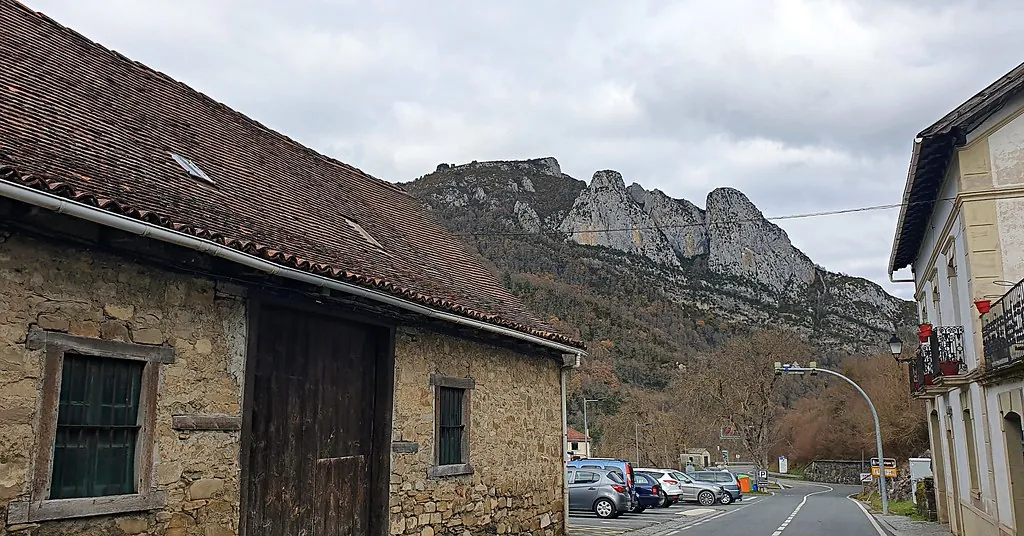
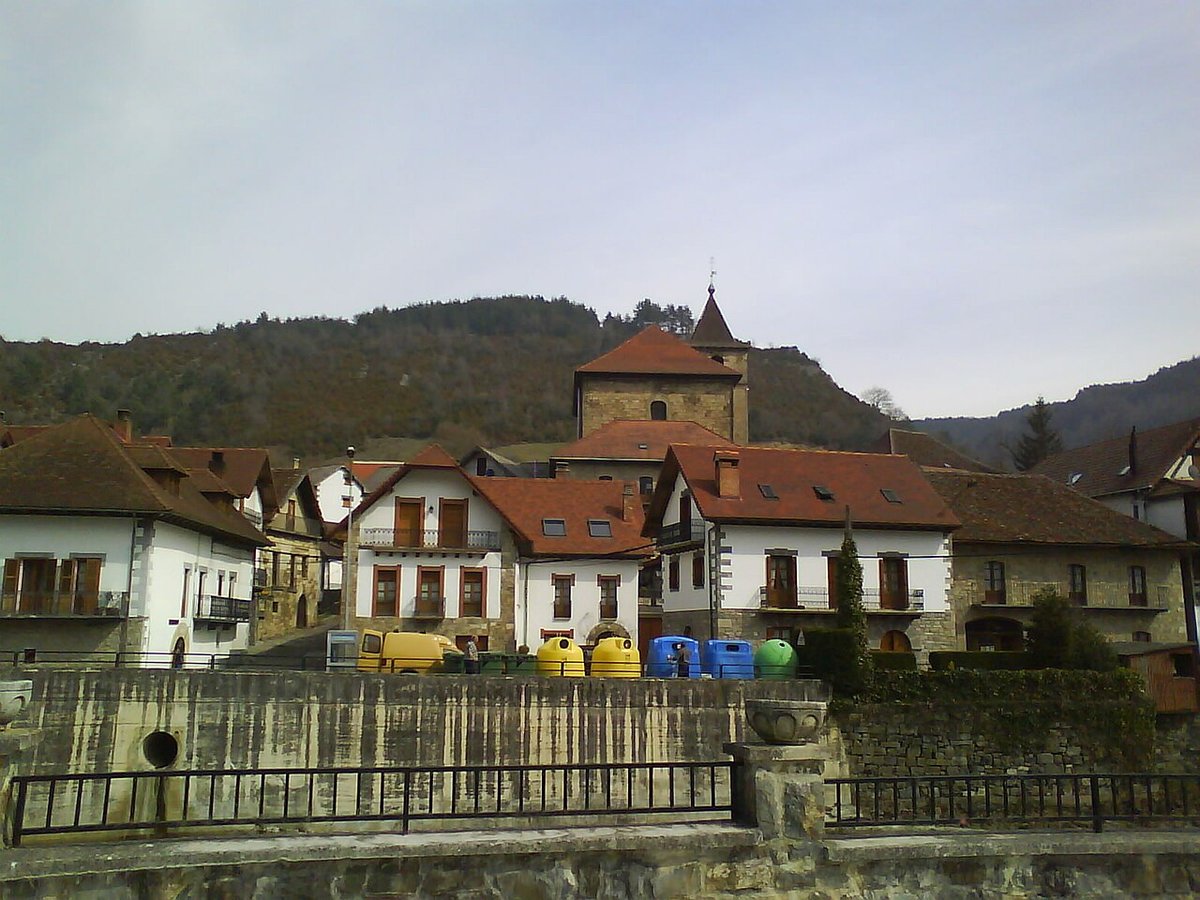
There are no major monuments or headline sights competing for attention. No need to reach for your phone every few steps. Instead, Sarriés is made up of a handful of stone houses, dark roofs, and the kind of quiet that feels particular to small mountain villages. When a car passes through, it is noticeable enough to turn your head.
It does not take long to understand the rhythm of the place. You arrive, stretch your legs, and without trying too hard, you fall into that slower tempo.
The centre point: Iglesia de San Miguel
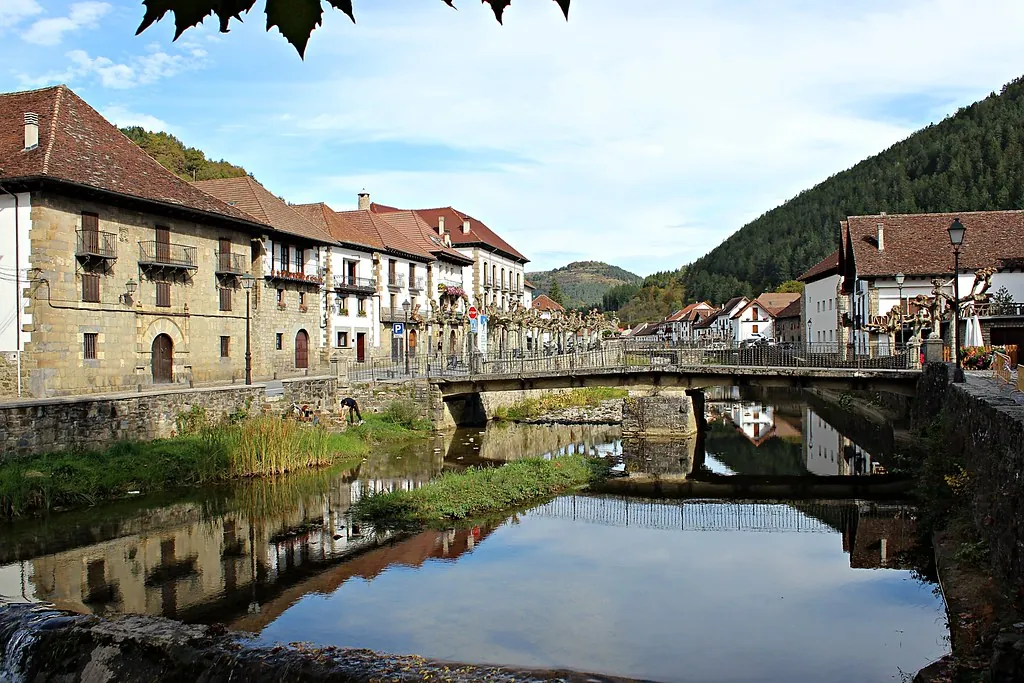
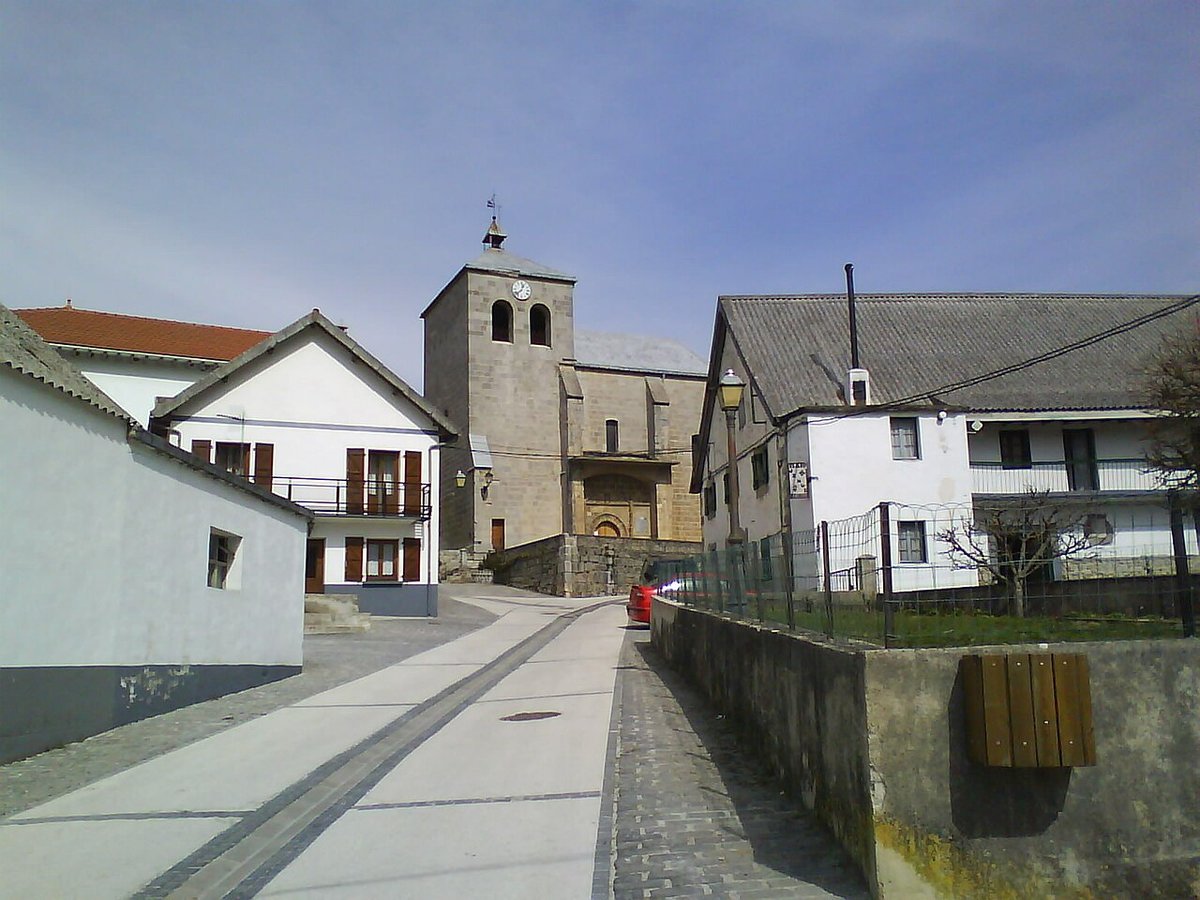
Everything in Sarriés sits close together, so the Iglesia de San Miguel naturally becomes the focal point of any walk. It is not a grand or imposing church. Rather, it matches what you would expect in a small Pyrenean village: solid, built in pale stone, and without elaborate decoration.
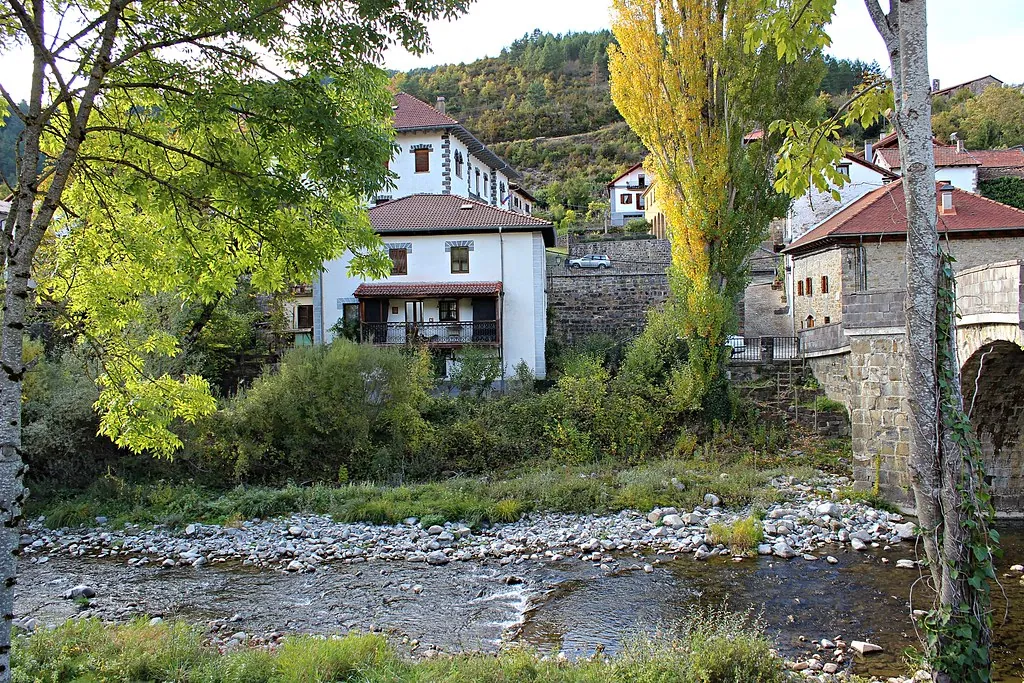
Around it, the houses cluster in a way that feels organic rather than planned. Many display coats of arms on their façades or dates carved directly into the stone. These small details reward a slower pace. Old doorways stand alongside balconies with wrought iron, and the walls themselves suggest long histories, shaped by generations who have come and gone.
You can cross the village in ten minutes if you walk straight through. It takes longer if you pause, look up, and follow the edges of the built-up area. That is really the point. There is no pressure to see everything, and not much to tick off a list anyway.
Beyond the houses: paths and open landscape
What gives Sarriés its real appeal lies just outside the village. Step beyond the last houses and the surroundings open up into meadows, small patches of woodland, and the first rising slopes of the Pyrenees.
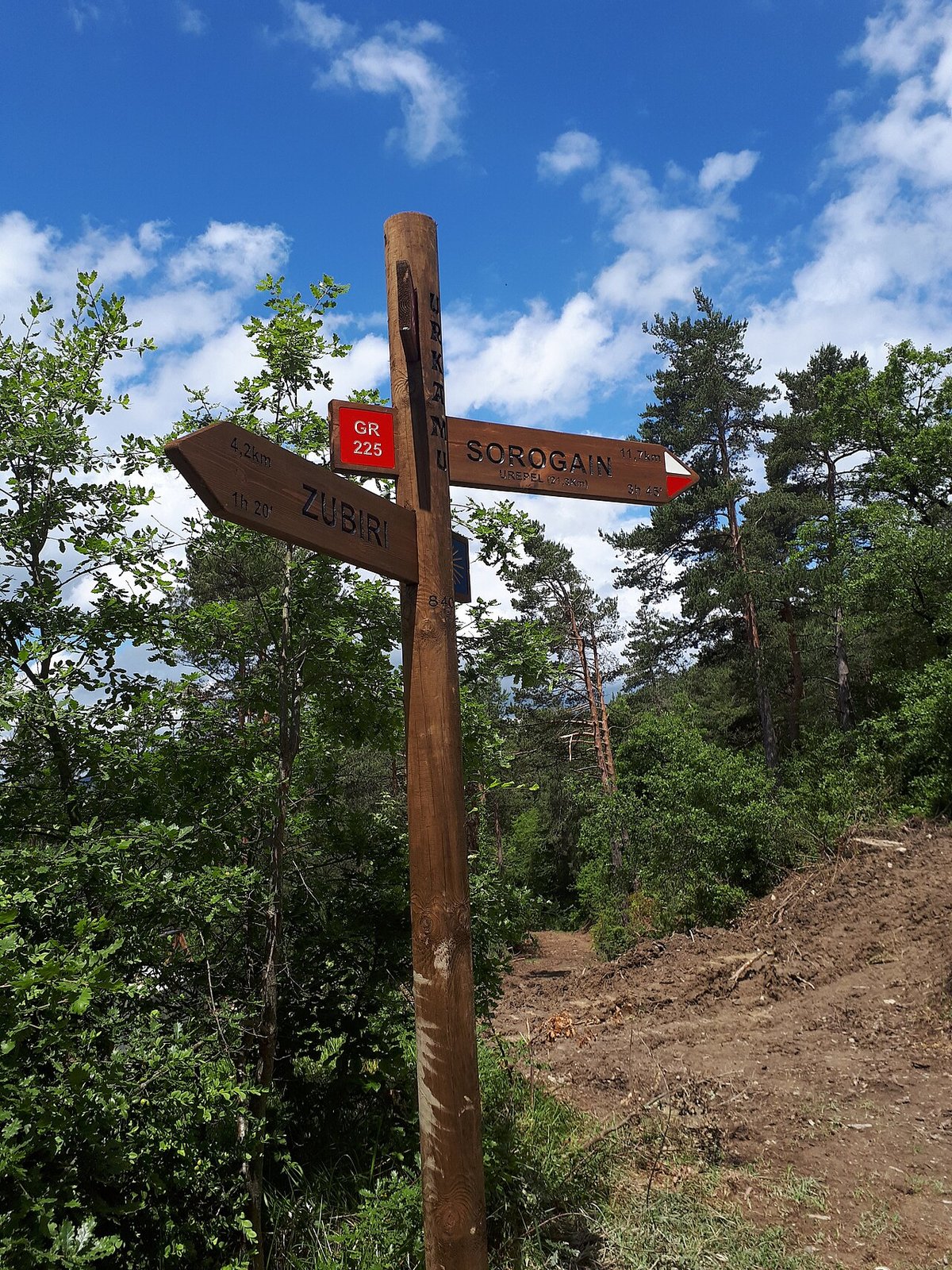
There is no need to plan a full hike. A short walk is enough to change perspective. Simple paths lead away from the centre and offer views over the Arce valley without much effort. This is the kind of half-hour wander that comes almost as an afterthought, yet often stays in the memory longer than expected.
Moving quietly and without hurry makes a difference here. Wildlife is not guaranteed, but at certain times of day it is possible to spot roe deer near the edges of the forest. Birds of prey can also be seen gliding on the air currents above the meadows, circling slowly as they search the ground below.
The landscape is not dramatic in a showy way. It is more understated, shaped by use and time, with open fields and wooded areas blending into each other. The transition from village to countryside feels immediate.
When the setting changes with the seasons
From May to October, conditions tend to be at their most comfortable for walking. Days are longer, and the paths are generally easier to follow. The surroundings feel more open and accessible during these months.
Autumn brings a noticeable shift in atmosphere. The beech forests in the area turn shades of ochre and yellow, altering the colour of the landscape. It is the sort of moment that often leads to stopping for a photo, then taking several more without quite intending to.
Winter tells a different story. Cold temperatures are more apparent, daylight hours are shorter, and recent snowfall can make some stretches of road or path more difficult. Visiting is still possible, but it calls for a bit more awareness of conditions rather than a spontaneous stop.
Getting around Sarriés
Sarriés is best explored on foot. The streets are short, and the layout does not suit moving from place to place by car. A practical approach is to leave the car in a more open space at the entrance and continue walking from there.
This also makes it easier to step straight onto the paths that lead out of the village, without needing to think about where to park afterwards. The transition from street to countryside is quick, and walking keeps that experience uninterrupted.
If you only have a short stop
An hour or two is enough to get a clear sense of Sarriés. A simple plan works well: walk through the village, take a look at the Iglesia de San Miguel, and then follow one of the nearby paths out towards the meadows to see the valley from a slight distance.
It is not a place designed to fill an entire day. It works much better as a calm pause within a wider route through the Navarrese Pyrenees or the Arce valley. The visit fits easily into a journey without needing careful planning.
What Sarriés is, and what it is not
Sarriés does not offer a long list of attractions or standout landmarks. That absence is part of its character.
This is the kind of place where you arrive, walk without checking the time, and leave with the feeling of having seen a very ordinary slice of life in the Pyrenees. Houses that are still lived in, fields that continue to be used, and a quiet that does not feel arranged for visitors. It simply exists that way, as it always has.