Full Article
about Uztárroz
Last village in the Roncal Valley; home to the Museum of Cheese and Transhumance.
Ocultar artículo Leer artículo completo
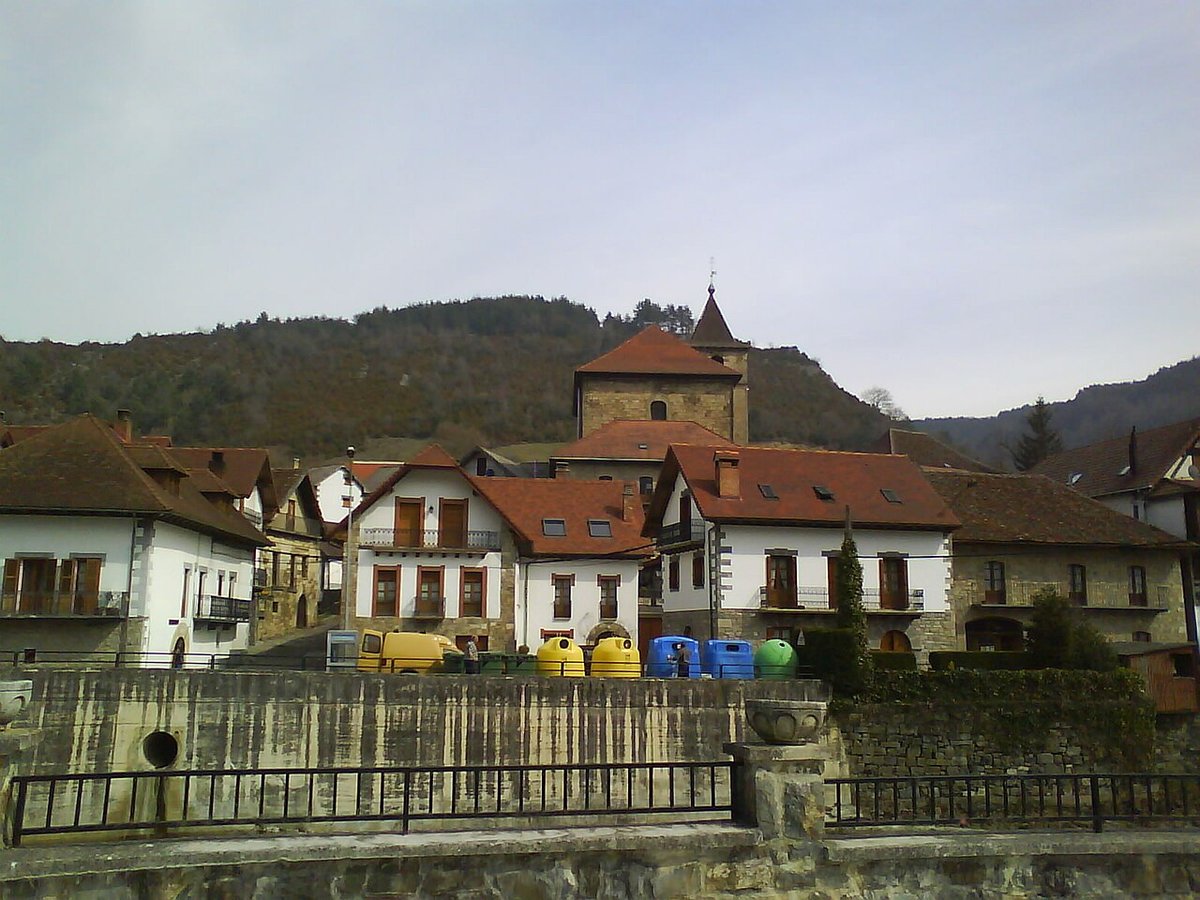
The bells in Uztarroz still mark the day’s rhythm, not the tourist coach timetable. At 11 o’clock on a Tuesday the only traffic jam is a flock of Latxa sheep squeezing past the fronton court while the shepherd leans on his crook, mobile phone pinned to his ear with one shoulder. That contrast—stone houses and slate roofs on one side, Bluetooth headset on the other—tells you most of what you need to know about this hamlet of barely 120 souls at the upper end of Navarre’s Roncal valley.
Stone, Slate and the Smell of Cheese
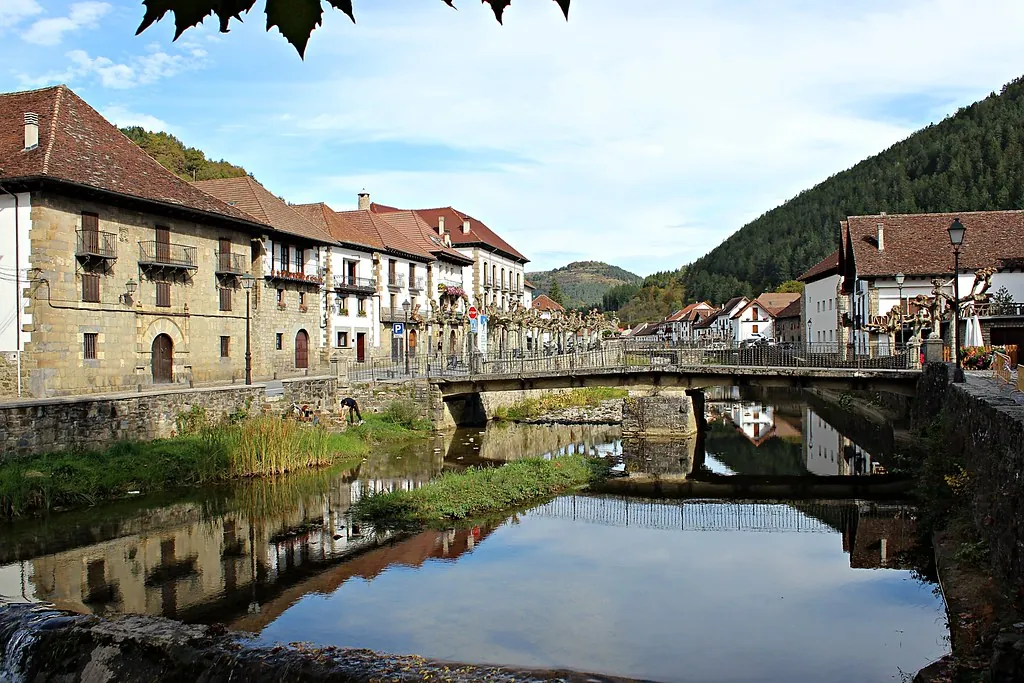
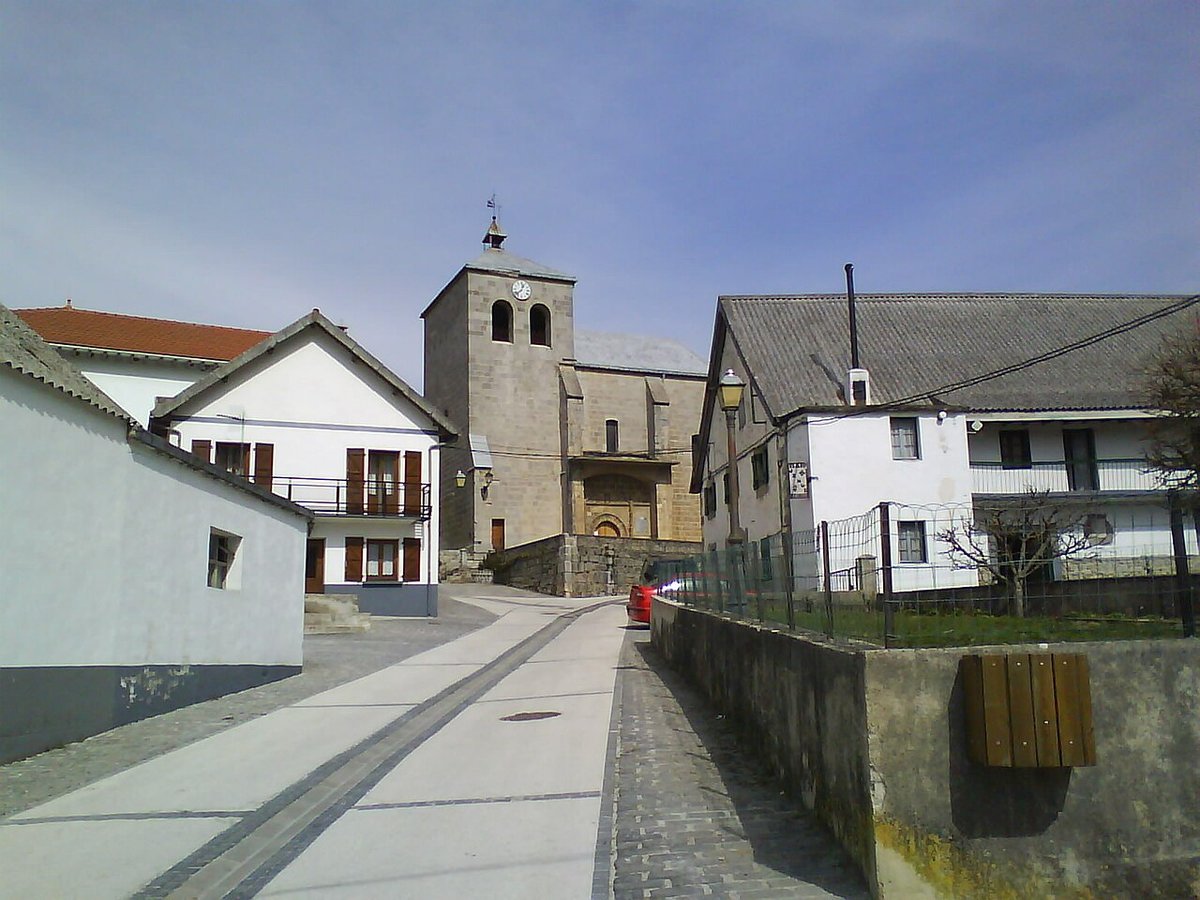
Start in the single-plaza centre. The church of San Esteban has been patched so often that its south wall is a patchwork of Romanesque, Gothic and 19th-century repair. Walk around it slowly; the stone escutcheons above doorways belong to families who wintered their herds here long before Spain had a parador network. Chimneys are the giveaway status symbol—fat, square and centred, proof the house could afford a proper kitchen fire. If a door is ajar you may catch the tang of Roncal cheese curing in an upstairs larder; the D.O. wheels spend at least two months in farmhouse storerooms where mountain air creeps through stone slits.
There is no ticket office, no audioguide and only one information panel, half sun-bleached. That is the appeal, and also the limit: the historic core is three streets long. Ten minutes of wandering and you have seen the blazons, the granite trough turned into a planter, the 16th-century cross whose Christ figure is missing a hand. Pause anyway; the silence lets you hear slate creak as it warms in the morning sun.
Upwards, Quickly
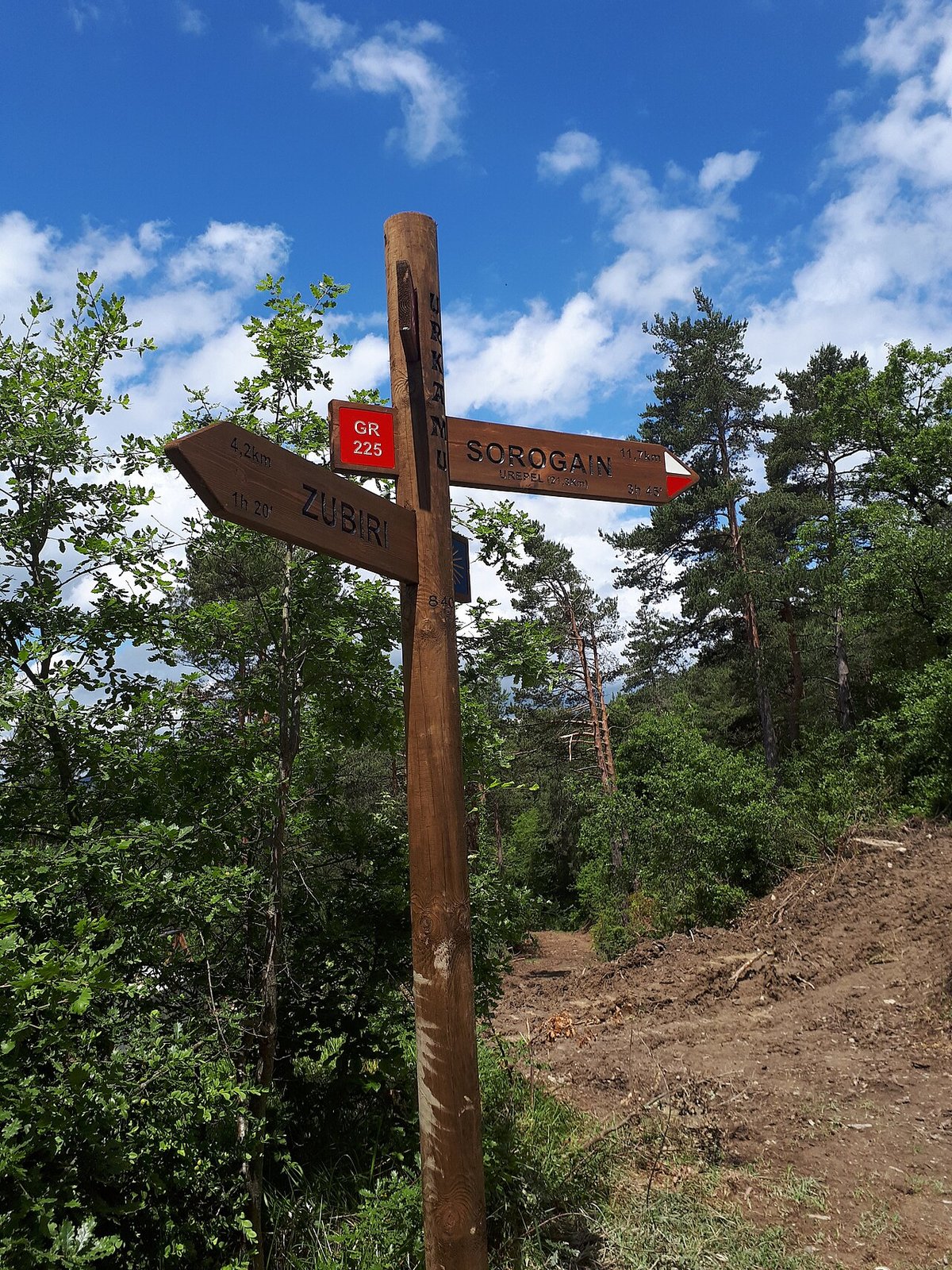
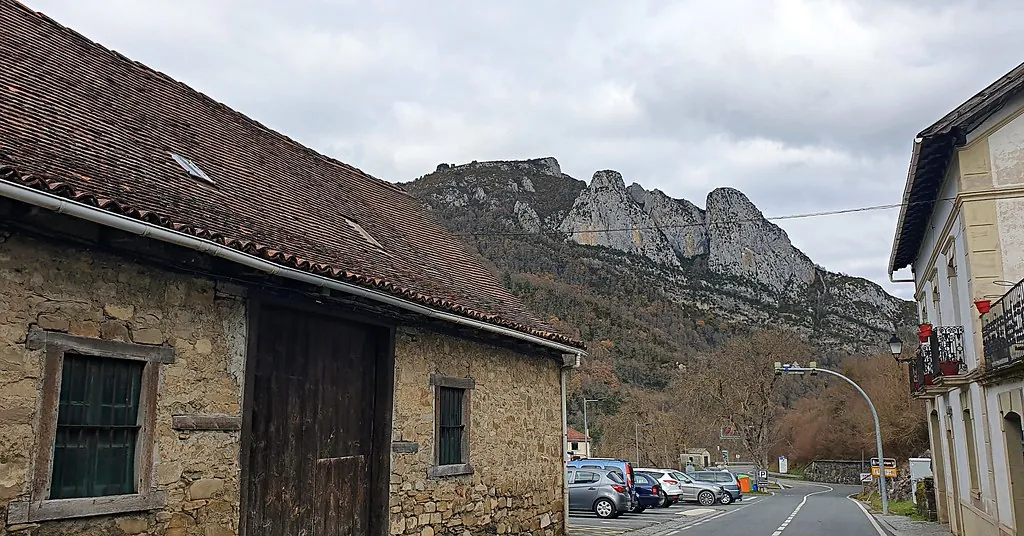
The valley floor sits at 700 m but the surrounding wall climbs fast. Head east on the farm track signed “Borda Aranzate” and within fifteen minutes the village looks like a grey dice throw between hay meadows. Keep climbing and you are in beech and fir, the border with France visible only as a distant fence of white rock: Orhi (1 917 m) to the north, Txamantxoia (1 647 m) to the south-west. Both are day walks if you start early and know how to read karst limestone—sinkholes appear without warning, and the red-white GR marks fade on bare stone.
Weather flips without notice. A morning that begins in T-shirt warmth can finish in cloud so thick the village vanishes below you. Even in July pack a windproof; by October the first snow can block the NA-178 for an afternoon. Winter proper turns Uztarroz into a place you reach only with chains or a 4×4, something the daily school bus driver accepts with a shrug.
What You Will Actually Eat
Forget tasting menus. The only place serving lunch is the front bar of Casa Juncosa, open weekends year-round and most evenings July–September. Order the plato combinado if you must, but better to ask what the owner’s mother has stewed that day—usually cordero al chilindrón (lamb with peppers) or a bowl of tarba (white-bean and pork soup) thick enough to support a spoon upright. Roncal cheese comes in door-stop wedges, never delicate shavings; the local cider is still, dry and poured from a height that would horrify an Asturian. Expect to pay €12–14 for two courses, cheese and a bottle of water, cash only. Cards are viewed with the suspicion reserved for foreigners who ask for decaf.
If you are self-catering, the mobile butcher’s van parks by the fountain on Wednesday mornings. Buy chuletas de cordero; they were grazing the surrounding slopes last week. The nearest supermarket is 12 km south in Burgui, so stock up before the climb.
Using It as a Base (and Why That Makes Sense)
Uztarroz works best as a quiet dormitory rather than a destination. The Selva de Irati, Europe’s second-largest beech forest, is 35 minutes by car; early morning there means you share the trail with wildcats, not coach parties. Back roads lead to pintxo-friendly Baztán towns or to the smugglers’ paths that cross into France over 1 500 m passes—hikes that start literally at the village edge. Stay three nights and you can rotate valley-bottom orchards, high-alpine limestone and 16th-century stone bridges without repeating a route.
Accommodation is limited to a handful of casas rurales. The one opposite the bakery has been renovated by a Pamplona architect couple; exposed beams, underfloor heating and a roof terrace that stares straight at Orhi. Low-season weekday rates dip below €90 for the house, so a pair of walkers pays less than a generic urban hotel.
Getting Here Without the Drama
Public transport stops at Burgui; from Pamplona bus station it is two buses and a taxi or a pre-booked lift. Car hire is simpler. Bilbao airport (served from London City, Manchester and Edinburgh) is 2 h 15 min away on fast motorway until Lumbier gorge, then mountain switchbacks. Biarritz is closer (1 h 45 min) but summer Saturday traffic around Saint-Jean-de-Luz can add an hour. Fill the tank before the valley—fuel is 10 c cheaper in the lowlands and mountain garages close for siesta.
The Honest Season Guide
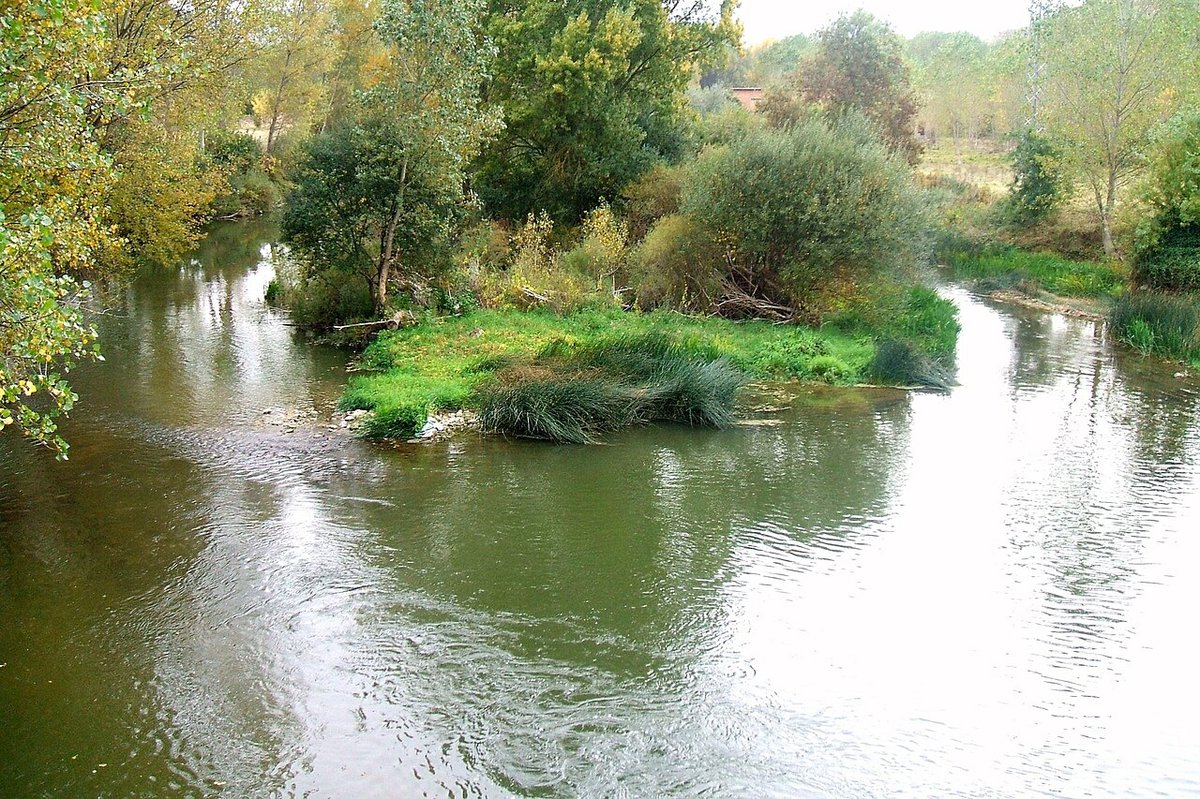
Spring brings orchards of white blossom against green pasture but also the heaviest rain; the river Esca can turn the road south into a ford. Summer is reliable for hiking, yet August weekends see Spanish families rent every village house and turn the tranquillity into an echo of Rioja wine tours. Autumn is the photographers’ window—beech woods the colour of burnt toffee, cheese at its nuttiest, clear mornings sharp enough to make you reach for a jacket. Winter is magnificent and occasionally impossible; if the forecast says “cota de nieve 800 m” believe it, carry blankets in the car and do not rely on mobile signal for rescue—there is none above 1 200 m.
The Things That Go Wrong (and How to Avoid Them)
Tourists arrive expecting a cute village that entertains them for a day, then complain there is “nothing to do” after 90 minutes. That complaint misses the point: the entertainment is the access, not the façade. Conversely, fit walkers treat the valley as a Pyrenean playground and set off in sandals; every summer the Navarrese rescue team winches someone off Txamantxoia in the dark. Bring boots, map, waterproof. Simple.
Mobile coverage is patchy enough that your UK provider may roam onto a French mast and trigger surprise charges while you sit outside the bakery. Switch to airplane mode and rely on Wi-Fi in the house.
Finally, do not expect conversational English. French is surprisingly common—historical smuggling routes—but outside the casa rural owners few speak more than phrase-book English. A couple of greetings in Spanish, or better in Basque (“egun on” for good morning), earns immediate goodwill and occasionally an extra slice of cheese.
Uztarroz will never tick the “must-see” box because its value lies precisely in not needing to be seen. Come for the slow rhythm: the cheese that tastes of thyme and altitude, the night sky so dark you can read the Milky Way, the realisation that a village can still function for locals first and visitors second. Treat it as a trailhead with a bed and you will leave content; expect entertainment laid on and you will drive away after lunch wondering what all the fuss was about.