Full Article
about Valcarlos
Border town on the Camino de Santiago (lower route); known for its dances (Bolantes) and roadside shops.
Hide article Read full article
A place people pass through, and remember
Some places are destinations in their own right. Others appear along the way, like a roadside stop where you end up looking around longer than planned. Valcarlos, or Luzaide as it is known locally, belongs to the second group. It sits in the Navarrese Pyrenees, right by the border with France, and for centuries it has essentially been a place of passage.
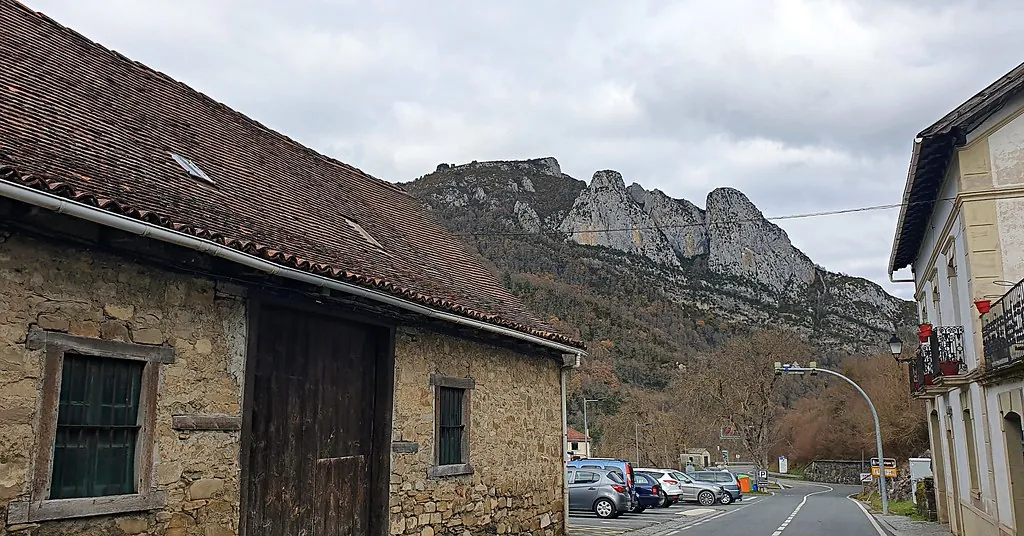
Cars still pass through, along with cyclists and pilgrims. The village keeps a calm, slightly removed feel, as if the flow of travellers never quite settled. Around three hundred people live here, spread out along the N‑135 road that climbs from Pamplona towards Roncesvalles and the frontier.
There are no grand monuments or large squares. The appeal comes from the landscape, from old houses clinging to the hillside, and from the sense of a valley that has watched people come and go for a very long time.
A village stretched along the valley
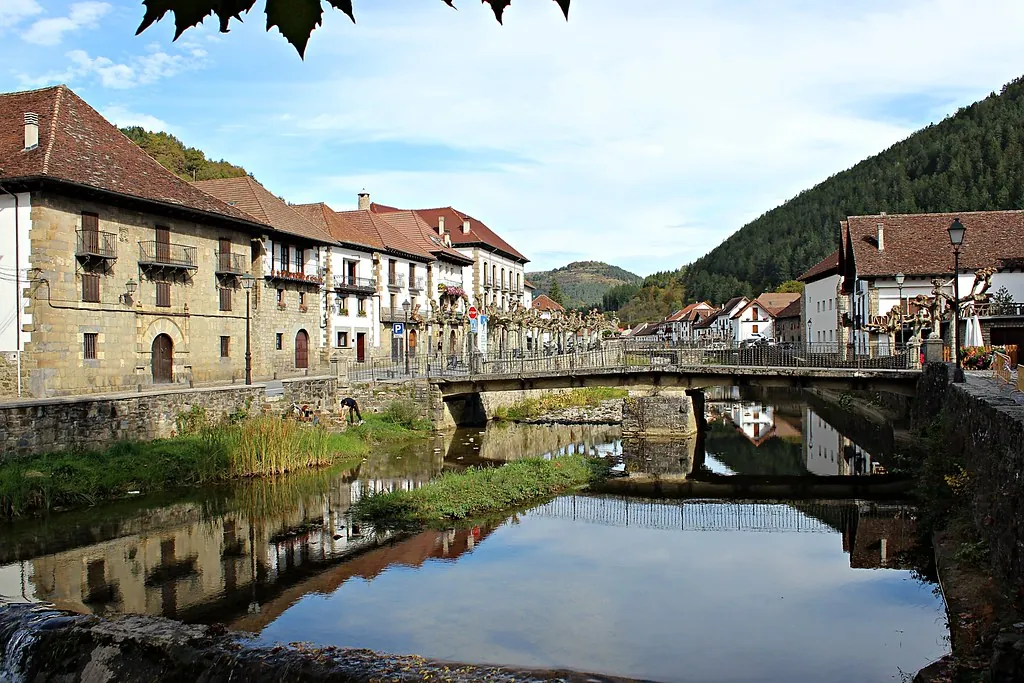
Valcarlos does not have a compact centre that can be crossed in a few minutes. The village stretches along the valley floor and the road, with scattered houses, patches of meadow and gentle bends that reveal the surroundings bit by bit.
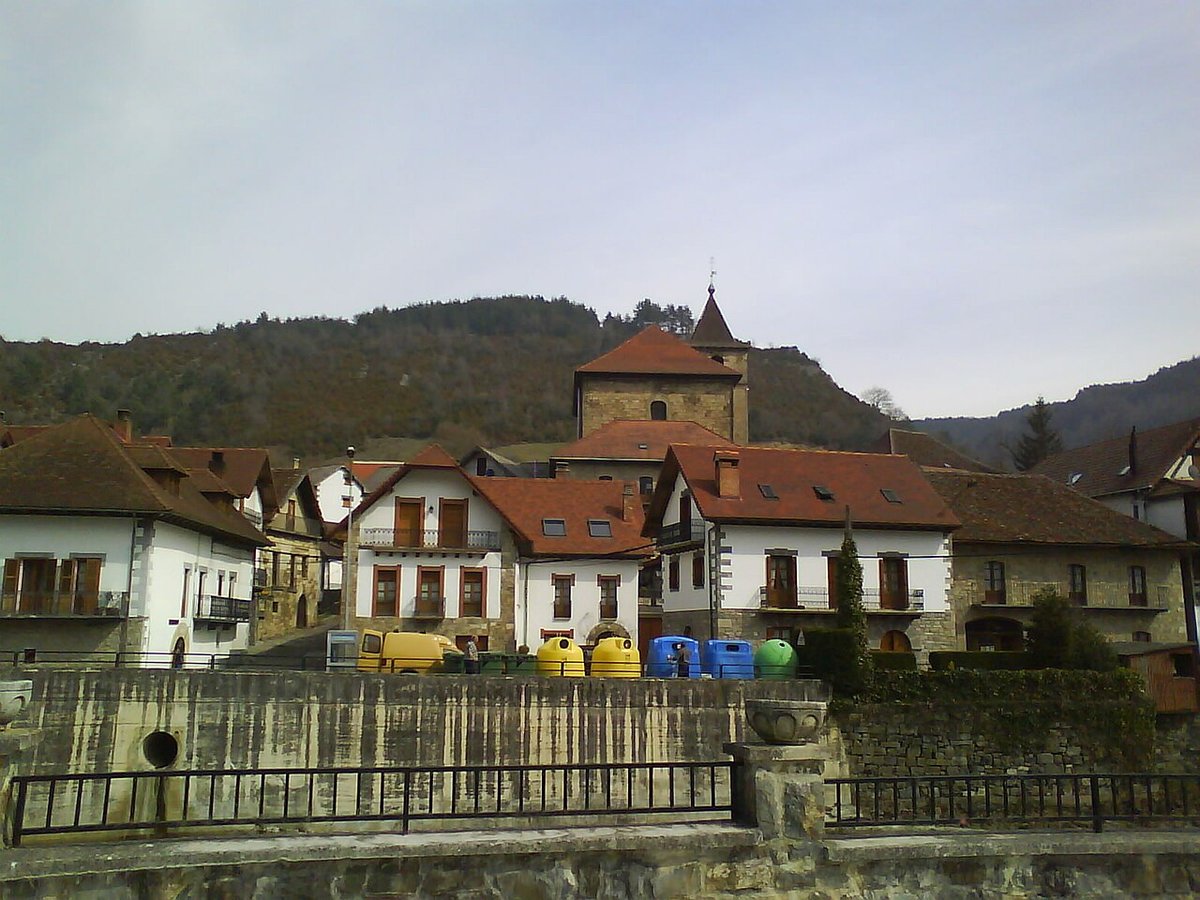
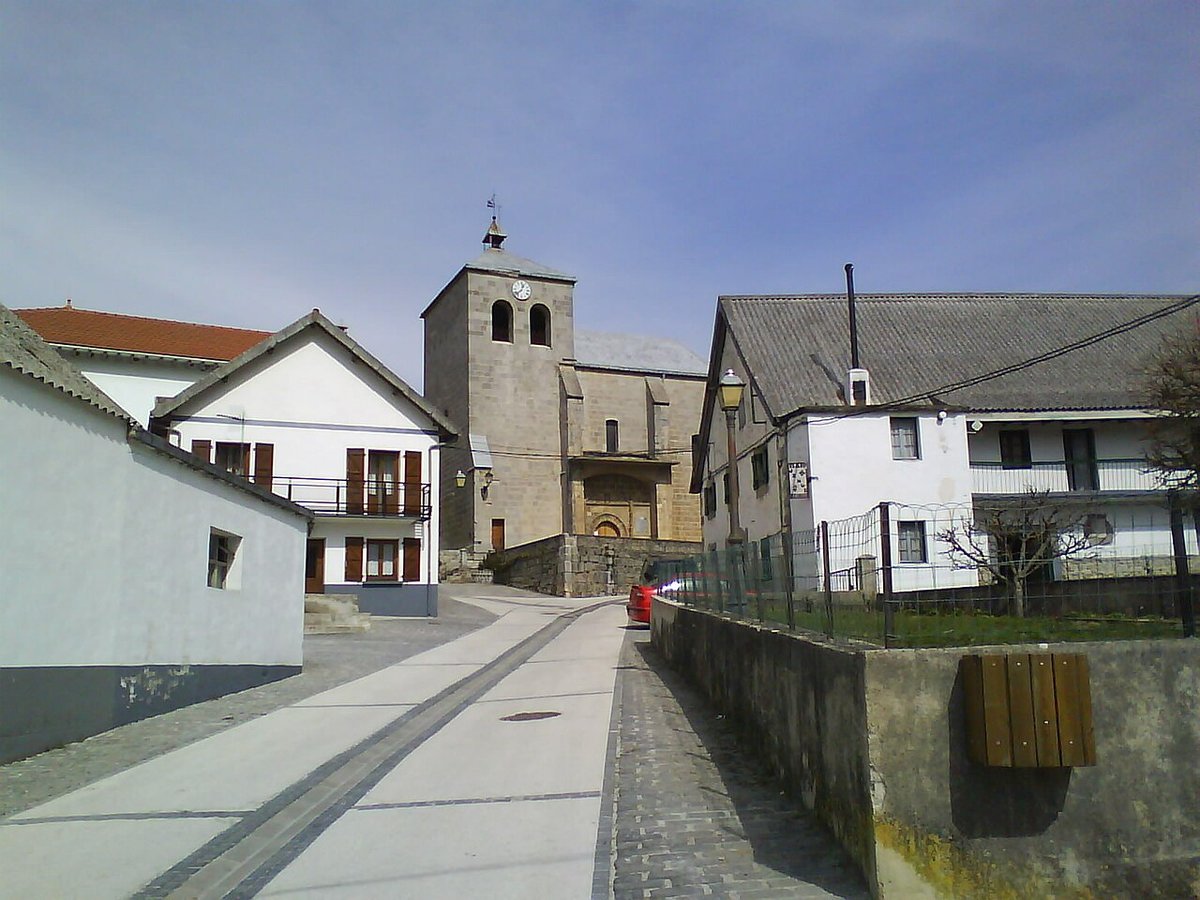
The buildings follow a familiar pattern for this part of the Pyrenees. Stone walls, steep roofs designed for snow, and wooden balconies appear again and again. Some houses look carefully maintained, while others give the impression of family homes that have been adapted over generations, piece by piece.
A walk through the village brings a common mountain reality into view. There was more daily life here decades ago. Some houses now open only in summer or at weekends, which adds to the quiet atmosphere outside peak times.
The church of Santiago and the Camino
At the centre of the village stands the church of Santiago. It is not a monumental building, yet its presence makes perfect sense. Valcarlos is closely tied to the Camino de Santiago, the long-distance pilgrimage route that crosses northern Spain.
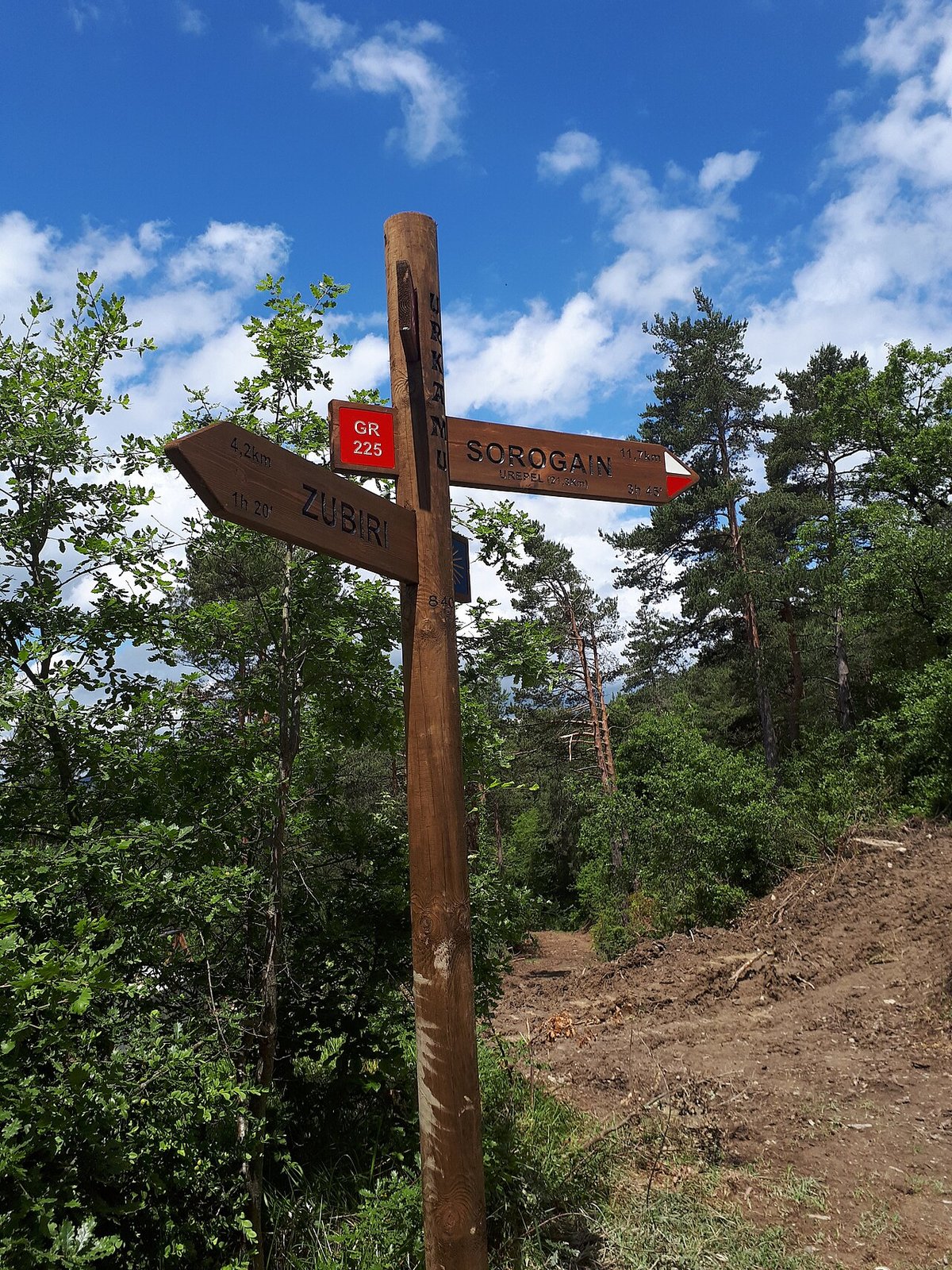
This valley marks one of the ways the Camino enters Spain before climbing towards Roncesvalles. Many pilgrims arrive from the French side, following the road or nearby paths. During the busier months, the signs are easy to spot. Large backpacks rest against walls, people refill water bottles, and there is a steady, unhurried rhythm that comes from having just crossed a border on foot.
The church and its surroundings reflect that long history of movement. The village feels shaped as much by those who pass through as by those who stay.
Forests that close in around the valley
Step away from the built-up stretch and the landscape changes quickly. Within minutes, forest takes over. Beech and oak woods cover the nearby slopes, creating a dense green that can seem almost dark on overcast days.
Autumn brings a noticeable shift in colour. The beech trees turn red and yellow, and the road through the valley looks different from one week to the next. Spring has its own character, with wetter ground and frequent low mist in the mornings, something quite typical in this part of the Pyrenees.
Several paths and tracks begin in or near the village and head into the hills. Some are signposted, others are simply local routes. None are especially extreme, but proper footwear matters here. Mud appears quickly after a couple of days of rain, and conditions can change fast.
Patience tends to be rewarded. Tracks of roe deer are not unusual, and movement can often be heard in the undergrowth. This is not a place of constant panoramic viewpoints. The experience leans more towards walking within the forest than seeking out wide, open vistas.
Close to Roncesvalles
One of Valcarlos’s advantages is its proximity to Roncesvalles. The distance is short by car, and on foot it is possible to link up with sections of the Camino that climb through the valley.
This stretch forms one of the best-known parts of the Camino Francés as it enters Spain. The route includes climbs, damp sections after rain, and long passages through woodland. Anyone who enjoys walking will quickly understand why this corridor has served for centuries as a natural route between France and Navarra.
Food shaped by the surroundings
Food in this part of the Navarrese Pyrenees is closely tied to what the local environment provides. Livestock, dairy products and resources from the surrounding hills all play a role.
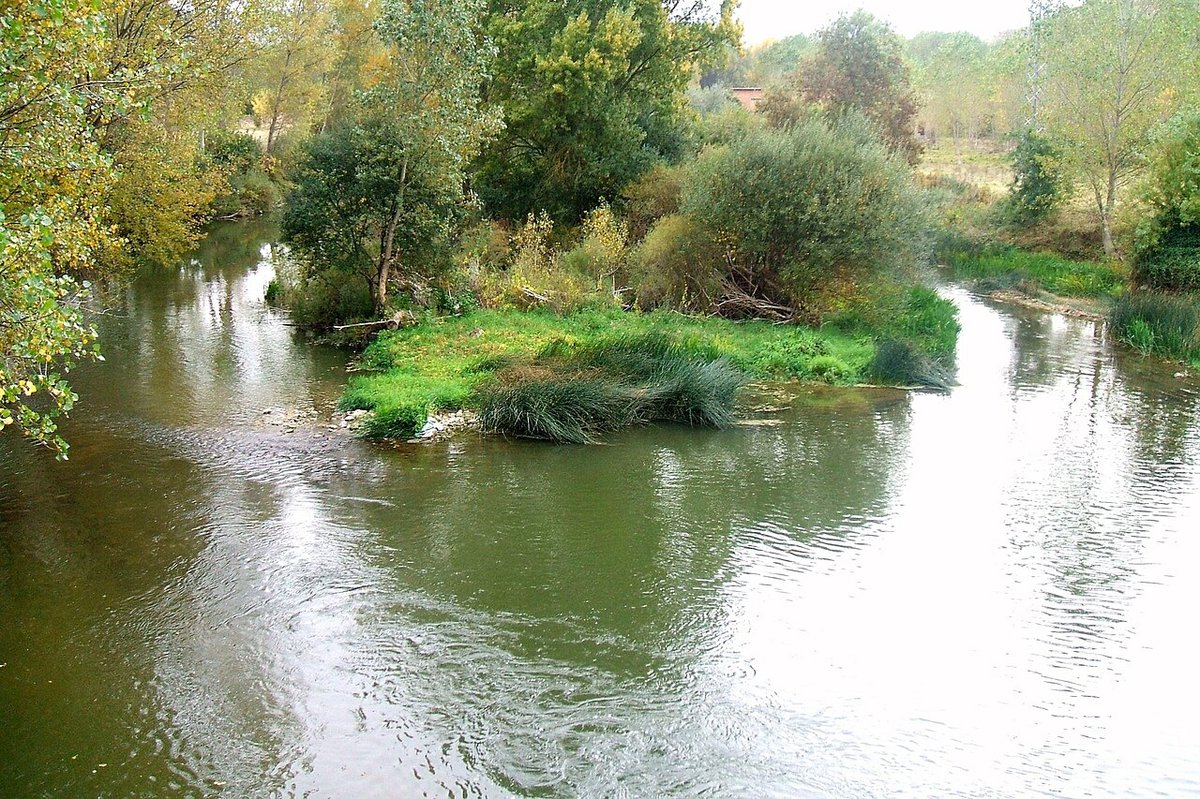
Cheese from the area is easy to find, along with cured meats and substantial dishes suited to a cooler climate. In season, mushrooms gathered in nearby forests also appear. The Bidasoa river, which rises not far from here, has traditionally been linked to fishing as well.
The cooking is not complicated. It centres on good ingredients and warm, filling plates.
When the valley changes
Each season alters the feel of Valcarlos quite noticeably.
Autumn stands out for colour, when the forest is at its most visually striking. Winter can be cold, and snow is not unusual in the surrounding areas. Spring and summer bring longer days and a greater flow of pilgrims along the Camino.
Weather in the Pyrenees shifts quickly. A sunny morning can turn into a rainy afternoon without much warning, so it makes sense to arrive prepared for changeable conditions.
A short stop that makes sense
Valcarlos is not a place for a packed three-day itinerary. It works better to accept that from the outset.
The village fits naturally as a quiet stop on a route through the Navarrese Pyrenees, or as a base for a short walk into the valley. You can park, wander through the houses, visit the church, and head a little way into the forest. It does not take long to grasp what defines the place.
That simplicity is part of its appeal. Valcarlos does not try to hold attention with big sights. It offers a pause, a landscape, and the steady sense of being on a route that people have followed for generations.