Full Article
about Fitero
Home to the peninsula’s first Cistercian monastery and a renowned spa; Bécquer’s inspiration
Hide article Read full article
Mornings by the monastery
At eight in the morning, when the bells of the monastery strike, the sun is still slow to settle fully into the Alhama valley. The stone of the monastic complex holds the night’s coolness and the square carries only faint sounds, a shutter lifting somewhere, the brief stop of a delivery van. This is how many days of tourism in Fitero begin, with the village still half quiet and the monastery setting the pace.
The Monastery of Santa María stands slightly apart from the town centre, a broad mass of pale stone that dominates everything around it. The first Cistercian monks arrived here in the 12th century from the south of France, and for a long time this was an important point of reference for the order in the Iberian Peninsula. The church is large and restrained, with that sense of bare space the Cistercians sought. By mid-morning, when light enters through the crossing, pale rectangles spread across the floor and the whole interior seems to shift in temperature.
The site is also linked to the origins of the Order of Calatrava, driven by Abbot Raimundo de Fitero during a period when this was frontier territory. That mix of monastic life and military past still shows in the scale of the building, closer in feel to a fortress than to a simple parish church. The cloister offers a different atmosphere. It is quieter, with cold stone underfoot, footsteps echoing, and at times the damp scent of the walls after rain.
It is worth arriving early or later in the day. Around midday, especially at weekends, the space tends to fill with more visitors.
Cooking and shared tables
At certain hours the village changes scent. Around lunchtime, smoke drifts out of kitchens and the air sometimes carries a trace of thyme from the nearby hills.
One of the best-known dishes is rancho fiterano, a hearty stew usually prepared by groups for gatherings and celebrations. It combines meat, cured sausage and pulses, the sort of food made to be eaten slowly and followed by a long stretch sitting at the table. There is traditionally a day dedicated to this dish within the festive calendar, when large pots are brought out into the street.
Another local speciality is gazpacho de Fitero, which can surprise anyone expecting tomatoes. Here the base is bread, water, oil and garlic. It is a humble, very old recipe, closer to other cold soups found across inland Spain than to the better-known southern version.
In many homes, savoury pies made with olive oil dough are still prepared, along with sweets such as torrijas or rosquillas when certain celebrations come around. This is not cooking designed for display. It is about feeding long, unhurried meals where conversation stretches on.
The hot waters of the Alhama
A few kilometres from the town, following the course of the River Alhama, lie the Baños de Fitero. The landscape shifts as you approach, with more vegetation along the riverbank, cultivated fields nearby and the visible steam of warm water when the air turns cold.
The place has been known since Roman times. The water emerges very hot and carries a faint mineral scent that becomes noticeable as soon as you get close to the pools. The stones have been worn smooth by centuries of use, and the constant sound is that of water moving between the walls.
In winter the contrast is striking. Steam rises while frost settles on the surrounding grass. In summer the area becomes busier, and the heat of the sun can make bathing less appealing at midday. For quieter moments, early morning or late afternoon tends to work better.
Days marked by celebration
Much of the local festive calendar revolves around the Virgen de la Barda, the town’s patron. The main celebration takes place in September, when the streets fill with residents and families who return for those days. There is a procession, music and shared meals that continue late into the night.
In March, attention turns to San Raimundo Abad, a figure closely connected to the origins of the monastery. Spring usually brings the romería del Barranco, a walk out to the riverbanks that combines religious tradition with an outdoor picnic.
Outside these dates, Fitero moves at a different pace. The streets are calm, neighbours stop to talk in the square, and the bells continue to mark the passing hours.
Up to Tudején
Around three kilometres from the village are the remains of the castle of Tudején. The walk up is gentle, crossing farmland and areas of low scrub where the scent of rosemary and thyme rises as the sun warms the ground.
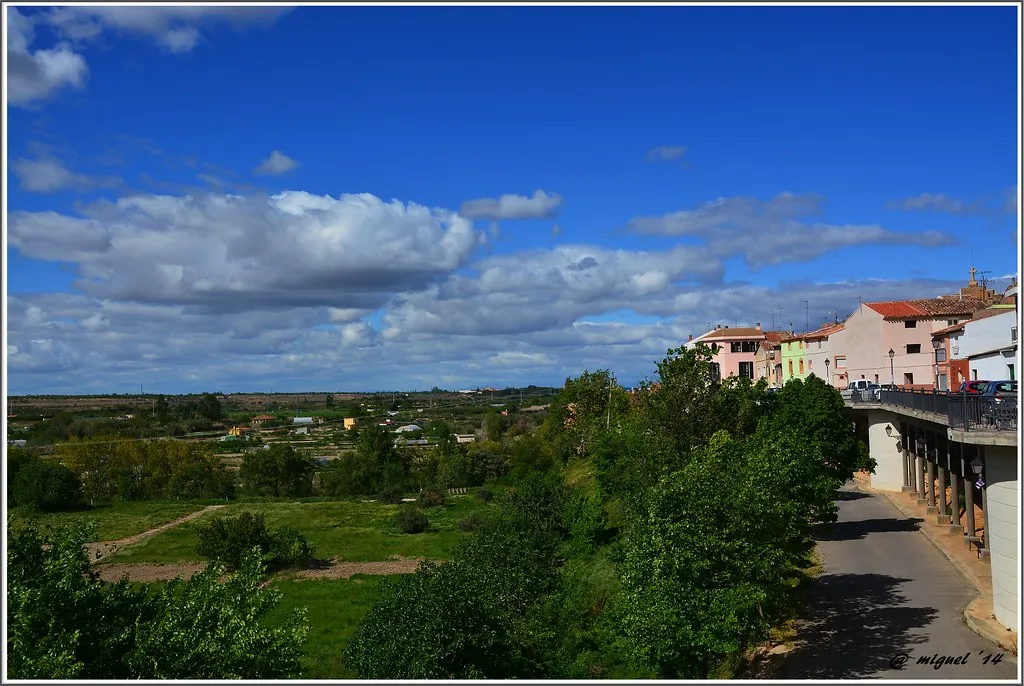
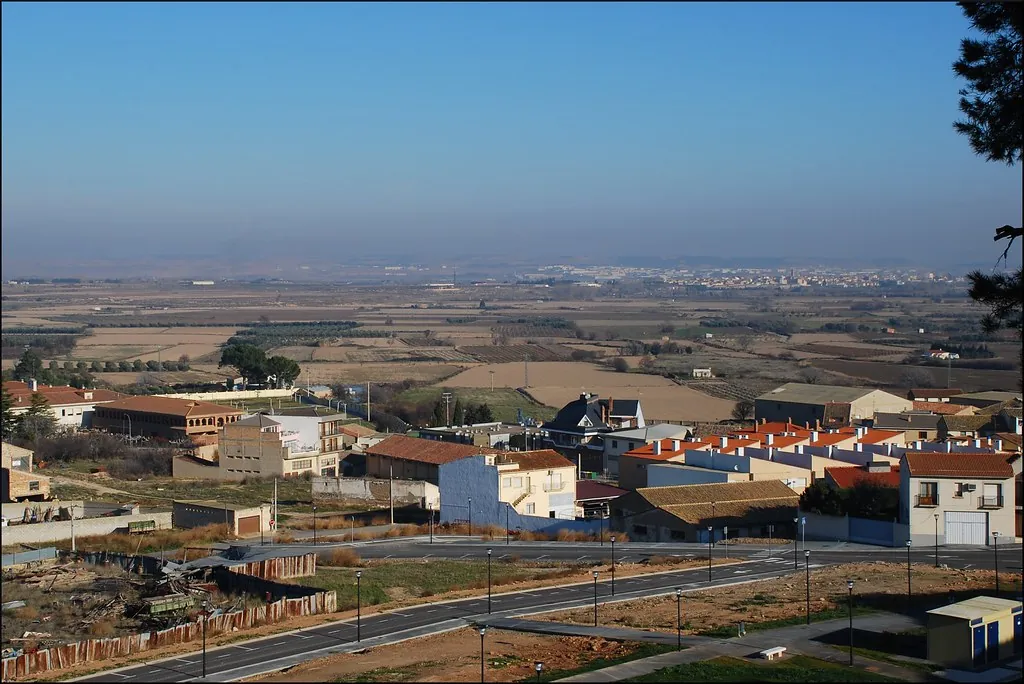
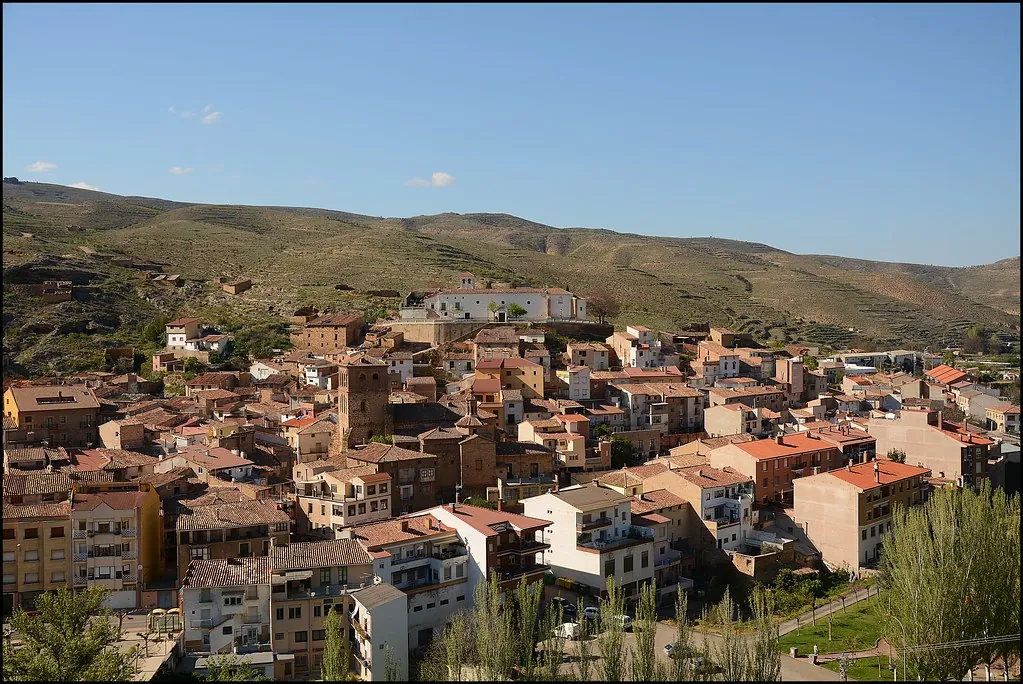
At the top, only fragments of wall remain, but the view makes the walk worthwhile. From here the layout of the town becomes clear, the monastery dominating the centre, the houses clustered around it, and beyond that the flat lands that stretch towards the Ebro.
In autumn, the surrounding olive groves begin to fill with fruit, and the air takes on the smell of freshly worked olives as the harvest approaches. In winter the landscape turns drier, and the wind moves freely across the valley.
Before heading back, many people pass by the Teatro Calatrava, set within what was once the monastery’s refectory. It still retains that curious blend of its former life and its present use, part historic space, part cultural venue, tied in quiet ways to everything around it.