Full Article
about Valtierra
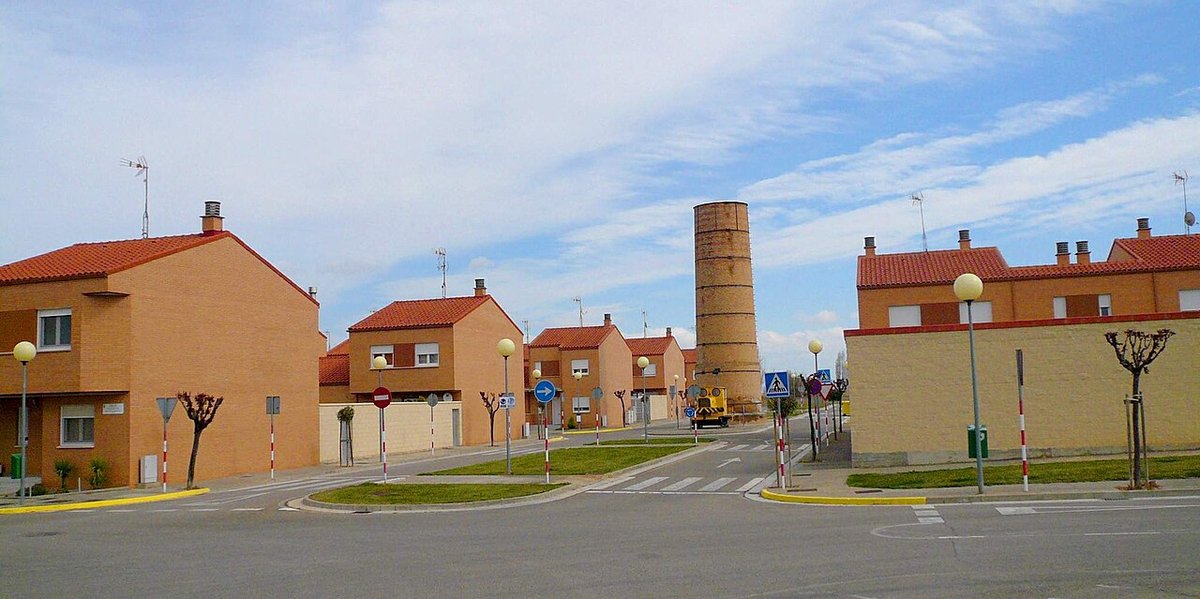
At the entrance to Bardenas; known for its tourist caves and farming past.
Hide article Read full article
Early light over the Bardenas
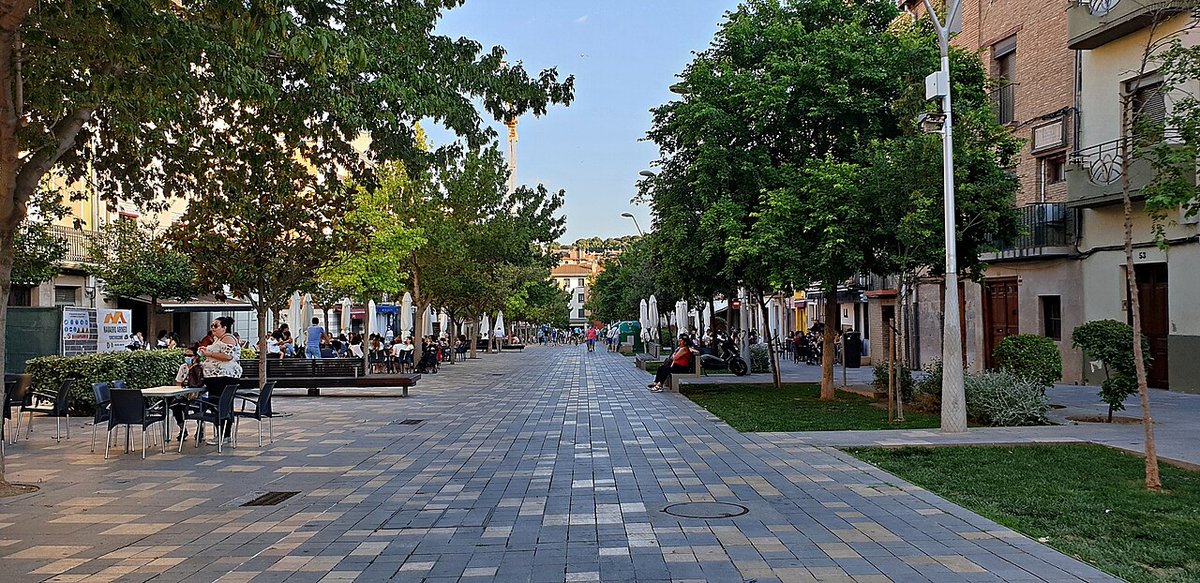
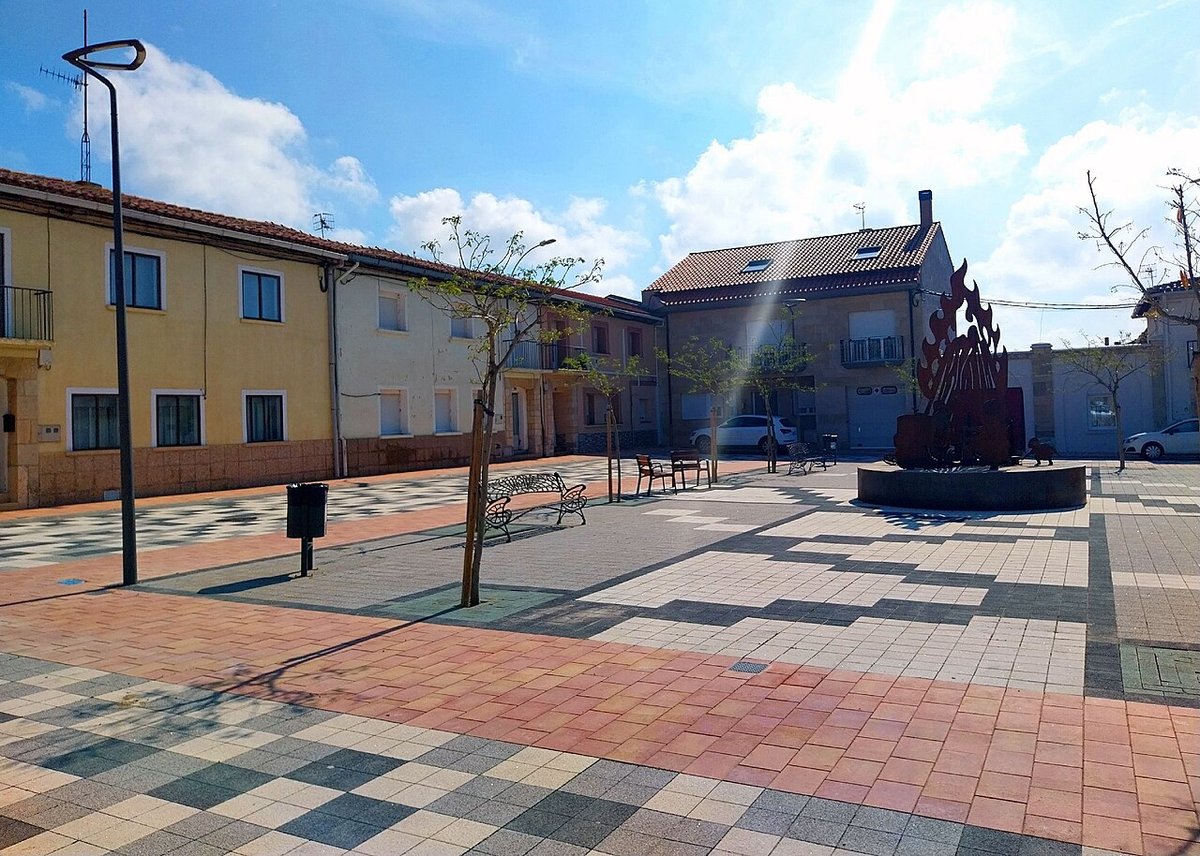
At that hour when the sky begins to brighten over the Bardenas, Valtierra is still half quiet. The bells of Santa María strike eight, and in the square the smell of freshly baked bread mixes with the dry air drifting in from the fields. Tourism in Valtierra starts to make sense in these slow morning minutes, when only the occasional car passes and the light falls at an angle across the façades.
The village wakes gradually. Here, the day tends to begin early out in the fields and later in the streets.
A retable that draws you in
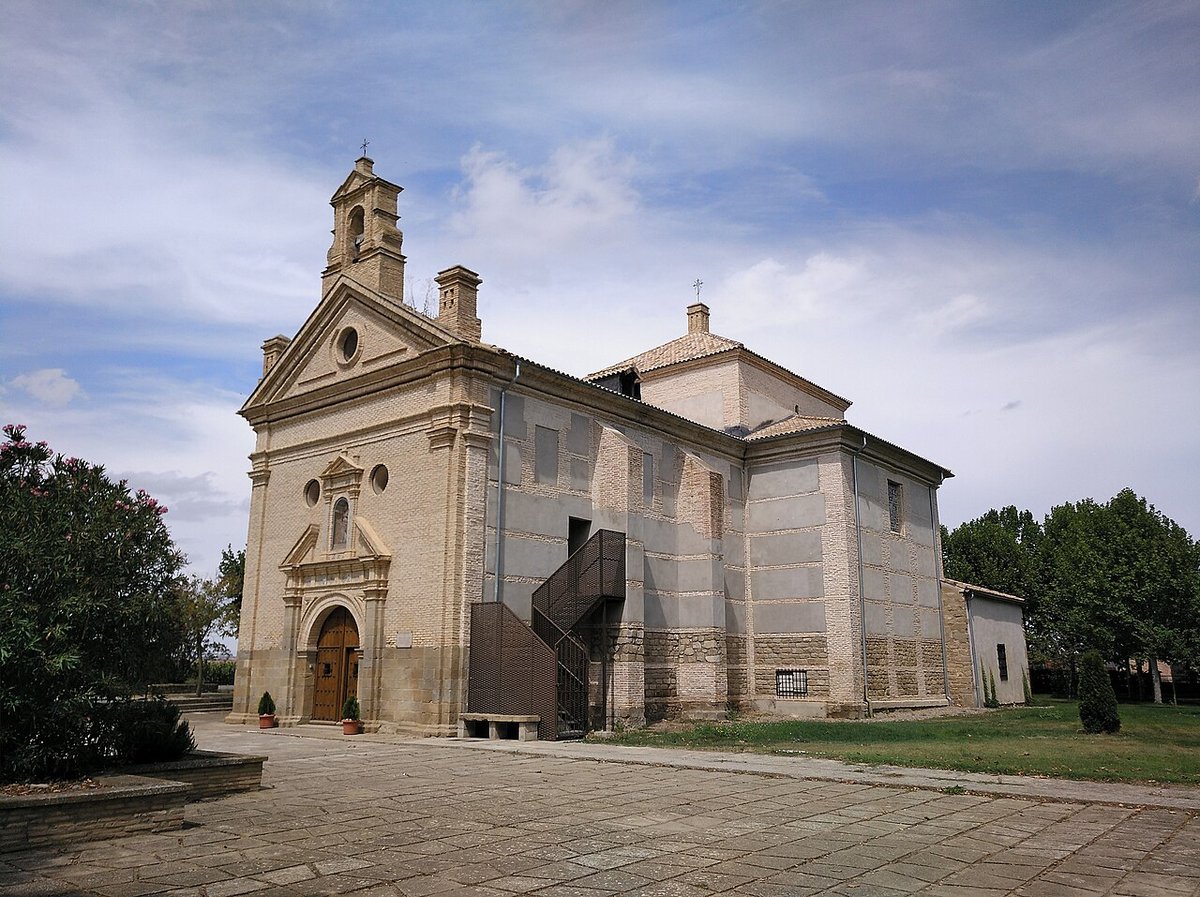
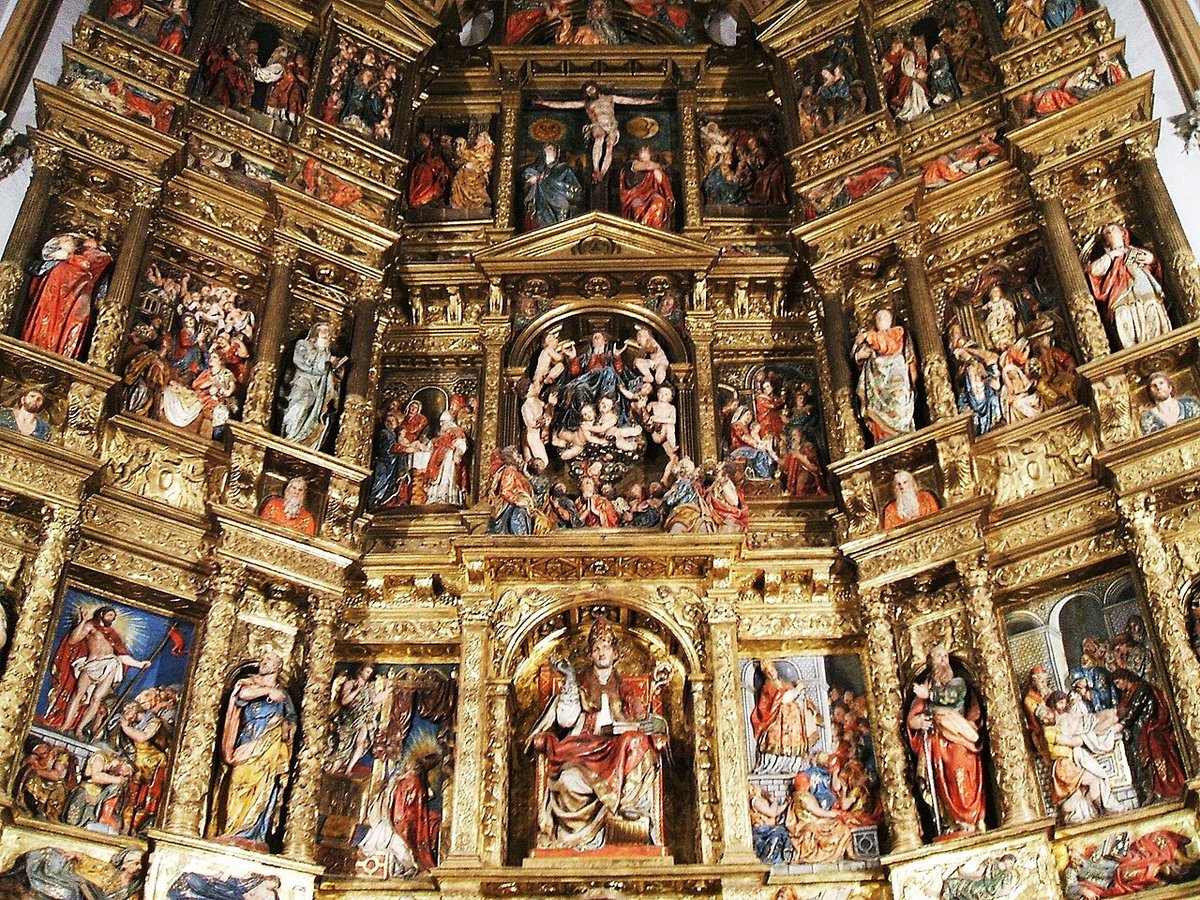
Inside the church, the temperature drops at once. The stone holds the cool even in summer. The dimness shifts when someone opens the south door and a strip of light cuts across the floor towards the main retable.
It is large and gilded, with that deep red still strong in the robes. Juan Martínez de Salamanca began the work in 1575, and other workshops finished it years later. The differences show if you look closely at the faces or the folds of the garments. Each hand seems carved by a different person.
Up close, the wood reveals small cracks and areas where the gold has softened with time. Even so, the whole piece imposes a certain quiet.
It is sometimes possible to go up the tower if someone has the key. That does not always happen. When it does, the wind at the top feels different from the street below. From there, the Ebro plain stretches out in green, and to the south the first dry shapes of the Bardena appear.
Cave houses and an unfinished palace
On Calle Mayor stands the façade of the former Palacio de los Gómara. Two towers and a Baroque doorway built in the 18th century remain. The rest disappeared in the 1970s. The gap is noticeable, as if the façade has been left without a body behind it.
The coats of arms are still sharply defined in the stone. When the sun falls sideways, the figures of the lion and the castle cast a clear shadow on the wall.
About ten minutes on foot towards the northern slope, the cave houses begin to appear. The clay here is soft, and for generations homes were dug directly into the earth. Many of the doors are painted in bright colours, blue, green, sometimes red.
Some of these caves are still used as storage or wine cellars. Others have been restored for living in or staying a few days. If you place a hand on the wall, the coolness inside is immediate, even when the Ribera heat presses hard outside.
August out in the street
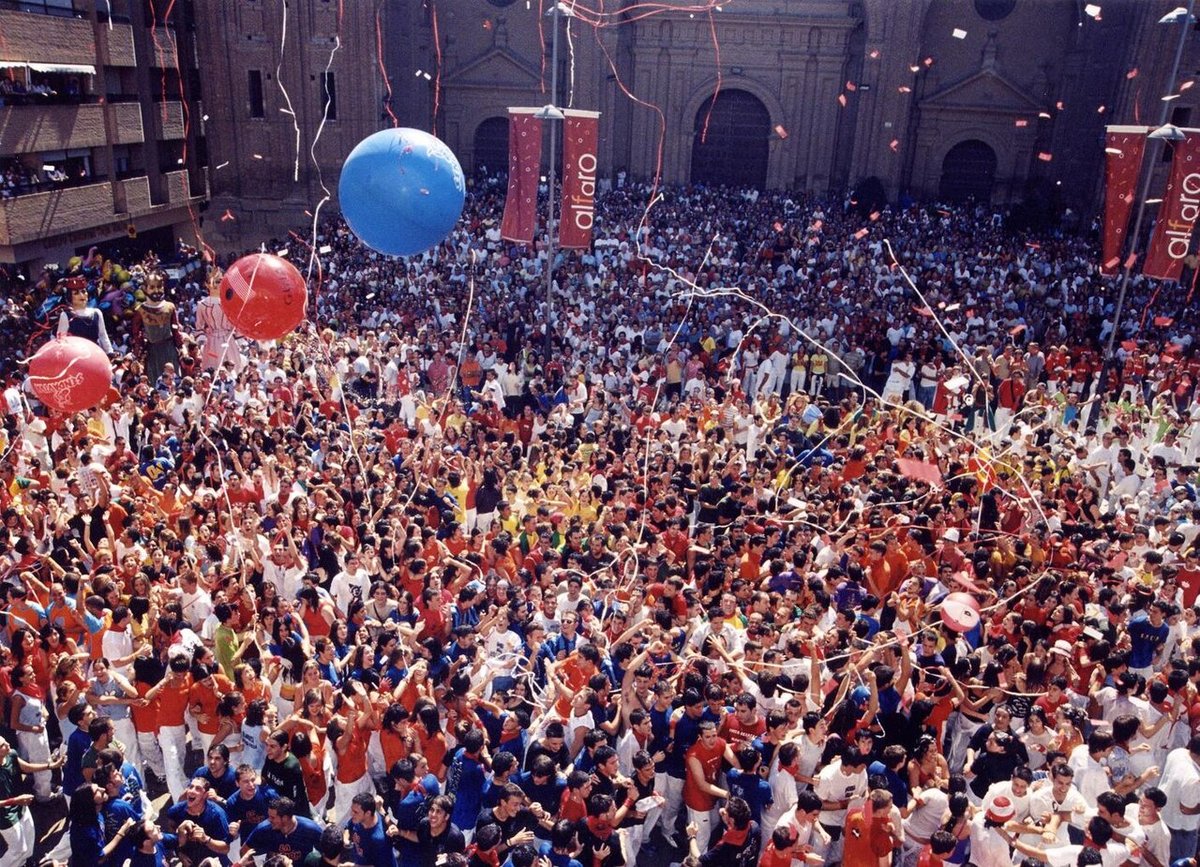
The local festivities usually fall around mid-August and change the rhythm of the village quite a bit. Tables are set out in the street, improvised grills appear, and the smoke from charcoal lingers between the houses as night comes.
There is music, small bull events in the square, and long family meals. It does not have the scale of some better-known Navarrese festivals, yet during those days the population grows noticeably and the noise carries on late.
Anyone who prefers a quieter visit often comes at another time, or, if arriving during the festivities, stays in a nearby town and comes in during the day.
Between the Ebro plain and the Bardena
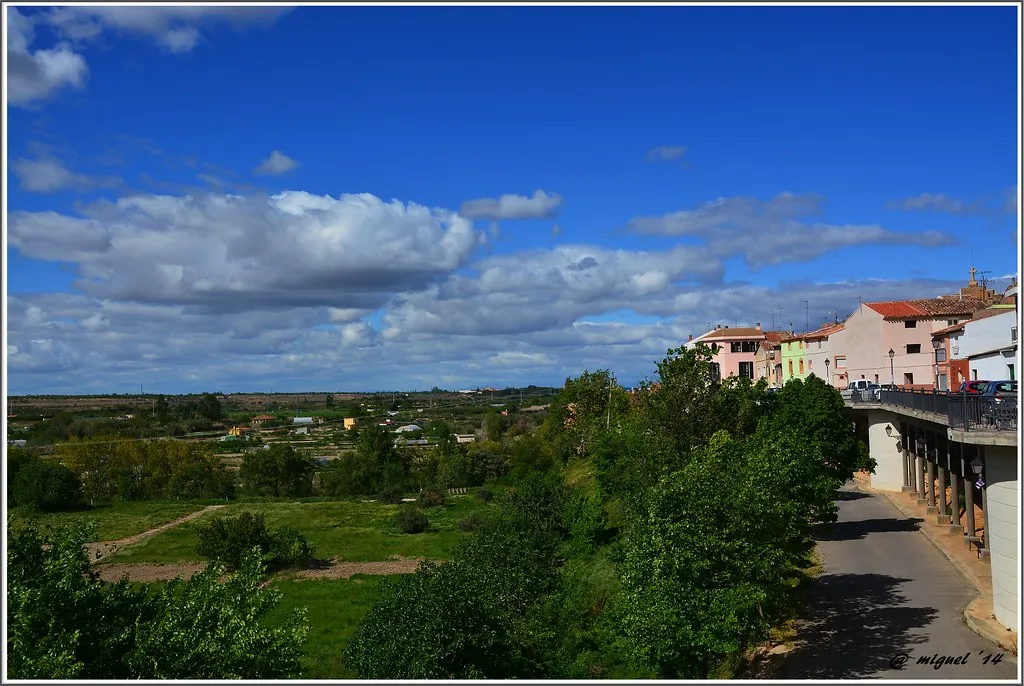
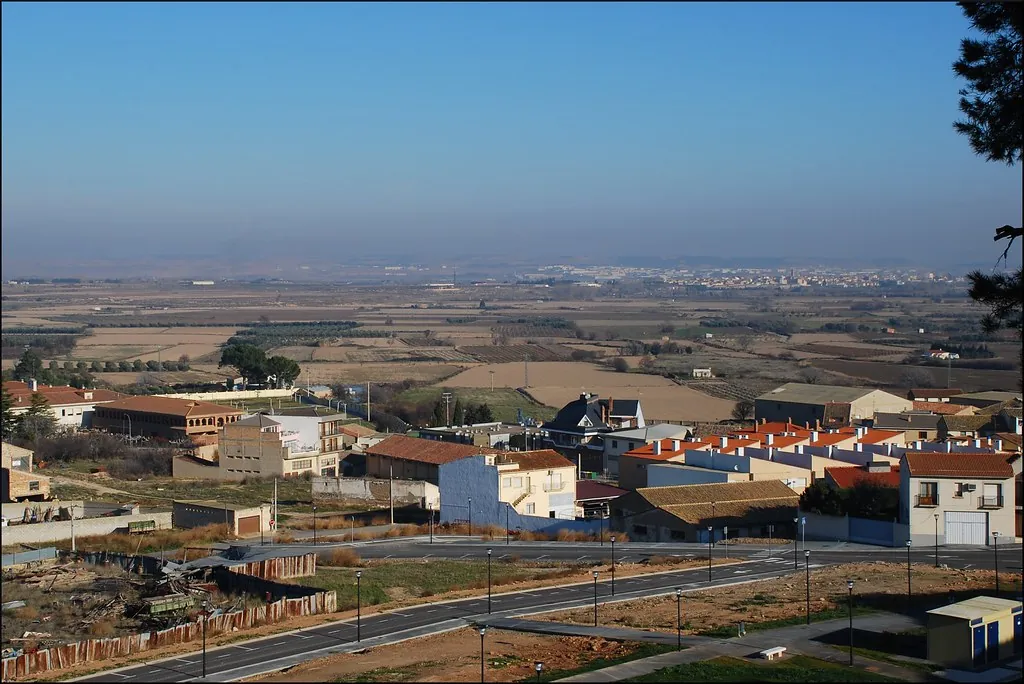
Valtierra sits right on the transition between the irrigated farmland of the Ebro and the dry terrain that signals the Bardenas Reales. The landscape shifts within minutes.
Several agricultural tracks lead south from the village. One of the better-known walks crosses fields and small gypsum gullies before reaching an area where boundaries were once marked with stone pillars. The route is around four or five kilometres and has very little elevation.
In spring, the ground fills with low flowers and the scent of thyme rises whenever someone steps along the path. After heavy rain, some of the gullies carry water for a few hours and the colours of the الأرض change.
Quite a few cyclists pass through on their way to the Bardena. It is worth carrying water from the village, as in that direction there is very little shade and no fountains.
What people eat here
In the village bars, the cooking follows the traditions of the Ribera, based on vegetables and hearty dishes. Ajoarriero, a cod-based dish, usually comes well blended, with hard-boiled egg mixed into the sauce. Cardo con bacalao, combining cardoon and cod, appears often in winter, when the cold settles over the plain.
Migas are prepared when the bread is truly dry, and the smoke from the pan drifts out into the street. For dessert, some households still make pestiños with honey or the village’s typical ring-shaped pastries, which are easier to break by hand than with a knife.
To drink, a rosado from Navarra is the usual choice, often fuller-bodied here than expected.
When to go and what to know
Spring is often one of the most pleasant times. The asparagus fields are in full activity and the Bardena still keeps a hint of green among the ochre tones.
August brings atmosphere and festivities, but also more noise and full accommodation. For those who want to walk the surrounding paths at a slower pace, it is better to look at dates outside those weeks.
On Sunday mornings, the village…