Full Article
about Arruazu
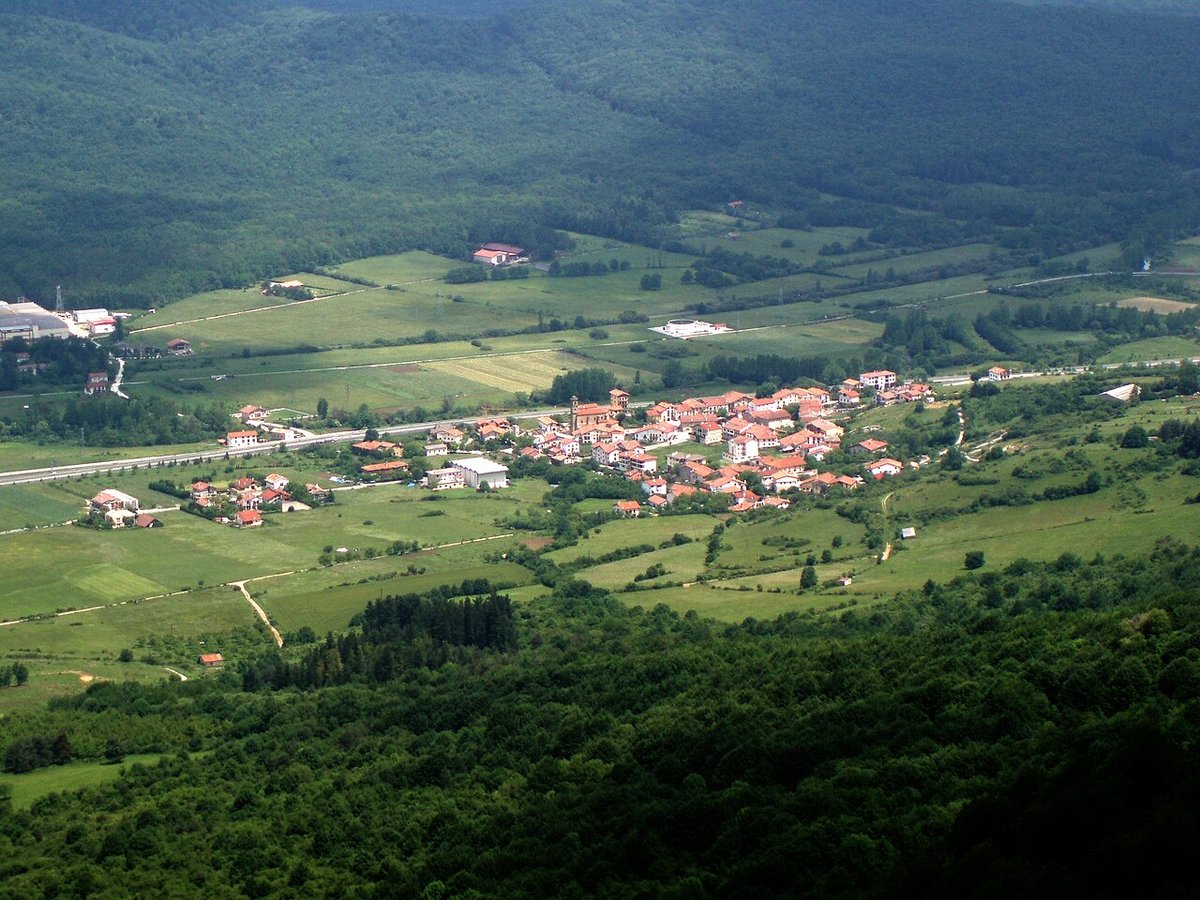
The smallest municipality in Sakana by area, strategically set among mountains with stone hamlets.
Ocultar artículo Leer artículo completo
The church bell strikes twice. Nobody appears. A lone pilgrim zips up a rucksack, steps onto the empty lane and disappears between stone houses, heading west toward the wind turbines that cap the ridge. In Arruazu, population 109, this counts as the morning rush.
A Mid-Mountain Breather at 449 Metres
Most British maps of the Camino de Santiago squeeze the village into a single dot on the stretch between Pamplona and Puente la Reina. That suits the locals fine. Arruazu sits at a modest 449 m in the Sakana valley, high enough for oak and beech to outnumber olive groves yet low enough for winter to drape the hills in damp moss rather than snowdrifts. The altitude matters: nights stay cool even in July, and a September morning can start at 10 °C, so the fleece you nearly left in Bilbao earns its luggage space.
Drivers arriving on the NA-7100 from the A-15 first notice the hush. The road narrows to a single track, hedges give way to dry-stone walls, and the only traffic jam involves two hens and a tractor. Park on the edge of the village; the centre is a no-through warren designed for donkeys, not hatchbacks.
Stone, Tile and the Smell of Firewood
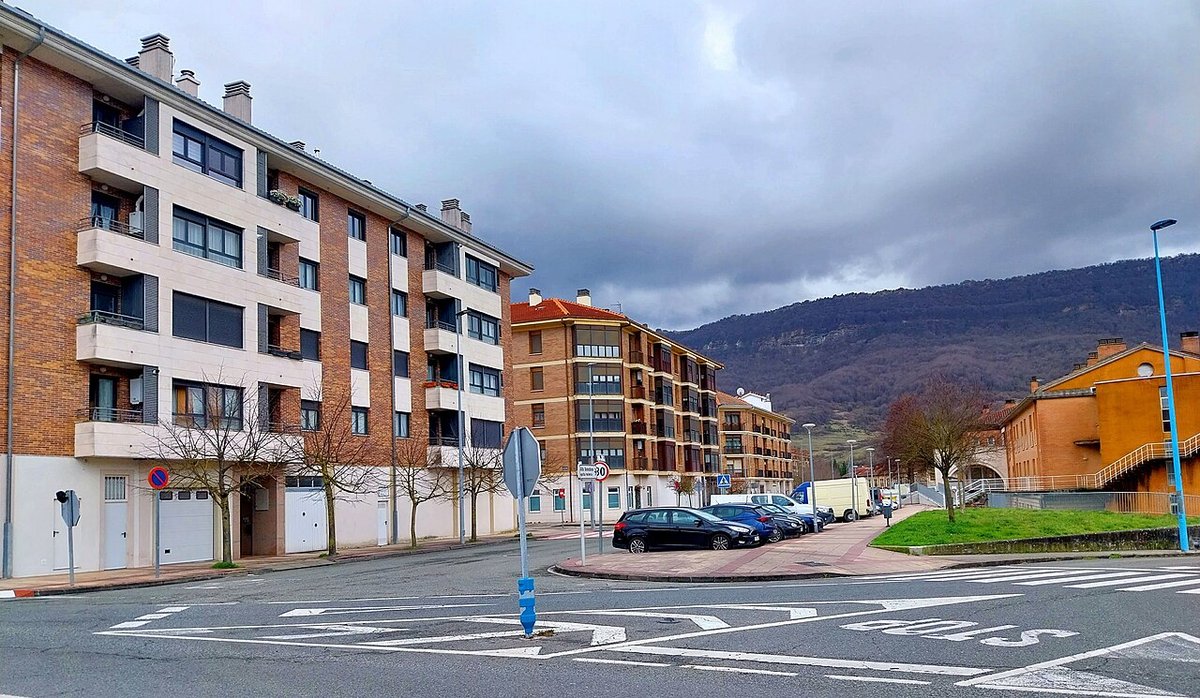
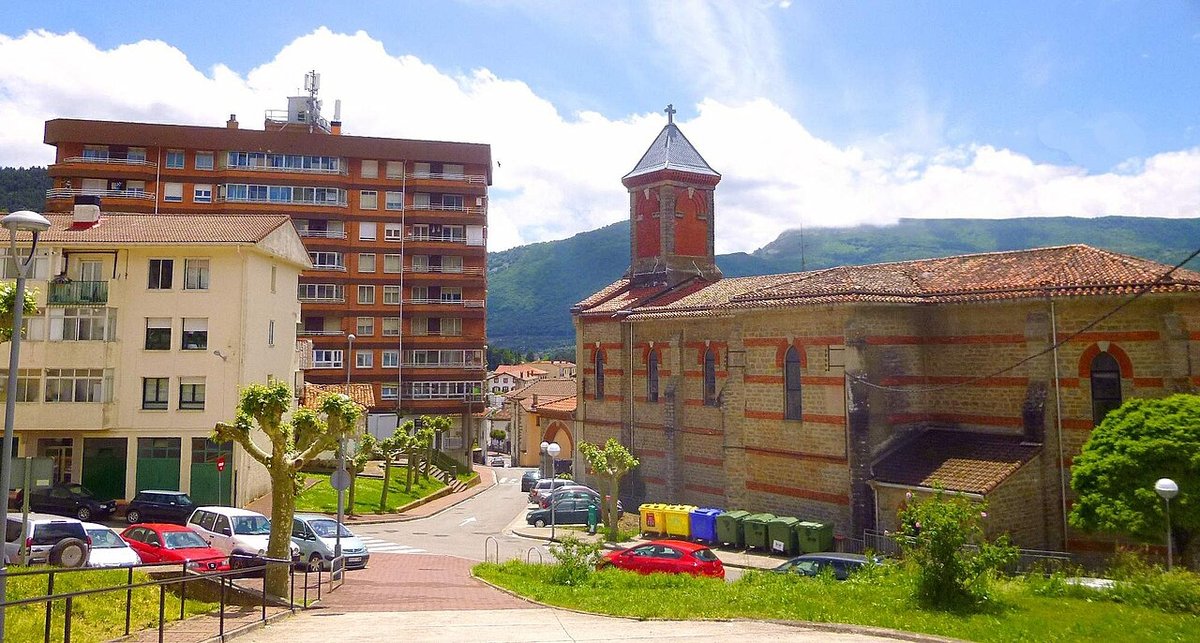
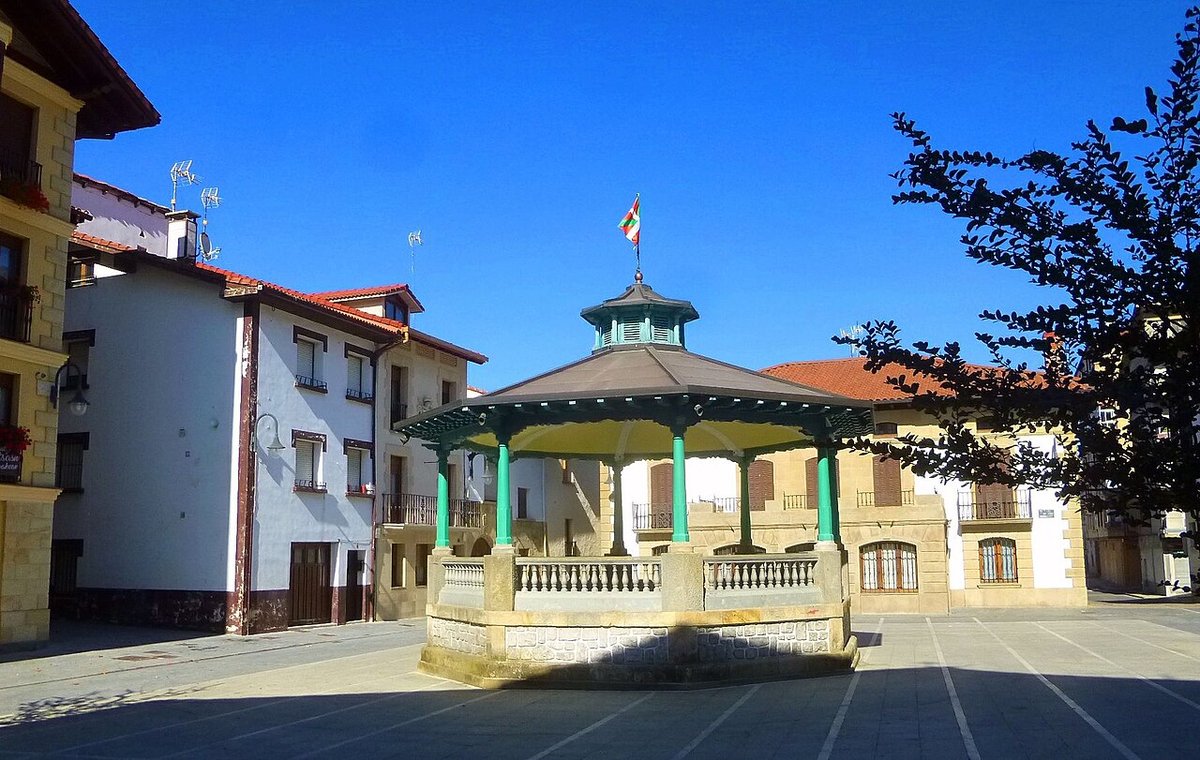
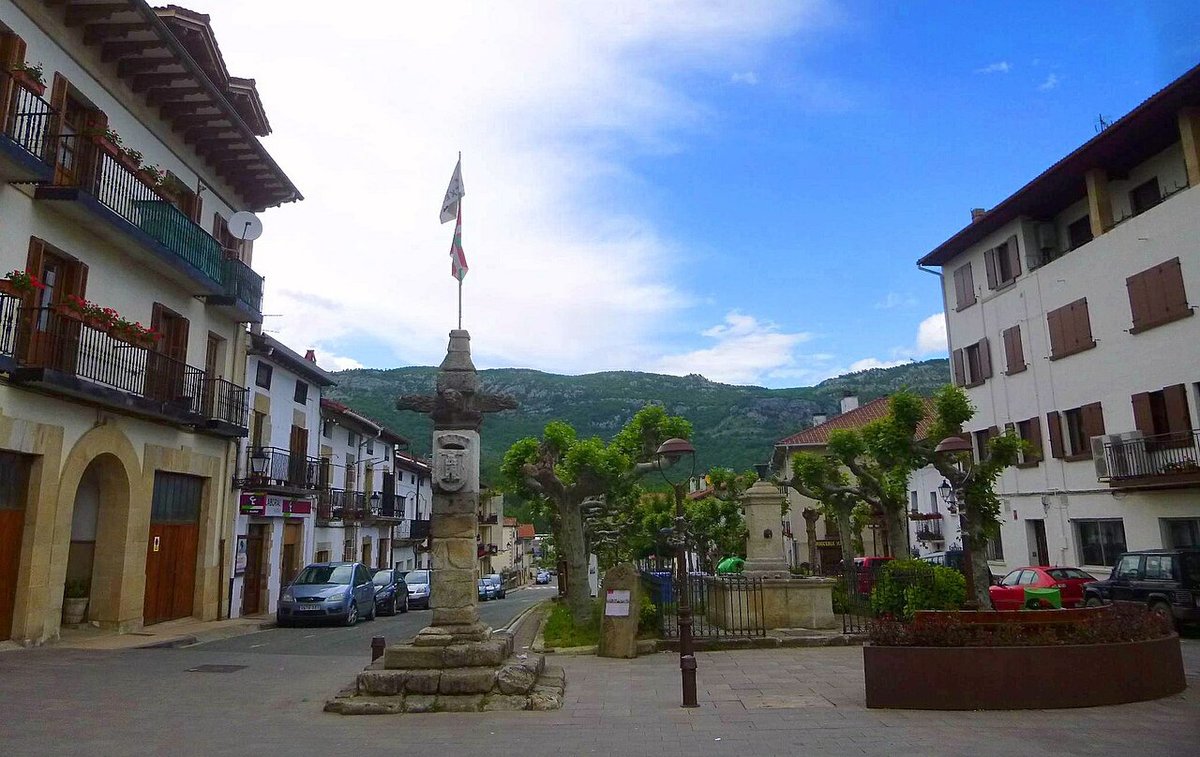
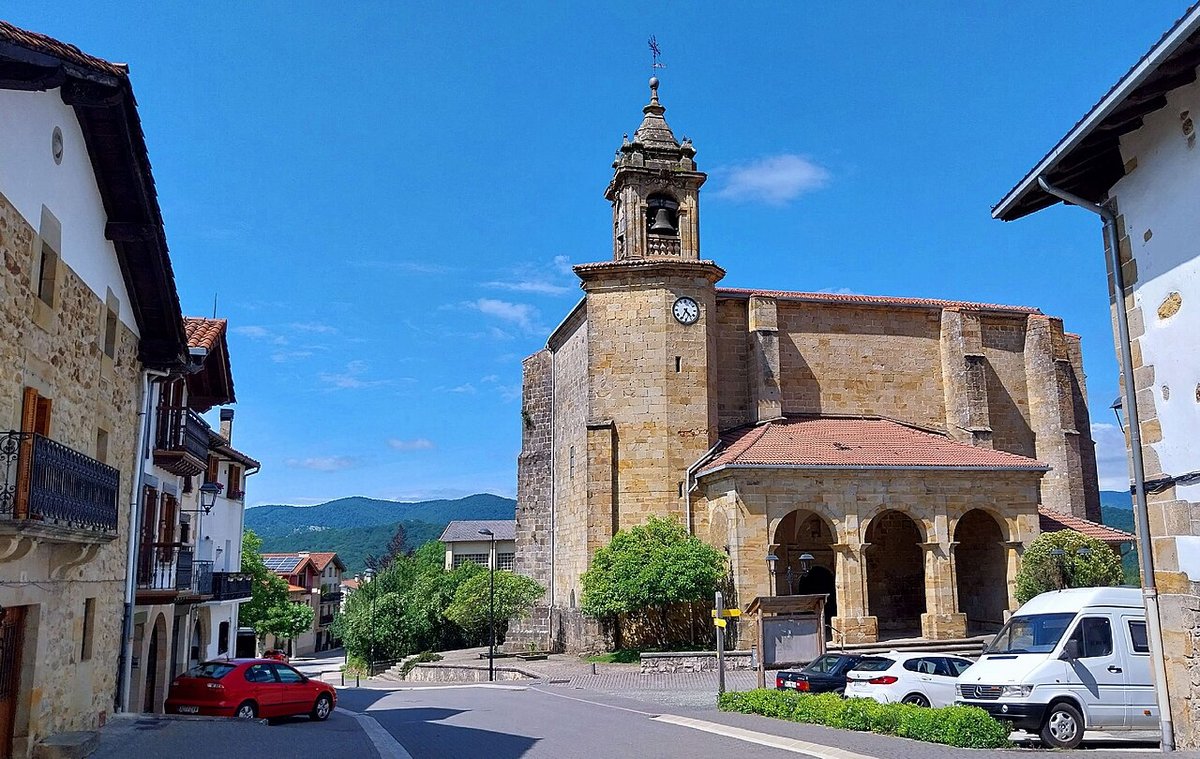
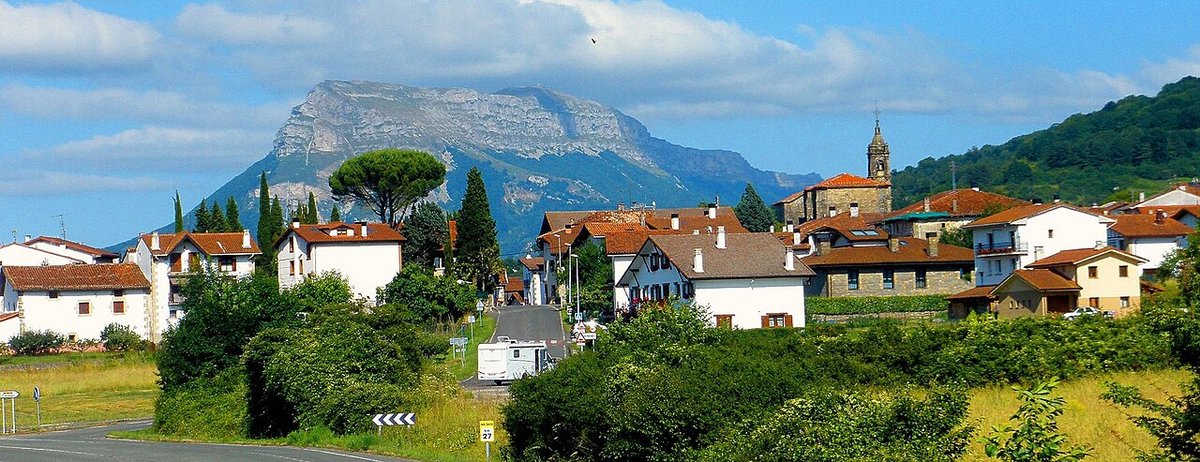
Arruazu measures barely four streets. Houses are built from caramel-coloured stone roofed with curved terracotta, balconies painted the deep green Navarre reserves for woodwork. Logs are stacked with mathematical precision beneath overhanging eaves; a hand-written sign advertises leña 5 € saco. The parish church of San Miguel Arcángel squats at the highest point, its Romanesque base widened in the 16th century after a fire. Try the door—if it’s open you’ll catch a whiff of wax and the faint hum of a refrigerator that keeps altar wine cool. More often it’s locked, but the stone porch still offers the best viewpoint over the valley’s patchwork of meadow and cereal plots.
Wander downhill and you’ll pass Casa Rural Martxoenea, the only place to sleep. Six rooms, all en-suite, heated by pellet stove in winter. Owners Koro and Ángel speak slow, clear Castilian and enough English to explain dinner times. They’ll also sell you a packed lunch—ham and cheese bocadillo, fruit, carton of juice—because there is no shop. Book ahead: during Camino season the place fills with Germans who set alarms for 05:30 and depart in head-torch formation.
Walking Without Way-markers
The village ends where the tarmac ends. From here a web of farm tracks climbs into holm-oak scrub. You don’t need a grand route: simply follow the wide gravel lane past the last orchard, turn left at the ruined hut, and within twenty minutes the view opens to reveal the whole Sakana basin, the railway to Bilbao threading through it like a toy-train set. Height gain is gentle—about 120 m—enough to stretch Camino-cramped calves without requiring hiking poles.
After rain the clay sticks to boots like wet biscuit. Locals strap gaiters over their everyday trainers; visitors in pristine white Sauconys learn fast. If the sky looks moody, turn back—there are no cafés on the ridge and mobile signal vanishes once you drop behind the crest.
Autumn brings mushroomers. The regional government publishes a list of permitted species; pick the wrong níscalo and the fine starts at €300. Better to photograph the scarlet fly agaric and buy a plate of revuelto de setas at the bar later—scrambled eggs with wild mushrooms, mild enough for even the fussiest British palate.
One Bar, No Cashpoint, Total Silence by Ten
Spanish villages of this size usually lose their last business within a decade. Arruazu hangs on by serving exactly what a passing pilgrim needs: coffee, menú del día, and a bed. The single bar opens at 07:00 for tortilla slices and café con leche; lunch runs 13:30–15:30, dinner 20:00–21:30. Expect grilled chicken or pork chips, salad from the garden out back, and a half-bottle of Navarre rosé for €10. When the shutters come down the village switches off. Bring cash—there’s no ATM, cards are accepted “cuando hay cobertura,” and coverage is a philosophical concept here.
If the bar is closed (Tuesdays in low season, random family weddings), the nearest meal is 6 km away in Zariquiegui, uphill. British motorists who assume a rural Spanish Tuesday still means somewhere to eat have been known to survive on crisps and emergency Kendal Mint Cake.
Seasons: Mud, Thaw or Thirst
April and May colour the slopes acid-green; cowslips appear along the verges and temperatures sit in the high teens. September repeats the trick, swapping flowers for blackberries. These are the comfortable months, when paths stay firm and daylight lingers long enough for a post-lunch circuit.
July and August turn the valley into a sun-trap. By 14:00 the thermometer nudges 32 °C; walking is either an early-mission or late-evening affair. The compensation is night-time: sit outside Martxoenea and you’ll need a jumper by 22:00, a novelty after sweaty Pamplona afternoons.
Winter is grey, damp and thoroughly alive. Fires smell of beech, the church porch shelters hunting harriers, and the Camino hosts its hard-core brigade in full waterproofs. Roads rarely ice over, but the clay paths become ankle-deep glue. Pack boots or accept a squelchy penance.
Getting Here, Getting Out
Public transport stops at Alsasua, 12 km north on the Madrid–Bilbao railway line. From there a taxi costs €25–30; book the same number for the return or you’ll be thumbing lifts with tractors. Drivers should leave the A-15 at kilometre 72, follow signs for Zariquiegui, then fork toward Arruazu just after the wind-farm access road. The turn-off is unsigned on some sat-navs—look for a stone shrine flanked by red and white Camino shells.
Leaving is easier: the Camino itself provides a ready-made exit. Follow the scallop shells westward and you’ll reach Uterga in two hours, Puente la Reina by lunchtime. If knees object, phone Taxi Sakanako (0034 609 570 747) the night before; they’ll collect from Martxoenea and deposit you back on the trail or at Pamplona bus station.
The Honest Verdict
Arruazu will never compete with the cathedral squares of bigger Navarran towns. It offers no souvenir shops, no evening paseo, no craft-beer taproom. What it does provide is a place to stop rushing. The village functions as a diaphragm in the Camino’s long inhale: breathe out here, enjoy the smell of woodsmoke, walk a ridge without meeting anyone, and remember why you started travelling in the first place. Just bring cash, book dinner and don’t expect Wi-Fi to stream the match. If that sounds like deprivation, stay in Pamplona. If it sounds like relief, Arruazu will give you exactly what you need—then close the door and let the silence settle.