Full Article
about Bakaiku
Linear village in the Burunda valley; it preserves ancestral traditions and vernacular Basque architecture
Hide article Read full article
Bakaiku en la Sakana
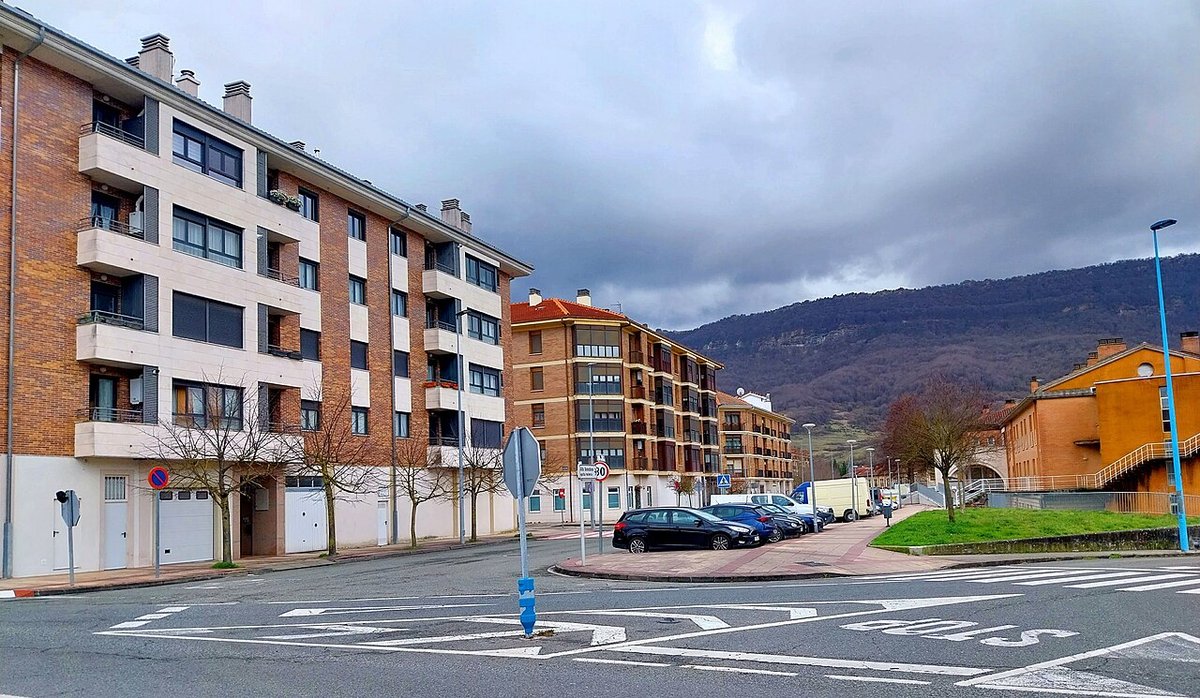
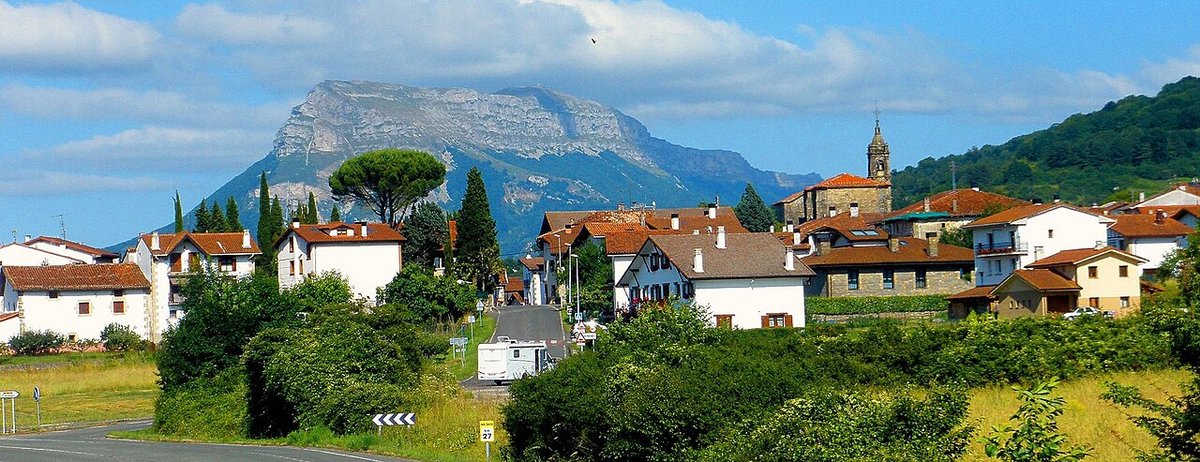
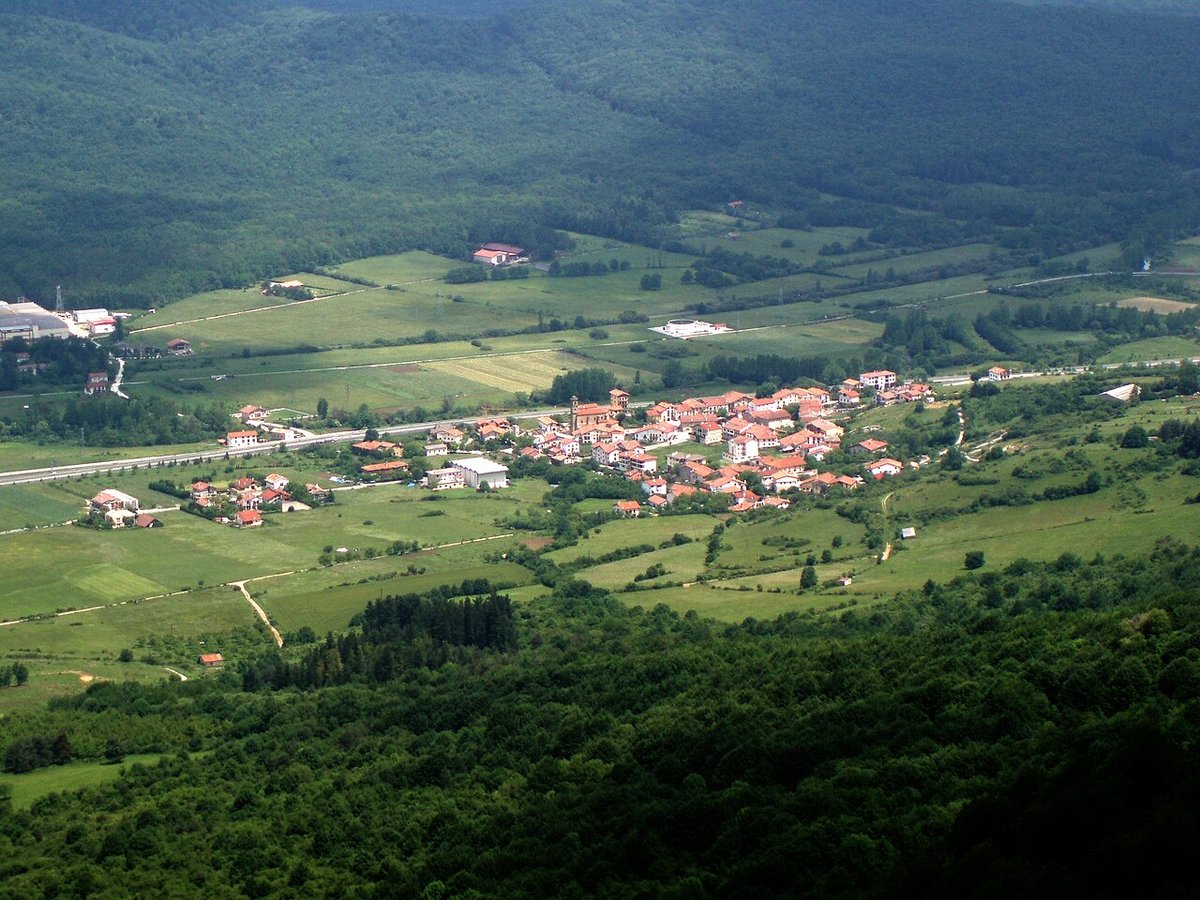
Bakaiku se encuentra en el extremo occidental del valle de Sakana, lindando ya con Álava. El pueblo se apoya en la ladera, entre prados y manchas de hayedo que anuncian la subida hacia Urbasa. Con poco más de trescientos habitantes empadronados, conserva la forma y el pulso de las pequeñas localidades ganaderas de este corredor: casas apiñadas, huertas cerca y la presencia de los montes circundantes siempre presente.
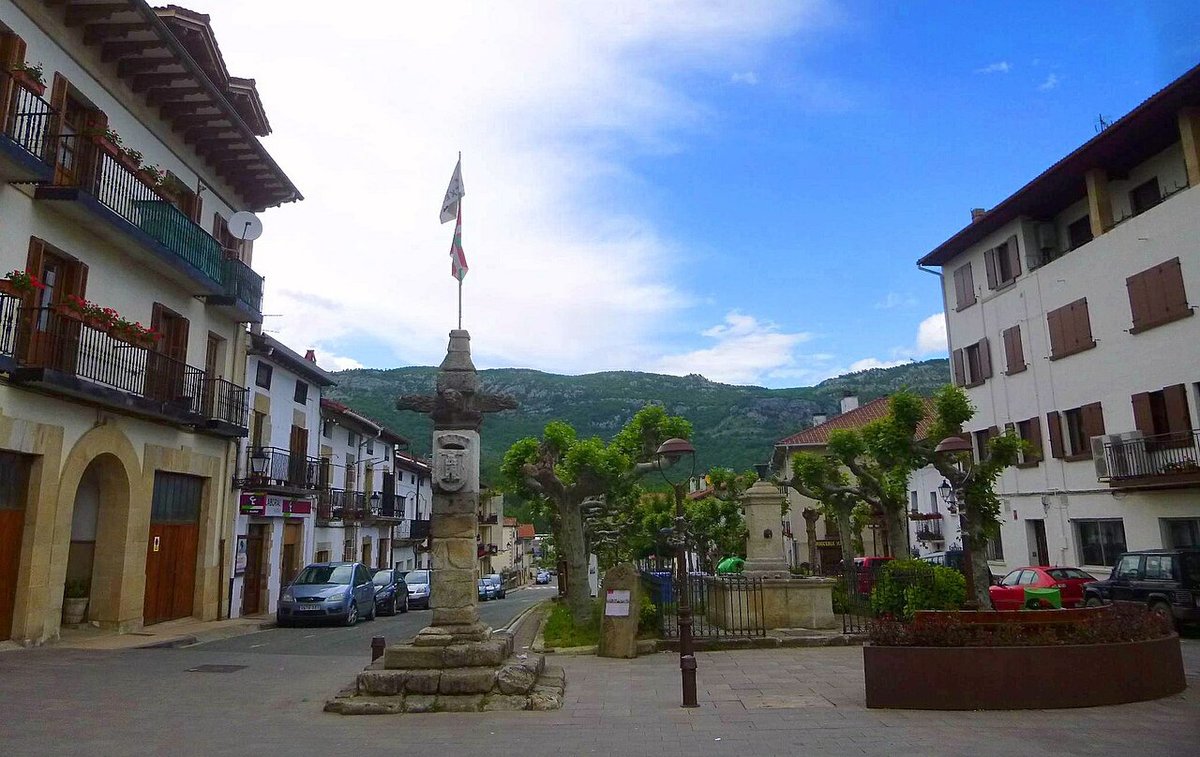
Casi todo se organiza en una única calle principal. De ella salen travesías hacia cuadras, campos y caminos más antiguos que llevan generaciones uniendo la zona. No hay grandes edificios civiles ni plazas monumentales. Para entender Bakaiku conviene mirarlo como parte del paisaje más amplio del valle, no como un lugar definido por sus monumentos.
La iglesia de San Juan Bautista
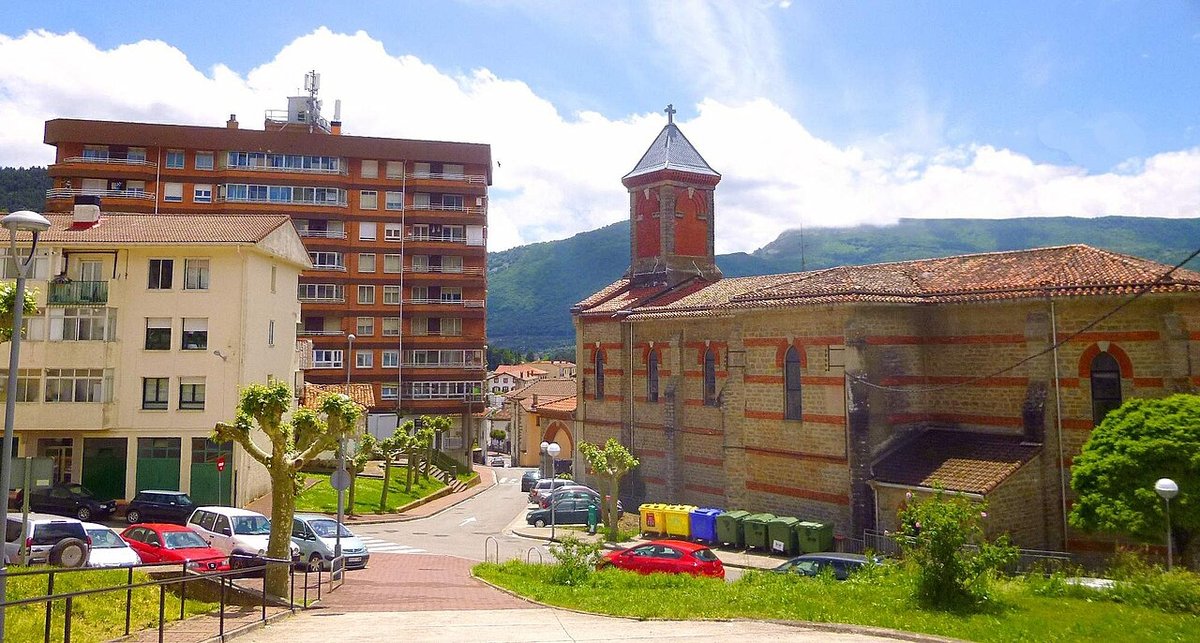
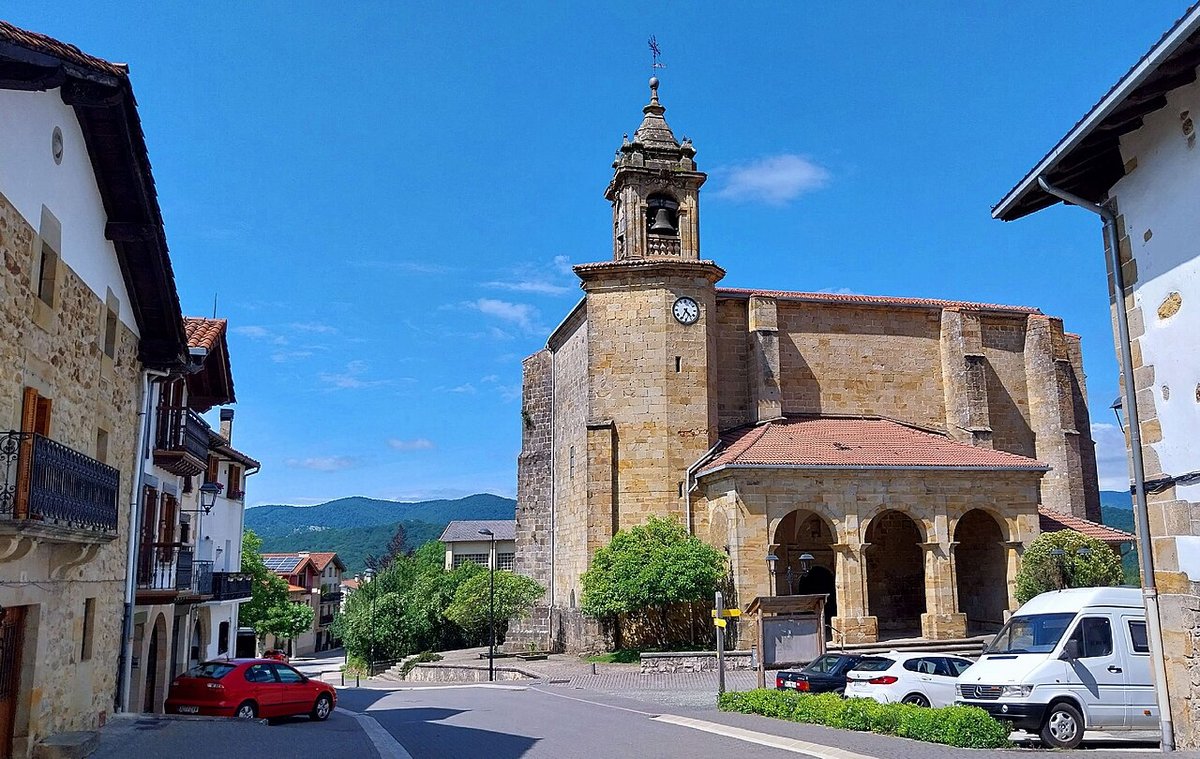
La iglesia de San Juan Bautista ocupa el centro del pueblo. La fábrica actual suele datarse en el siglo XVI, aunque con reformas posteriores. De piedra y diseño bastante sobrio, se alza con modestia sobre las casas, y su campanario marca la silueta cuando se llega por la carretera del valle.
En Sakana, las iglesias suelen funcionar a la vez como punto de encuentro y referencia visual, y esta no es una excepción. El pequeño espacio frente al templo sirve de lugar común donde los vecinos se cruzan al salir o volver de los campos. Refleja cómo la vida diaria sigue girando en torno a rutinas conocidas y a la proximidad.
Casas hechas para el trabajo y el tiempo
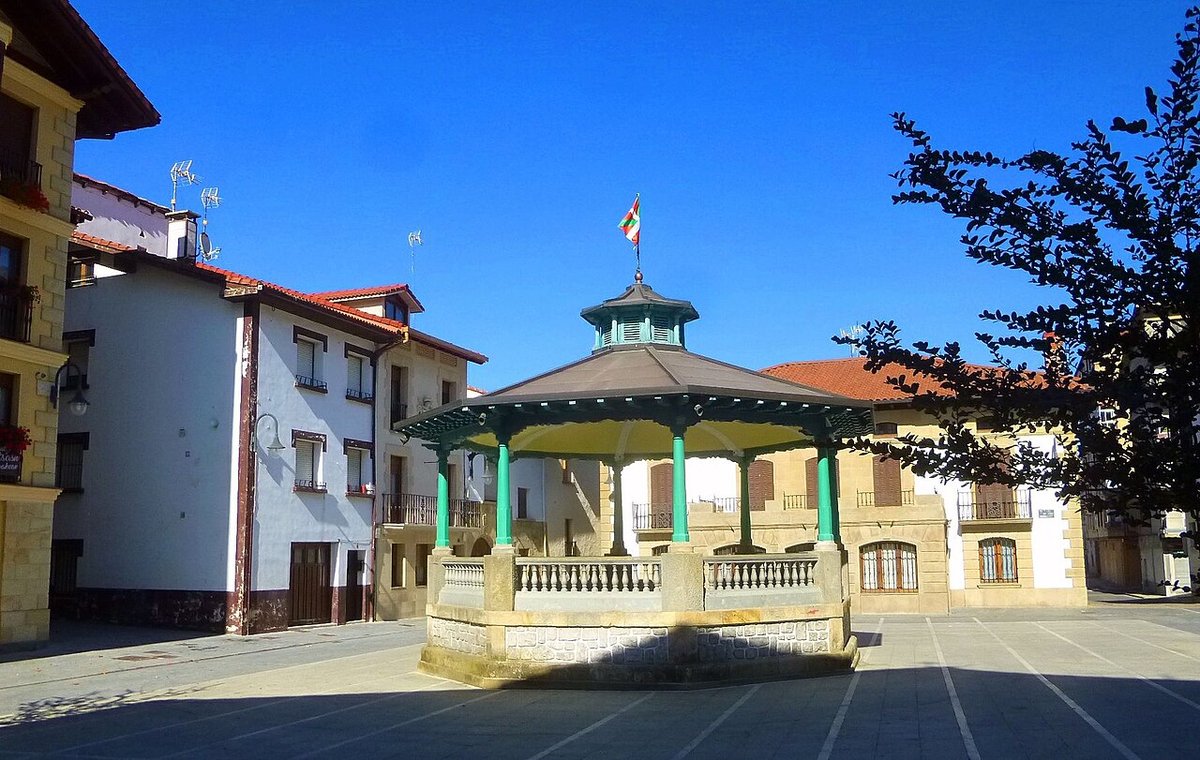
La arquitectura sigue los patrones habituales del valle. Muros de piedra gruesos, tejados a dos aguas y aleros amplios están pensados para aguantar la lluvia frecuente. Algunas viviendas conservan balcones de madera o galerías abiertas, normalmente orientadas al sur o al este para aprovechar la luz.
Son frecuentes los portones grandes en las plantas bajas. Antes daban paso a carros, herramientas y ganado. Incluso donde las reformas han modernizado los interiores, la conexión entre la vivienda y el trabajo agrícola sigue visible en las fachadas. El pueblo no presenta un aspecto uniforme ni pulido, sino más bien vivido, donde las necesidades prácticas han guiado siempre la construcción.
Caminos que suben al monte
Salir del casco urbano lleva rápido a una red de senderos que trepan hacia el bosque cercano. Son rutas que existen desde hace siglos, uniendo bordas, pastos y zonas de leña. Hoy se siguen usando, ya sea para paseos cortos o para adentrarse más en la sierra.
El paisaje alrededor mezcla prados abiertos con hayedos y robledales. Los cambios estacionales se notan aquí con fuerza. En otoño, el cambio de color se extiende por esta parte de la Sakana, alterando el tono de las laderas. En invierno, el suelo suele estar húmedo y algunos tramos pueden volverse resbaladizos, algo común en todo el valle.
Estos caminos ayudan a entender cómo encaja el pueblo en su entorno. No son algo ajeno a la vida diaria, sino parte de una relación antigua entre las personas, el ganado y la tierra.
Ritmos cotidianos y una visita breve
La vida en Bakaiku sigue un calendario rural. El verano trae las fiestas mayores, cuando vuelven muchos vecinos que residen fuera. El resto del año, el ritmo es más tranquilo y acorde con las tareas del campo.
La cocina casera sigue ligada a lo que da la tierra. Verduras de temporada, embutidos y quesos de la zona forman parte de las comidas diarias. No es una gastronomía pensada para el visitante, sino que refleja los hábitos locales y cierta continuidad.
El núcleo del pueblo se recorre en poco tiempo. Con media hora basta para hacerse una idea de su trazado, aunque vale la pena alargar el paseo por los caminos que salen del casco. Es ahí donde se ve con más claridad la relación entre las casas y el paisaje de la Sakana.
Conviene calzado cómodo si se piensa recorrer pistas o senderos. Tras varios días de lluvia, aparece el barro con facilidad y puede dificultar el paseo.
Bakaiku queda a un lado de la N-240, la vía principal que atraviesa el valle de Sakana entre Pamplona y Vitoria. Desde esta carretera, el acceso es rápido y directo. No suele ser una parada larga por sí sola, pero encaja bien en una ruta más amplia por el valle, combinada con pueblos cercanos o una caminata por el monte. Una o dos horas suelen bastar para recorrer el centro y dar un breve paseo por los alrededores.