Full Article
about Irañeta
Small village at the foot of San Miguel de Aralar; privileged setting of forests and meadows
Hide article Read full article
A village that slows things down
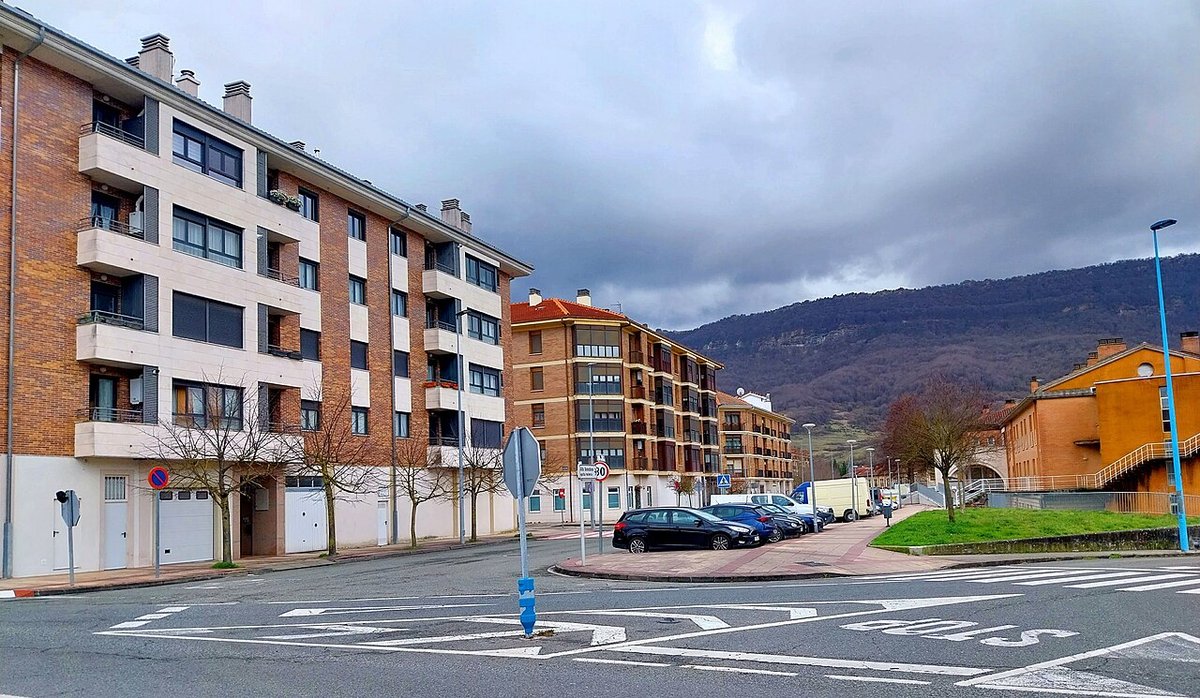
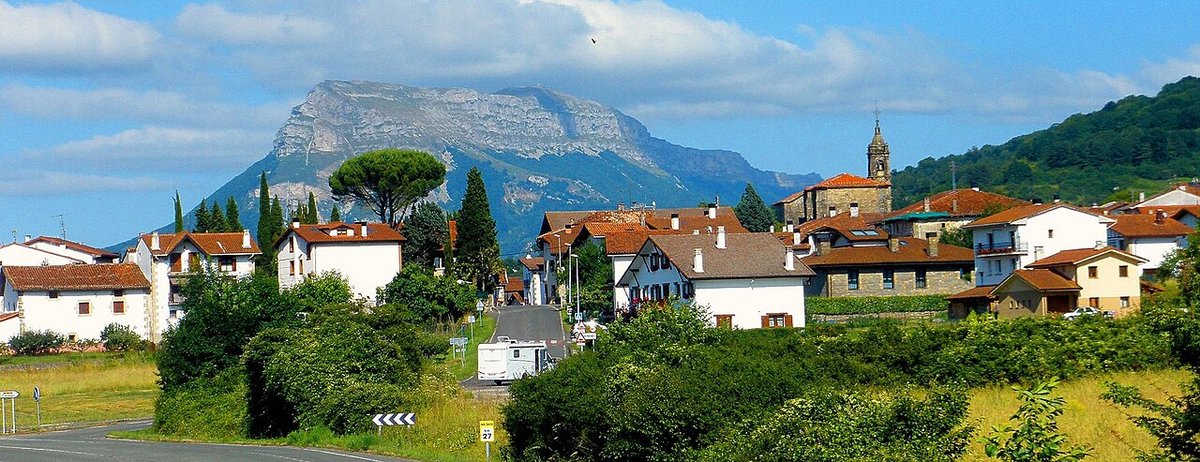
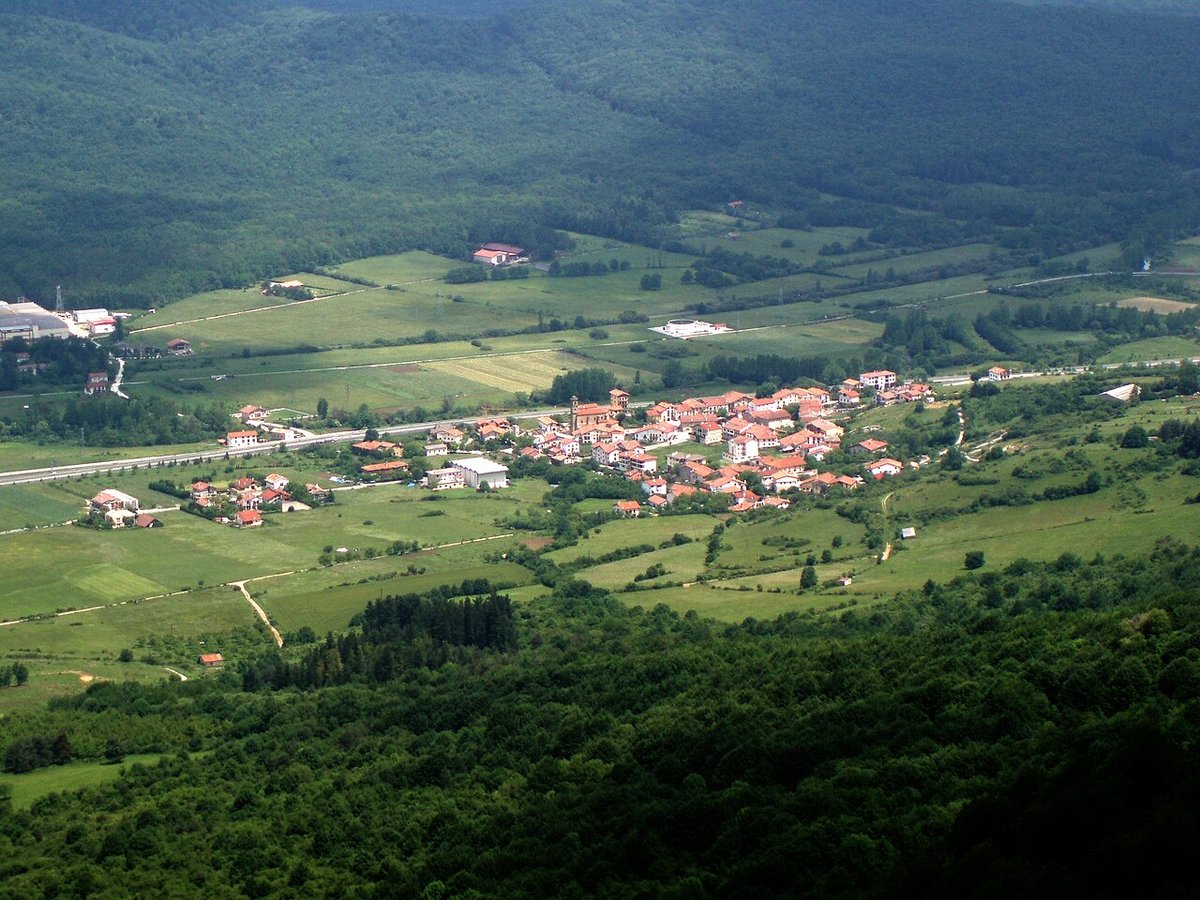
Some places work as viewpoints. Others work as a pause. Irañeta sits firmly in the second group. You arrive, park the car, and within minutes it becomes clear that nobody here is in a hurry. Around 170 people live in the village, and the rhythm feels closer to that of a large farmhouse community than a destination shaped around visitors.
The surrounding landscape fits neatly with what many imagine when they think of a Navarrese valley. Open meadows stretch out from the houses, dirt tracks slip quietly between them, and small patches of woodland appear without drawing attention. Stand still for a moment and the atmosphere settles in: the distant sound of a cowbell, birds moving somewhere out of sight, and very little else. This is not a place that chases dramatic views. It is somewhere that helps make sense of how life here has unfolded over decades.
The centre and its quiet details
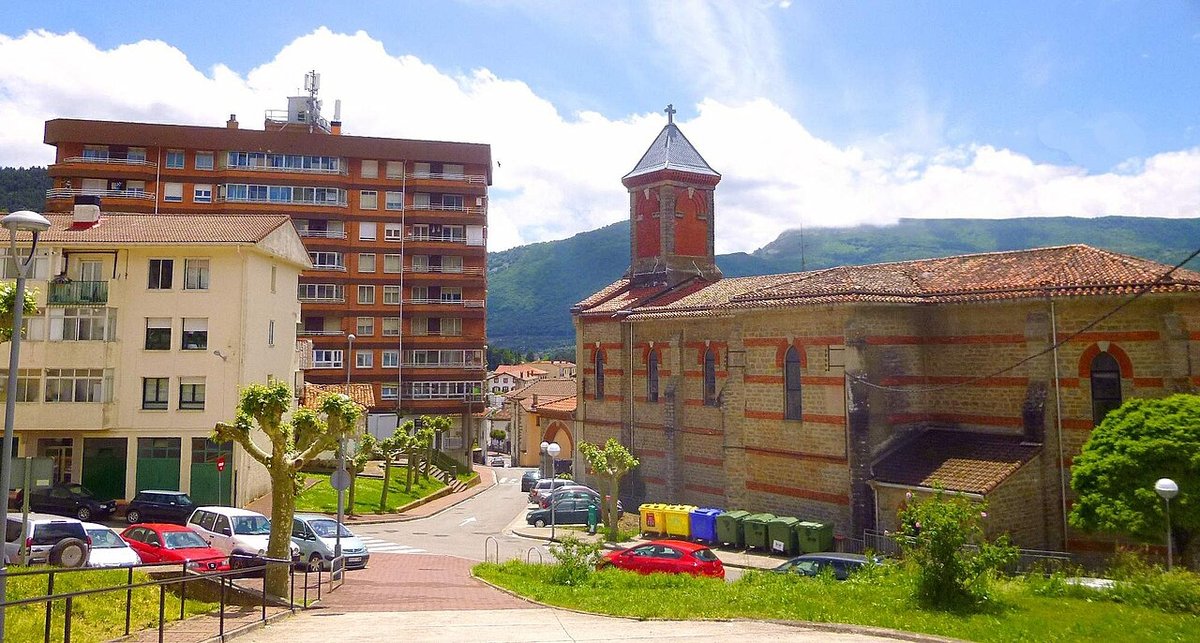
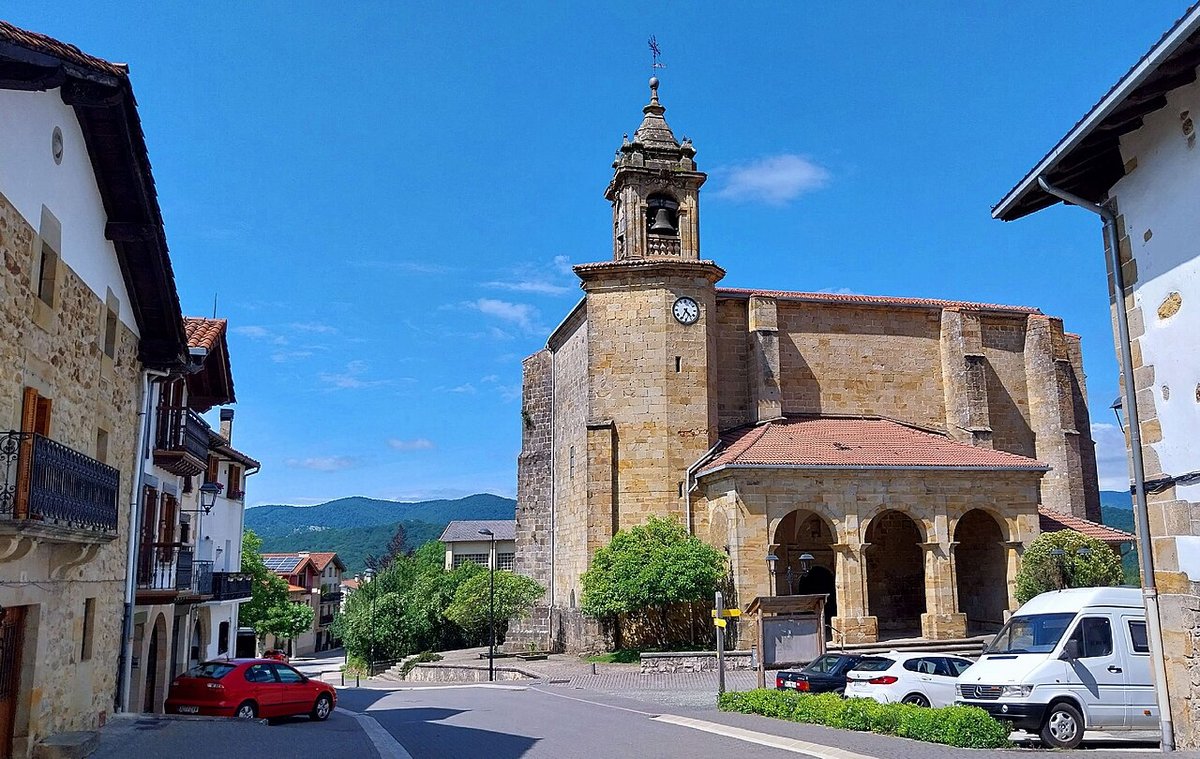
At the heart of Irañeta stands the parish church of San Martín. It is not large or elaborate. Built in stone, it has the restrained, practical feel common to many rural churches in Navarra. The priority here was longevity rather than decoration, and that shows in its solid, unembellished presence.
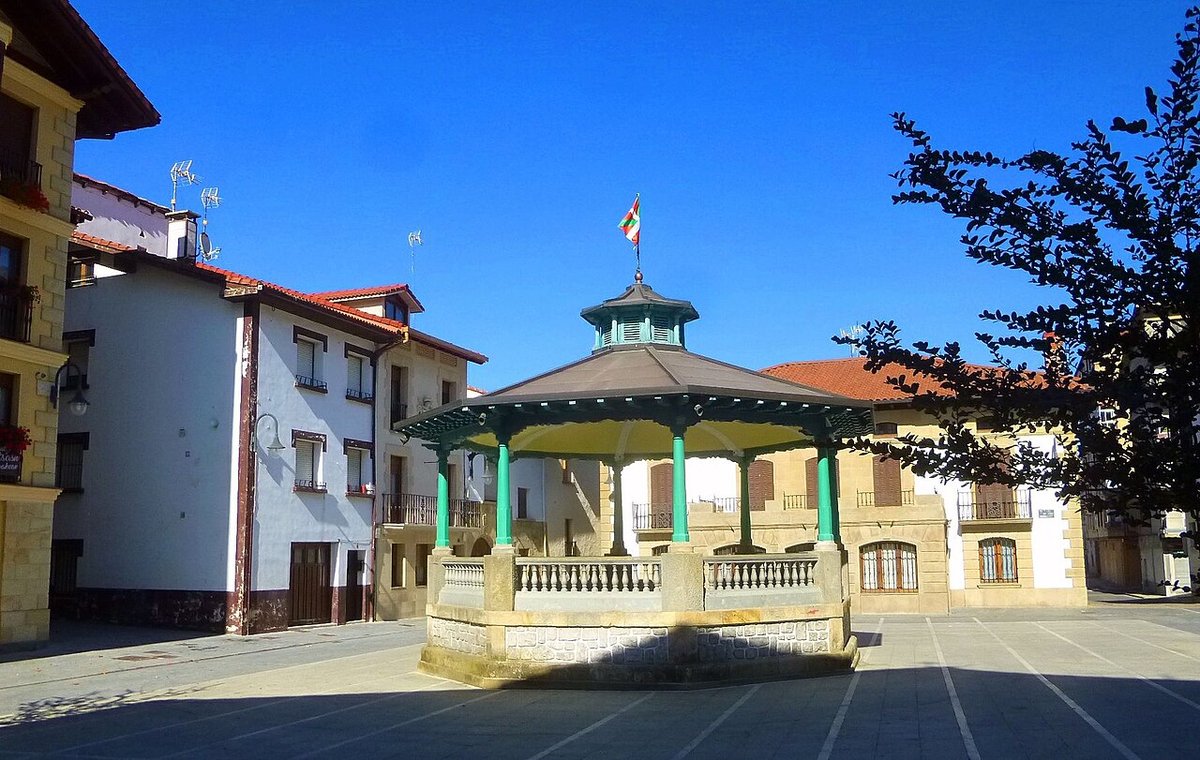
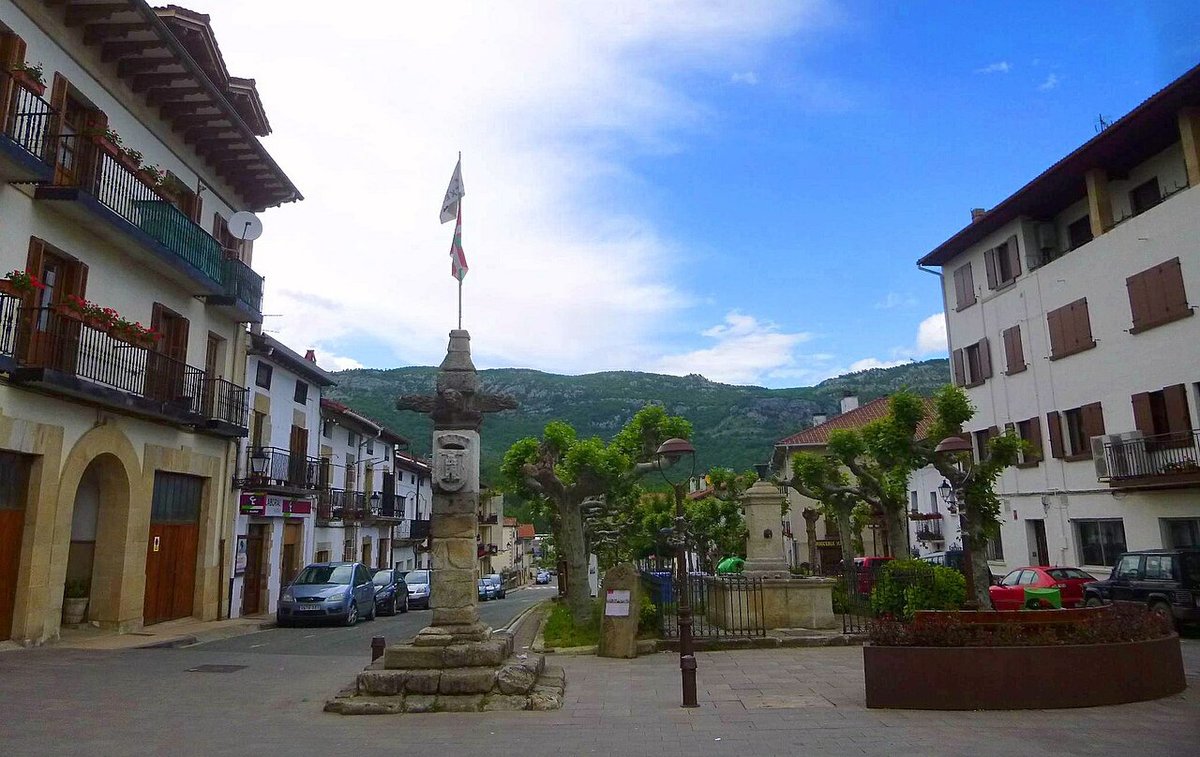
Around it, the houses form a coherent whole. Stone walls, sloping roofs, and simple balconies define the look of the village. Nothing feels designed to attract attention. These are homes built to withstand damp winters and calm summers. Walking through the two or three main streets does not take long, yet there is enough to notice if you slow down. Old wooden gates, small vegetable plots pressed up against the houses, and chicken coops still in use all hint at everyday routines that continue much as they always have.
The appeal of Irañeta does not rest on a single landmark. It lies in the overall picture and in the modest scale of everything. A short stroll is enough to reach the edge of the village, where the last houses give way almost immediately to open fields.
Walking out into the valley
The most natural thing to do in Irañeta is to head out on foot. Rural paths begin right from the village and link it with farmland and other small settlements scattered across the Sakana valley, a long corridor in western Navarra known for its agricultural landscape.
These are not routes marked every few metres with signs. They are traditional agricultural tracks that have been used for generations. Walking here is straightforward. The terrain is gentle and the slopes are rarely demanding, making it easy to move at a relaxed pace without watching the clock.
The setting shifts subtly as you go. Meadows dominate much of the route, broken occasionally by stretches of low woodland. Along the way, small details appear: a simple fountain, a junction marked by a stone cross, or a bend in the path that opens up a slightly wider view of the valley.
For anyone who enjoys listening as much as looking, the area offers a steady background of sound. There is nothing dramatic about it, yet it is varied enough to hold your attention. Sit on a low wall for a while and the layers become clearer, especially if you are used to busier places where these quieter sounds are easily missed.
Making the most of a short stop
Irañeta is quick to explore, and that is part of its appeal. Within an hour, it is easy to walk through the core of the village without any effort.
A simple plan tends to work best. First, take a slow loop through the streets, noticing the details that give the place its character. Then choose one of the paths that lead out into the countryside. A half-hour walk outward and another half-hour back is enough to get a good sense of the surroundings.
It works well as a pause during a wider journey through Sakana. The experience is similar to stopping at a viewpoint you had not planned to visit, only to find it becomes one of the calmer moments of the day. Here, instead of a dramatic panorama, the reward is a quieter understanding of rural Navarra.
Before you go
It is worth setting expectations. Irañeta is not a place that will fill an entire weekend if you stay only within the village. Its interest lies more in the rural atmosphere than in a long list of sights.
The same applies to walking routes. The surrounding area offers pleasant walks through fields and patches of low woodland, but longer mountain excursions are usually found elsewhere in the valley. Irañeta sits in a gentler part of the landscape.
Even so, it works very well as a short stop. Step out of the car, walk for a while, take in the stillness of a small village, and then continue your journey with the sense of having seen a very everyday side of Navarra.
When to go and how to get there
Spring and early autumn are often the most rewarding times to visit. The meadows are green and the landscape shows more contrast. Summer can also be a good option for walking, as long as the middle hours of the day are avoided.
Winter changes the atmosphere quite a bit. Fog is more common and the days are shorter. For those who enjoy very quiet places, it has its own appeal, with the village taking on a slower, almost drowsy feel.
From Pamplona, the drive takes a little over half an hour along the road that runs through the Sakana valley. Once you arrive, everything is done on foot. The village is small and traffic is almost non-existent. You park, take a few steps, and you are already inside Irañeta.