Full Article
about Lakuntza
A key industrial and livestock town in Sakana, known for its livestock fair and mountain setting.
Hide article Read full article
A village shaped by a valley
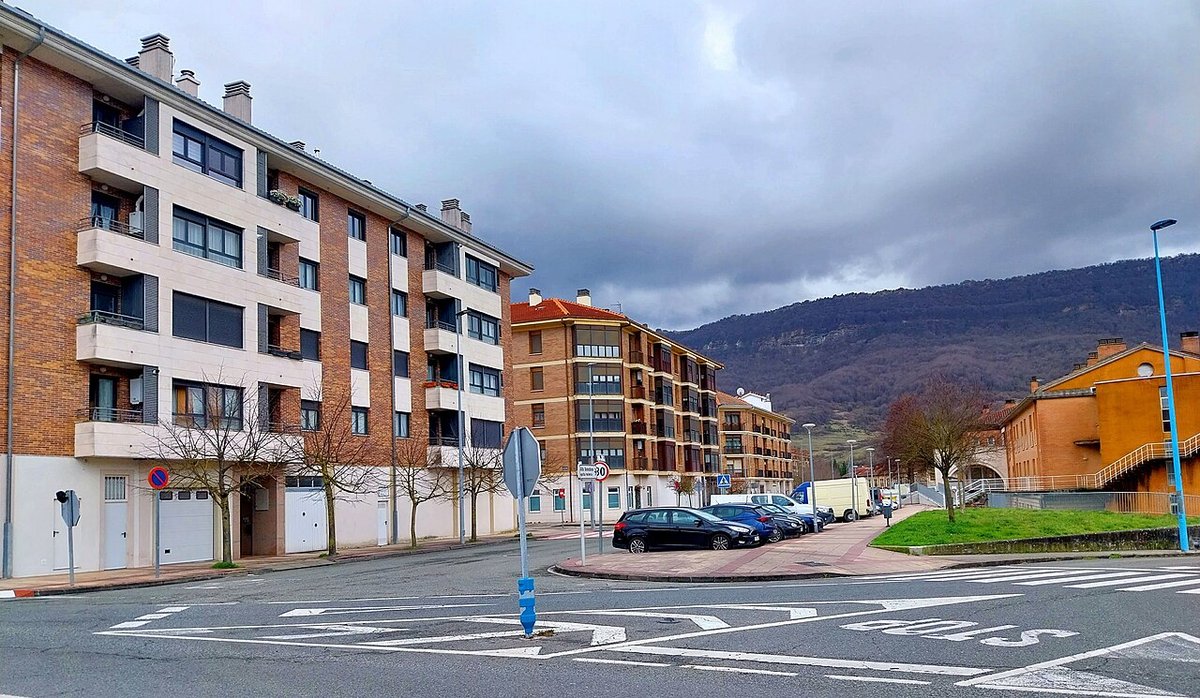
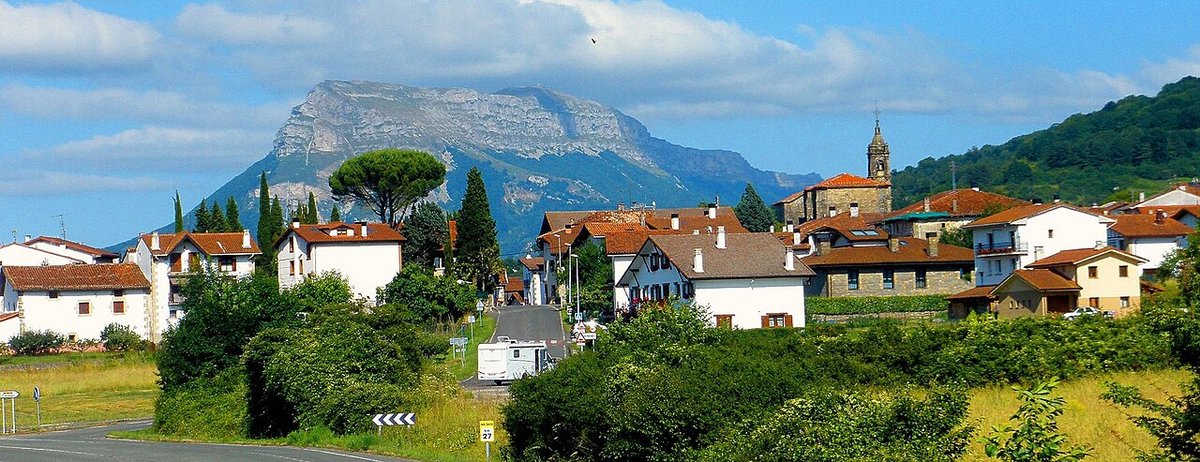
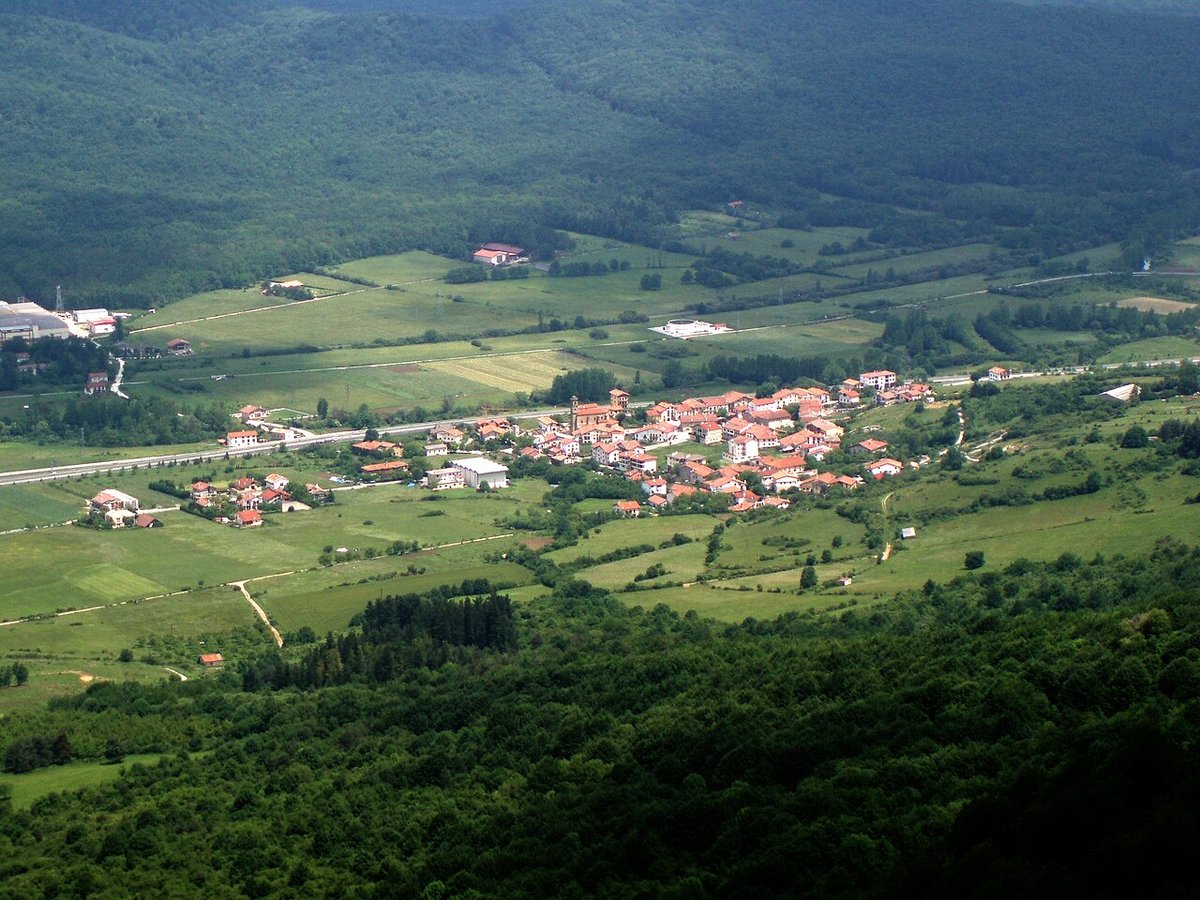
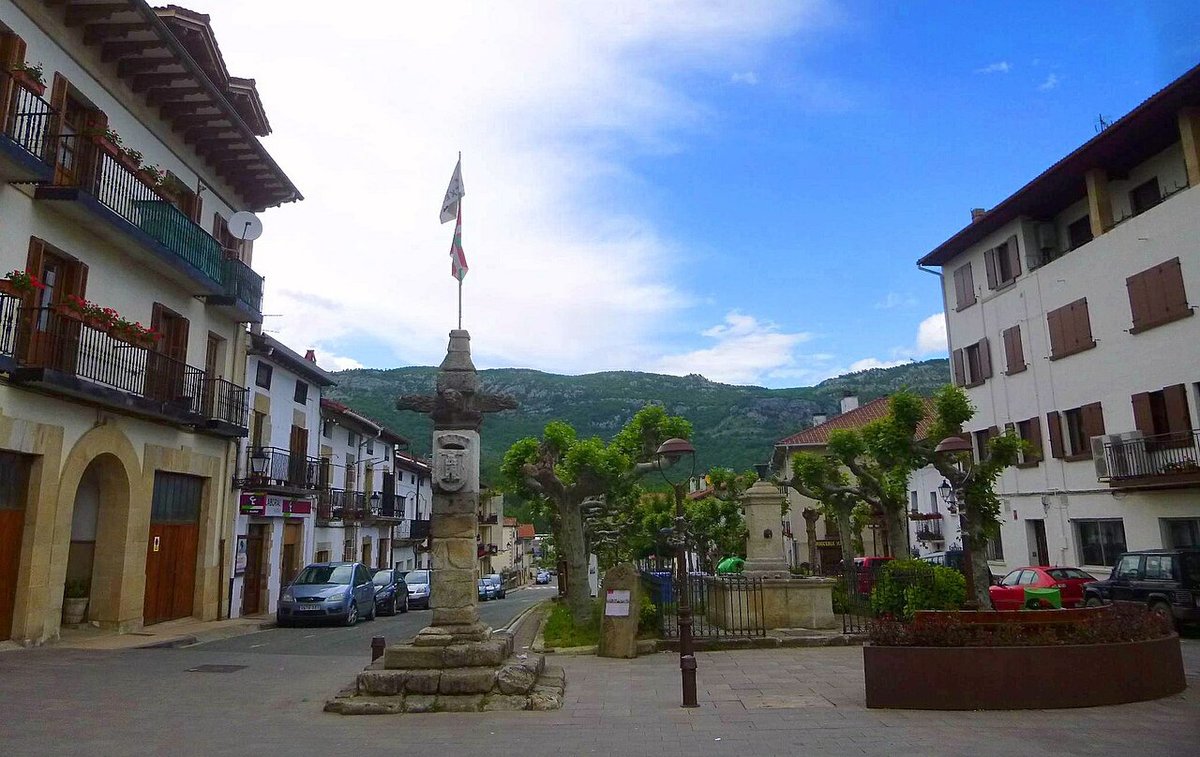
Any look at Lakuntza begins with its setting. The village sits in Sakana, a natural corridor between mountain ranges that for centuries served as a route linking Navarra and Gipuzkoa. That role as a lived-in, travelled valley explains much of its layout: houses arranged along the historic road, kitchen gardens close by, and the mountains rising almost immediately at the edges.
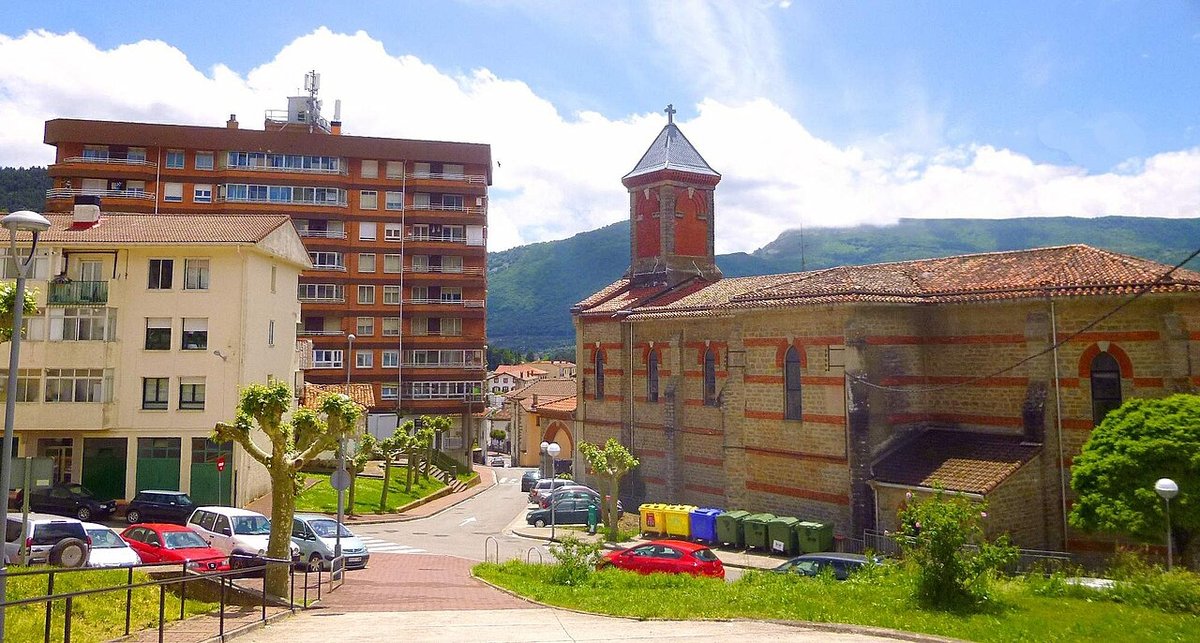
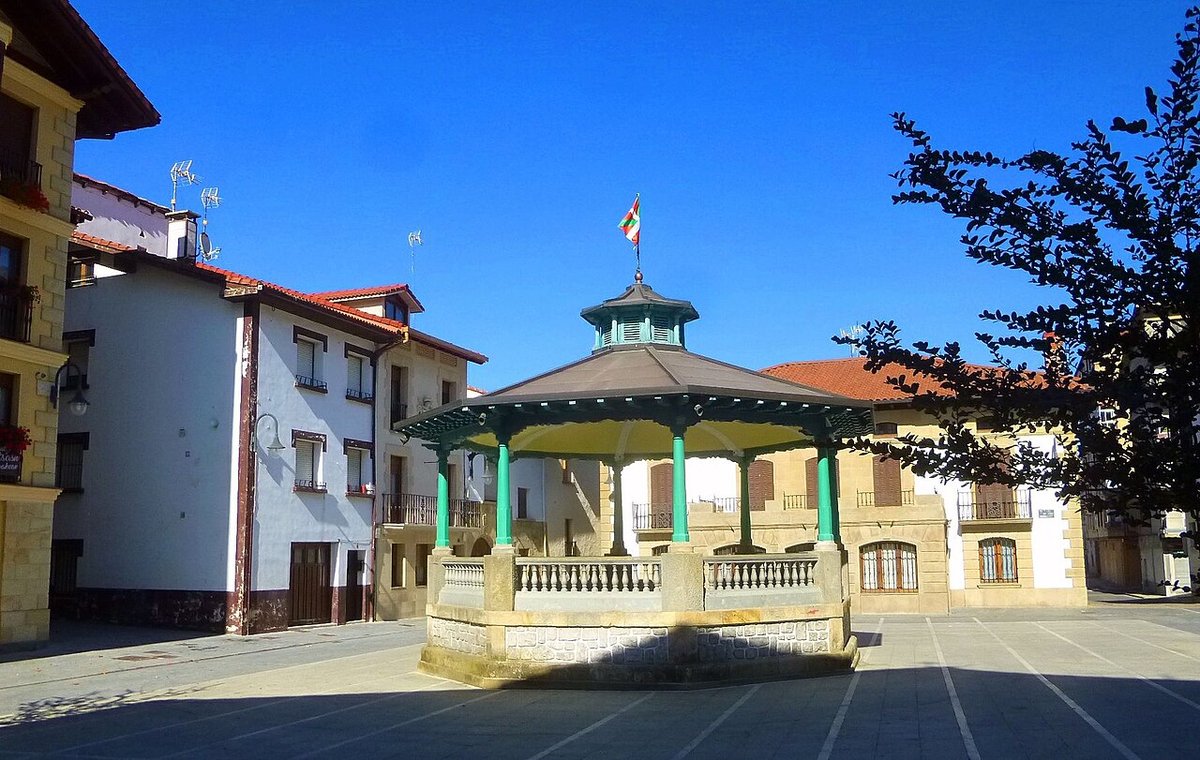
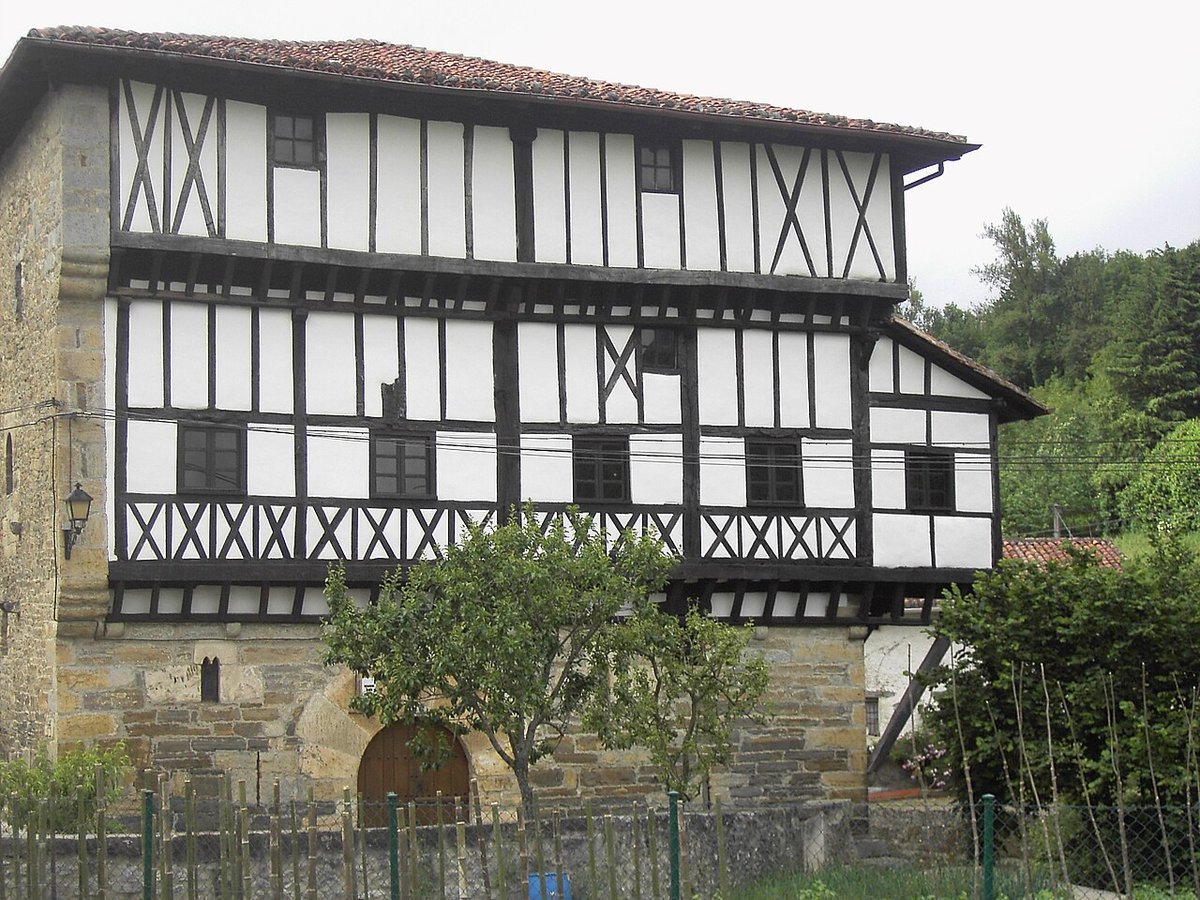
Lakuntza has around 1,300 inhabitants and stands at roughly 490 metres above sea level. Its buildings reflect the wider architecture of the region, with stone walls, timber framing and wide eaves designed to shield façades from frequent rain. Streets follow the gentle slope of the land rather than imposing a rigid plan. There are no large squares or grand viewpoints. The place makes more sense at a slow pace, paying attention to façades and small details.
San Martín de Tours and the built landscape
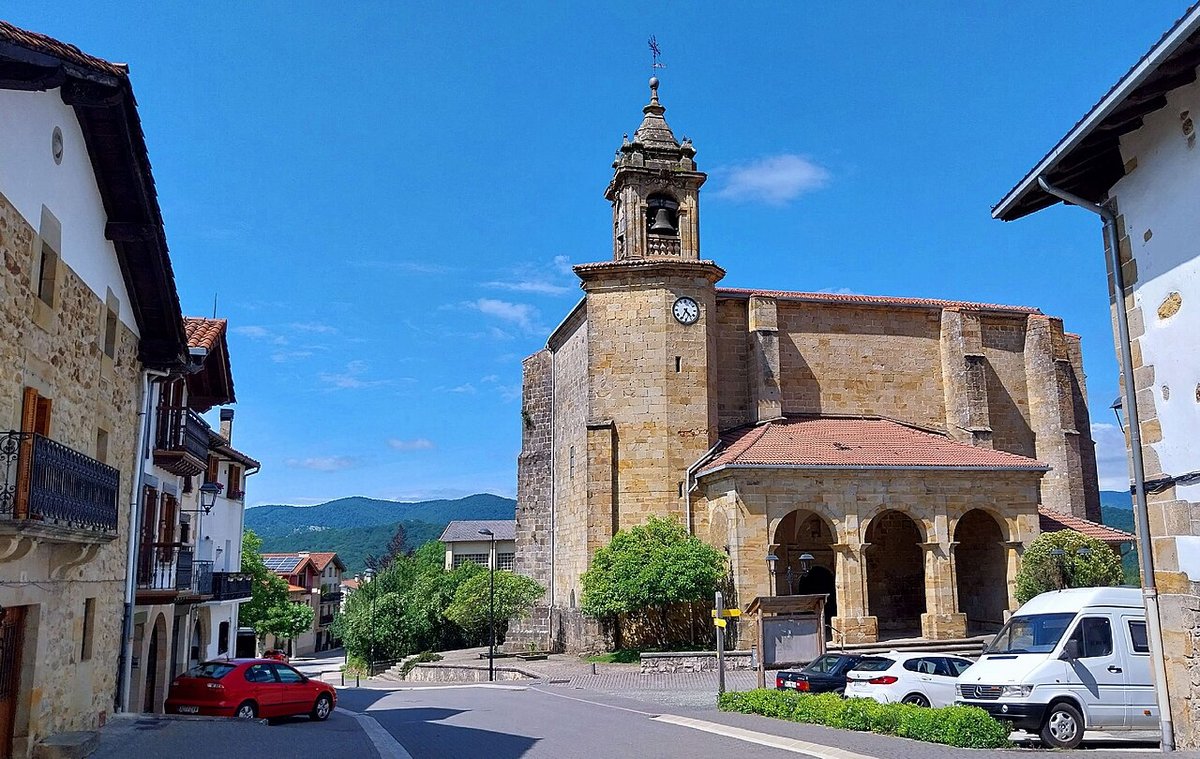
The main landmark in the village centre is the church of San Martín de Tours. Like many parish churches in the valley, the current building is the result of several phases of alteration. From the outside it presents a sober, stone-built appearance.
Inside, attention often turns to the altarpieces and decorative features linked to the Baroque tradition. The church remains an active parish space, so it is not always open outside times of worship. When access is possible, it is worth focusing on carved details and painted surfaces rather than the overall structure.
Around the church stand several older farmhouses. Some doorways display carved coats of arms and solid stone lintels. These are buildings designed for an agricultural and livestock-based way of life, with generous ground floors used for storage and stabling.
Forests at the edge of the village
Lakuntza is surrounded by slopes covered in beech and oak woodland. The transition from village to forest happens quickly, almost as soon as the last houses are left behind. This proximity to woodland has long shaped daily life in the valley, from the use of timber to grazing and the network of paths linking neighbouring settlements.
The landscape changes noticeably with the seasons. In autumn, the beech woods around the village become particularly visible from the valley floor paths. Winter brings a harsher feel. Frost is common and shaded paths can be slippery in the early hours.
Walking routes through Sakana
Several rural paths start from Lakuntza, connecting it with other villages in Sakana and with the nearby slopes. Many of these routes were traditionally used for farm work or for heading up into the hills.
Some walks are short and almost flat, suitable for a gentle stroll through the valley floor. Others begin to climb as soon as they approach the mountain ranges. Good footwear is advisable when the ground is damp, as the clay soil in the valley tends to retain water.
In the nearby fields and meadows, agricultural and livestock activity is still visible. During the right season, mushrooms can be found along the edges of the woodland, a familiar presence in this type of landscape.
Local life and seasonal celebrations
Festivities in Lakuntza follow a pattern common across many villages in Navarra. San Martín, the patron saint of the parish, is commemorated in November. The main festivities usually take place in summer, typically in August, when many people with ties to the village return for a few days.
During these periods, the rhythm of daily life shifts. Streets become busier and traditional activities are organised. Exact dates can vary from year to year, but the sense of a temporary increase in activity is consistent.
A short walk through Lakuntza
Lakuntza can be explored without difficulty in a relatively short time. A walk along its main streets reveals several older houses, the parish church and corners where the rural scale of the valley is still clearly visible.
Continuing beyond the built-up area along one of the outgoing paths quickly opens up views across Sakana and towards the slopes that enclose the valley. The shift from village to open landscape happens in just a few minutes.
Before setting out
Lakuntza is a small place, and a visit often makes more sense when combined with other spots in Sakana or with a walk in the surrounding hills. The mountains are very close and the weather can change quickly. Even on mild days, it is worth bringing an extra layer if planning to head to higher ground.
Beyond that, the experience is simple. Walk through the village at an unhurried pace and look closely at what remains of its agricultural past, still present in its buildings, its layout and the landscape that surrounds it.