Full Article
about Olazti / Olazagutía
Industrial town on the border with Álava and Guipúzcoa, at the foot of Urbasa with a strong cement-making tradition.
Hide article Read full article
A pause between Pamplona and Vitoria-Gasteiz
Tourism in Olazti Olazagutia feels a bit like pulling off the motorway at one of those places you pass and think, “life must move more slowly there”. You stop, park, take a few steps… and it turns out that yes, it really does.
Olazti, or Olazagutía in Spanish, sits in the Sakana valley, between Pamplona and Vitoria-Gasteiz. It works less as a destination designed for visitors and more as a lived-in village. That difference shapes everything. There is no staged experience waiting for travellers, just a place of a little over a thousand residents going about daily life.
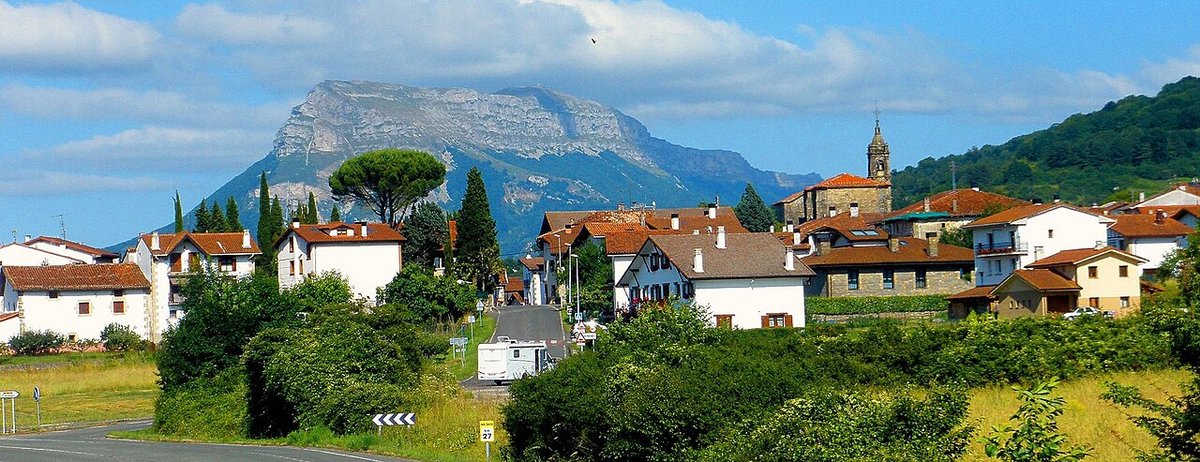
Cars come and go, houses open out towards the valley, and the surrounding mountains are always present, almost as if watching over the village. Nothing feels arranged or polished for visitors, which is precisely what gives it its character.
Even the name says something about where you are. Olazti in Basque, Olazagutía in Spanish. This part of Navarra has long had a close relationship with neighbouring Álava, and you can sense that in the language, the movement of people, and the feeling of being in a valley that connects territories rather than dividing them.
A straightforward walk through the centre
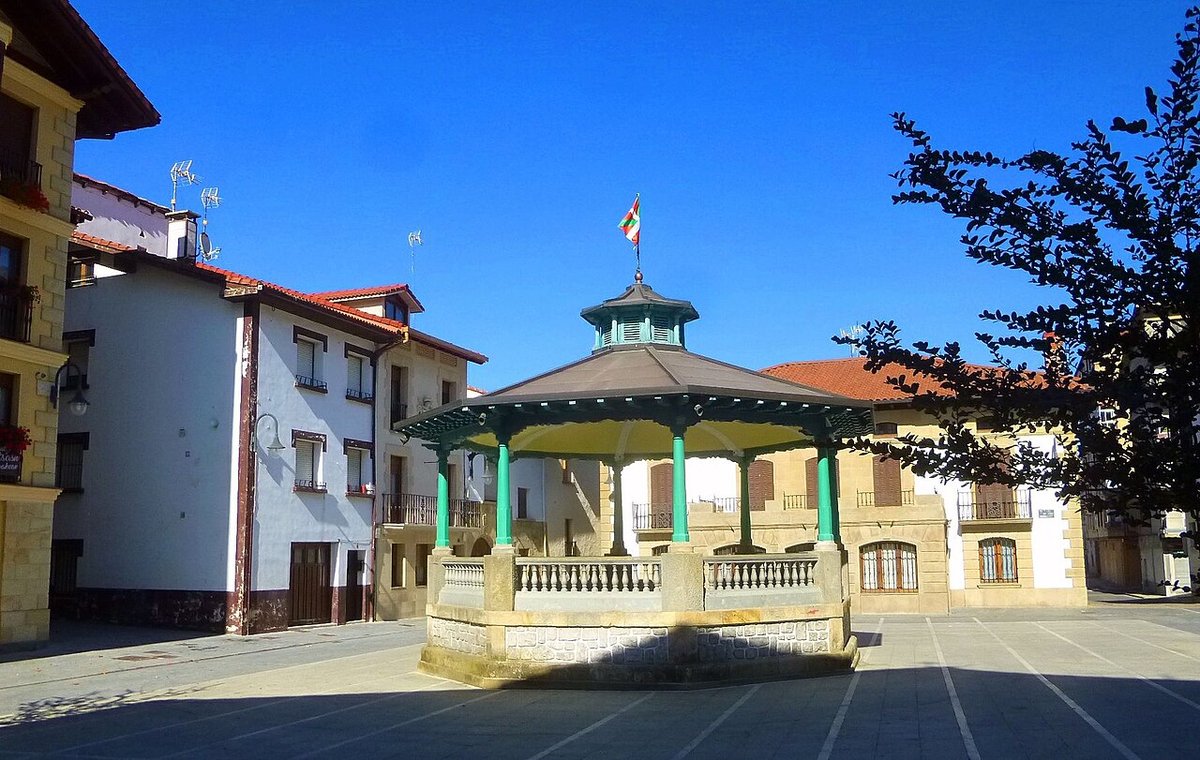
The centre of Olazti is easy to explore on foot. There is no grand historic quarter or carefully curated set of streets designed for photographs, and that absence is part of the appeal.
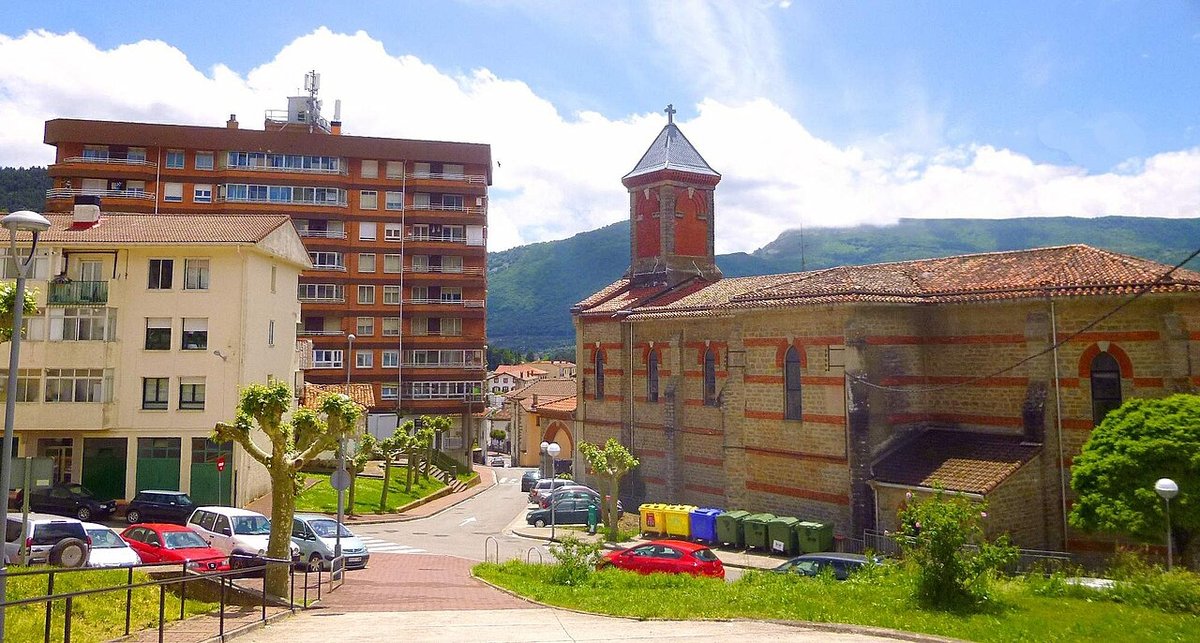
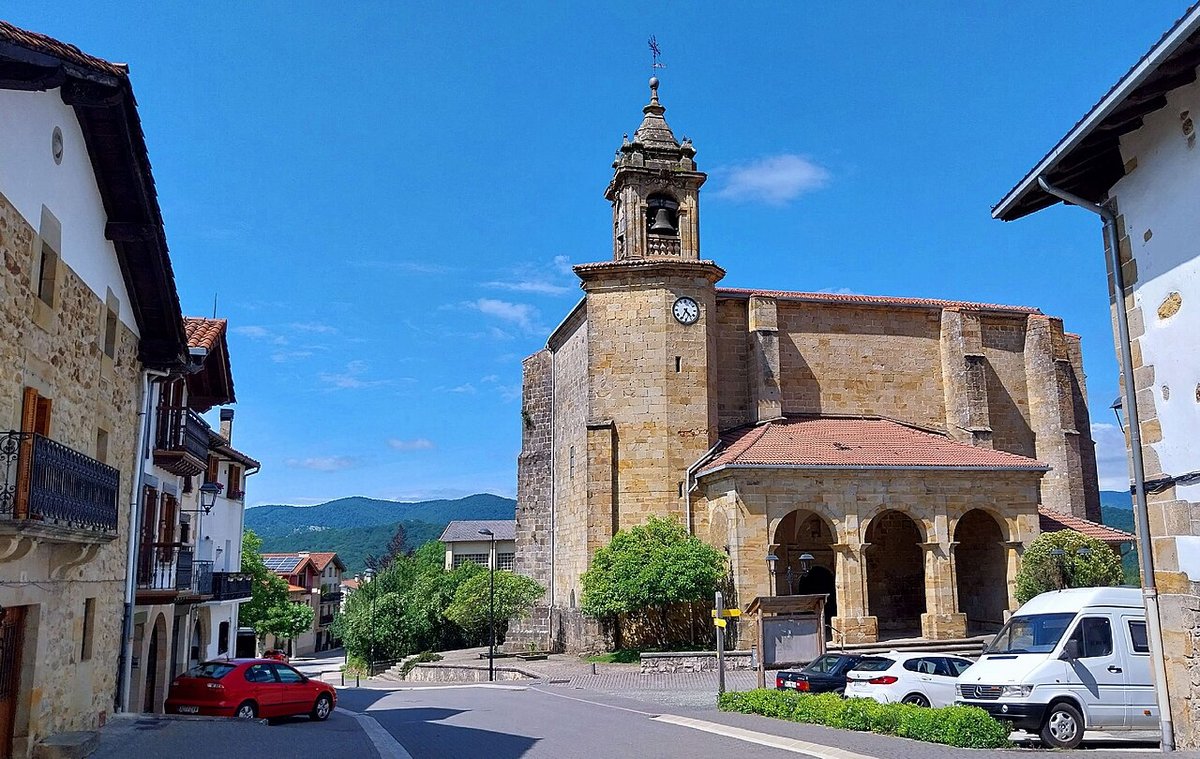
Everything revolves around the church of San Martín. Its tower is visible from different points in the village and works as a natural reference as you walk. It is the kind of place you orient yourself by without really thinking about it.
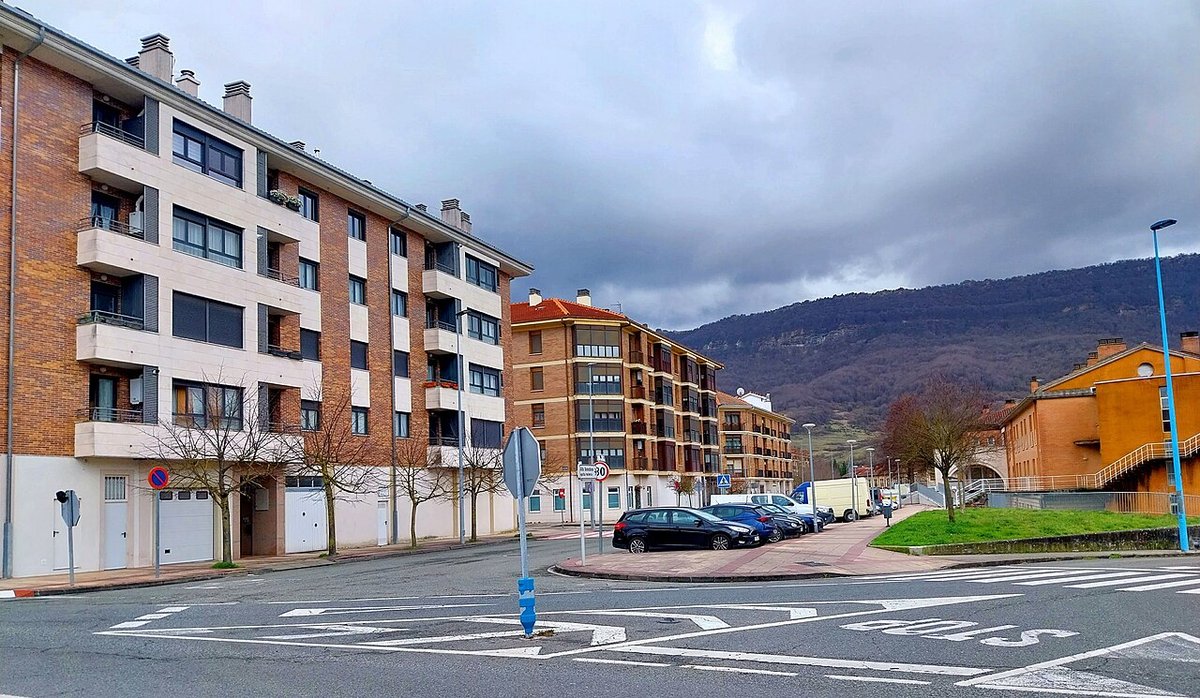
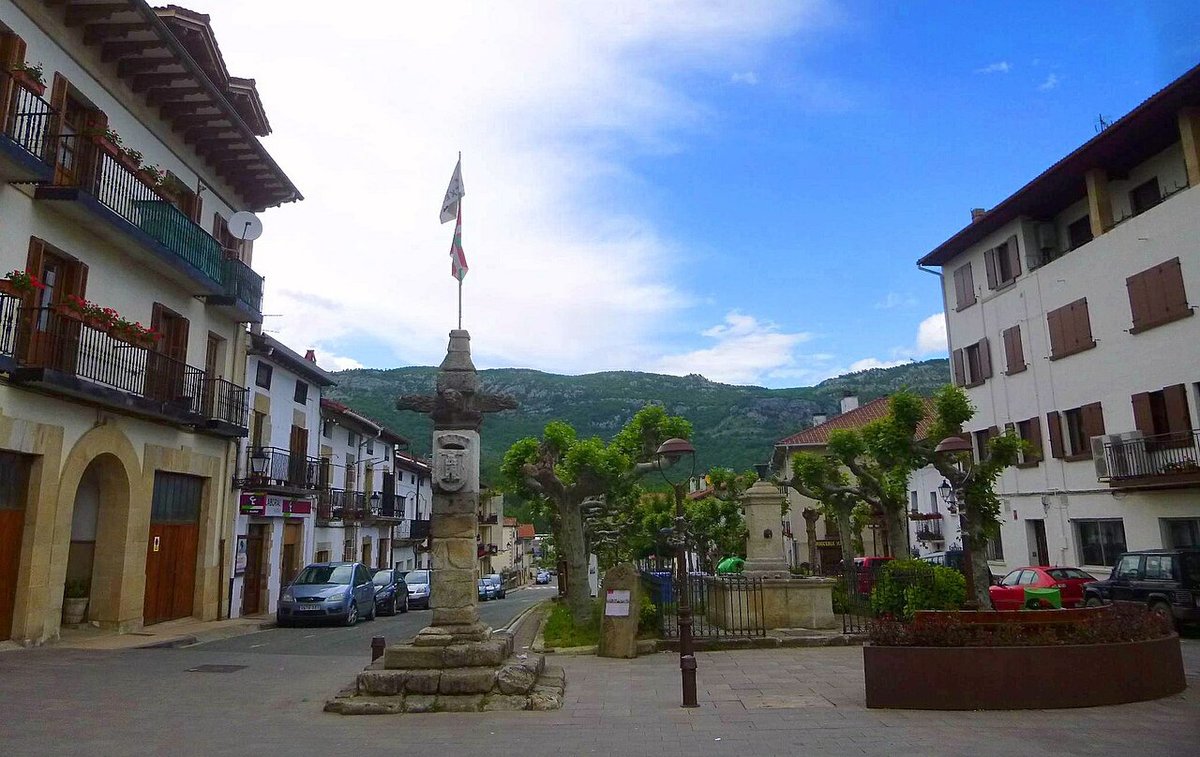
The houses combine stone, brick and sloping tiled roofs. Many are multi-generational homes that have been extended over time. Not everything is old, and not everything fits a tidy idea of what a village should look like. That mix gives the place a more genuine feel.
Look a little closer and small details begin to stand out. Large wooden doors, old walls softened by moss, and enclosed yards that are still used at certain times of year. These are quiet clues about how the village has functioned over decades, without needing explanation.
Where the landscape takes over
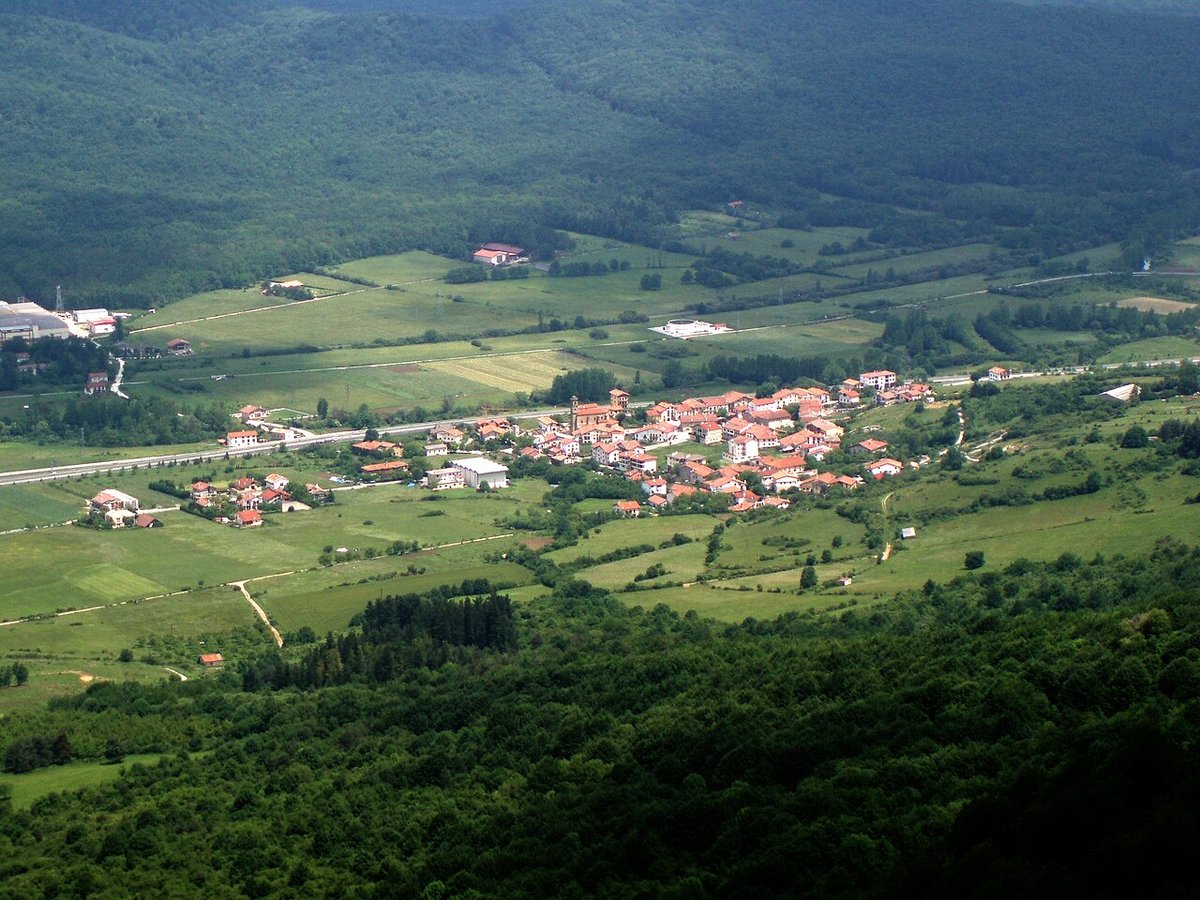
Olazti really comes into its own in its surroundings. The Sakana valley stretches out around it, with the Sierra de Urbasa and other nearby mountains shaping the horizon. Step outside the village and you quickly find rural paths, forest tracks and trails weaving through oak and beech woodland.
It is the kind of setting where you can walk for a while without seeing anyone, with only the sound of wind through the trees or a tractor somewhere in the distance. On clear days, the mountains remain in view, a constant reminder that nature still plays a leading role here.
There is no need to plan a long or demanding route. Even a short walk away from the centre is enough for the landscape to shift completely. Within minutes, the built environment gives way to open fields and woodland, and the rhythm of the place changes with it.
Farmhouses at the edge of the valley
On the outskirts of Olazti, scattered farmhouses appear across the landscape. Some are quite old, built in stone with broad roofs and small plots of land around them. Others sit half hidden behind trees or low walls covered in ivy.
This peripheral area has a particular feel. It does not seem arranged for visitors or adapted for any specific purpose. It is simply inhabited countryside, functioning as it always has.
For those interested in photography, the paths leading out towards the fields often offer strong viewpoints. This is especially true when low fog settles in the valley or when autumn begins to introduce reds and ochres into the green of the forest. The contrast between seasons adds another layer to what is otherwise a quiet, steady landscape.
If you only have a short stop
Olazti does not demand much time. If you are passing through, one or two hours is enough to get a clear sense of the place.
A simple approach works best. Park near the centre, walk around the area near the church of San Martín, then follow one of the paths that lead out towards the fields. From just outside the village, looking back across the valley, it becomes easier to understand how Olazti fits into its surroundings.
It is not a place for ticking off sights or following a checklist. It suits a brief pause, a look around, and then continuing on your way.
Seasons in the Sakana valley
The Sakana changes noticeably throughout the year, and Olazti reflects those shifts.
In spring, the valley turns a vivid green, the kind that looks freshly painted after several days of rain. Autumn brings a different kind of interest, as nearby forests begin to change colour and create striking contrasts against the mountains.
Winter is often cold and damp, which is typical for this part of Navarra. In summer, even when temperatures rise in the valley, the nearby woods tend to offer some relief.
Each season alters the atmosphere, but none transforms the village into something it is not. The changes are subtle rather than dramatic, in keeping with the overall character of the place.
A base for exploring Sakana
Olazti Olazagutia works well as a base for exploring this part of Navarra. The Sierra de Urbasa is relatively close, and the entire Sakana valley is connected by road and rail, making it easy to move between villages.
There is one detail worth noting. The motorway runs nearby, and in some areas it becomes part of the background sound. It does not dominate the experience, but neither does the village exist in complete silence. If quieter surroundings are what you are after, it is enough to head a little further out along the mountain paths.
In the end, Olazti is not trying to impress anyone. That might be exactly why it leaves an impression.