Full Article
about Eslava
Known for the Roman site of Santa Criz; farming village in the lower mountains
Hide article Read full article
Footsteps on Gravel at Seven
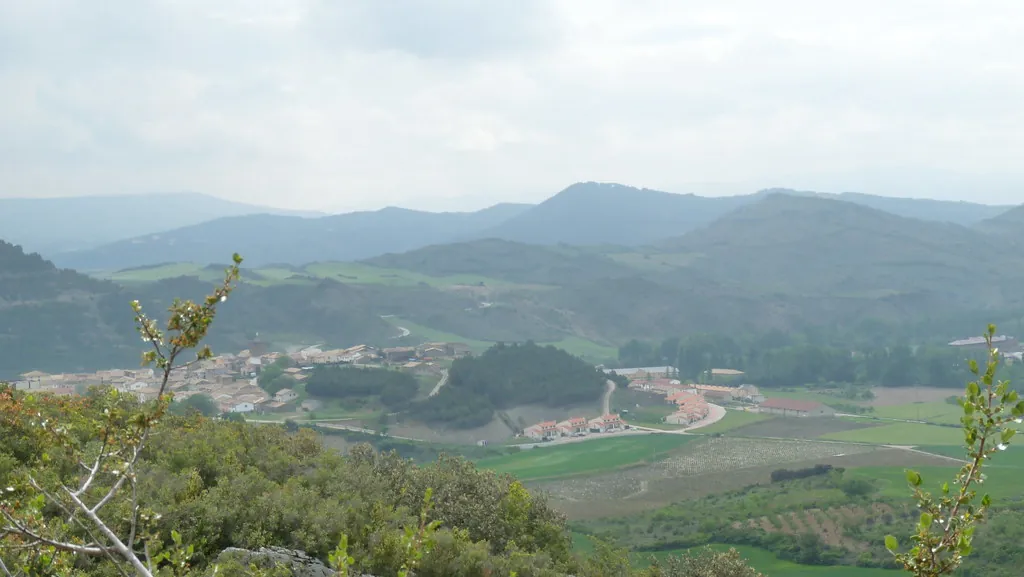
The first sound is your own footsteps on the gravel track that serves as the main street. Then, the slow creak of a heavy wooden door opening somewhere. At this hour, the light is flat and clear, bleaching the pale gold of the cereal fields that press in around Eslava. The air smells of dry earth and, faintly, of the woodsmoke from a single chimney.
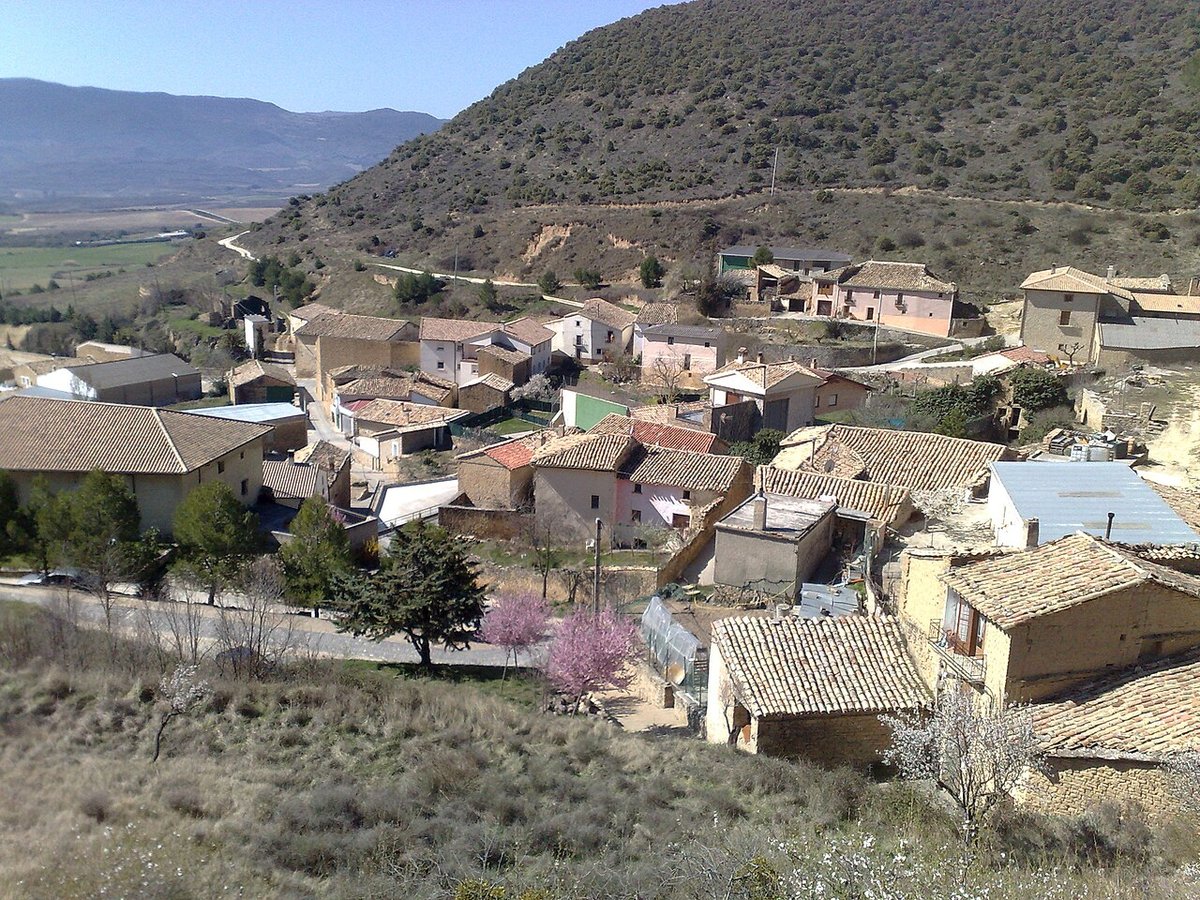
This is a village of ninety-seven people, built from the stone of its own land. The houses are low, their façades a muted patchwork of greys and ochres, and the silence between sounds is deep and complete.
The Cool Dimness of San Martín
The church of San Martín de Tours doesn’t dominate the skyline; it emerges from between two houses as you turn a corner. Its stonework is thick, its windows small. The style is often called Romanesque, but you see the simpler truth: it was built for shelter and permanence in a landscape of weather.
If you find the door unlocked, push it open. Inside, the air is several degrees cooler, carrying the faint, papery scent of old hymnals and damp stone. Light filters in weakly, just enough to trace the lines of a carved altarpiece. Stand still for a full minute. The quiet here isn’t an absence, but a substance—the accumulated quiet of centuries of murmured prayer and seasonal ritual.
A Ten-Minute Circuit
You can walk every street in Eslava in about ten minutes. They are straight and purposeful, laid out for utility, not for show. Your eye starts to catch what isn’t immediately obvious: a date—1782—worn smooth on a lintel; the rusted scroll of an iron grille; the deep grain of an oak door split by decades of sun.
There are no plaques or guided tours. The history here is worn into surfaces, not explained on them. Around mid-morning, you might hear the tinny sound of a radio news broadcast from an open kitchen window, a reminder that life continues in its ordinary rhythm.
Where the Pavement Ends
The pavement ends abruptly. One step beyond the last house and you’re on a dirt track between fields. In late summer, the barley is bone-dry and whispers constantly in the wind, a sound like steady, gentle rain. The vine rows are short and gnarled.
You don’t need to walk far. Just far enough to turn around and see the village as part of the land: a compact cluster of stone and tile, with San Martín’s square tower as its anchor, set against the vast, open sky of the Sangüesa comarca.
The Rhythm of the Year
Life here moves to an agricultural and liturgical calendar. In November, around San Martín’s feast day, the cold has firmly settled in the sierra. There’s a gathering then, a small flame in the long dark.
August is different. The population swells with returning families. The quiet recedes for a few weeks, replaced by the hum of evening conversations in doorways and the shouts of children playing on the same streets that are empty in January.
If You Go
Come in the shoulder hours. The midday sun in July or August is relentless here, with almost no shade to be found. Early morning or late afternoon light is kinder and paints the stone in warmer tones.
Park by the entrance and wander on foot. If the church is open, go in—it’s the key to understanding the place’s scale and spirit. Then take one of the farm tracks for fifteen minutes until the village looks small behind you.
Eslava isn’t a destination. It’s a pause. A place to stretch your legs, to feel a slower tempo, and to see how a human settlement can sit so lightly yet so stubbornly on such an expansive piece of earth. You pass through it quickly, but its particular quiet lingers for miles afterward.