Full Article
about Lónguida
A valley running alongside the Irati River; a quiet farming area dotted with small villages and palaces.
Hide article Read full article
A village that moves at its own pace
Some places seem built for a quick photo. Others feel more like a pause in the middle of a journey. Tourism in Longuida leans firmly towards the second. It sits in the Sangüesa area of Navarra, surrounded by cereal fields and patches of oak and holm oak, and the first impression is usually one of complete stillness. The kind where you park the car, shut the door, and the loudest thing around is the wind shifting something in the distance.
This is not a village of grand monuments or busy streets. It is somewhere you can walk aimlessly for five or ten minutes and quickly get a sense of how life unfolds here. The rhythm is unhurried, the scale small, and the appeal lies in noticing what is right in front of you rather than seeking out headline sights.
San Miguel Arcángel and the shape of the village
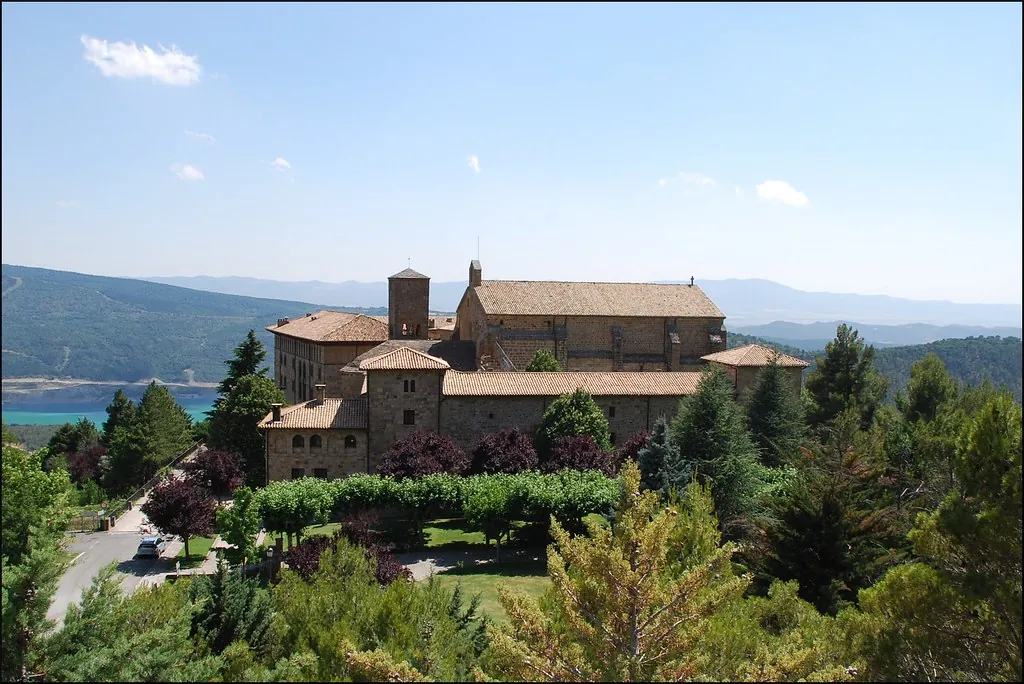
The first thing that tends to stand out on arrival is the tower of the church of San Miguel Arcángel. It is visible from a distance and defines the outline of the village. The building itself was constructed in different stages, something you can pick up on if you look at the volumes and the details in the stonework.
If the church is open, it is worth stepping inside. There are altarpieces and religious sculptures typical of rural churches in Navarra: solid craftsmanship, made to endure rather than impress. It reflects a practical approach, where longevity matters more than decoration.
Much of the village centre is arranged around the church. It does not take long to walk through. The streets are short, the stone houses fairly restrained in style, with some carefully worked doorways and wooden balconies facing onto the main street. The layout is compact, easy to follow, and best explored without any fixed plan.
Fields, oaks and open space
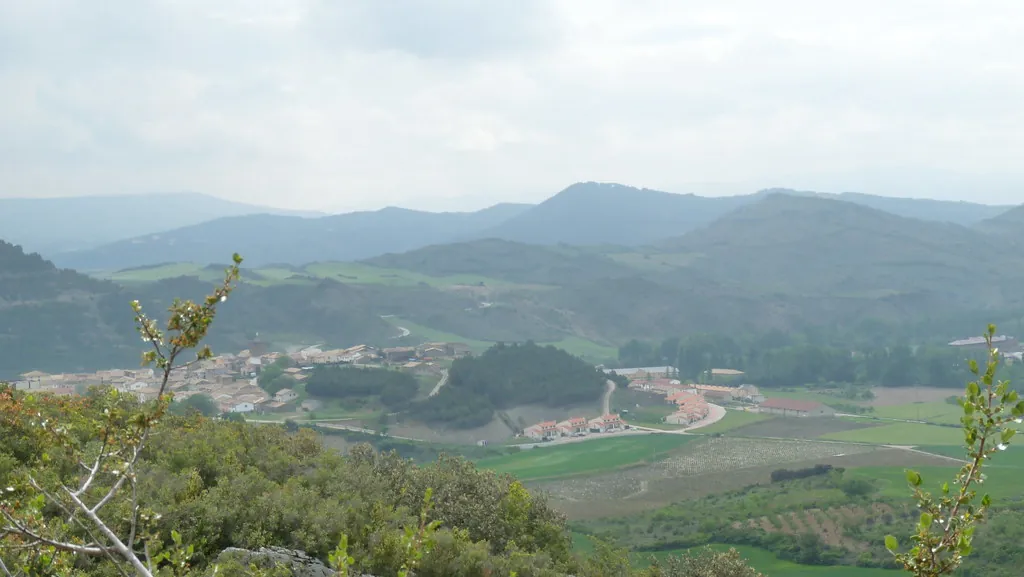
Step just beyond the edge of the village and the atmosphere shifts slightly. Longuida is surrounded by open farmland and small patches of low woodland where oak and holm oak appear. It is not a dramatic landscape of mountains or gorges, but it has the wide, open feel typical of central Navarra.
The colours change with the seasons. In spring, the fields are often green. By late summer and into autumn, the tones turn to ochres and golds. It is a subtle transformation rather than a striking one, but it shapes how the place feels at different times of year.
For anyone who enjoys walking without too much planning, there are agricultural tracks that make it easy to take a short stroll and return to the village in under an hour. These are not routes aimed at reaching a specific landmark. The point is more about switching off for a while and moving through the landscape without any real destination.
Looking closely at small details
Longuida can be covered quickly, so it makes sense to slow down and pay attention. Some façades still display carved stone coats of arms, along with simple mouldings around doors and windows. These are the kinds of features that do not demand attention but reward it.
It is easy to arrive thinking everything will be seen in ten minutes, then end up lingering. An old door, a bench set against a wall, a few plants on a windowsill. Small elements like these often say more about a place than any signboard could.
If you have a camera, the light tends to be softer early in the morning or towards the end of the afternoon. Around midday, when the sun is high, the village can look flatter and more uniform, with fewer shadows to bring out texture.
Local life and celebrations
The main festivities are usually held around 29 September, for San Miguel. As in many small villages, these days bring a noticeable change in atmosphere, with people returning who have family ties here even if they now live elsewhere.
There are also religious celebrations such as Semana Santa, or Holy Week, which are maintained with a strongly local character. These are occasions shaped more by residents than by visitors, with a scale that reflects the size of the community.
In summer, there are sometimes informal gatherings or evening events that bring together both locals and those who come back for a few days. Nothing is designed as a large spectacle. Everything happens on a smaller, more familiar level.
A short stop in the Sangüesa area
If you are travelling through the Sangüesa area, Longuida works well as a brief stop. You can park, take a walk around the church, and wander the main streets while looking at façades and coats of arms.
After that, it is worth heading out along one of the paths that begin near the village. Within half an hour, you can see Longuida from the outside, surrounded by fields, which is when its setting makes the most sense. The relationship between the village and the land around it becomes clearer from that perspective.
It is the kind of place where a quiet hour feels well spent.
A couple of things to bear in mind
Arriving at midday in summer can give a slightly harsher impression of the landscape. The light is strong and the walk can feel shorter and less varied. If you have the option, earlier or later in the day tends to be more pleasant.
Another small point: after recent rain, some of the dirt tracks can become muddy quite quickly. It is nothing major, but it helps to wear footwear you do not mind getting dirty.
The most important thing is to come without expecting a structured tourist experience. Longuida does not work that way. It is a quiet pause in a rural setting, a place to walk for a while and slow down before continuing through this part of Navarra.