Full Article
about Lumbier
Gateway to the spectacular Foz de Lumbier; a town with Roman history and a nature interpretation center
Hide article Read full article
A small village, a sudden change of scale
Some places reveal themselves almost instantly. You park, walk a little, and the landscape shifts in a way that catches you off guard. That is how tourism in Lumbier works. It begins with the idea of visiting a quiet village in the foothills of the Pyrenees in Navarra, and within minutes the surroundings open up dramatically at the Foz de Lumbier, as if the mountain had been split apart.
Lumbier, with around 1,300 inhabitants, sits in the Sangüesa area, about a 45-minute drive from Pamplona along the NA‑240. Most people arrive for one clear reason: the Foz de Lumbier. Here, the river Irati has carved out a canyon with almost vertical walls reaching roughly 400 metres. What makes it especially accessible is that you do not need to be an experienced walker to appreciate it. The old railway line has been converted into a path, making it easy to explore the gorge on foot, passing through tunnels and following the river between towering rock faces.
Looking up is almost unavoidable. Griffon vultures often circle overhead, sometimes gliding so close that they seem to be simply drifting on the air, like a kite released into the sky.
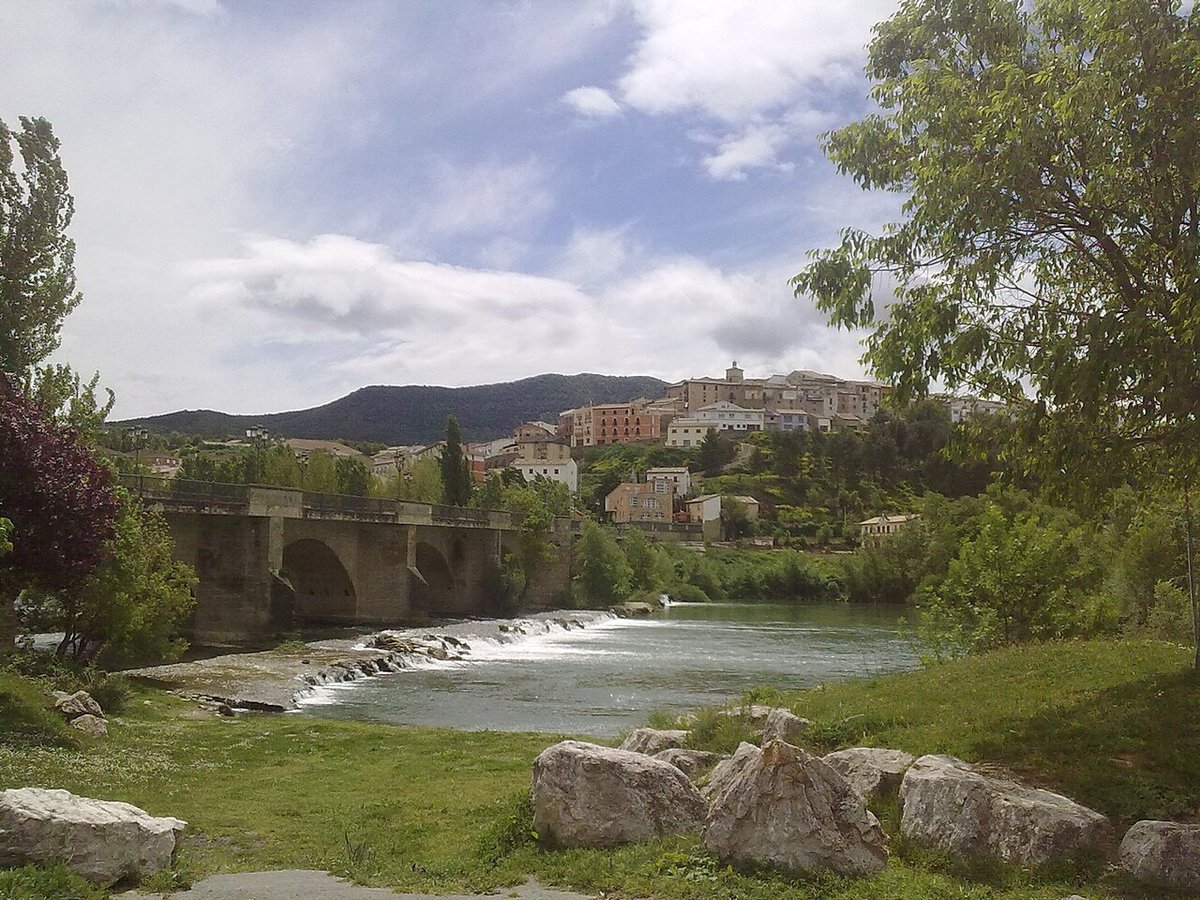
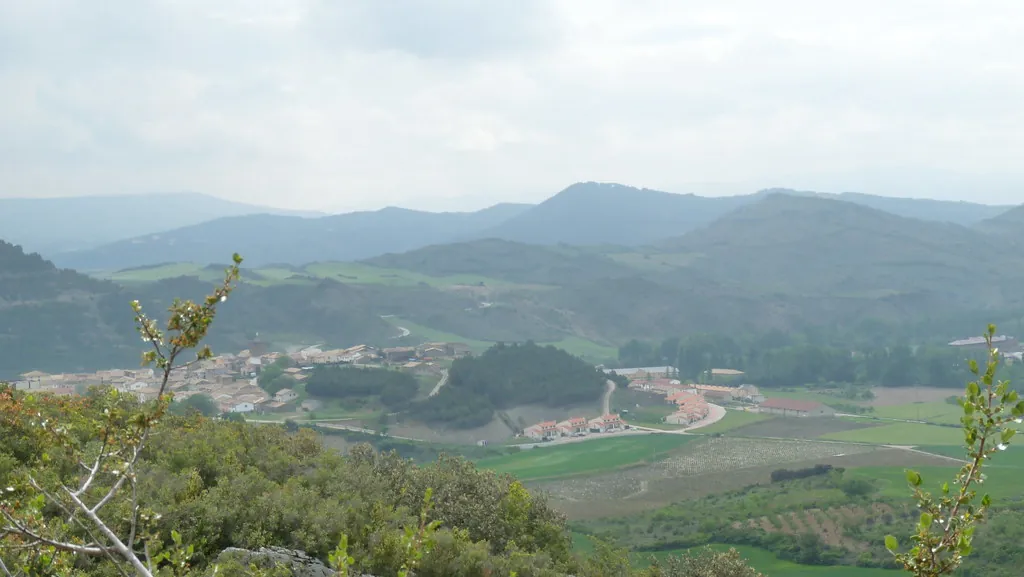
Back in the village, everything is on a smaller, quieter scale. Stone houses line the streets, some with coats of arms on their façades, and there is a sense of stillness where little seems to happen in a hurry. The parish church of the Asunción combines late Gothic elements with later additions and contains an elaborate Baroque altarpiece. Nearby, a medieval bridge crosses the Irati, a reminder that this was once a natural route between valleys for centuries.
Walking through the Foz de Lumbier
In Lumbier, the plan tends to be straightforward. Park near the entrance to the gorge and follow the former railway line on foot. There is no need to complete the entire route to understand the place. Even a short walk through the tunnels and alongside the rock walls gives a clear sense of where you are.
It is the kind of walk where your attention keeps drifting upwards rather than ahead.
Bringing binoculars can make a difference. The area is often a good spot for observing birds of prey, especially early in the morning or towards the end of the afternoon, when the heat eases and the air begins to move more.
The combination of the river Irati below and the sheer cliffs above creates a setting that feels defined by geology more than anything else. The path itself remains simple and accessible, which is part of what draws so many visitors.
A quick look around the village
After the walk through the gorge, the natural next step is to return to Lumbier and have a brief wander. The village does not demand much time.
You can head towards the medieval bridge, cross the river, and stroll through the centre. There is no grand historic quarter filled with major landmarks, but there are streets that still reflect its past as a route between different parts of the region.
In just over an hour, you can see almost everything. That brevity is part of its character. Lumbier does not try to hold your attention with a long list of sights, but rather complements the experience of the gorge.
A couple of practical tips
If you visit during a busy period, it is worth arriving early. The parking area near the entrance to the Foz de Lumbier can fill up quickly on certain days, and once it does, options nearby are limited.
Comfortable footwear is also a good idea. The path is easy overall, but there are tunnels, gravel sections, and stretches where a bit of grip makes the walk more pleasant.
Even in summer, it helps to carry an extra light layer. Inside the gorge, air can move differently, and the temperature can feel noticeably cooler when you stop to take in the view.
When to go
From spring to autumn is when most people visit Lumbier. The longer daylight hours make it easier to enjoy the walk through the gorge at a relaxed pace.
In summer, the heat can be intense, which is why many people choose to go early in the day or later in the evening. Outside these months, the area becomes quieter, though the shorter days mean it is worth keeping an eye on the time before heading back.
Getting to Lumbier
From Pamplona, the journey takes a little over forty minutes along the NA‑240. It is a straightforward and direct route.
The access point to the gorge path is clearly signposted, and the village itself is just a couple of minutes away by car. If you decide to stop in Lumbier after visiting the gorge, you will find that the centre is easy to explore without a map.
In the end, Lumbier tends to work in a simple way. People come for the Foz de Lumbier, stay a bit longer than expected, and leave with the feeling of having seen a place where the landscape sets the tone more than anything else. In Navarra, that is usually a good sign.