Full Article
about Abárzuza
Gateway to the Urbasa and Andía Natural Park; a town with a craft tradition and close ties to the Iranzu Monastery.
Ocultar artículo Leer artículo completo
At 569 metres above sea level, Abarzuza sits level with the highest tops of the Yorkshire Dales, yet the land around it is flat enough for combine harvesters to run ruler-straight lines. The village presses itself against the foot of the Andia range, a position that gives every east-facing house a private theatre of dawn light creeping down the limestone. It is the first place in Navarra where the mountain air meets cereal fields, and the temperature drop after dusk is sharp enough to remind you that the peaks are only a 40-minute walk away.
Abarzuza’s single main street, Calle San Esteban, takes six minutes to pace from end to end. Stone houses shoulder together, their wooden balconies painted the colour of ox blood. A coat of arms—faded, chipped, but unmistakably noble—survives above one doorway; the family that commissioned it left in the 19th century and nobody has bothered to sand-blast it off. That indifference to ornament sums the place up. There is no interpretive centre, no craft shop, not even a rack of postcards. What you get instead is the sound of grain dryers humming inside barns and, on Fridays, the clatter of elderly men rolling bocce balls on the dusty petanca court beside the church.
The Church that Grew Like Topiary
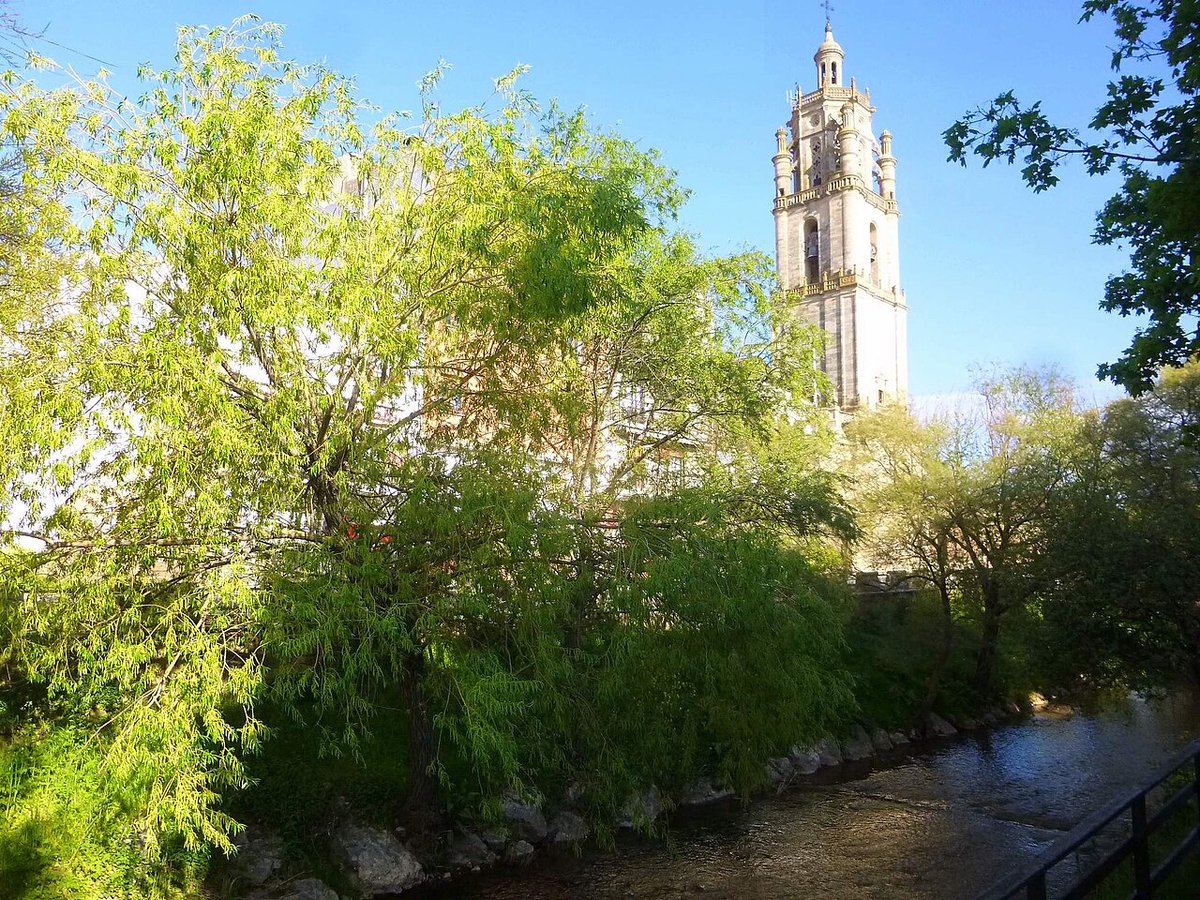
The parish church of San Esteban looks lopsided because it is. The original Romanesque nave still stands, but each century stapled on its own extension—Gothic arch here, Baroque tower there—until the whole resembled a stone cactus sprouting extra arms. Inside, the atmosphere is barn-cool and faintly bees-waxy. A 16th-century Flemish panel of the Crucifixion hangs in the south aisle; no guard, no glass, just a 40-watt bulb. If you want to study it properly, bring a torch: the caretaker switches the lights off after two minutes to save electricity.
Mass is sung at 11:00 on Sundays, and visitors are welcome to stand at the back, though the priest will assume you understand Spanish. The sermon rarely exceeds eight minutes; afterwards the congregation files straight into the bar opposite for gin-and-tonics that would floor a bull. One measure is the local standard; asking for a double brands you as either an alcoholic or a Saxon.
Walking Without Waymarks
Maps.me shows a spider-web of lanes radiating from the village, but on the ground the arrows vanish after the last house. This is not the Lake District: expect no stiles, no finger-posts, no “Public Footpath” plaques. What you do get is a grid of farm tracks used by tractors heading to the maize plots, and the right to wander is taken for granted. A useful rule is to follow the irrigation channel that leaves Abarzuza just below the cemetery; it delivers you, 25 minutes later, to a grove of Pyrenean oaks where redstarts flicker like lit cigarettes.
For a half-day circuit, continue upstream until the path narrows into a limestone defile known locally as Barranco de las Brujas. The climb is gentle but relentless, gaining 300 metres in 4 km. At the head of the ravine the valley floor opens into summer pasture where horses wearing cowbells graze among buttercups. From here a farm track zig-zags left to the NA-718, the road that corkscrews up to the Monasterio de Iranzu. Turn downhill and you are back in Abarzuza in 50 minutes, thighs pleasantly warm and lungs full of resin-scented air.
The Monastery that Time (and Coaches) Forgot
Three kilometres up the same road, the Monasterio de Iranzu floats above the tree line like a stone aircraft carrier. Cistercian monks founded it in the 12th century, were booted out in 1835, and returned in 1954; today their number hovers around a dozen. The cloister is raw golden sandstone, still warm at dusk, and the only sound is the slap of sandals on flagged corridors. British visitors who expect a gift shop will be disappointed; there is merely a wooden honesty box for donations and a stack of leaflets in Spanish. Opening hours are civilised—10:30-14:00 and 16:00-19:00—but shut tight on Monday and Tuesday from November to March. Check @NavarraTurismo the morning you set out; a lone caretaker is prone to lock up early if the wind is cold.
Beside the gate a single bar serves tortilla the size of wagon wheels and coffee that tastes of burnt toast. A set lunch of roast chicken, chips and a carafe of wine costs €12; they will swap the wine for water if you ask, though the waitress will look sorry for you. Mobile reception dies halfway through the first course, so settle the bill before you post that smug “no-one here but me” photo.
Seasons and Sensibilities
Abarzuza follows the farming calendar with medieval obedience. Spring arrives late: the first swallows appear around 10 April and farmers still light their braseros (charcoal braziers) in the evening until mid-May. By June the plateau shimmers gold and the air smells of warm bread; day temperatures flirt with 30 °C but nights drop to 14 °C, so pack a fleece even in July. Autumn is the sweet spot—clear, sharp light, threshing machines raising dust devils, and the mountains turning the colour of burnt toffee. Winter is short but serious: frost hardens the ruts by mid-November, and when the northerly wind called the cierzo blows, the perceived temperature can be six degrees below the forecast. Snow shuts the monastery road for a day or two most years; if the forecast mentions “nevada débil”, fill up with petrol the night before because the village garage does not open before nine.
The Logistics Bit—Without the Bullet Points
The nearest airport is Pamplona, 45 minutes away by hire car, but Bilbao often has cheaper UK flights and the drive south on the A-68 takes 95 minutes. Whichever route you choose, the last 20 minutes is on the NA-132 and NA-718, roads barely wider than a Tesco delivery van. Meeting a tractor round a bend is standard; reverse etiquette dictates the vehicle heading uphill keeps going while the downhill driver backs up. There is no petrol station in Abarzuza and the last ATM is in Estella, 15 minutes west—withdraw cash before you arrive because the monastery bar is cash-only and the nearest alternative is a vending machine that swallows notes reluctantly.
Accommodation is limited to two rural houses: Casa Sarasa (three doubles, €80) and Casa Donamariá (two doubles, €70). Both have kitchens, so stock up in Estella’s Eroski on Saturday night; Sunday lunchtime shutters come down and you will be left with crisps and monastery wine. If you prefer hotels, base yourself in Estella and treat Abarzuza as a half-day add-on—though you will miss the moment, just after dawn, when the village smells of fresh bread and the sierra glows pink enough to make you consider staying forever.
Exit Through the Gift Shop That Isn’t
There is nothing to buy in Abarzuza except a sense of having slipped between the cracks of the modern world. That, and perhaps a bottle of the monks’ honey sold from a side door at the monastery—labelled only with the year and a discreet cross. Take it home, spread it on toast, and remember that somewhere on a plain below the Basque mountains, tractors still stop for the Angelus and time is measured by the clang of a cowbell drifting down the valley.