Full Article
about Aberin
Municipality made up of Aberin and Muniáin; known for its farmland and its closeness to the historic city of Estella.
Ocultar artículo Leer artículo completo
At 514 m, Aberin sits just high enough for the air to feel thinner than the traffic on the A-12 below. The village roofs are almost level with the wings of the red kites that drift over the cereal terraces, and on a clear morning you can count the grain silos of Estella-Lizarra eight kilometres away without raising a hand to shade your eyes.
Stone, Brick and the Smell of Bread at Dawn
The centre is a tight knot of two-storey houses whose limestone walls have gone honey-coloured under centuries of sun. Timber balconies, painted ox-blood red, project just far enough to let a housewife shake a rug over the street without touching the opposite wall. Washing lines run from iron hoop to iron hoop; by eight o’clock the linen is already snapping in the north-westerly that climbs the Ega valley.
Walk clockwise from the church and you pass, in quick succession, a 1668 coat of arms, a 1739 coat of arms, and a door whose lintel is simply carved “GRACIA PLENA”. Nobody charges admission; there is not a ticket booth in sight. The only commercial noise is the occasional clack of the bakery shutter on Calle Nueva when half-baguette portions are handed out to farmhands on their way to the fields.
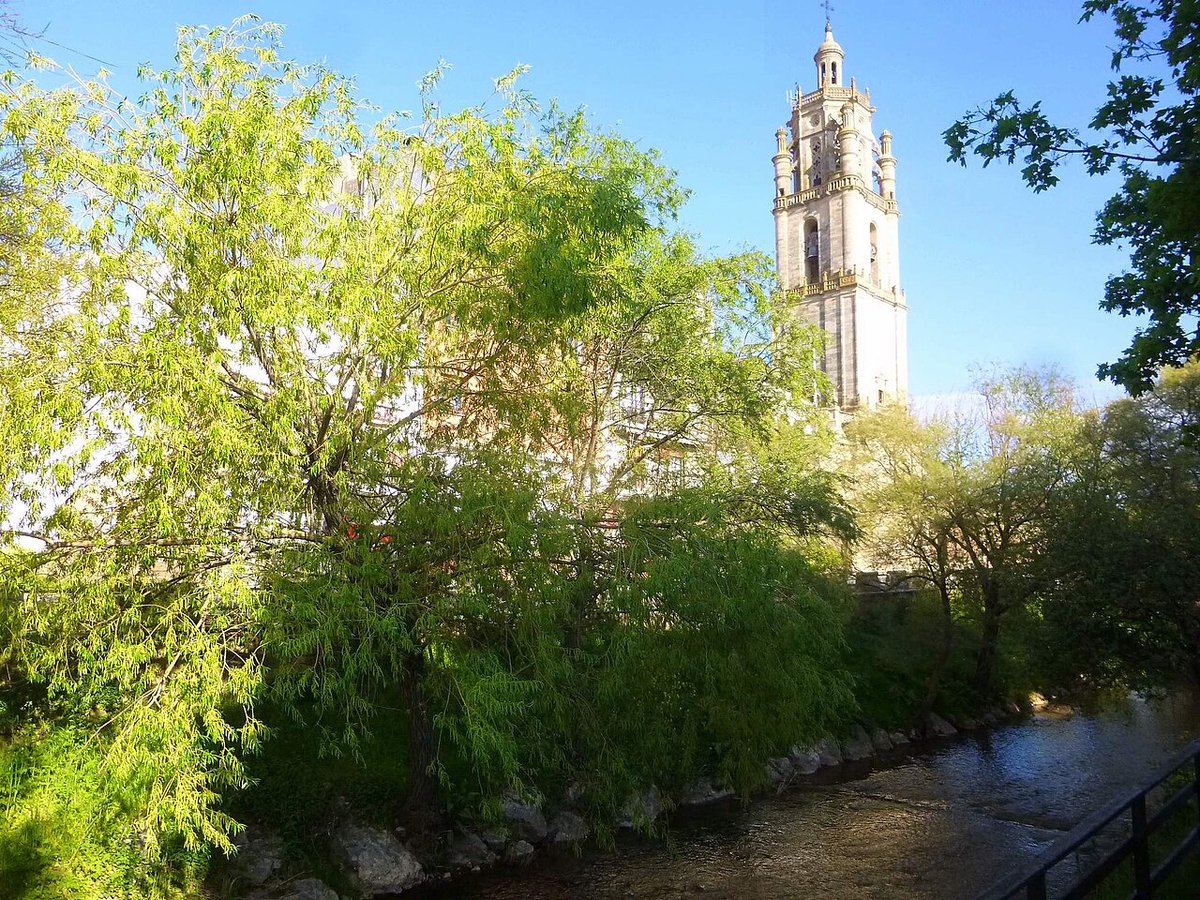
San Esteban itself keeps watch from a slight rise. The tower is 15th-century, the nave was given a Baroque ribbing in the 1700s, and the porch still carries a Romanesque tympanum whose original paint survives only as terracotta ghosts. Mass is at 11:00 on Sundays; visitors are welcome but the priest delivers in rapid Riojan Spanish—stand near the back if you need a quick exit.
Terraces, Tarmac and the Camino de los Molinos
Aberin’s boundaries stretch well beyond the last streetlamp. Wheat, barley and the odd patch of vines flow across rounded ridges like a patchwork quilt someone keeps tugging straight. The Camino de los Molinos begins where the asphalt ends; within ten minutes the only sounds are your boots, a lark and the soft slap of irrigation water. Three ruined mills—stone circles open to the sky—appear beside the stream, each just large enough to have ground the weekly ration for the old municipality. Do not expect interpretive panels; the information is in the stonework: deeper grooves on the upper millstone mean drought years when farmers doubled the grind.
If you prefer mileage to masonry, follow the signed path south to Murieta (3 km, 45 min). The gradient is negligible, but at midsummer the path is exposed and the temperature can jump 6 °C between 09:00 and 11:00. Carry a litre of water per person; the bar in Murieta opens only at lunchtime and, on Tuesdays, not at all.
When the Village Lets its Hair Down
San Esteban’s feast day falls on 26 December. Visitors arriving after Christmas lunch in Bilbao will still find the plaza lit with oil-drum braziers and the village band murdering pasodobles. The August fiesta is warmer in every sense: temporary bars, five-a-side football under floodlights, and a paella that starts at 14:00 sharp—turn up late and you will be eating rice scraped from the bottom.
None of this is staged for tour groups. If you want to join in, buy your drink tickets like everyone else (€1.50 for a caña, €2 for wine) and do not photograph children without asking. A smattering of Spanish helps, yet the local dialect drops final ‘s’ sounds; “gracias” may sound like “gracia” but the sentiment is the same.
Getting There, Staying There, Leaving Again
The nearest airport with UK flights is Bilbao (easyJet from Manchester, British Airways from Heathrow). Pick up a hire-car, leave the terminal, and stay on the A-68 until Logroño, then the A-12 towards Pamplona. Aberin is signposted seven minutes after the Estella-Lizarra exit; the last kilometre is single-track with passing bays cut into the rock.
Public transport exists but resembles a rural branch line in 1950s Wales: one bus a day from Pamplona (Mon-Fri only) and nothing at weekends. The stop is at the entrance to the village, marked by a stone cross; timetable PDFs are posted on the Mancomunidad de Estella website, usually two weeks behind reality.
Accommodation within the municipality amounts to three self-catering cottages—bookable through the Navarra Rural portal—sleeping four, six and eight respectively. Prices hover around €95 per night for the smallest, linen and firewood included. There is no hotel, no swimming pool, and the nearest cash machine is back down the hill in Estella. What you gain is silence: at 02:00 the loudest noise is the church clock striking the half.
Seasons: What to Expect and What to Pack
Spring arrives late on these slopes; farmers sow barley in April when the soil temperature finally reaches 9 °C. Wild asparagus appears along the lanes and the terraces glow an almost violent green. Light-frost mornings give way to 17 °C afternoons—perfect walking weather, but take a fleece for the wind that barrels up the valley.
By July the cereal is cropped to stubble and the thermometer pushes 32 °C in the shade. Aberin itself empties after breakfast; sensible visitors follow suit and head for the Irache monastery bodega (open 10:00–14:00) where the wine tap on the outer wall dispenses free Rioja—one mouthful per pilgrim, honour system applies.
Autumn is brief but spectacular. The last fortnight in October turns the Quejigo oaks copper and the threshing floors echo with the hum of tractors drying grain. Expect mist in the hollows until 10:00, then crystalline air that makes the 30 km view feel like 3.
Winter is not Alpine, yet at 500 m night frosts are routine and the wind can knife through a Barbour. Daylight is scarce—sunrise 08:25, sunset 17:35 at the solstice—so plan walks for late morning. On the upside, the bakery extends its hours and every bar fire is lit; order a café con leche and you will usually be offered a churro on the house.
The Honest Verdict
Aberin will never compete with the postcard drama of the Picos or the tapas crawl of San Sebastián. Its charms are incremental: the way the stone glows after rain, the smell of crushed fennel on the path, the moment you realise the only queue is for the bread van on Friday. Come if you need a pause between bigger stops, if you like your villages lived-in rather than lacquered, and if you are happy to trade nightlife for the sound of grain husks skittering across the road. Stay a night, walk two loops, drink the local tempranillo at €2.50 a glass, and leave before the church bell reminds you it knows exactly where you live.