Full Article
about Aguilar de Codés
Set on high ground with commanding views; it keeps stretches of wall and an interesting medieval layout on the border with La Rioja.
Ocultar artículo Leer artículo completo
The church bell in Aguilar de Codés strikes noon, but only the swallows seem to notice. At 600 metres above the surrounding vineyards, this stone hamlet sits high enough that the air carries a faint chill even in May. Below, the Valle de Valdorba stretches south towards Estella-Lizarra; above, the Montes de Codés rise another 400 metres into holm oak and beech. The village itself needs twenty minutes to cross on foot—thirty if you pause to read the weathered coat of arms above a 17th-century doorway—yet the walking territory begins where the asphalt stops.
A village measured in metres, not monuments
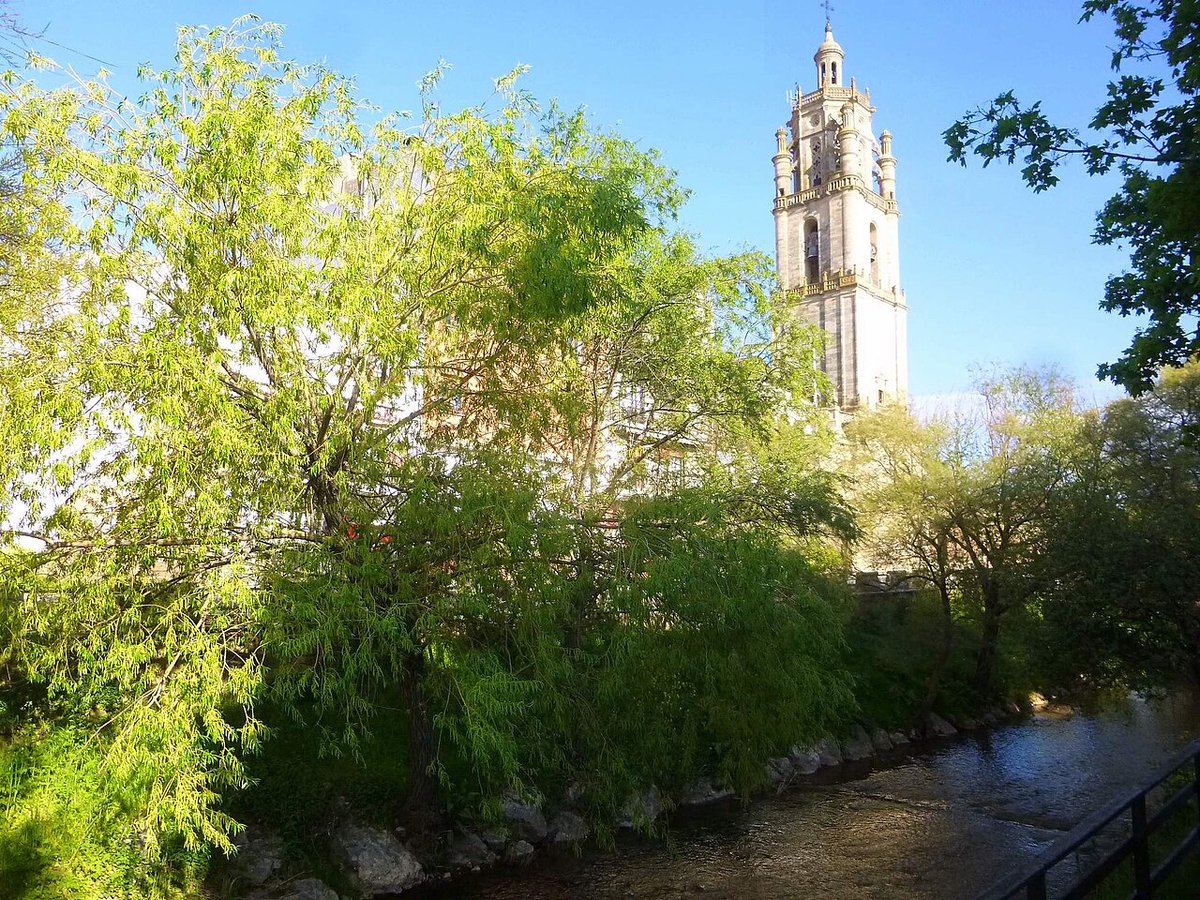
No souvenir stalls, no interpretive centre, not even a bar. What Aguilar offers is compression: stone houses shoulder-to-shoulder, roofs pitched steeply for winter snow that rarely stays more than a day. The parish church of San Andrés squats at the top of the single main street, its bell-tower double-arched in the Romanesque manner but rebuilt so often that the stone colour changes halfway up. Inside, the air smells of candle smoke and mountain dust; outside, the threshold gives an instant lesson in altitude—south-facing views leap across three ridges before the eye lands on the grain silos of Ayegui, ten kilometres away.
Walk twenty paces past the church and tarmac gives way to a concrete farm track signed “Casa de la Parva, 1.3 km”. That marker is the unofficial trailhead for half a dozen loops that fan into the Codés range. None require payment, permits or even a map if you possess a decent sense of direction: the paths are the same livestock routes plotted on the 1929 military survey, now way-marked with faded yellow dashes.
Tracks, not tick-lists
The shortest circuit leaves the village north-eastwards, drops into the Barranco de la Hoz and climbs back along a limestone spur. Distance: 4.2 km. Total ascent: 220 m. Time needed: ninety minutes including the inevitable photo stop when a griffon vulture glides past at head height. Spring brings purple orchids under the oaks; October turns the beech copper and releases the smell of decaying leaves so sharp it catches the throat. In summer you need to start early; by 11 a.m. the southern slope is furnace-hot despite the altitude, and shade is a currency worth more than water.
Those wanting a full day can continue along the ridge to the Santuario de Nuestra Señora de Codés, six kilometres further. The chapel, locked except on 8 September, sits in a meadow grazed by semi-wild horses. Return via the forest track and the round walk tops 16 km—respectable by any standard and blissfully quiet; weekday encounters rarely exceed a farmer on a quad bike and perhaps two German pilgrims who took a wrong turn from the Camino Francés.
What you won’t find—and why that matters
Mobile coverage flickers in and out. There is no cash machine; the nearest petrol pump is back down in Estella. Mid-week, the only commerce is a vending machine inside the locked civic centre, and that stocks tinned beer and packets of spicy peanuts. Plan accordingly: fill water bottles at the stone trough by the church (potable, cold, delicious) and carry lunch. The upside is silence so complete you can identify birds by wing-flap alone—no mopeds, no tour buses, no playlist leaking from a café terrace.
Weather changes faster than you can swap jacket for sun-cream. At 600 m Atlantic fronts collide with the Iberian plateau; within ten minutes sunshine can turn to horizontal sleet. Even in June the evening temperature can dip below 10 °C once the sun slips behind Sierra de Lokiz. Pack a wind-shirt and a woolly hat regardless of the forecast.
Reaching the roof of Tierra Estella
From the UK the easiest gateway is Bilbao. A two-hour flight from Gatwick, a hire-car counter twenty minutes from baggage reclaim, then 145 km south-west on the AP-15 and A-12. Turn off at Estella-Lizarra, follow the NA-7010 for 10 km of hair-pins and you’re there. Public transport is theoretical: a weekday bus links Pamplona with Estella, but the connecting service to Aguilar was axed in 2011. A taxi from Estella costs about €25 each way—book by phone and expect to conduct the transaction in Spanish.
Accommodation choices mirror the transport: there simply isn’t any inside the village. Base yourself in Estella (Hotel Tximista, doubles from €75, good riverside restaurant) or in one of the casas rurales scattered through Villamayor de Monjardín, fifteen minutes away. Day-trip timing works well: leave Estella after breakfast, walk, return for late-afternoon pinchos in the Plaza de los Fueros.
Eating nearby (because you won’t eat here)
Back in Estella try pochas beans stewed with mild chorizo—buttery white beans that even British palates raised on baked versions find comforting. Half portions are standard; ask for “media ración”. Cochinillo, roast suckling pig, arrives with glass-crackling skin and a wedge of lemon; pair it with a glass of Navarra rosado, paler and drier than the southern Spanish pinks. Sweet-toothed walkers should hunt down rocás del Puy, chocolate-hazelnut clusters sold by the hundred-gram bag in Pastelería Garrigós on the main street—calorie-dense and indestructible in a rucksack.
When to come—and when to stay away
Late March to early June delivers daylight walking until 20.30 and meadows fluorescent with poppies. September–mid-October trades flowers for fungi; chanterelles appear after the first rains, but unless you can tell them from the yellow stainer, photograph don’t pick. Mid-July to August is feasible only if you start walking at dawn; afternoon temperatures can touch 36 °C on the south-facing slopes, and shade is minimal. Winter brings its own austere beauty—snow-dusted roofs, crystal air—but daylight is scarce and the forest tracks turn to greasy clay. A short, sunny midday loop is realistic; anything longer demands micro-spikes and a head-torch.
The honest verdict
Aguilar de Codés will never feature on a “Top Ten Spanish Villages” list, and the locals prefer it that way. Come here for a half-day stride into proper mountain country without the Pyrenean crowds, for stone walls lichen-bright and for the moment when the only sound is your own breathing. Manage expectations: the village is tiny, services are nil and the weather owes more to the Atlantic than to Mediterranean brochures. Bring boots, water and a sense of self-sufficiency, and you’ll leave with lungs full of cedar-scented air and the satisfying ache that only a 400-metre climb can bestow. Just don’t expect a souvenir shop to commemorate the achievement.