Full Article
about Allo
A municipality in the Estella merindad with a strong farming tradition; it has a compact old quarter and manor houses.
Hide article Read full article
Arriving without much warning
Some places appear almost abruptly when you leave the main road, as if the landscape has been paused for a moment. That is more or less how Allo feels. You turn off the busier routes of Tierra Estella, follow a quiet street, and suddenly you are somewhere the pace is set by vineyards and the farming calendar.
Allo is small. A cluster of streets around a central square, a few tree-lined stretches, and many stone houses carrying the marks of centuries. Coats of arms fixed to façades, wide wooden gateways, thick walls. These are not decorative additions but features that have simply remained in place over time.
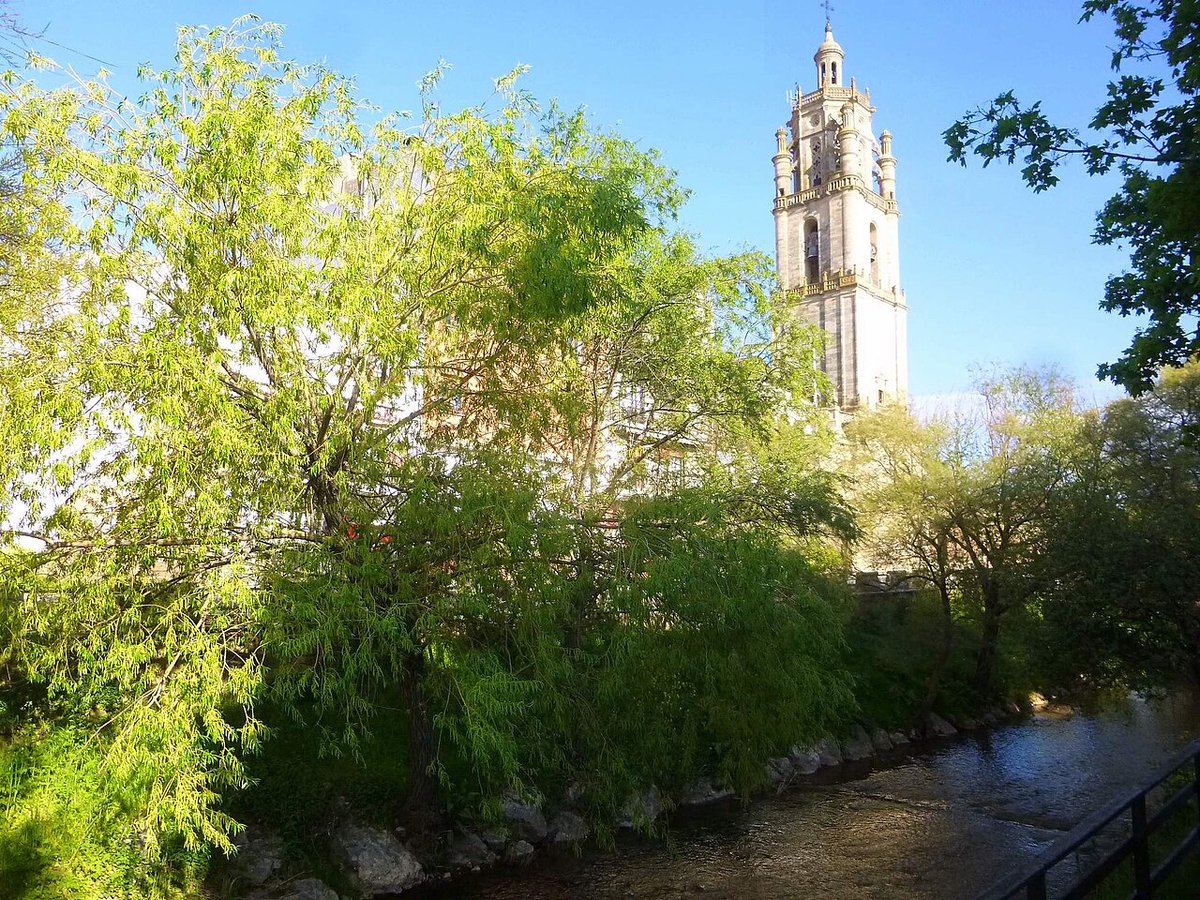
At the centre stands the parish church of San Pedro, a building that draws the eye without trying too hard. Its origins go back to the 13th century, and although it has changed over time, it still feels like a place that has watched generations come and go. Inside, there are altarpieces from different periods, including a Baroque example from the 18th century, alongside older religious images. It is not monumental in the grand sense, yet there is a quiet sense of history in its walls.
A small old quarter with things to notice
The oldest part of Allo can be walked in a matter of minutes. It is compact enough that you quickly get your bearings. Even so, it rewards a slower pace, especially if you take the time to look up at the buildings.
Details begin to appear. Carved coats of arms, carefully worked stone doorways, and family names etched into lintels. Surnames such as Sanz, Alzáiz or Goñi can still be read on some houses, linking the present to the past in a direct and unpolished way.
The Plaza Mayor acts as the village’s meeting point. It is not large, but it tends to have a steady rhythm of activity. People stop to talk, children run near the kiosk, and older residents stretch out their midday coffee. It is an everyday scene that feels ordinary to those who live here, yet for a visitor it makes clear that life follows a different tempo.
Vines and underground cellars
Step beyond the edge of the village and the vineyards begin almost immediately. Much of the surrounding landscape is tied to vine growing and wine production, something common across this part of Navarra.
Among the fields, you come across cellars dug into the earth. Some are still in use, others appear closed or altered over time. They are simple constructions, often set into sandy slopes, designed to keep wine at a stable temperature. They do not resemble the polished image often associated with wine tourism. Here, everything feels closer to the ground, more practical than styled.
For those with a genuine interest in local wine, it is sometimes possible to visit one of these cellars. It is worth asking locally beforehand, as not all are regularly open and many operate on a direct, informal basis.
Looking out over the Ega valley
Climb a little towards the higher ground around Allo and the landscape opens up. The valley of the Ega river stretches out ahead, with vineyards, cereal fields and agricultural tracks weaving between plots of land.
Towards sunset, the light shifts and the colours turn warmer, leaning into ochre tones. There are no formal viewpoints or railings. These are simply places along the paths where you stop, take in the view, and then move on.
Paths across Tierra Estella
Several rural tracks lead out from Allo towards nearby villages such as Dicastillo and Arellano. These routes are generally flat and run through farmland, used both by those working the land and by people walking or cycling.
In summer, the sun is not something to underestimate. Shade is scarce and the heat can be intense, so basic precautions make all the difference.
Some variants of the Camino de Santiago also pass through the area. This famous pilgrimage route crosses much of northern Spain. In Allo, it does not change daily life much, but from time to time pilgrims with backpacks pass through the quiet streets, briefly becoming part of the scene.
Festivities and the farming year
The calendar in Allo is closely tied to both tradition and agriculture. The patron saint festivities of San Pedro usually take place at the end of June. In August, the Virgen de las Nieves is marked with simpler events. Then September brings the grape harvest, one of the most important moments of the year.
During the harvest, there is a noticeable shift in activity. Tractors move in and out of the fields, trailers arrive filled with grapes, and conversations often turn to the quality of the crop. The connection between the village and its surroundings becomes especially visible at this time.
What Allo is, and what it is not
Allo is not a place of major landmarks or somewhere packed with sights for a full weekend of constant activity. It works better as a stop along a wider route through Tierra Estella.
You arrive, walk through the main streets, visit the church, and look out over the vineyards that frame the village. Then you move on. It has something in common with a well-placed roadside stop: you do not need much time to understand where you are.
What becomes clear quite quickly is the direct relationship between the village and the land around it. Almost everything here revolves around that connection, and it shows in the pace, the buildings, and the way the landscape is used.