Full Article
about Améscoa Baja
Spectacular valley at the foot of the Sierra de Lóquiz; known as the natural gateway to the Nacedero del Urederra.
Hide article Read full article
A Quiet Valley at First Light
Early in the morning, when much of the valley is still in shadow, the first thing noticed is the sound of water. It runs through tall grass and under small stone bridges, heard before it comes into view. Tourism in Amescoa Baja begins in this understated way: soft sounds, the smell of damp earth, and the sense of being somewhere unhurried.
This municipality in Tierra Estella, a region in Navarra, brings together several small villages at the foot of the Urbasa and Andía mountain ranges. A single road crosses the valley without drawing much attention to itself. Meadows stretch out on one side, patches of woodland on the other. Just over seven hundred people live here, spread across pale stone houses with reddish roofs and farmyards where livestock can still be heard.
Villages of Stone and Stillness
Walking through Amescoa Baja is largely about noticing small details. Wooden doors darkened with age. Coats of arms carved into façades. The faint smell of firewood as the air cools towards evening.
In San Martín de Améscoa, the church dedicated to San Martín de Tours preserves elements of late Romanesque architecture alongside later additions. The oldest parts are most visible in the doorway: slightly worn stone, simple reliefs, solid proportions that give it a grounded presence.
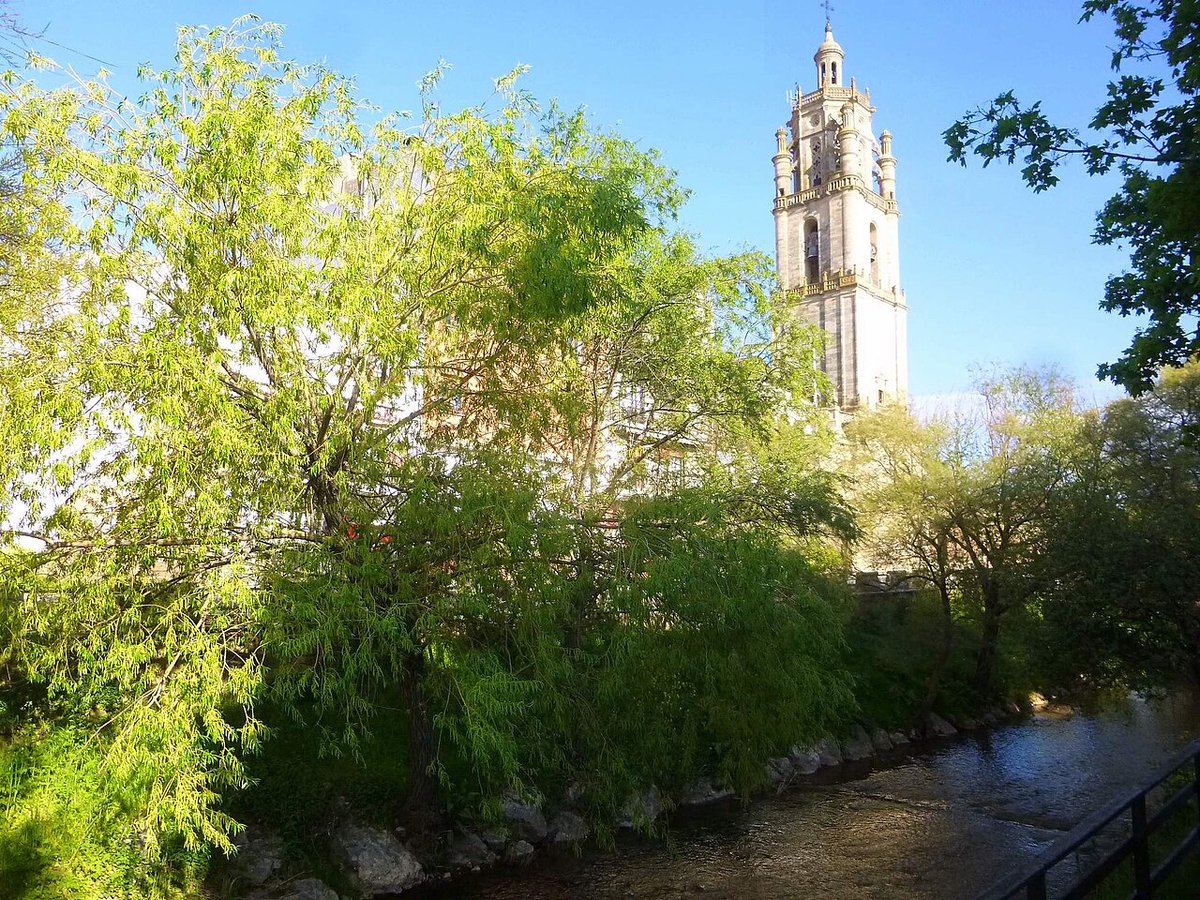
Zudaire is often one of the livelier villages in the valley. Its church of la Asunción has a tower visible from some distance as you approach along the road. Inside, according to local accounts, there is a Baroque altarpiece that contrasts with the building’s restrained exterior.
In Artaza, the landscape opens out. Houses are more spaced apart, with meadows surrounding them and a small hermitage near the livestock paths. It is common to see cows or sheep grazing very close to the village itself.
Water and Woodland
Water is a constant presence. Springs appear in different parts of the valley, and small streams cross meadows and wooded areas. In Artaza there is one of the best-known springs in the area. People often come to fill bottles or sit for a while on the stone edge, especially on warmer days.
Further up the slopes, beech forests and grazing land rise towards Urbasa. In autumn, the change in colour is clear: deep browns, muted yellows, damp leaves pressed into the ground along the paths. Summer brings a different focus, with shade becoming more important. The air beneath the beech trees is usually cooler than in the valley floor.
Near some of the rivers, remains of old mills can still be seen. Low walls, stone channels and structures partly covered by vegetation. They are traces of a time when water powered much of the local economy.
Paths Between Villages
Paths and minor roads connect the villages, suitable for walking or cycling. Distances are not large, though the terrain rises and falls often enough to be noticeable. It helps to be aware of the route profile before setting out if the area is unfamiliar.
Trails that head towards Urbasa gradually gain height. On damp days, mud appears quickly, especially under tree cover, and good footwear makes a difference.
In summer, starting early is often appreciated. By mid-afternoon, the sun falls directly onto the valley floor and the heat feels stronger than a map might suggest.
Taking It Slowly
A couple of hours is enough to walk through Zudaire, visit its church, and continue on to Artaza to see the spring and the houses with coats of arms on their façades. These are short walks, the kind that unfold without much attention to the clock.
With more time, it is worth heading to San Martín de Améscoa and spending a while in its narrow streets. There are no large monuments or grand squares. What appears instead are small, everyday moments: a tractor parked by a wall, washing hanging between balconies, the distant sound of a dog somewhere in the village.
The valley road has gentle bends and occasional stretches where livestock may approach the tarmac, so driving slowly is advisable. For those walking along tracks or paths, having a map downloaded beforehand helps, as mobile coverage can be unreliable in areas that open towards the mountains.
Amescoa Baja is best understood by accepting its rhythm. It is not suited to rushed visits. The interest lies in what happens between one village and the next: water running alongside the path, wind moving through the high leaves of the beech forest, the quiet that settles once the car is left behind. The landscape speaks softly, but it holds attention for a long time.