Full Article
about Ancín
Small town on the banks of the Ega; former railway stop now a greenway for cyclists and walkers
Ocultar artículo Leer artículo completo
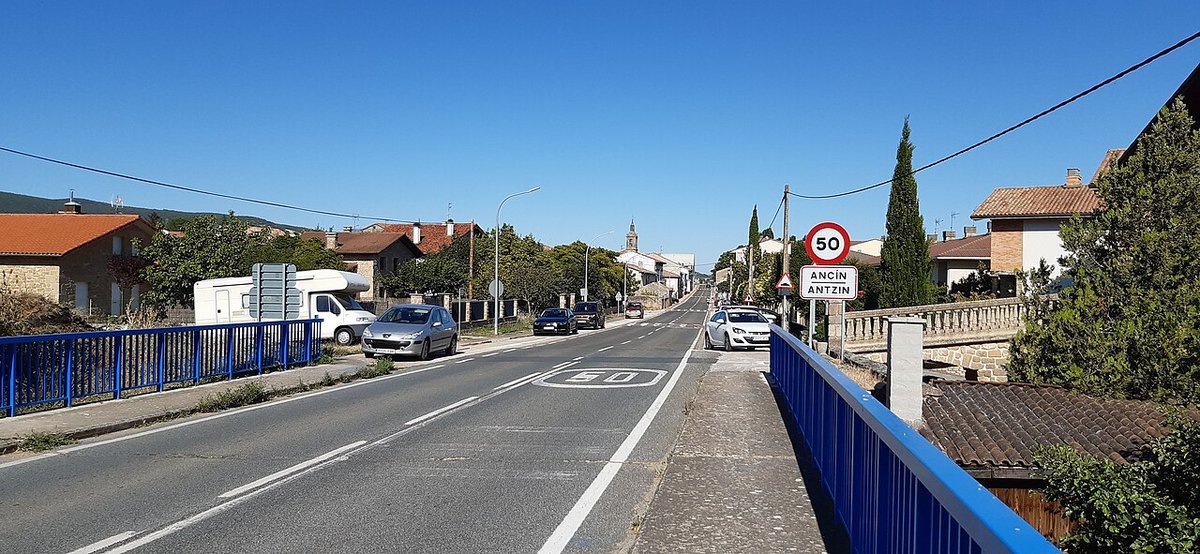
The church door stands open at three on a Tuesday afternoon, letting swallows dive through the nave and out again. Nobody seems bothered. That's Ancín: 488 metres above sea level, half-way between Pamplona and Logroño, and in no hurry to choose sides.
Stone, Sky and the Smell of Threshing
Ancín sits on a limestone ridge that keeps the village cool when the surrounding cereal plains shimmer. The altitude matters more than the modest figure suggests. Mornings arrive sharp, even in May; by dusk the air drains heat fast, so walkers who set out in T-shirts return looking for a jumper. Winter brings the reverse problem—roads stay clear of snow longer than you expect, yet a northerly wind can make the same lanes feel Alpine.
The built fabric reflects that climate. Houses are squat, walls nearly a metre thick, roofs pitched just enough to shed rain rather than snow. Limestone blocks the colour of pale ale turn honey-gold after seven o'clock sun, a trick photographers miss because most pass through at midday. Iron balconies are slender; the woodwork is painted ox-blood red or left to weather grey. Nothing is "restored" in the heritage-park sense—families still lime-wash each spring, replacing broken panes with whatever glass the Estella glazier has in stock.
You can cover the core in twenty minutes, yet the sequence keeps unfolding: a coat-of-arms dated 1674 above a garage door, a medieval socket stone reused as a flowerpot holder, bread ovens bricked up during the Civil War and never reopened. The parish church of San Esteban hides its best piece inside—a sixteenth-century Flemish panel that the sacristan will uncover if you ask at the house opposite. No ticket, no rope barrier, just a polite request to wipe your feet.
Paths that Follow the Harvest
Leave the last streetlamp behind and the network of farm tracks begins. These are not signed GR routes; they are working roads used by tractors hauling grain to the cooperative in neighbouring Zudaire. That means stone surfaces graded twice a year and hedges flailed short, perfect for easy walking with no specialised gear. Distances are measured by threshing floors rather than kilometres: twenty minutes to the abandoned cortijo, another fifteen to the oak grove where beekeepers leave their hives.
Spring brings poppies between wheat rows, autumn turns stubble to bronze under low sun. Summer walking demands an early start; shade is limited to the occasional holm oak, and the reflection off pale soil intensifies heat. Even in July the thermometer may read 32 °C at noon yet drop to 16 °C by 10 p.m.—a swing that catches out campers from the Basque coast who assume inland means "warmer".
Birdlife follows the plough. Calandra larks rise vertically like small helicopters, red-legged partridges scurry in coveys, and in October hen harriers cruise the stubble looking for careless voles. You will hear more tractors than people, though that changes abruptly on festival days when every family with roots in the village returns, swelling numbers to roughly a thousand.
What Appears on the Table
There is no tasting menu, no chef's interpretation of tradition—just the weekly rhythm of market produce and whatever game the local hunt brings in. Weekday lunch (served promptly at 14:00 in Bar Iribia, the only public bar) might be a bowl of pochas, pale haricot beans stewed with chorizo, followed by chuletón al estilo—a rib steak cooked on the hearth grill and brought to the table still spitting. Expect to pay around €14 for the menú del día including wine from the DO Navarra cooperative down the road.
Evenings are quieter; the bar reopens at 20:00 but kitchen hours vary. If shutters are still down, drive ten minutes to Estella where choices multiply, or buy picnic supplies at the Eroski on the outskirts and watch the sun settle over the cereal sea. Vegetarians survive on tortilla and salads; vegans should plan ahead—cured ham infiltrates most dishes, even the green beans.
Timing the Trip
The village makes sense between mid-April and mid-June, or from late September to early November. In those windows day-time highs hover around 20 °C, paths firm up after winter rain, and the encinas hold their copper leaves long enough for decent photographs. July and August empty the place of locals; shutters stay closed, the only fountain dribbles warm water, and the bar may shut early if trade is slow. Winter walks are possible—snowfalls over 10 cm happen twice a season on average—but short days mean dusk by 17:30 and the church is rarely unlocked.
Fiestas reverse the emptiness. The patronales around 25 August pack the single street with brass bands, paella for five hundred, and a Basque pelota match played against the church wall. Book accommodation early; the nearest hotel beds are in Estella and they disappear fast. Semana Santa processions are low-key—hooded cofradías, one drum, women wearing black lace—but they block the road through the village, so drivers should plan a detour via the NA-132.
Getting There, Staying Over
Ancín lies 50 km south-west of Pamplona. The quickest route is the N-111 to Estella, then the NA-1110 for 7 km; total driving time is 45 minutes, longer if you meet tomato lorries trundling towards the processing plant at Los Arcos. Public transport exists but feels theoretical: one morning bus from Pamplona, one return at 18:00, fewer on Saturdays, none on Sunday or public holidays. Car hire from the airport therefore counts as essential rather than optional.
Accommodation within the municipality amounts to two self-catering cottages—both converted stone houses with wood-burning stoves and patchy phone signal. Expect €90–110 per night for four people, two-night minimum. Otherwise base yourself in Estella (ten minutes by car) where the Hostal Cristina offers doubles from €55 including garage parking, handy if your rental comes with the oversized mirrors common on Spanish cars.
The Honest Catch
Ancín does not overwhelm. There are no great monuments, no Michelin stars, no dramatic gorges. Walkers seeking 3,000-metre peaks should aim for the Pyrenees an hour north-east; food pilgrims chasing three-hour tasting menus are better served in San Sebastián. What the village offers is continuity—stone that has housed the same families for four centuries, fields rotated between wheat and barley since feudal dues were abolished, a pace dictated by swallows rather than algorithms.
Come prepared for silence after 22:00, for mobile coverage that vanishes in the lee of a threshing floor, for the sacristan to decide church visiting hours on the spot. Accept those terms and the reward is an afternoon when the loudest sound is a hawk circling overhead, and the evening sun turns limestone walls the colour of English honey—no filter required.