Full Article
about Aranarache
Small village at the foot of the Sierra de Urbasa; wooded setting perfect for direct contact with nature.
Hide article Read full article
Aranarache: un pueblo de Tierra Estella
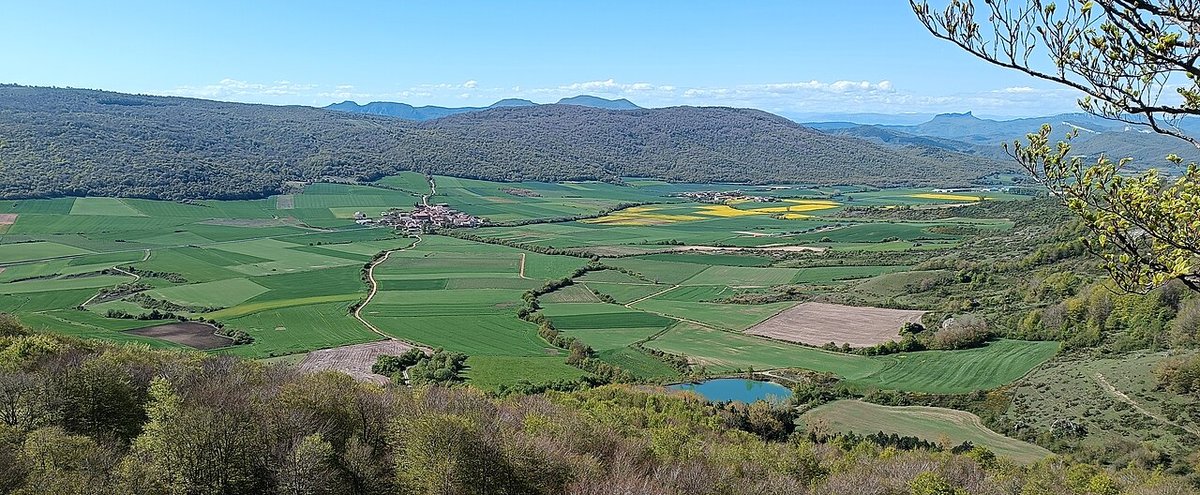
Aranarache se encuentra a unos 780 metros sobre el nivel del mar, en la zona alta de Tierra Estella. El paisaje aquí es abierto, dominado por campos de cereal. Con unos setenta habitantes, el pueblo mantiene la escala de los asentamientos rurales que apenas han variado en las últimas décadas: unas pocas calles, casas compactas y los campos que empiezan justo después de la última puerta.
La disposición del pueblo solo se entiende mirando al territorio que lo rodea. Las parcelas, los caminos de acceso e incluso la orientación de las viviendas responden a siglos de trabajo ligado a la agricultura y la ganadería.
La iglesia y la estructura del casco
En el centro se levanta la iglesia de la Asunción. El edificio actual es de época moderna, probablemente del siglo XVI, con reformas posteriores. Su aspecto es sobrio, de muros de piedra con una espadaña visible desde los accesos al pueblo. Guarda un retablo barroco modesto, similar al de otras parroquias rurales de Navarra.
El casco se agrupa alrededor del templo. Las casas son de piedra, de volúmenes compactos, y varias lucen escudos sobre sus puertas. Estos no siempre indican linajes poderosos; a menudo señalan simplemente antiguas casas familiares que tuvieron cierto peso dentro de la comunidad local.
En algunas fachadas se conservan galerías de madera orientadas al sur. Su función era práctica: protegían del viento y ofrecían un espacio cubierto para secar productos de la huerta o guardar herramientas.
Los palomares en el campo
Fuera del núcleo urbano, varios palomares aislados salpican los campos. Estas estructuras formaban parte del aprovechamiento tradicional del terreno. No son exclusivos de esta zona, pero en la Navarra media y en Tierra Estella llegaron a ser bastante frecuentes.
Recorrer los caminos rurales
Aranarache se recorre en poco tiempo. En menos de una hora se pueden caminar sus calles principales y rodear el pueblo por los caminos que salen hacia los campos.
Una red de pistas agrícolas hace que caminar sea sencillo, aunque no se trata de rutas señalizadas. Son vías de trabajo que conectan parcelas y suelen seguir líneas antiguas, marcadas por lindes y suaves elevaciones del terreno.
En días despejados, las zonas algo más altas alrededor del pueblo permiten ver cómo se organiza el paisaje: campos de cereal que alternan con manchas de matorral y pequeñas zonas boscosas donde el cultivo no era viable. El patrón es simple pero revelador.
Las primeras horas de la mañana y el final de la tarde suelen ser los momentos más tranquilos para caminar por estas pistas. La actividad agrícola marca el ritmo y es habitual cruzarse con tractores o maquinaria moviéndose entre parcelas. No es un espacio reservado para el visitante, sino un entorno de trabajo donde caminar implica compartir el sitio con las tareas cotidianas.
Consideraciones prácticas
En verano, el calor se nota en estas zonas abiertas de cultivo. Fuera del casco urbano hay poca sombra, por lo que es más cómodo caminar a primera hora o al atardecer.
En el pueblo no hay tiendas ni servicios turísticos. Quien planee pasar tiempo por los caminos de alrededor debe llevar agua y algo de comer.
Conviene también prestar atención al coche. Es mejor dejarlo en la entrada del pueblo, evitando bloquear accesos a campos o portales. Las pistas que parecen tranquilas suelen ser utilizadas por tractores y maquinaria agrícola, sobre todo en época de siembra o cosecha.
Cómo llegar y moverse
Desde Estella-Lizarra, el acceso es por carreteras locales que pasan por varios pueblos cercanos. El último tramo es una carretera estrecha, típica de esta parte de Navarra, donde conviene circular con calma y pendiente del tráfico agrícola.
Una vez en Aranarache, lo más sencillo es dejar el vehículo en las afueras del núcleo y continuar a pie. El pueblo es lo suficientemente pequeño como para no necesitar más.