Full Article
about Arellano
Town known for the Roman villa of the Muses; set on the slopes of Montejurra overlooking the Ribera.
Ocultar artículo Leer artículo completo
The villa gates open at 10:30 sharp. By 10:25, a queue of eight visitors has already formed outside a modest farmhouse on the edge of Arellano, cameras at the ready. They're not here for the house itself, but for what lies beneath: a Roman residential complex so intact you can still trace the heating pipes under the mosaic floors.
Arellano sits 450 metres above sea level in Navarra's Tierra Estella region, a 25-minute drive south-west of Pamplona. The village proper stretches barely a kilometre from end to end, a cluster of stone and adobe houses where wheat fields roll right up to the back gardens. At this altitude, mornings arrive crisp even in summer, and winter fog can linger until noon, turning the surrounding cereal plains into an impressionist canvas of muted golds and greens.
The Roman Surprise
The Villa de las Musas shouldn't really be here. Most Roman sites in northern Spain hug the coast or major rivers; this one sits in agricultural nowhere, discovered only when a farmer tried to plant apple trees in 1975. What emerged was a 4th-century villa complex with 900 square metres of geometric mosaics, underfloor heating channels, and a bathhouse complete with hypocaust system. The preservation is startling: you can walk on glass panels laid directly over the original floors, peering down at dolphins, octopuses and the nine muses themselves.
Tours run hourly in high season, €3 cash only, and last forty minutes. The guide switches between Spanish and hesitant English depending on the group composition; download the English PDF beforehand if your Castilian is rusty. Photography is allowed, but flash is banned—the mosaics have already faded from centuries of exposure after their protective earth blanket was removed.
Between tours, the site is locked. This isn't a suggestion; the metal gate clatters shut with bureaucratic finality. Several visitors each month arrive at 11:15 to find themselves stranded until the 12:30 slot, having misjudged the 90-minute drive from Bilbao airport. Pre-booking online is essential in July and August; outside those months, you can usually squeeze onto the next tour if you arrive early enough.
Village Life, Compressed
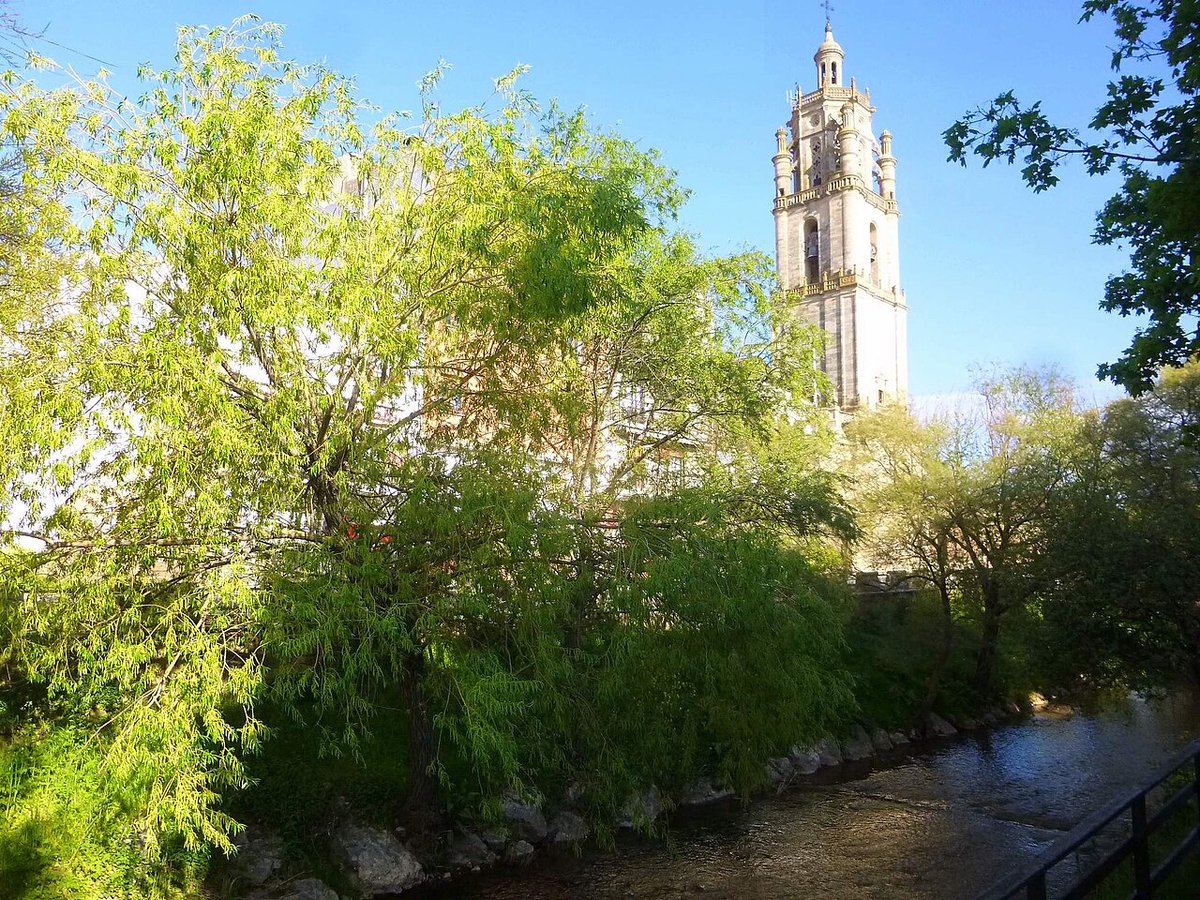
Arellano's modern centre takes precisely twelve minutes to traverse at a dawdle. Houses rise two or three storeys, their lower walls built from local limestone, upper sections from adobe brick left natural or whitewashed. Iron balconies hold geraniums in summer; winter sees firewood stacked in neat cords against every south-facing wall. The parish church, rebuilt in the 16th century after a fire, stands solid and square at the top of the main street. Inside, the carving on the altarpiece shows Flemish influence—look for the tiny dog carved at the feet of Saint Roch, patron saint of plague victims.
The only bar sits opposite the church, opening at 7:00 for coffee and churros, closing at 22:00 except on Sundays when shutters come down at 15:00. Their navarrico toastie—ham, cheese and piquillo pepper pressed between crusty bread—makes a reliable lunch at €4.50. Order it with a glass of house red from Tierra Estella; the wine is light enough for lunchtime yet stands up to the smoky pepper. If you're vegetarian, the grilled asparagus sandwich works, though you'll need to specify "sin jamón" twice.
There is no cash machine. The nearest ATM stands outside the Repsol station on the N-111, six kilometres towards Estella. The bar accepts cards for amounts over €10, but the villa ticket desk does not. Bring coins for parking too—€1.20 covers three hours in the marked bays, though nobody seems to check outside August.
Walking the Wheat
Three signed footpaths radiate from Arellano into surrounding farmland. The shortest, a 45-minute loop, climbs gently north towards the Sierra de Urbasa. In May, the wheat is still green, rippling like the sea when Atlantic weather systems roll in. By July, stalks stand knee-high and golden, crackling underfoot. The path follows ancient farm tracks between dry-stone walls; keep an eye out for hoopoes feeding at the field edges, their zebra-striped wings unmistakable in flight.
Longer routes connect to neighbouring villages—Dicastillo at 7km, Artazu at 9km—but navigation requires attention. Junctions appear every few hundred metres, unsigned beyond the parish boundary. Download the track beforehand; phone signal drops in every valley. Carry water in summer—there's no shade for kilometres, and temperatures can hit 35°C by 13:00. Winter walks bring their own reward: crisp air, empty paths, and views stretching 40km south towards the wine hills of Rioja, but you'll need layers; the same altitude that keeps summer nights comfortable means January mornings start at -2°C.
Timing Your Visit
Spring arrives late at this elevation. By late April, orchards around the village explode into white blossom overnight, but night frosts can still catch out early vegetables. Autumn is the photographer's friend: wheat stubble turns bronze, holm oaks on the ridge glow deep green against ochre fields, and the low sun paints long shadows across the mosaics inside the villa. Mid-September to mid-October offers the best balance of mild weather and manageable crowds.
August brings fiestas: processions, brass bands, and a communal paella that feeds half the province. Accommodation within Arellano itself is non-existent; the nearest hotels lie 15 minutes away in Estella. Book early for fiesta week—rooms fill with returning emigrants who've been reserving the same balconies since 1992. Winter sees the village almost hibernate. Several cafés close entirely from November to March; even the church reduces Mass to Sunday mornings only. Come then only if you value silence above services.
The Practical Bits
Driving remains the only practical approach. From Bilbao airport, take the AP-68 towards Logroño, switch to the A-12 at Miranda de Ebro, exit at Noáin towards Estella, then follow the NA-6310 for 12km. Public transport exists in theory—a twice-daily bus from Pamplona—but it drops you on the main road with a 2km walk into the village. Taxis from Estella cost €20 each way and must be booked in advance; drivers rarely speak English.
Combine Arellano with nearby sites to justify the journey. The Monasterio de Irache, five kilometres south, offers a 10th-century church and a wine fountain that dispenses free Rioja to pilgrims on the Camino de Santiago. Estella's old town, perched above the Ega river, contains Romanesque bridges, Gothic palaces, and enough pintxo bars to keep grazers happy for an afternoon. Allow half a day for Arellano itself—an hour for the villa tour, another hour wandering the village lanes, plus whatever time you devote to walking the fields.
Leave before nightfall unless you're staying locally. Street lighting is minimal; once the few residents retreat indoors, the only sound is the hum of tractors cooling in farmyards. The mosaics will be locked away, the bar shuttered, and the wheat fields invisible under a sky thick with stars. It's peaceful, certainly, but also a reminder that Arellano functions first as a home to its 120 inhabitants, and only second as a stage set for time-travelling tourists.