Full Article
about Arróniz
Navarre’s quintessential olive-oil town; a landscape of olive groves and home of the Día de la Tostada
Ocultar artículo Leer artículo completo
The church bell in Arroniz strikes two, and the only other sound is a tractor grinding through gear changes on the edge of town. At 560 m above sea level the air is thin enough to sharpen the scent of straw drifting in from the surrounding wheat belt. This is Tierra Estella, an hour south-west of Pamplona, where the landscape flattens into open cereal plateaus and olive groves rather than the postcard Pyrenees most British visitors associate with Navarra.
Stone houses line a compact grid that can be walked end-to-end in twenty minutes. Many still have wooden doors wide enough for a mule cart; a few display weather-worn coats of arms that hint at medieval livestock fairs long since replaced by cooperatives and mechanised harvesters. The core is the Plaza Mayor, a rectangle of terraced houses with iron balconies and ground-floor arches. Plastic chairs appear outside the single bar after 17:30, and conversation clusters around crop prices rather than sightseeing itineraries.
What passes for “sights” – and how to see them
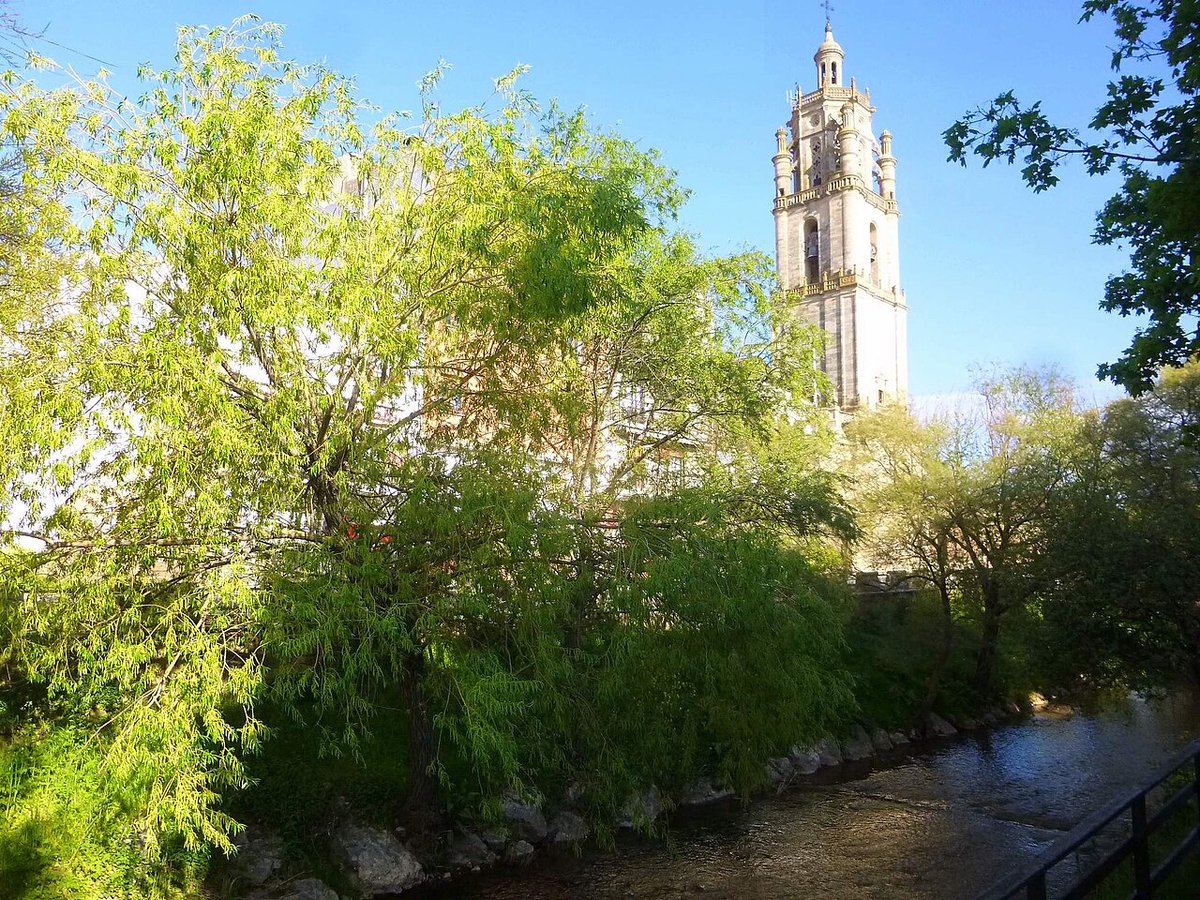
The 15th-century tower of San Julián rises above the roofs like a stone compass needle. Inside, the church is cool, plain and usually locked unless you coincide with Sunday mass at 11:00 or the weekday evening office at 19:00. Baroque side altars, paid for by wool profits in the 1700s, are worth the wait: gilded spirals catch the dim interior light and give away the town’s former wealth. Ask the caretaker (lives second door down, look for the keys on a ribbon) and she’ll open up for no tip, just the expectation that you’ll close the door quietly on the way out.
Civic pride centres less on monuments than on facades. Wander two streets east to Calle Nueva and you’ll spot a row of ashlar houses built by emigrants who returned from Cuba in the 1920s; the marble plaques list names that sound surprisingly Basque rather than Caribbean. Five minutes south the cemetery hedge gives way to wheat fields that shimmer bronze by late June. There is no viewpoint sign, no orientation board – just a gravel shoulder wide enough to park and a sunset that turns the stone walls peach at 21:00 in midsummer.
Moving at field pace: walking, cycling, driving
Surrounding tracks are farm service roads, not mountain trails. They roll gently, following low dry-stone walls that divide olives from barley. A 5-km loop north to Corraliza and back passes an abandoned grain dryer popular with nesting storks; early mornings bring hoopoe calls and the smell of dew on chamomile. Summer midday temperatures top 35 °C, so walkers either set off at dawn or wait until after 18:00 when the sky softens and tractors return from the fields.
Tarmac is minimal and traffic light, making the area decent for leisurely cycling. Hire bikes in Estella (15 km west) and follow the NA-1110 service lane; gradients rarely exceed 3 %. After rain, clay sections stick to tyres like wet cement – locals carry a short stick solely to poke mud from wheel rims. Road cyclists use the main A-12 as a fast link between wine towns, but the hard shoulder is narrow and lorry drivers assume right of way.
Winter is a different proposition. Frost feathers the stubble from November to March, and the sierra to the north occasionally wears a dusting of snow visible from the plaza. Daytime highs hover around 9 °C, night-time can dip to –4 °C. Charming if you own a fireplace; otherwise hotel bases in Estella or Los Arcos make more sense – both have heating systems designed for the plateau chill rather than the modest wood stoves of village houses.
Eating and stocking up
Gastronomy follows the agricultural calendar: artichokes and cauliflower in April, peppers and tomatoes in September, pork products after the autumn matanza. The Polideportivo bar next to the football pitch serves a three-course menú del día for €13 (£11.20) Monday to Saturday, but stops taking orders at 15:00 sharp. Expect grilled pork shoulder, chips, and a half-bottle of local tempranillo; vegetarian choices extend to roasted piquillo peppers or a green salad. English is limited, yet staff are used to pointing at trays and smiling.
There is no shop in the village centre. A mobile grocer’s van parks by the plaza on Tuesday and Friday mornings; bread arrives around 10:30, fruit slightly later. Fill your tank and your wallet before you arrive – the nearest cash machine is 12 km away in Los Arcos, and petrol stations close at 21:00. If you arrive on a Monday you’ll find both bar-restaurants shut; pack sandwiches or detour to Estella where a small supermarket opens 09:00-14:00.
Olive oil, pressed in Almazárate 8 km down the road, is Navarra’s mildest: yellow, almost sweet, and suited to British palates that find Andalusian oils peppery. Buy a 500 ml bottle for €6 from the cooperative door on weekday mornings; they’ll rinse out a used plastic water bottle if you haven’t brought packaging.
Fiestas and the population swell
For most of the year the town keeps to its census count of about 1,000, but fiestas at the end of August quadruple the numbers. San Julián’s week brings street bands, a paella contest in the sports hall car park, and a bull-run of the sort you’ve seen in Pamplona but with far fewer spectators and no ticketed grandstands. Accommodation within the village is non-existent; visitors stay in Estella and drive in after dark. Expect fireworks until 02:00 and every verge converted into free parking – charming if you enjoy a party, stifling if you came for silence.
February keeps things local: on San Blas day the priest blesses doughnuts after mass and the women’s association sells anise-laced rosquillas for €1 a pair. Snow is unlikely but cold rain is not; the plaza drains poorly and puddles reflect the church tower like a cracked mirror. It’s the best moment to witness the town talking to itself – no tourists, no itinerary, just neighbours trading seedlings and comparing rainfall figures.
The honest verdict
British drivers racing between Bilbao and La Rioja sometimes pause for coffee, photograph the plaza, and leave twenty minutes later – which is about right if you measure attractions in cathedrals and museums. Arroniz rewards a slower gauge: the smell of new-mown oats, the way dusk softens the stone, a bar where your glass of wine arrives with a free tapa of home-cured chorizo. Stay for a couple of hours and you may leave underwhelmed; stay for a slow lunch and an evening walk and you’ll understand why the harvest, not the guidebook, sets the rhythm here. Bring water, check the bar calendar, and plan a bed elsewhere – then let the Navarran plateau work its quiet, unspectacular spell.