Full Article
about Bargota
Birthplace of the famous Brujo de Bargota; a charming village that hosts an annual witchcraft week.
Ocultar artículo Leer artículo completo
The church door sticks. A woman in an apron leans against it with her shoulder until the oak yields, revealing San Pedro Apóstol’s 12th-century porch suddenly flooded with October light. That small battle with wood and iron is Bargota in miniature: modest, a little stubborn, and worth the shove.
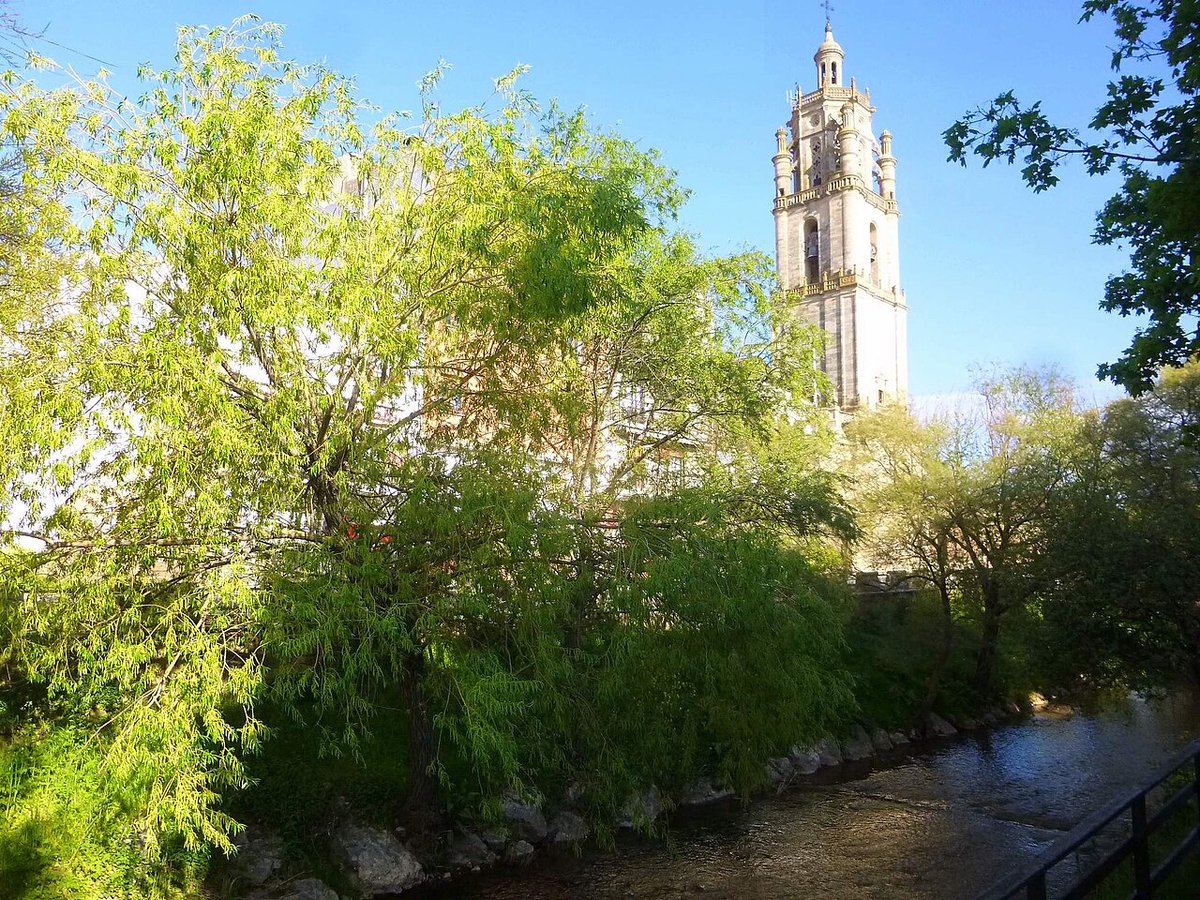
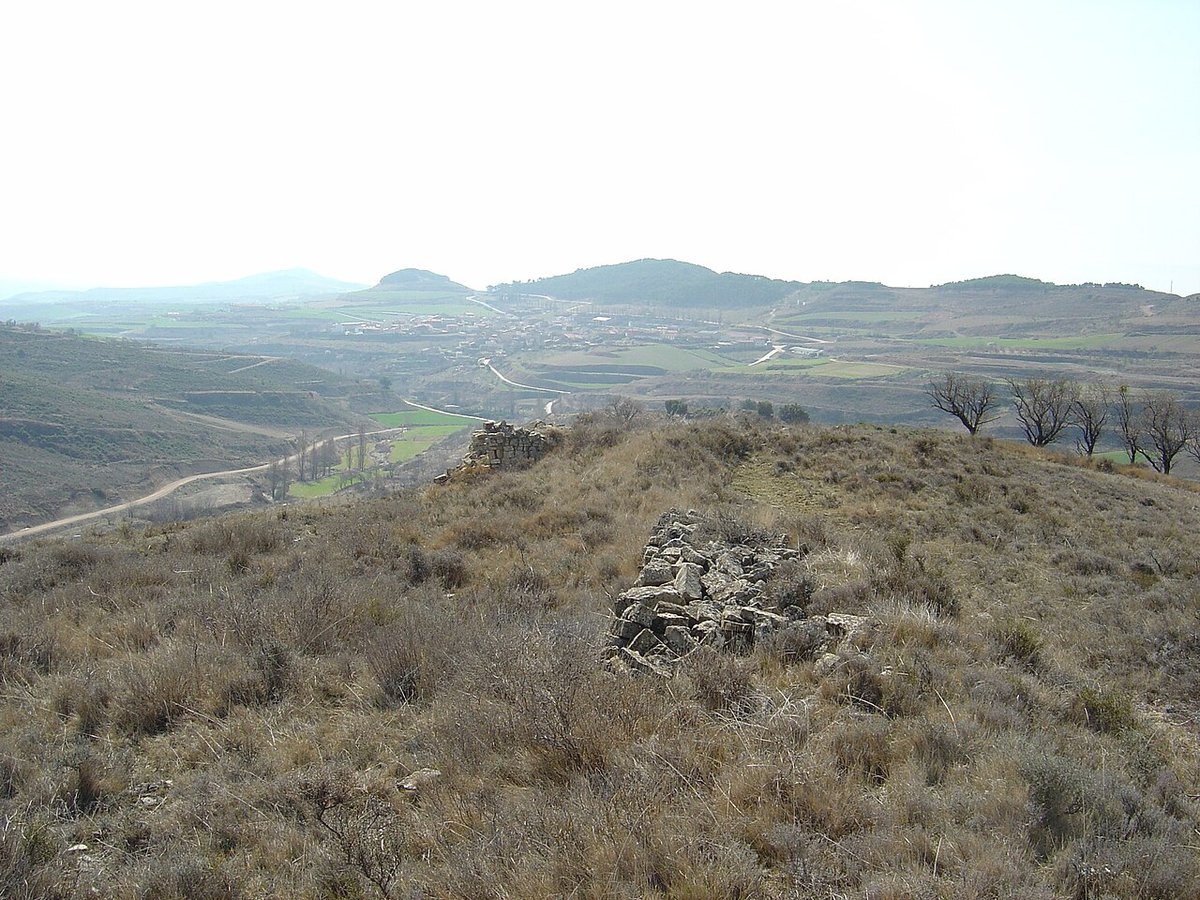
At 507 metres above the Ega valley, the village sits just high enough for the air to lose the dust of the southern Navarre plain. Morning mist pools between vineyard rows, then lifts to leave the Sierra de la Codera sharp against a pale sky. The altitude matters: nights stay cool even in July, so the Grenacha grapes keep their acidity and the local reds stay balanced. It also means that in January the narrow lanes can glaze over; if you’re driving from Logroño (45 minutes on the NA-111) carry a set of tyre chains in the boot.
Bargota’s medieval grid was drawn for feet, not wheels. Park by the stone pillory on the plaza, leave the car, and the place makes sense in ten minutes. Calle Mayor threads south between houses stitched from honey-coloured ashlar and brick. Look up: one 16th-century façade carries a relief of a hawk tethered to a glove, the family crest of the same surname that still runs the village bakery. The bakery opens at 07:00, sells out of mantecadas by 09:30, and shuts when the trays are empty. No website, no card machine—euros only.
Romanesque porches and shuttered interiors
San Pedro’s west doorway is the village’s only piece of recognised architecture: three archivolt bands, water-leaf capitals, a tympanum so eroded that only the nail-holes of a vanished Christ remain. The key-holder lives opposite at number 14; ring the bell labelled “Conchi” and she’ll appear in carpet slippers, talking rapid Spanish with a Riojan lilt. Inside, the single nave smells of wax and extinguished candles. The Baroque altarpiece is gilded pine from 1694, flaking badly on the left side where the roof leaked for thirty years. Restoration money arrives in dribs and drabs; the right side is already bright with new gold leaf, creating a two-tone effect that restorers cheerfully call “honest patina”. Conchi will point out the gap in the predella where a San Pedro statue was removed during the Civil War and never returned. She locks up again after fifteen minutes—no fixed timetable, no donation box, just an expectation that you’ll close the door quietly.
Beyond the church the lanes narrow until two people can’t pass without touching shoulders. Houses turn their backs to the street: tiny grilled windows, iron grilles over wooden doors, the occasional geranium pot the only concession to ornament. It feels closed, but push any ajar gate and you’ll find an interior courtyard where the real life happens—grandparents shelling beans under a pergola, a tractor engine half-dismantled on newspaper. Photograph the stone, not the people; they’ll tolerate it once, not twice.
Tracks through vines and cereal stripes
The village ends abruptly. One minute you’re on cobbles, the next you’re between waist-high wheat and wire-trained vines. A lattice of farm tracks forms a rough figure-of-eight that can be walked in an hour and a half. The red-and-white waymarks belong to the “Ruta del Vino” network, but they’re sporadic; download the free Tierra Estella pdf instead or simply keep the bell-tower in sight as your bearing. Spring brings poppies between the barley rows; October turns the vines into scarlet flames and brings out tractors stacked with yellow plastic picking crates. There is no shade—none—and the wind that funnels up the valley can feel like a hair-dryer. Set off before 09:00 or after 17:00, take a litre of water per person, and wear shoes you don’t mind grinding into chalky soil.
If you want a longer hike, follow the track north-west towards Lorca (4 km). The gradient is gentle but constant; you’ll gain another 150 metres and reach a ridge that lets you see the limestone wall of the Sierra de Cantabria, the roof of the Marqués de Riscal winery glinting like a fish-scale. Turn back, or drop down to Lorca and phone for a taxi back to Bargota (Taxi Estella, +34 609 570 064, €18 fixed fare). Sunday service is patchy—book the return when you book the outward ride.
Wine without the theatre
Bargota itself has no bodega open to visitors; the cooperative presses its members’ grapes in Estella and trucks the juice out. For a tasting you need to travel six kilometres south to Bodegas Irache, whose museum still contains the 1891 bottling machine that first put Navarre wine into glass rather than pigskin. Their basic visit costs €8 and includes a glass of crianza that tastes of black cherry and the graphite soils around here. Irache closes on Mondays and for the entire month of January; check before you make the drive.
Back in the village, food options are limited to Bar La Plaza (ten tables, television usually showing cycling) and the weekend-only asador attached to the bakery. The menu is written on a chalkboard and never changes: chuletón al estilo navarro (a 900 g T-bone for two, €38), pimientos de cristal, and cuajada (sheep’s-milk curd) with local honey. Order the house red—vino joven from nearby Olite—served in a plain glass for €2. They’ll ask if you want water; the tap stuff here comes from a mountain spring and is perfectly drinkable, so save the plastic.
When the fiestas start, the village doubles
The population swells to maybe 500 during the fiestas de San Pedro (last weekend in June). A sound system appears on the plaza, pumping 90s Euro-pop until 04:00; if you’re staying in the rental apartment above the pharmacy, bring ear-plugs. The daytime programme is traditional: paella cooked in a pan the size of a satellite dish, a children’s sack race, and a mass followed by a procession where the statue of the saint is carried at shoulder height through streets too narrow for the turn. Visitors are welcome but not catered for; buy your beer from the kiosk and no one will ask for ID or tourist tax.
August’s fiestas are smaller, oriented to families who’ve migrated to Pamplona or Vitoria and return for a long weekend. On the 15th the village stages its own “encierro” – not bulls, but a single heifer with padded horns let loose in a fenced alley while teenagers show off. It lasts ten minutes, nobody gets gored, and grandmothers applaud from behind steel grilles. Ethically dubious, perhaps, but it’s over quickly and the animal is back in the truck before you can object.
Practical fragments you’ll actually use
Staying: There is no hotel. The ayuntamiento lists three privately-owned flats (two-bed, €70–€90 nightly) booked via WhatsApp; payment by bank transfer the week before arrival. The flats have washing machines and central heating—essential in winter when night temperatures drop below zero. Closest accommodation with a reception desk is Hotel Rural las Águedas in Villamayor de Monjardín, 12 minutes by car (doubles €95, good breakfast, closes January).
Weather reality: Summers are 4–5 °C cooler than Logroño; winters are 3 °C colder and snow arrives three or four times a season. If the forecast drops below –2 °C the water supply sometimes freezes—run the taps gently overnight.
Driving: The final 6 km from the A-12 motorway are on the NA-550, a road that narrows to single-track with passing bays. Meet a combine harvester and you’ll be reversing. Pull in, switch off the engine, and the driver will wave thanks.
Language: English is rarely spoken; a basic Spanish greeting unlocks goodwill. If you attempt the local greeting “Aupa” you’ll get a grin, even if the accent is wrong.
Leave before the light goes
By 19:30 the swifts have stopped screaming and the plaza falls quiet except for the clack of pétanque balls. The bakery shutters are down, Conchi has locked the church, and the vines on the western slope look almost black against a sky draining from rose to steel. Bargota hasn’t offered an Instagram moment; it has given you a calibrated sense of scale—how little space, how few stones, how much silence, can still constitute a living village. Drive away while the last tractor trails home, and the place folds back into its own dusk, exactly as small as it promised, and just large enough to remember.