Full Article
about Desojo
Small farming village amid gentle hills; noted for its Gothic church and quiet.
Ocultar artículo Leer artículo completo
The church bell strikes eleven and only the crows answer. At 515 metres above sea level, Desojo sits high enough for the air to feel thinner, yet low enough for the surrounding wheat plains to ripple like a golden inland sea. Seventy-two residents, one parish church, zero traffic lights: this is Navarra’s Tierra Estella stripped to its bones.
Visitors arriving from the N-111 out of Pamplona notice the temperature drop within minutes of leaving the river corridor. By the time the car swings onto the local road at Abáigar, the steering wheel is cooler under the fingers and the horizon has widened into a 360-degree ring of low, oak-scattered ridges. Desojo appears suddenly—a compact stone knot on a gentle rise, no neon, no petrol station, just a hand-painted name board and a tarmac strip barely wider than a Bedford van.
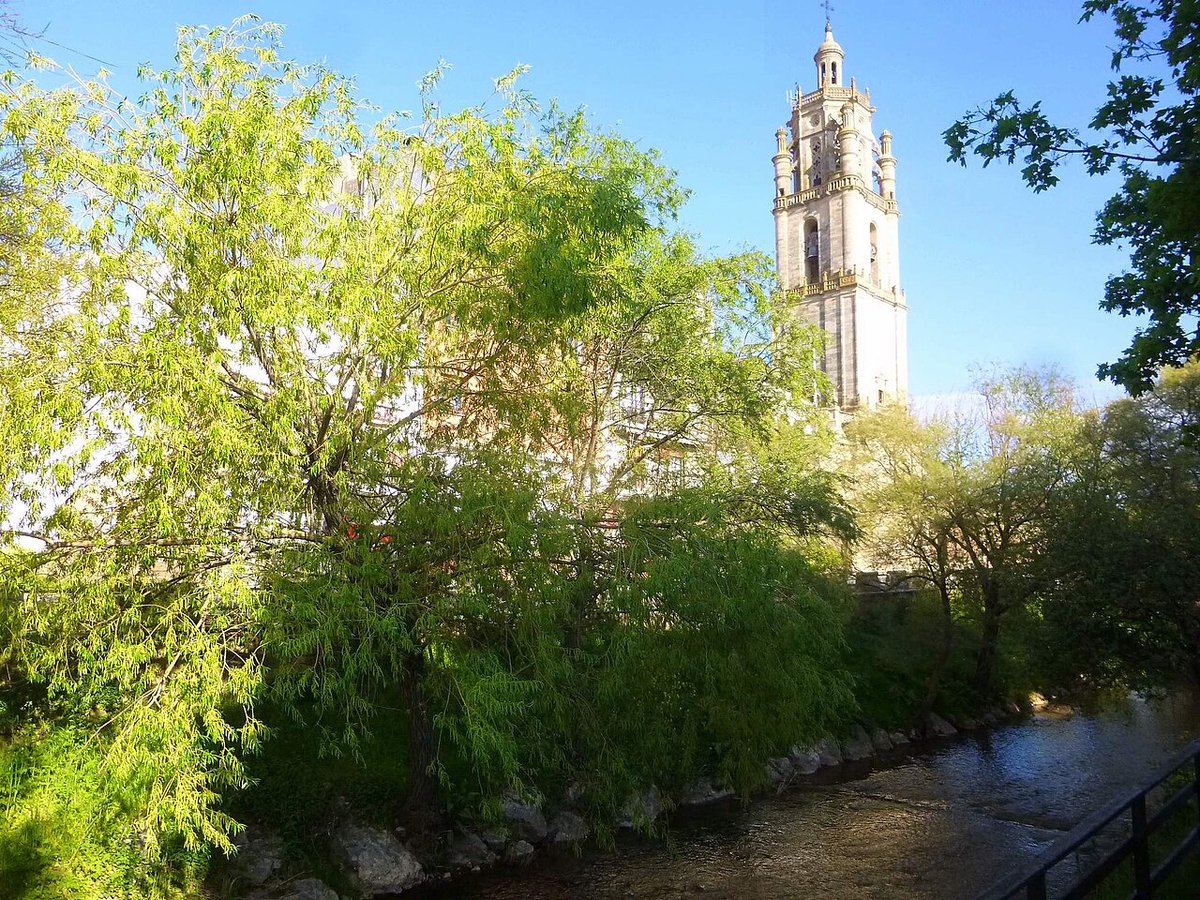
Inside the village the silence has weight. Stone houses shoulder right up to the lane, their wooden balconies painted the colour of ox blood or forest green. Many façades carry carved dates: 1892, 1904, one optimistic 1929 just before the Depression reached rural Spain. The parish church of San Andrés anchors the uphill end of the single street. The door is usually open, the interior dim, smelling of candle wax and old grain sacks. No ticket desk, no audio guide—just a single printed sheet laminated in plastic that lists the church’s one curiosity: a sixteenth-century font rescued from a ruined monastery twenty kilometres away.
Walk the street slowly and you’ll clock the details: a row of dovetail joints in a lintel, iron rings where mules were once hitched, a tiny brass letterbox engraved “Correos 31410”. The post still comes once a day, delivered by a white van that double-parks, flings rubber-banded bundles onto doorsteps and is gone in four minutes flat. There is no bar, no shop, no ATM. If you need water, the fuente at the lower plaza offers mountain-cold spring water that tastes faintly of iron; bring a bottle.
Outside the built cluster the land takes over. Wheat and barley rotate with sunflowers and fallow strips of crimson poppies. A lattice of farm tracks radiates for kilometres, wide enough for a tractor but not a coach. These paths are public; maps are available at the Oficina de Turismo in Estella, eight minutes’ drive away, though signal-based apps work if you download offline tiles first. Early risers share the dust with workers heading to the fields at dawn; by ten o’clock the sun is already fierce between May and September, so carry more water than feels reasonable—shade is limited to isolated holm-oak clumps.
Birdlife rewards patience. Calandra larks rise vertically, pouring out metallic songs, while harriers quarter the stubble after harvest. Bring binoculars rated for glare; the pale soil reflects light like snow. Spring migration (mid-March to early May) turns every thistle patch into a temporary hostel for wheatears and whinchats. Winter walks are possible—snow falls only a handful of days—but the wind sweeping across the plateau can drop the perceived temperature below freezing even under blue sky.
The shortest worthwhile circuit starts at the church, drops past the cemetery, then follows the GR-99 waymarks west for 1.5 km to a low basalt outcrop known locally as “El Fraile” for its resemblance to a hooded monk. From the top Desojo looks like a ships’ prow cutting through an ocean of cereals; the Pyrenees float on the northern horizon, snow-capped from October to early July. Turn back when you’ve had enough—there’s no loop, simply retrace your steps. Stout shoes suffice; boots are overkill unless you plan a longer haul towards Luquin, another microscopic village 7 km further on.
Food requires forward planning. The nearest proper meal is either in Estella—try La Taba for grilled artichokes and lamb sweetbreads, menú del día €16—or at the roadside venta in Villamayor de Monjardín, where the €14 three-course lunch includes a carafe of house rosé sturdy enough to strip paint. If you prefer picnicking, stock up at the Supermercado Eroski in Estella before turning off the main road; the village bench outside the church is perfectly positioned for an evening sandwich while swallows hawk insects overhead.
Accommodation inside Desojo simply doesn’t exist. The sensible base is Estella, which has everything from the utilitarian Hostal Remíso (doubles €55, no lift) to the converted palace of the Palacio de San Martín (doubles €120, car park €12). Camping is theoretically allowed beside the tracks under Spanish “right to roam” rules, but farmers discourage tents that might be shredded by irrigation sprinklers; ask at the nearest house—someone will emerge within minutes even if you saw nobody earlier.
Evenings deliver the biggest surprise. After the sun slips behind the ridge at Abáigar the temperature plummets; a July afternoon of 32 °C can collapse to 17 °C by ten o’clock. Locals appear on doorsteps, pulling cardigans over work shirts. Conversation is muted Navarrese Spanish, slow and gentle. Visitors who attempt a greeting receive nods, sometimes a sentence about the harvest forecast. Expect no souvenir stalls, no flamenco, no craft market. The single annual fiesta, around Saint Andrew’s day at the end of November, involves a communal stew and card games in the church hall; outsiders are welcome but there’s no programme—turn up and you’re in it.
Come prepared and Desojo offers something increasingly rare: a place that refuses to perform for tourism. The reward is spatial, almost architectural—an exercise in proportion between human settlement and open land. Stay too long, though, and the silence becomes oppressive rather than soothing. Two hours is plenty for a look-around; half a day if you add the walk to El Fraile. String it together with the fortified church of Eunate, the Romanesque bridge at Puente la Reina, or the wine museum in Olite, all within 40 minutes’ drive, and you have the makings of a slow road trip that keeps the credit card holstered and the lungs full of high-plateau air.
Leave before dusk and the village shrinks in the rear-view mirror, wheat fields glowing like burnished brass. By the time you rejoin the N-111 the engine note deepens, the first articulated lorry blasts past, and normality—queues, notifications, coffee chains—rushes back in. Desojo doesn’t cling; it lets go the instant you depart. Whether that brief weightlessness justifies the detour is a calculation only you can make.