Full Article
about Dicastillo
Known for the Palacio de la Vega and its wines; a village terraced on the slope of Montejurra
Hide article Read full article
A place that asks you to slow down
Some villages are explored with one eye on a map, ticking off the “important” spots. Dicastillo works differently. After a few minutes, it becomes clear that the best approach is to put the phone away and wander without a plan. The streets do not feel arranged for quick photos. They invite a slower pace, noticing doorways, worn coats of arms and the small exchanges between neighbours at a corner.
Just over five hundred people live here, and the surrounding landscape has not shifted away from its roots. Kitchen gardens, vineyards and cereal fields frame the village, changing colour as the seasons move on. There is no sense of staging for visitors. Daily life carries on, much as it always has.
San Esteban, larger within than expected
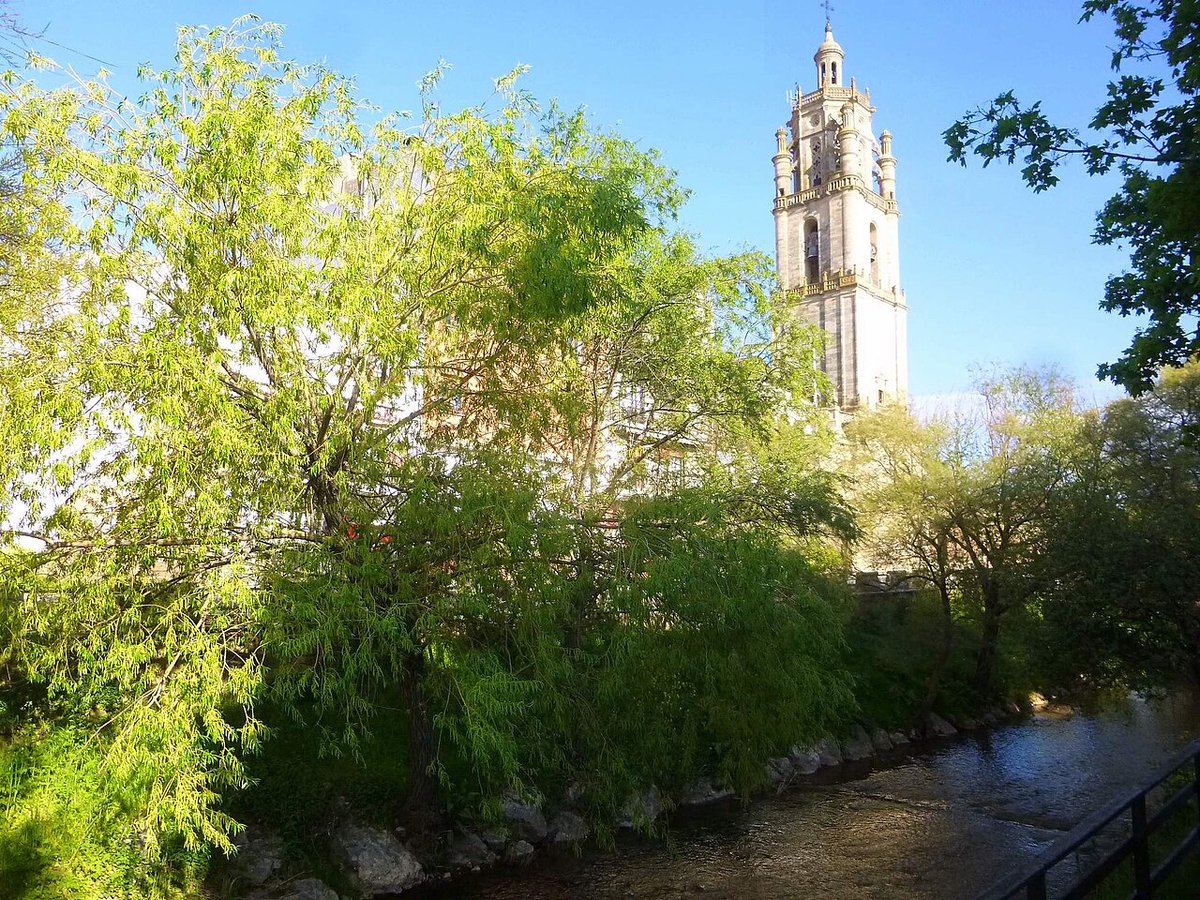
The outline of Dicastillo is defined by the church of San Esteban. From the outside, it can seem fairly restrained, almost plain. Step inside and the impression shifts. The interior has more depth than the view from the square suggests.
Like many village churches, the building reflects different periods of work. Additions and repairs have been made over time, and traces of its Gothic origins can still be picked out among later changes. It is not the kind of place that draws attention through scale or decoration. Instead, it feels tied to the rhythm of the village across centuries.
Religious life still has a presence here. Processions and masses remain part of the routine for some residents, though this is not a centre for large-scale religious tourism. What stands out is continuity rather than spectacle.
Streets shaped by agricultural life
A walk through the centre of Dicastillo reveals a settlement that has not lost sight of its original purpose. Many houses combine stone and brick, with tall entrances and spaces that once stored tools, grain or animals. These features have not been erased; they are still visible in the layout of the buildings.
Details reward a closer look. Lintels and façades sometimes carry a date or a carved shield, small markers of who built the house generations ago. Former barns appear here and there, now used as storage or garages. Nothing is presented as remarkable, yet the overall impression is consistent and grounded.
There is no sharp divide between past and present. The same structures that supported agricultural work continue to shape how the village functions today. That continuity gives the streets a quiet coherence.
Vineyards on the edge of Tierra Estella
Beyond the built-up area, the landscape opens quickly. A short distance from the centre brings fields into view, and above all, vineyards. Dicastillo lies within Tierra Estella, a region of Navarre known for its agricultural character, and that identity is easy to recognise in the surroundings.
Tempranillo grapes are common here, grown under the Denominación de Origen Navarra. Wineries operate in the area, and some arrange visits or tastings if organised in advance. Even so, many of these spaces are primarily places of work rather than visitor attractions.
During the grape harvest, activity in the fields becomes more visible. Tractors move back and forth, and trailers filled with grapes mark the rhythm of the season. At other times of year, the same land appears calmer, though it continues to follow its agricultural cycle.
Easy routes between nearby villages
For those who prefer walking or cycling without technical challenges, the tracks around Dicastillo offer straightforward options. These are wide agricultural paths used by tractors, not narrow mountain trails or steep descents.
They link the village with others in Tierra Estella, making it possible to move through the area at an unhurried pace. The views remain open, with fields shifting in colour depending on the month. Silence tends to dominate, broken occasionally by animals or the passing of a car.
The simplicity of these routes is part of their appeal. There is no need for specialised equipment or experience, just time and a willingness to move through the landscape as it is.
Seasonal changes in colour and pace
Dicastillo shifts noticeably with the seasons. In spring, the surrounding fields turn a strong green, set against the reddish tones of some of the tracks. The contrast stands out without any effort.
Autumn brings a different change, particularly in the vineyards as the leaves begin to alter in colour. It is a quieter transformation, but one that reshapes the look of the area.
Summer can be hot, as is common in inland parts of Navarre. At that time of year, it makes sense to move around earlier in the day or later in the evening, when the temperature eases. The village itself does not alter its rhythm dramatically, but the conditions encourage a slower pace.
A quiet stop in Tierra Estella
Dicastillo does not compete with the more monumental villages of Navarre. There are no large historic ensembles or museums that fill an entire morning. That absence is part of what defines it.
It tends to appear as a stop along a route through Tierra Estella. The pattern is simple: arrive, park near the centre, take a walk through the streets, pause at the church, then continue towards the surrounding countryside or another nearby village.
Approached in that way, Dicastillo fits naturally into a wider journey. It offers a brief look at a working agricultural village that continues to function on its own terms. Nothing is arranged to impress. Things are simply there, much as they have always been.