Full Article
about El Busto
Small village on a hill near Los Arcos; a quiet stop for pilgrims and silence-seekers
Ocultar artículo Leer artículo completo
The moment the tarmac ends
Half an hour south of the A-12, the road narrows to a single ribbon that threads between wheat and olive plots. Mobile reception drops out at the same moment the wheat gives way to a scatter of stone houses under a square church tower. You have arrived in El Busto, Navarra—population forty-eight, altitude 637 m, and silence loud enough to notice.
The climb from Estella-Lizarra is gentle by Pyrenean standards, yet the air is already thinner and cooler than on the valley floor. In April the wind still carries the snap of snow from the Montejurra ridge; in August it feels ten degrees softer than the furnace of nearby Logroño. That difference is what first alerts walkers that they have entered the upland pocket locals call La Llanada.
A village measured in minutes
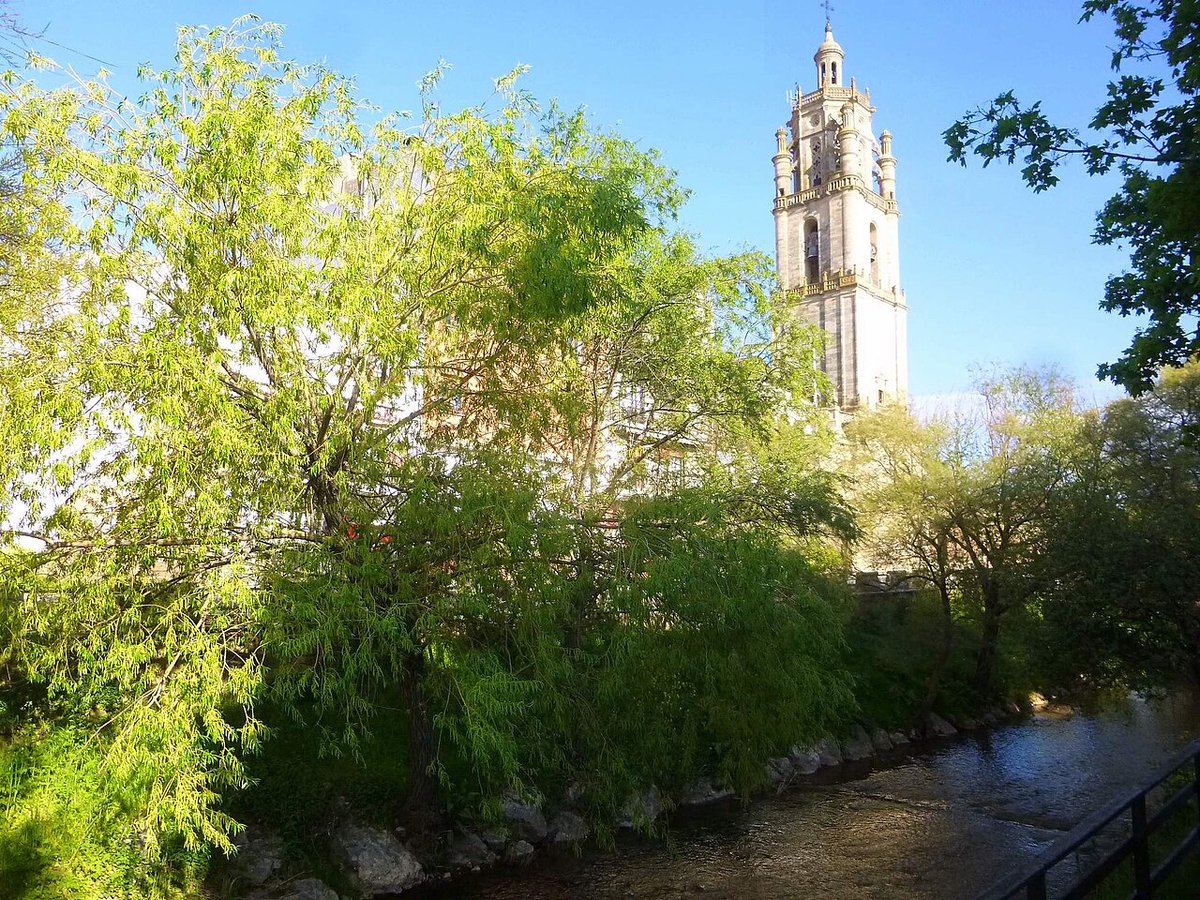
Park where the lane widens by the stone trough—there is no sign, but everyone else does. From that spot every corner of El Busto lies within a three-minute radius. The parish church of San Pedro rises first; its tower was rebuilt in 1896 after lightning split the earlier medieval shaft. Step inside and the temperature drops again: thick walls, whitewash, a single altarpiece gilded in the 1730s. Mass is sung only twice a month; on other days the nave smells of candle wax and sun-warmed timber.
From the church door, Calle Mayor runs east–west for the length of a cricket pitch. House numbers stop at twenty-three. Many façades carry the mason’s mark: a tiny chiselled rose, a datestone reading 1847, a family coat of arms crudely recut after the Carlist wars. Wooden balconies, painted the wine-red of neighbouring Rioja, throw afternoon shadows onto granite doorways where iron knockers still hang in the shape of a hand. There are no souvenir shops, no bars, no public loo—plan accordingly.
At the western edge the lane dissolves into a farm track. Keep walking and within two minutes wheat stalks brush your knees. Look back: the village forms a neat brown rectangle on the brow, its tower acting as the exclamation mark. This is the photograph that never appears in brochures—because there are no brochures.
Paths that ask for sturdy shoes
Three waymarked routes leave from the last lamp-post. The shortest (2.4 km) loops through olive terraces to an abandoned threshing floor where eagles now use the stone circle as a perch. Yellow arrows painted by a local Scout group guide the way; if the paint looks faded, trust the tractor ruts instead. The mid-length circuit (5 km) climbs to the ridge at 820 m, giving a straight-line view north to the cathedral spire of Estella and south to the cereal ocean of Castile. Both walks can be combined into a figure-eight in under two hours—carry water, there is no fountain after the village.
Winter alters the deal. At 637 m El Busto sits just below the habitual snowline, yet January fog can lock the approach road for days. Chains are rarely needed, but hire cars have been known to miss flights after underestimating a 200-metre stretch that turns to sheet ice at dusk. From May to October the same road hums with cyclists tracing the Camino de Santiago variants that criss-cross Tierra Estella; they swoop down for photographs, then pedal off before the kettle could boil.
Where to eat, sleep, and buy milk—elsewhere
There is no hotel, no casa rural, no bakery. The last grocery van called on Fridays until 2018; it stopped when the driver retired. For beds, head five kilometres north to Villamayor de Monjardín, where a stone mill turned hostel charges €18 for a bunk and €12 for a three-course menú del día. For supplies, Estella offers supermarkets and Saturday farmers’ stalls under the medieval bridge. Picnic basics—tinned tuna, bread, tomatoes—should be bought before you leave the A-12; once in El Busto you will find only honesty-box eggs at the occasional gate.
That scarcity is part of the contract. Visitors who arrive expecting coffee and Wi-Fi last exactly fifteen minutes. Those who bring a filled rucksack tend to linger on the church steps, unwrapping sandwiches while swifts race the tower clock overhead.
The sound of a working afternoon
Stay long enough and the place begins to move. A tractor coughs into life behind number 14. Two elderly women in housecoats carry chairs onto the single pavement for the daily tertulia; conversation switches from Spanish to Basque when they notice you, not from rudeness but habit. A dog—always the same black-and-white mongrel—appears from a stable doorway, tours the rubbish bins, then vanishes. By 15:00 the only metallic noise is the wind vane squeaking atop the tower. You realise the village is not empty; it is simply operating at the volume of a previous century.
Honest appraisal
El Busto will not fill an itinerary. Coaches do not stop, souvenir hunters leave disappointed, and the church key is kept by a neighbour whose mobile goes straight to voicemail. What the place offers instead is a calibration exercise: a chance to reset your internal speedometer to rural Navarran time. Arrive expecting grand monuments and you will drive away within twenty minutes. Arrive content to look at stone, sky and soil, and the village repays with a masterclass in how half a hundred people still shape a landscape.
Come in late spring when the wheat feathers green-to-gold, or in mid-October when stubble fields glow copper under squally clouds. Avoid August weekends unless you enjoy sharing a single patch of shade with overheated motorbikes. Bring water, a sunhat, and enough petrol to retreat—because once the church bell tolls noon, the next service, meal or bed may be farther away than it looks on the map.