Full Article
about Espronceda
Small village on the border with La Rioja; set high with clear views.
Ocultar artículo Leer artículo completo
The church bell strikes eleven, and the only other sound is wheat rustling in the wind. At 675 metres above sea level, Espronceda hangs on a Navarre hillside like an afterthought—108 inhabitants, one parish church, and lanes so narrow that two umbrellas can't pass without negotiation. British drivers arriving from the A-12 should prepare: the final six kilometres shrink to a single-lane track where farm tractors have right of way and stone walls refuse to flinch.
Stone, Slate and Silence
Most visitors race past the exit, bound for the better-known embroidery of Estella-Lizarra twenty minutes west. Those who turn off discover a settlement that predates the motorway by at least eight centuries, though you won't find souvenir plaques saying so. Granite houses shoulder together against winter winds; their slate roofs angle like crooked hats, directing rain into stone gutters worn smooth by generations of storms. Look closer and you can read the village's economic history in the masonry: newer cement patches mark where owners could afford repairs, while untouched façades, grey and pocked, belong to families who left for Pamplona or Bilbao and never returned.
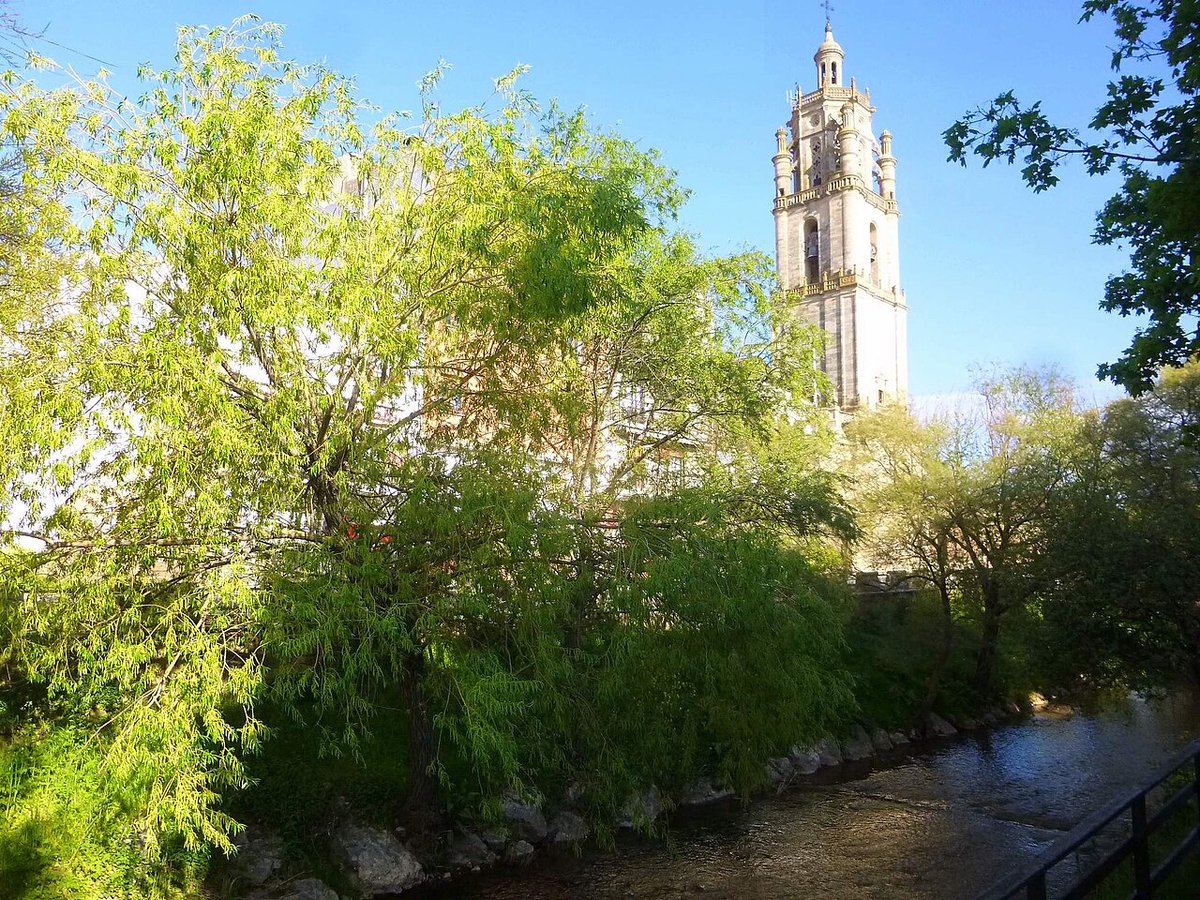
The parish church of San Vicente Mártir presides over this layered geology. Romanesque bones, Gothic arches, a Baroque tower stump—each century added what fashion dictated and budget allowed. Walk around it slowly; the building shifts with every step, appearing first as a modest chapel, then as a fortified keep, finally as a weather-beaten village hall whose bells still call the remaining neighbours to mass. Inside, the air smells of candle wax and damp stone; outside, swallows stitch the sky between its belfry and the surrounding fields.
A Calendar Written in Cereals
Espronceda sits in the centre of a shallow bowl of cereal farms. From late April the land turns emerald, then gold by late June when combine harvesters drone like distant chain-saws. After the grain is sold, stubble burns umber under October skies; by December frost silvers every stalk left standing. The cycle is reliable enough that older residents still date conversations by it: "That was the year the barley lodged before Saint John's" or "We planted after the snow in '94".
Footpaths radiate from the village along field margins, but signage is sporadic and mobile coverage patchy. A practical loop of about four kilometres heads south-east towards the abandoned hamlet of Zudaire, returning along the ridge that gives a bird's-eye view of Espronceda's terraced plots. OS-style mapping apps work if pre-downloaded; otherwise pick up the free Tierra Estella walking leaflet from Estella's tourist office—stock up before you leave, because Espronceda has no shops, no bars, and certainly no Wi-Fi passwords chalked on blackboards.
Spring and autumn offer the kindest conditions. In May the temperature hovers around 18 °C, low enough for comfortable hiking and high enough to sit outside at midday. Come August the mercury can top 32 °C, and shade is restricted to the alley-width streets; venture into open fields after eleven and you'll understand why the village empties until siesta ends. Winter brings sharp nights just above freezing, and the occasional snow flurry that turns the access road entertainingly slick—carry chains if travelling between December and February.
Lunch Elsewhere, Look Again Here
Food is seasonal, hearty and elsewhere. The closest menu del día is a ten-minute drive to Ayegui where the monastery of Irache still runs a dining room serving roast lamb, piquillo peppers and wine aged in the adjacent cellar caves. Expect to pay €14–16 for three courses including house wine—about £12–14 at the time of writing. Back in Espronceda you can picnic on the concrete bench beside the church, but bring supplies; the nearest small supermarket is in Estella, and even that shuts on Sunday afternoons.
What the village does offer is time. Stand on the ridge at sunset and the cereal plains glow like burnished copper; listen and you'll hear only wind and the clank of a distant cowbell. Photographers appreciate the way afternoon light carves geometric shadows between the grain plots; historians notice how the layout—houses above, threshing floors below—mirrors medieval social order. Birdwatchers should pack binoculars: calandra larks spiral overhead, and in winter hen harriers quarter the stubble, quartering the same air their ancestors hunted before the Reconquista.
Getting Up, Getting Out
Access is straightforward if you read the fine print. From Pamplona take the A-12 west, exit at 50 towards Ázqueta, then follow the NA-122 and local road NA-3120. The tarmac narrows after Villamayor de Monjardín; proceed slowly, because every stone wall is older than your insurance excess. Parking is informal—squeeze against the cemetery wall and hope no tractor needs through. Buses from Pamplona stop five kilometres away in Luquin; walking the remainder means sharing a lane with grain lorries, not recommended after rain.
Accommodation within the village is non-existent. Base yourself in Estella where the Hostal La Casa de la Abuela offers doubles from €55 (£47) with secure parking, or try the Albergue Municipal if you fancy a pilgrims' dorm bed for €12. Either way, treat Espronceda as a half-day pause rather than an overnight goal: arrive mid-morning, walk the fields, photograph the stone, drink your filled flask on the church steps, and leave before afternoon heat or darkness complicates the return drive.
The village won't change your life, and it doesn't pretend to. What it provides is a concise lesson in how much of rural Spain now functions—beautiful, half-empty, dependent on neighbours who may live twenty kilometres away. Visit once and you may never return; but the memory of wheat glowing below a limestone sky lingers longer than many pricier panoramas.