Full Article
about Estella-Lizarra
The Toledo of the North; a monumental city on the Camino de Santiago with exceptional Romanesque and Gothic heritage.
Ocultar artículo Leer artículo completo
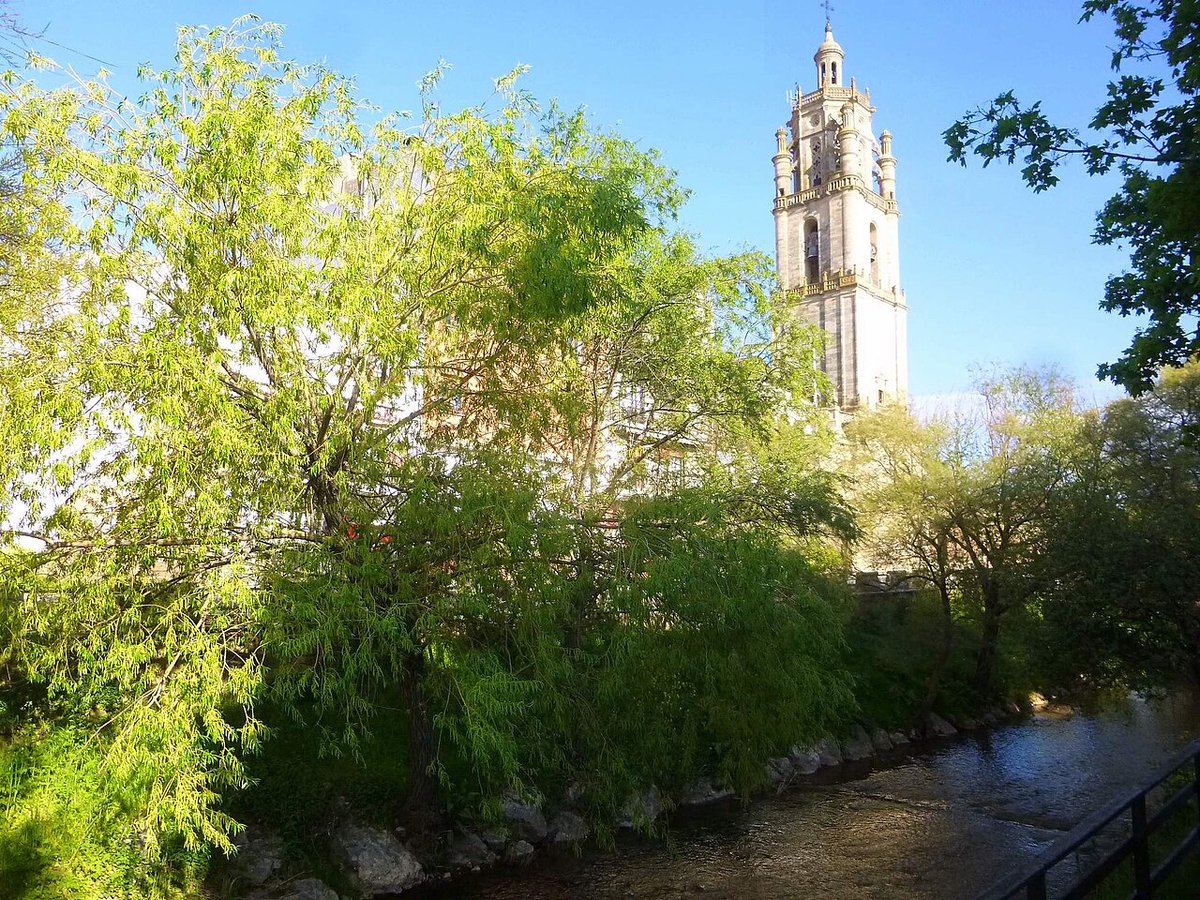
At 421 metres above sea-level, Estella-Lizarra sits just high enough for the air to feel thinner than the Rioja vineyards below, yet low enough for almond trees to survive winter frosts. The town’s sandstone walls glow amber at dusk, a colour that photographers call “golden hour” but locals simply know as the moment when the Ega river reflects stone instead of sky. This is Navarra’s halfway house between the Atlantic green of the Basque Country and the baked plains of Castile, and the climate keeps you guessing: T-shirts at noon, fleece by twilight, even in May.
A Town that Grew on a Slope
The Camino de Santiago enters from the west across the 12th-century Puente de la Cárcel, a humpbacked crossing that funnels both pilgrims and traffic into the same narrow throat. Cross it at 8 a.m. and you’ll share the stone roadway with rucksacks and walking poles; return at six and it’s delivery vans and parents on school run. Estella never flattened itself for convenience: streets tilt at angles that turn calf muscles into conversation pieces. The saving grace is a glass-panelled lift cut into the rock beneath San Pedro church—press “1” and you rise 35 metres without burning the calories you’re about to replace with chuletón.
San Pedro de la Rúa crowns the western ridge. Its cloister is free, roofed and mercifully cool when the plaza outside hits 34 °C. Capitals carved around 1170 show everything from harpies to rabbits stealing grapes; children tend to spot the animals before adults notice the theology. Climb the bell tower (€2, cash only) and the reward is a 270-degree ledger of the town’s geography: cereal plots to the south, irrigation green to the north, and the corrugated brown of the Urbasa range on the horizon.
Downhill again, Calle de la Rúa narrows into a medieval gutter where balconies almost shake hands overhead. Halfway down, the 13th-century Palacio de los Reyes de Navarra appears suddenly on the left—civil Romanesque, rare anywhere in Europe. Inside, the museum labels are Spanish-only, but the carved windows need no translation: twin arches, zig-zag abutments, a stone lattice designed to filter light rather than block it. Entry is €3; Wednesdays free for EU passport holders, a quirk that still surprises Spanish visitors.
Food that Moves with the Calendar
Estella’s restaurants revolve around what the river and surrounding huerta produce, not what tourists expect. In late April the menus shout “pochas!”—broad white beans picked before they harden, stewed with partridge or simply with saffron and clams. A plate for two costs €14 at La Cepa Dorada on Plaza Santiago, enough to cancel any afternoon hiking plans. May brings river trout, pan-fried whole, served with slivers of Serrano ham that crisp like bacon. If heads on plates unsettle you, ask for “sin cabeza”; most kitchens oblige without the theatrical sigh you’d get in coastal Spain.
Thursday is market day. By 09:30 the Plaza de los Fueros fills with 80-odd stalls: knitted slippers from nearby Oteiza, net bags of still-damp spinach, and whole chickens cheaper than a pint of London bitter. British visitors hankering after a taste of home should queue at Pastelería Garrido for a napolitana de chocolate—essentially a pain au chocolat that costs €1.20 and comes dusted with sugar rather than diplomacy.
Walking Off the Wine
The town bills itself as a walking base, but routes divide cleanly into “river flat” and “up there”. The easiest stretch follows the Ega south-east for 3 km on a gravel track shaded by poplars. You’ll pass kitchen gardens protected by bramble hedges and the occasional heron posing like a garden ornament. Turn back when the path meets the NA-1110 or you’ll end up on a vergeless road that rattles with grain lorries.
For something hillier, follow the yellow arrows of the Camino towards the Monasterio de Irache. The first kilometre climbs 120 metres through oak scrub; after that it’s a gentle 2 km to the 10th-century Benedictine ruins and—more importantly—the famous wine fountain. A brass tap dispenses chilled Rioja from the monastery’s own bodega; pilgrims hold their scallop shells beneath it, day-trippers fill plastic water bottles. Either way, it’s free, open 08:00–20:00, and the alcohol content is 12.5%. Plan transport back if you over-sample; the return journey is uphill and shadeless.
Winter walkers face a different equation. January daytime highs hover around 8 °C, but night frosts are common and the escalator to San Pedro shuts for maintenance. Snow is rare in town yet dusts the 1,000-metre ridges visible to the north; photographs look Alpine, but the roads stay open. What closes instead are terraces: most bars move chairs indoors and the evening paseo lasts minutes, not hours. Accommodation prices drop 30%, perfect if you want Romanesque stone to yourself, less so if you’re hoping for lively tapas crawl.
When the Streets Become a Stage
The first weekend in August brings the Semana Medieval, Estella’s biggest crowd-puller. Craft stalls line streets that are barely two metres wide; on Saturday night a torch-lit procession squeezes through them like a snake digesting a goat. Hotel rooms triple in price and the municipal campsite on the riverbank fills with Dutch caravans. If you fancy jousting re-enactments without the elbow-to-elbow experience, come instead for the San Andrés fiestas at the end of November. The programme is parochial—card tournaments, a children’s lantern parade, roast chestnuts sold from oil drums—but you’ll share the town with locals rather than tour groups. Pack a raincoat: Navarra’s autumn can unload 40 mm in a morning, turning the stone streets into reflective mirrors.
Getting There, Getting Out
Pamplona airport is 45 minutes by car, Bilbao 1 hr 45 min. Public transport is workable but patchy: two daily buses from Pamplona, three on Fridays, none on Sunday evenings. The train stopped in 1983 and shows no sign of resurrection. British driving licence rules apply post-Brexit—bring the plastic photo-card and request the free international permit if you still have the old paper version. Free parking on Paseo de los Llanos is safe and plentiful; ignore the touts waving you into the underground car park beside the bus station (€14 a day, unnecessary).
Leave time for the outskirts. Five kilometres west, the dolmen of Ayegui stands forgotten in a wheat field; no ticket booth, no rope, just a 4,000-year-old burial chamber you can crawl into with a phone torch. From there it’s a ten-minute drive to the source of the Urederra, a turquoise spring so clear that even the regional government gave up trying to charge entry. The track is signposted “Desembocadura” and the car park fills by 10 a.m. in May—early bird sees the water mirror, late bird sees Spanish number plates and disappointment.
Estella-Lizarra won’t hand you instant Instagram gold; its appeal is cumulative, measured in stone worn smooth by farmers’ boots and in menus that change faster than the weather forecast. Come for two nights and you’ll leave with calf muscles that remember the place longer than any souvenir.