Full Article
about Lana
The charcoal burners' valley; a hidden, wooded corner beneath the Sierra de Lóquiz
Hide article Read full article
A village set into the landscape
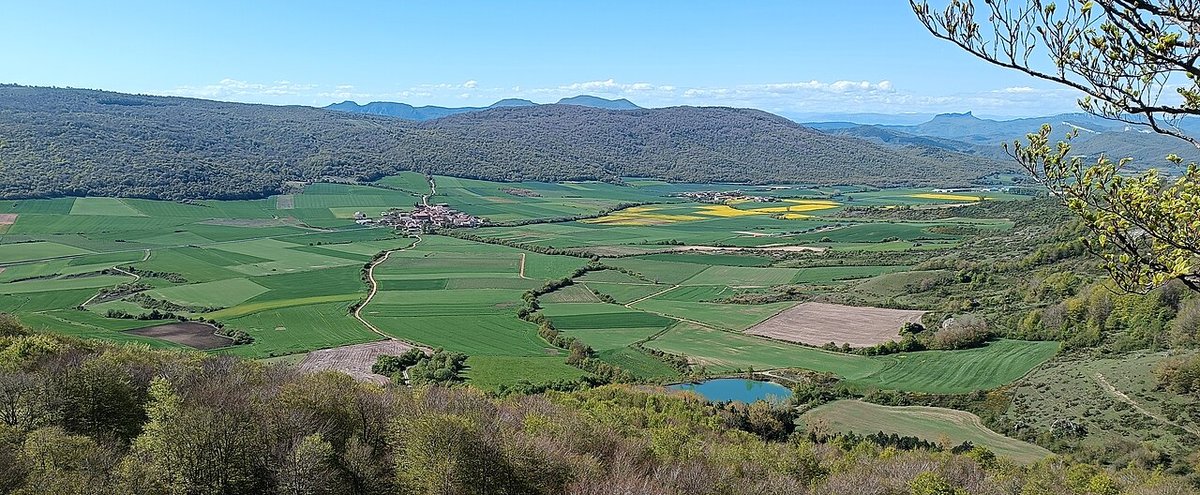
In the north of Tierra Estella, Lana sits in a shallow hollow ringed by wooded slopes. Tourism in Lana is closely tied to that discreet position on the map: a small village, around 650 metres above sea level, where stone houses seem almost pressed up against the hillside. Today just over a hundred people live here, spread across a handful of streets that still follow the valley’s traditional layout.
The nearby Urbasa mountain range shapes the surroundings. Beech and oak woods cover much of the slopes and set the pace of the seasons. In spring, the green is dense and almost overwhelming. By autumn, the hills turn ochre and reddish, visible from the paths that circle the village. This is not a landscape altered by large infrastructure, and that becomes clear almost immediately.
Traces of history in stone
At the centre of the village stands the parish church of San Vicente Mártir. The current building dates from the 16th century, with later alterations, probably in the 18th. It is a restrained construction, typical of rural Navarra, built in stone and without elaborate decoration. Its position is what stands out most. The main streets lead towards it, showing how village life was once organised.
Around it, there is a group of well-built houses in carefully cut stone. Some display doorways with finely shaped voussoirs and coats of arms on their façades, signs of former families of the valley. There are also balconies with wrought iron railings and, in some homes, wooden galleries facing south. These are not isolated features. Together they form a coherent whole, especially for a village of this size.
The centre can be covered quickly, yet it rewards a slower look. In places like this, history is not concentrated in a single landmark. It appears instead in small details scattered across walls and doorways.
Paths into the surrounding woodland
From the edges of the built area, several paths head into the forest. These routes have long been used to connect fields, huts and springs. Some climb gently to low hills with views over the valley, while others wind between oak and beech trees.
Not all of them are clearly marked. Anyone unfamiliar with the area should carry a map or track. The terrain itself is not especially difficult, but the woodland is dense and the junctions between tracks can be confusing.
Wildlife is part of the experience. Woodpeckers, robins and tits are often heard among the trees. There are also signs of roe deer and wild boar, although sightings are less common. After rain, the ground releases the damp, earthy scent typical of beech forests.
In autumn, there is usually an increase in visitors searching for mushrooms. It is a well-established activity in the area, though it is sensible to check local regulations beforehand and gather with care.
Walking through the village
A walk around Lana does not take long. Within about an hour, it is possible to cross the centre, reach the church and then continue out towards one of the nearby paths.
Its small scale helps make sense of the place. There are no major monuments or a grand historic quarter. Instead, what emerges is a compact agricultural settlement, shaped by the land and surrounded by woodland. That alone gives a clear impression of the valley and how it has been lived in.
Practical notes for visiting
From Pamplona, the usual route is along the A-12 to Estella, followed by local roads heading north into this part of the region. The final stretch curves gently through a mix of woodland and fields.
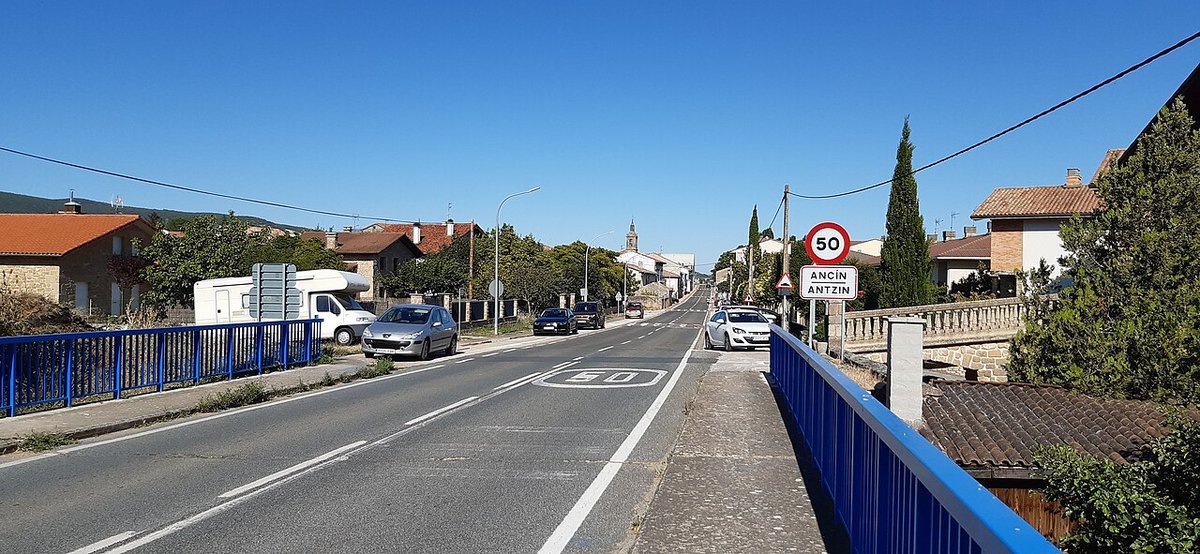
Parking is generally easier at the entrances to the village, where there is more room to manoeuvre. The streets inside are narrow and better explored on foot.
For those planning to walk in the hills, it is worth bringing water and an extra layer, even on mild days. The shade of the forest and the elevation mean temperatures can drop quickly towards evening.