Full Article
about Larraona
Highest village in the Améscoas; direct access to the Urbasa natural park and close to the source of the Urederra.
Hide article Read full article
A quiet start in Tierra Estella
Early in the morning, as the sun begins to touch the stone façades from the east, Larraona is still half asleep. Cool air drifts down from the sierra and carries the smell of damp earth. At that hour, tourism in Larraona has little to do with plans or checklists. It is closer to an unhurried walk, while a window opens somewhere and the bells of the parish church break the silence of the valley.
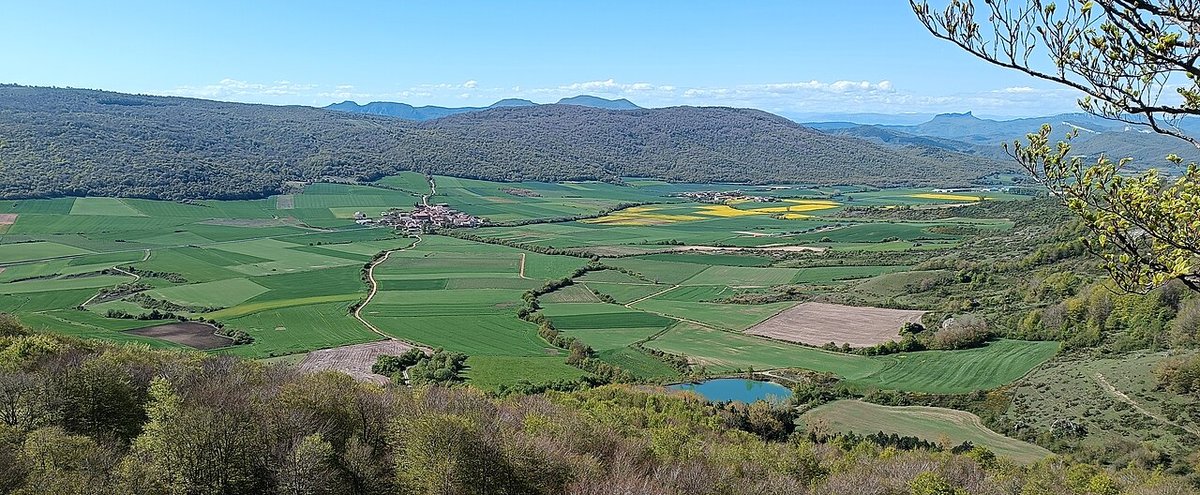
Larraona sits in Tierra Estella, at the foot of the Sierra de Urbasa, and has around a hundred inhabitants. The village is small and compact, with fairly austere stone houses and reddish roofs gathered around the church. It does not take long to walk from one end to the other, yet it rewards a slower pace. Old doorways, coats of arms carved above lintels, and walls where the stone has changed colour over time all invite a second look.
The church and the village core
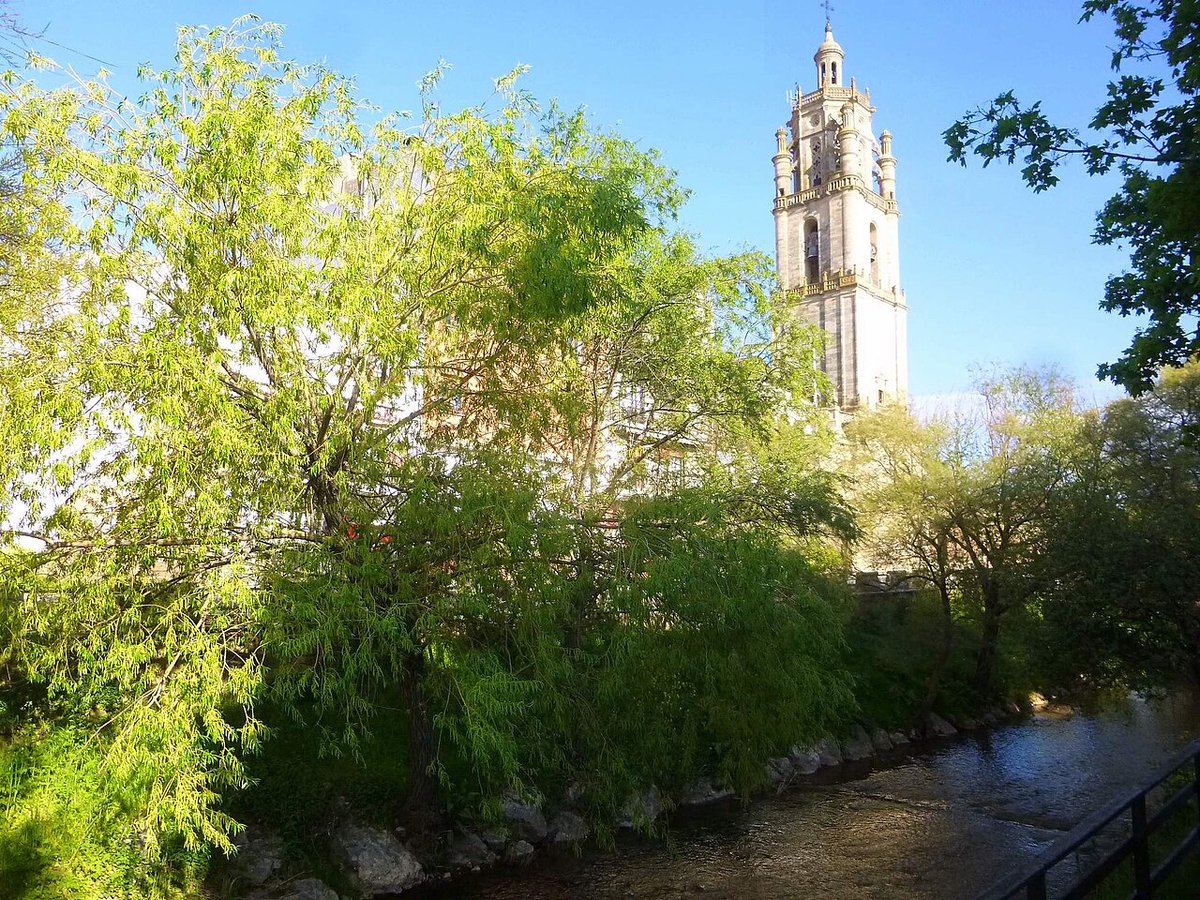
The parish church of San Martín stands at the centre, its square tower visible from almost anywhere in the village. The current building dates back several centuries, much of it from the early modern period, and it keeps the simple feel common to rural churches across Navarra.
At midday, when the bells ring, the sound spreads across the open valley around Larraona. There is very little traffic or background noise, so the echo travels far. It bounces off the houses before fading into the fields.
Around the church, small details hint at everyday life. There are fountains with worn stone basins, a washhouse where water still runs, and open-air frontons, the traditional courts used for pelota, where children play when they return during holidays. These are not arranged for visitors. They remain part of the rhythm of the place.
Fields and the presence of Urbasa
A short walk out of the village is enough to reach open countryside. The transition happens quickly. The last houses give way to dirt tracks, cereal fields and scattered patches of holm oak growing along the slopes.
The Sierra de Urbasa is always present, especially to the north. On clear days, its rock faces draw a sharp line against the sky, a constant backdrop that shapes the horizon.
The landscape changes markedly with the seasons. In spring, the green is intense and the wind moves through the fields like water. Summer brings the dry yellow of cereal and heat that becomes noticeable from midday onwards. In July and August, it is better to set out early or wait until late afternoon, when the light softens and the air begins to move again.
Paths towards Urbasa
Several agricultural tracks leave Larraona in the direction of the sierra. Some rise gently towards low hills, where views begin to open over the valley of the Ega.
These are not marked routes, yet the paths are clear and used daily for working the land or moving between plots. With a bit of time and suitable footwear, it is possible to walk towards the edges of the Urbasa-Andía Natural Park in roughly under an hour.
Along the way, the most common sounds are insects, the crunch of dry earth in summer, or the occasional movement of a bird of prey gliding over fields and farm buildings. Vultures are often easy to spot when the sky is clear and the air starts to warm.
Traces of everyday life
In a village this small, many signs of the past appear in minor details. Some façades still carry hand-painted names or dates carved into the stone. They are subtle marks, usually above doorways, speaking of family houses passed down through generations.
On the outskirts, there are also remains of structures linked to agricultural work. Near the valley, people often mention an old mill that once made use of local water. Today it survives as low walls and stones partly covered by grass.
Nothing is arranged for display or explained with signs. It simply remains there.
When to come
Larraona changes noticeably throughout the year. In winter it can feel very quiet, even somewhat empty on weekdays. In summer, and on certain weekends, more people return to family homes and the atmosphere becomes livelier.
The fiestas of San Martín, usually held in November, bring together residents and those who come back for a few days. They are small celebrations, closely tied to the parish and to shared meals.
For a short visit, the most pleasant times are early in the day or towards evening. Light falls across the façades at an angle, and the breeze descending from Urbasa cools the air.
Walking without hurry
Larraona does not require long routes or careful planning. Sometimes it is enough to cross the square, follow a street to the edge of the village, and continue a few metres along a dirt track.
From there, the clustered roofs come into view, the open fields stretch out around them, and beyond, the sierra defines the limit of the landscape. A tractor passes slowly, a line of washing shifts in the wind, and the bells sound again in the distance.
That rhythm,