Full Article
about Lazagurría
Ebro-side town in Tierra Estrella, noted for its vegetable gardens and the Rosario church.
Ocultar artículo Leer artículo completo
A church tower above the cereal sea
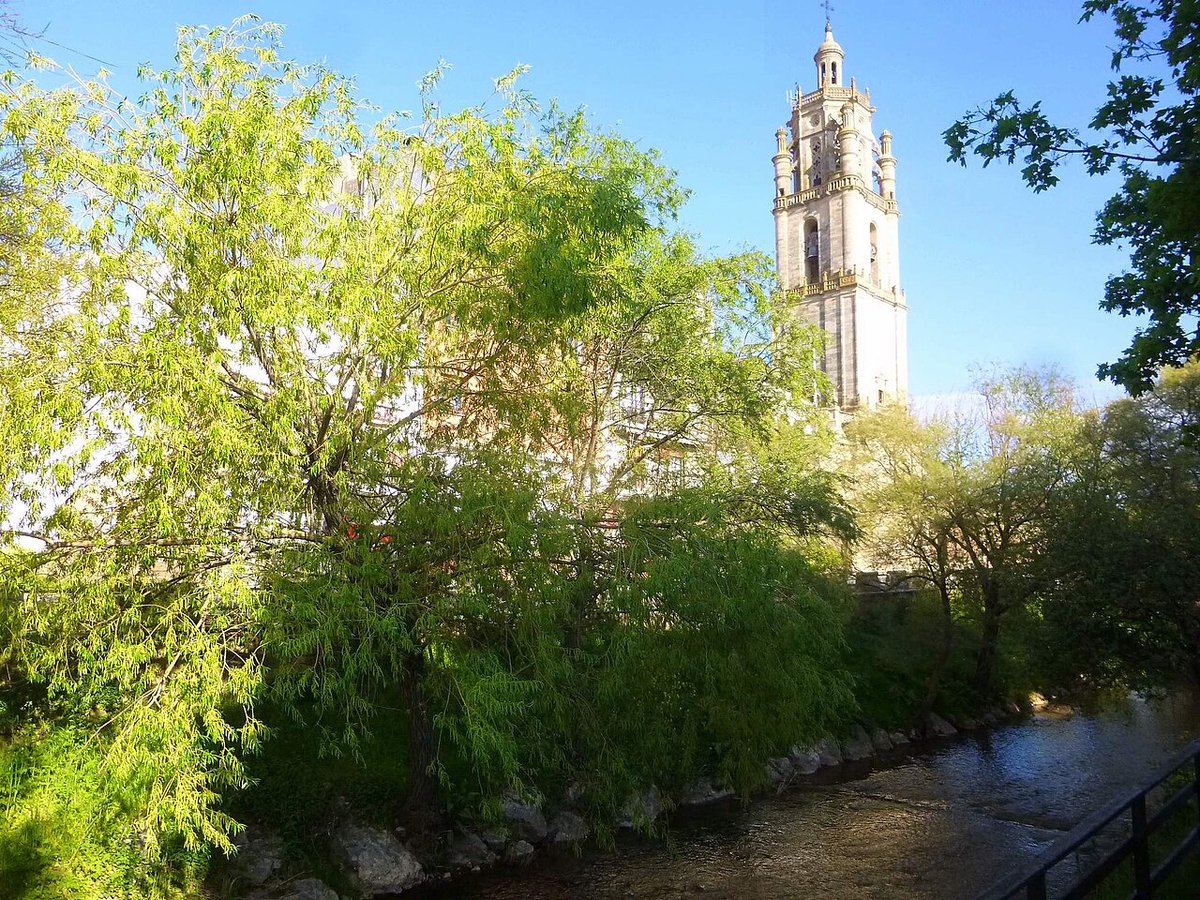
The stork's nest arrives first. From half a mile away it sits like a wonky crown on the tower of San Martín, announcing Lazagurria long before the village itself appears. At 390 metres above sea level the church seems higher than it is, a lone stone marker rising from an ocean of wheat that stretches uninterrupted to the Sierra del Montejurra. This is Tierra Estella at its most elemental: no forests, no dramatic gorges, just horizontal space and a sky that feels disproportionately large for such a small settlement.
The approach road, NA-1110, is a single-lane ribbon that cyclists love and sat-navs occasionally forget. Drivers coming from Los Arcos will clock the village exactly six minutes after the last vineyard ends and the cereal belt begins. There is no signpost at the turning, only the nest and the tower. Park where the tarmac widens by the cemetery wall; anything further in risks blocking a farmer's gateway.
A village that takes twenty minutes, give or take
Lazagurria's census hovers around 180, though numbers swell briefly during the wheat harvest when contract combines rumble through. The street plan is simple: three parallel lanes running downhill from church to fields, connected by alleyways wide enough for a tractor but not much else. Houses alternate between ochre stone and brick the colour of burnt biscuits, their balconies forged in Estella workshops during the 1920s. Ironwork is still painted municipal green, a detail that makes the place look "as tidy as a freshly-made bed" in the words of one British motor-biker who stopped for photos last spring.
San Martín itself is usually locked—services are Saturday evening and one Sunday a month—so most visitors do a slow circuit, noting the Romanesque base swallowed by later additions, the blocked doorway that once led to a vanished cloister, and the stork's twiggy architecture overhead. Bring binoculars: the birds tolerate observers from the opposite side of the plaza but take off if anyone steps within twenty metres of the tower.
Walking without waymarks
There are no tourist offices, interpretive panels or coloured arrows here. Instead you follow farm tracks that leave the village at each cardinal point. The most satisfying five-kilometre loop heads south past the ruined threshing floor, drops into the dry gully of the Barranco del Ciego, then climbs gently back through young wheat that hisses in the breeze like frying bacon. Early mornings deliver dew and hares; late afternoons turn the stubble fields the colour of digestive biscuits.
Spring brings poppies scattered so thinly they look like someone spilled paprika. Autumn is the photographers' favourite: stubble burning sends ribbons of blue smoke across the horizon while migrating cranes pass overhead, their bugle calls audible long before the V-formation appears. Summer, frankly, is hot and shadeless; thermometers touch 38 °C and the only cool spot is the church porch. Winter can be sharp—night frosts in December often glaze puddles solid—and the cierzo wind that barrels down the Ega valley makes a 10 °C afternoon feel sub-zero.
What you won't find
Cafés, shops, cashpoints, public toilets. The last business, a combined bakery and grocer, closed in 2008 when the owners retired to Viana. Today villagers order bread from the travelling van that honks its way through Tierra Estella on Tuesdays and Fridays, or drive eight kilometres to Los Arcos where the Día supermarket opens 09:00–13:30, 17:00–20:30 except Sunday. Plan accordingly: if you want coffee, bring a flask; if you want lunch, buy supplies before you leave the A-12.
Mobile signal is patchy. Vodafone and Orange pick up a bar or two near the church; EE and Three usually don't. Data is Edge at best—sufficient for WhatsApp, useless for Instagram Live.
When to stop, when to move on
Treat Lazagurria as a comma, not a chapter. A leisurely circuit of the village plus a forty-minute field walk fills two hours, three if you sketch or photograph seriously. After that the options are either to head onwards or to sit on the bench outside the ayuntamiento and watch farming life proceed at farming pace.
Most visitors stitch the hamlet into a wider loop. Torres del Río, twelve miles east, offers a Templar octagonal church and a bar that serves coffee with UHT milk—acceptable if not artisanal. Westwards, Viana's medieval walls and Saturday market provide a contrast in scale. Los Arcos, meanwhile, has the nearest accommodation: Hotel Villa de Los Arcos faces the service-station forecourt but rooms are clean, bike parking is secure, and the café does a perfectly serviceable tortilla del día for €9.
Practical residue
Driving from Bilbao airport takes ninety minutes: AP-68 to Logroño, then A-12 south-west, exiting at Los Arcos. Fill the tank at the Repsol by the roundabout—petrol stations are scarce south of here. If you're on two wheels, the same roads are blissfully quiet mid-week; weekends bring weekenders from Pamplona who treat the NA-1110 as a personal racetrack.
No buses serve Lazagurria. The closest rail stop is in Castejón, 45 km away, with two daily Regional Express trains to Madrid and Bilbao. From there you would need a taxi—pre-book, and agree the fare (around €60) before you set off.
Bring water, hat, sunscreen. Shade is limited to doorways and the single plane tree beside the washing trough. After rain the farm tracks turn to chocolate mousse; stick to the tarmac lane that loops past the cemetery if conditions are soggy.
Parting shot
Lazagurria offers nothing dramatic, and that is precisely its appeal. It is a place to calibrate your sense of scale: a reminder that in rural Navarra the horizon still belongs to wheat, storks and weather rather than to human ambition. Stay long enough to watch the nest sway as the adult birds swap shifts, then leave while the silence still feels companionable rather than eerie.