Lezáun - Flickr
Txema León · Flickr 5
Navarra · Kingdom of Diversity

Lezáun

The only place to buy a drink in Lezaun is a winery. Not a bar, not a café, not even a vending machine—just Bodegas Lezaun, where the tasting room ...

248 inhabitants · INE 2025
850m Altitude

Why Visit

Mountain Hermitage of Santa Bárbara Visit cheesemakers

Best Time to Visit

summer

San Pedro Festival (June) junio

Things to See & Do
in Lezáun

Heritage

  • Hermitage of Santa Bárbara
  • medieval ice houses

Activities

  • Visit cheesemakers
  • Hiking in Andía

Festivals
& & Traditions

Fecha junio

Fiestas de San Pedro (junio)

Las fiestas locales son el momento perfecto para vivir la autenticidad de Lezáun.

Full Article
about Lezáun

Livestock village at the foot of Urbasa and Andía; charcoal and cheese tradition.

Ocultar artículo Leer artículo completo

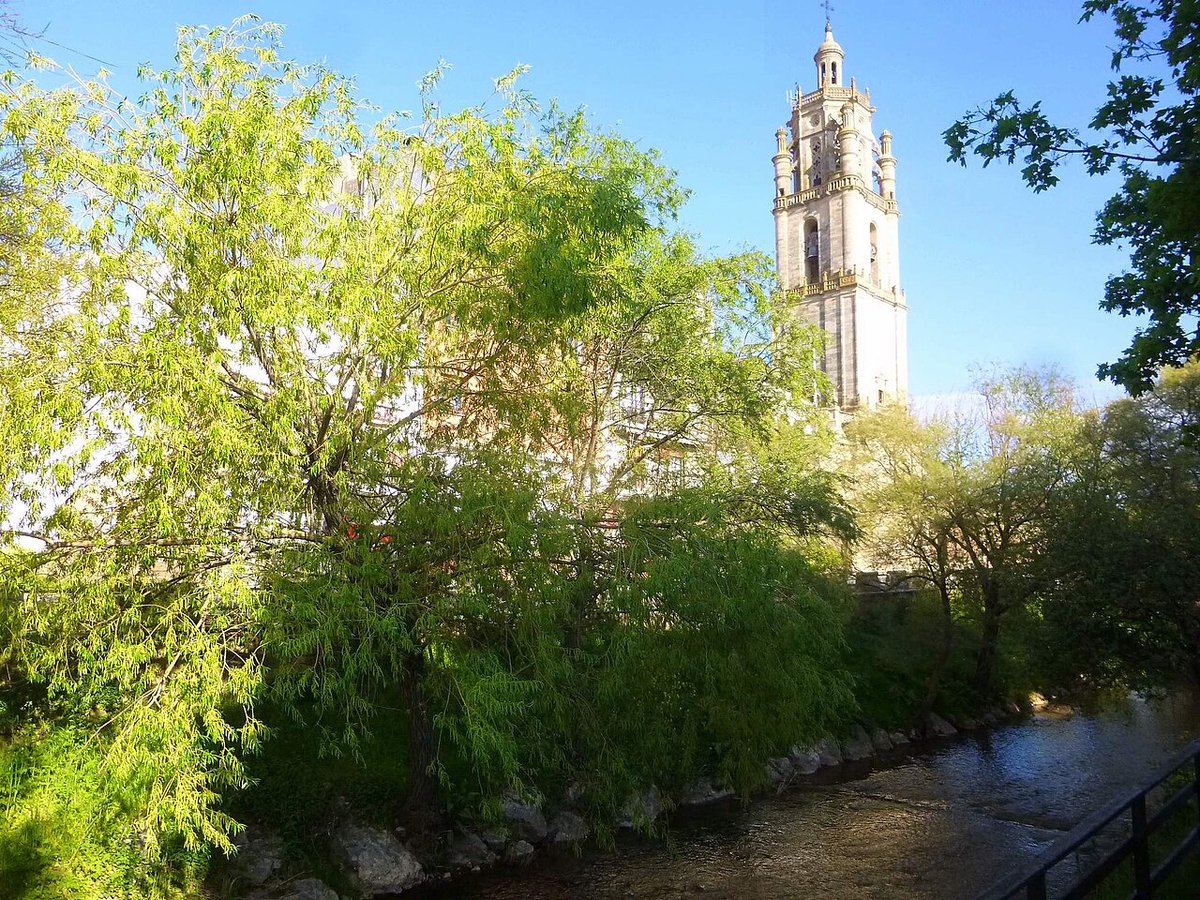
The only place to buy a drink in Lezaun is a winery. Not a bar, not a café, not even a vending machine—just Bodegas Lezaun, where the tasting room doubles as the village social hub. At 850 metres above sea level, this single-street settlement in the Navarre uplands feels less like a village than a hardworking farmyard that happens to have a church tower. The tower belongs to San Martín de Tours, a stone barn of a building whose bell still marks the hours for the 244 people who call the place home.

Stone is the local language. Houses are built from it, walls are topped with it, and the lanes are patched with it when winter frost carves cracks across the tarmac. Walk downhill from the church and you pass stone troughs once used for wheat, now planted with geraniums. Walk uphill and you meet stone shelters for sheep that still smell of last night’s flock. The whole hamlet can be circled in fifteen minutes, yet the stone changes colour as you move: honey at midday, pewter by late afternoon, a soft bruised lilac once the sun drops behind the Urbasa ridge.

That ridge is your compass. Twenty kilometres west, the Sierra de Urbasa rises to 1,220 metres and acts as a weather barrier. When Atlantic storms hit the range they dump rain, leaving Lezaun in a rain-shadow that can feel almost desert-dry in July. Conversely, when northerly winds slip over the crest, the temperature here plummets five degrees faster than in Estella, the nearest small city fifteen winding kilometres away. Pack a fleece even in June; you will use it after seven o’clock.

The winery explains why anyone beyond farming families bothers to turn off the NA-132. Bodegas Lezaun is family-run, certified organic, and small enough that the guide still points to tanks by name rather than number. Tours start with a horse-drawn cart through the Tempranillo rows, continue into a barrel room scented with American oak, and finish at long pine tables where the house red is poured from a height of half a metre in the local fashion. British visitors tend to blink twice: first at the carriage (Health & Safety would have a field day), then at the price—€12 including three generous glasses and a plate of chorizo. English-speaking staff are available most weekdays if you book ahead, and the attached grill restaurant will happily swap lamb chops for grilled vegetables if you mention “veggie” when reserving.

Outside vintage season the place returns to silence. Tractors outnumber cars two to one, and the nearest petrol pump is back in Puente la Reina, thirty-five minutes down the autovía. Fill up before you arrive; the only thing worse than hunting for diesel is hunting for it on a Sunday when every garage from here to Logroño is shuttered.

Walking tracks radiate from the top edge of the village like spokes from a wheel. The shortest is a 3-km loop that skims cereal terraces and returns past an abandoned threshing floor. Add another hour and you can reach the ruins of Monjardín castle, a former pilgrim landmark on the Camino de Santiago whose stones now serve as picnic tables for booted hikers. Paths are unsigned but follow the dry-stone walls; keep the Urbasa escarpment on your left and you will not get lost. Stout shoes are enough—this is sheep country, not mountain goat territory—yet after rain the red clay clings like wet concrete. Locals laugh at the spectacle of visitors trying to scrape three kilos of Navarre earth from their soles before getting back into hire cars.

Cyclists find better mileage heading east on the farm track toward Olazti. The surface is compacted grit, gentle gradients, and views that open onto the Ega valley suddenly enough to make you brake for photographs. Expect to meet the occasional combine harvester; drivers will wave, but they will not reverse half a kilometre, so it is up to you to find the passing place.

Birdlife rewards early risers. From late March to early May the fields become a transit lounge for migrating honey-buzzards and black kites. Stand by the stone barn at dawn and you can watch them ride the same thermals that later carry paragliders who launch from the Sierra del Perdón. No hides, no entrance fee, just binoculars and the smell of dew on barley.

Winter changes the rules. At 850 metres Lezaun catches snow that rarely reaches Pamplona, and the council grades only one road in or out. When the forecast mentions “cota 700” expect a white village, closed winery, and absolute hush broken only by church bells and the creak of boots on packed snow. Photographers love it; everyone else should postpone until the plough has passed.

Spring and autumn are the sane seasons. Wild asparagus appears along verges in April, and villagers will point out the shoots if you ask politely. October brings the cereal harvest and the smell of straw bales stacked like giant Jaffa Cakes beside every barn. Mid-September also sees the grape harvest at the winery; visitors can join the traditional evening stomp, though steel tanks now do the real work while guests splash about for selfies.

Practicalities fit into one paragraph. There is no cash machine—nearest is in Villamayor de Monjardín, eight kilometres away. The winery restaurant serves lunch from 13:30 to 15:30; arrive at 15:31 and you will be offered a bag of crisps with your wine. Mobile reception is patchy on Vodafone and absent on Three, so download offline maps before you leave Estella. Accommodation means either the rural apartment above the winery (two rooms, shared kitchen, €70 a night) or a dozen rural houses within a fifteen-minute drive; Hotel Tximista in Estella has English-speaking reception and a pool if you need both Wi-Fi and a cocktail after all that stone.

Lezaun will never tick the “must-see” box. It offers instead a calibrated sense of scale: one church, one winery, one street, and a horizon wide enough to remind you how much sky the Midlands surrendered to electricity pylons. Come for the wine, stay for the silence, leave before you need a haircut—because you will not get one here.

Key Facts

Region
Navarra
District
Tierra Estella
INE Code
31154
Coast
No
Mountain
Yes
Season
summer

Livability & Services

Key data for living or remote work

2024
ConnectivityFiber + 5G
HealthcareHospital 10 km away
Housing~5€/m² rent · Affordable
CoastBeach nearby
Sources: INE, CNMC, Ministry of Health, AEMET

Official Data

Institutional records and open data (when available).

  • Ekaiza
    bic Monolito - Menhir ~6.3 km
  • Larrenganbelako Aldapa
    bic Dolmen ~5.9 km
  • Trinidad (La Sima De 3 Bolas)
    bic Dolmen ~5.7 km
  • La Planilla
    bic Monolito - Menhir ~2.8 km
  • La Txila
    bic Monolito - Menhir ~5.1 km
  • La Txila
    bic Monolito - Menhir ~5.1 km

Planning Your Visit?

Discover more villages in the Tierra Estella.

View full region →

More villages in Tierra Estella

Traveler Reviews