Full Article
about Luquin
A hilltop village overlooking Monjardín, noted for its Basílica de los Remedios.
Ocultar artículo Leer artículo completo
The church bell in Luquin strikes noon, yet the village square stays in shade. At 595 metres above the Estella valley, the sun climbs slower here, and the air carries a clarity that makes the cereal terraces below look almost translucent. One hundred and twenty-nine people live in this single street of stone houses, and on weekdays the loudest sound is the grain dryer humming behind the cooperative barn.
A village measured in metres, not minutes
British hikers who know the Pyrenees often expect Navarra to rise dramatically, all granite spires and glacial cirques. Luquin offers something quieter: a high plateau that folds rather than soars. The surrounding tracks gain only thirty metres per kilometre – ideal for anyone who prefers a Sunday stride to a calf-burning climb. Paths head south-west towards Allín and north-east to Villatuerta; both are way-marked with the familiar yellow-and-white stripes, but mobile signal vanishes within five minutes of the last house, so screenshot the route before you set off.
Summer walking starts best at 07:30, when the thermometer still reads 17 °C and the limestone walls sweat cool air. By 11:00 the same walls radiate heat like storage heaters, and shade is limited to the north side of barns. Carry a litre of water per person; the only public fountain is on the church corner and it is turned off during drought alerts. In winter the tracks firm up after frost, but drifting leaves hide ankle-turning ruts – lightweight boots are wiser than trail shoes from November to March.
Stone, storks and silence
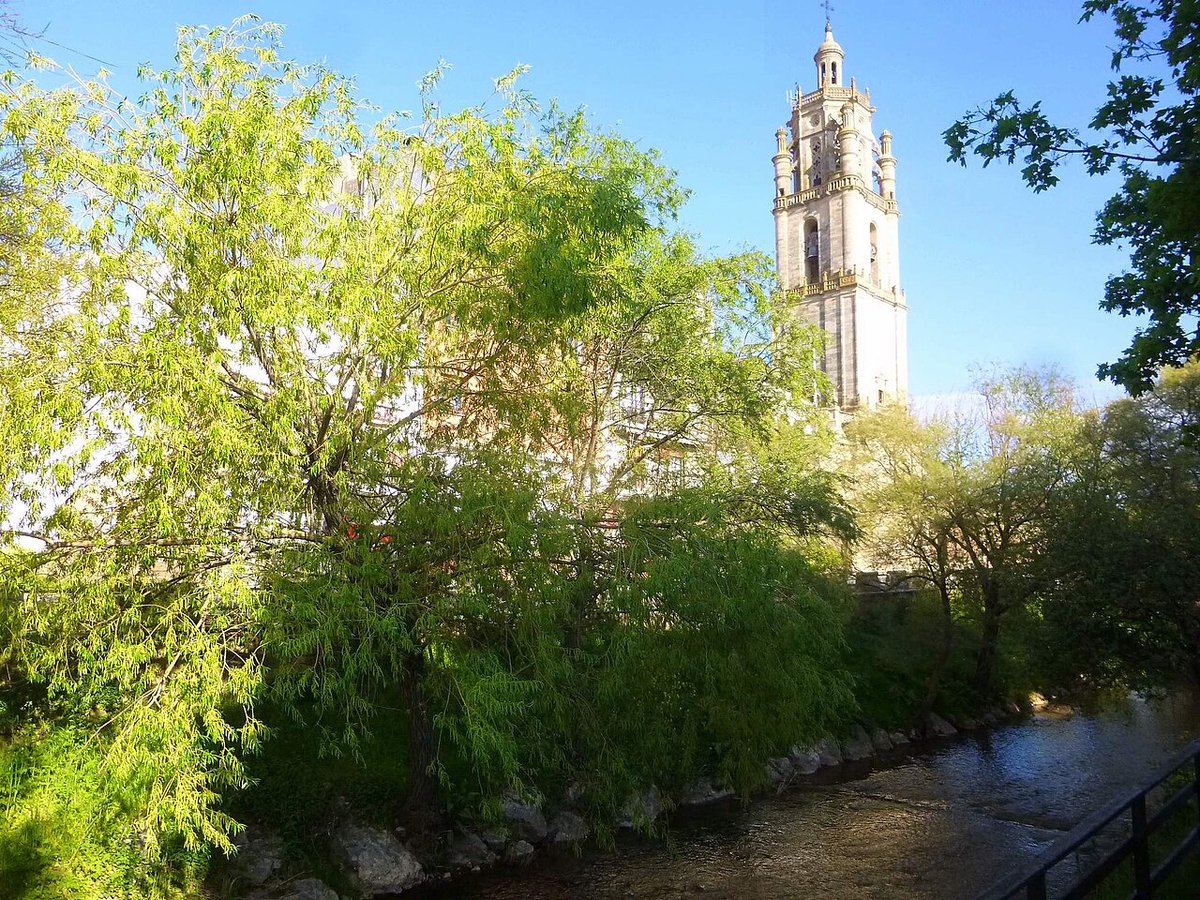
Luquin’s architectural highlight is the sixteenth-century parish church, its tower rebuilt in 1784 after a lightning strike. Step inside and you will find a single nave, no transept, and a timber roof whose beams still carry carpenters’ marks in Roman numerals. The priest only visits twice a month; the rest of the time the building stays unlocked, lit by a 25-watt bulb that makes the gold leaf on the altarpiece flicker like embers. Outside, look for the carved coats of arms wedged between the guttering – one shows a boar chained to an oak tree, the crest of a family that left for Peru in 1823 and never returned.
White storks nest on the bellframe most years. If you stand in the right place the tower appears to wear a living crown of feathers and twigs, a sight more memorable than many cathedral façades. Binoculars are useful; the birds tolerate voices but lift off if you point a long lens directly upwards.
Eating and sleeping: call ahead or go without
There is no shop in Luquin. The bakery van comes on Tuesday and Friday at 10:15, honking its horn like a French boulanger. For a sit-down meal you have two choices, both outside the village. Bar-Restaurante Allín (2 km east) serves menú del día at €14 mid-week: expect roast piquillo peppers followed by cordero al chilindrón, lamb simmered with mild choricero peppers. Weekend service stops without warning if the owner’s family has a christening; telephone +34 948 50 30 26 before you walk over. The alternative is Hostal Lur Gorri in Ayegui, 6 km away on the old pilgrim road to Santiago – taxi fare €18 each way, last kitchen orders 21:00 sharp.
Accommodation inside Luquin itself is limited to two rural hostels. Casa Tiago has eight dorm beds, a communal kitchen and a terrace that catches the last sunbeam at 18:30 in October. Beds cost €22 including sheet hire; the Wi-Fi password is written on a slate bolted to the wall, a nice touch until you realise the router is switched off at midnight. Ágora Hostel, 50 metres closer to the church, scores top marks for cleanliness but only takes private groups of six or more. If both are full, the nearest hotel is La Perla Negra in Estella, twenty minutes down the NA-1110, double room €70 with underground parking.
When the plateau turns white and then gold
Spring arrives late at this altitude. Almond blossom appears in April, a full month after the coast, and the cereal fields remain a tentative green until early May. By June the colour has drained to parchment; photographers talk about the “golden hour” here, but the entire landscape glows for weeks. Autumn is brief – the first frost often comes the same night the clocks go back – yet the stubble fields are punctuated with saffron milk caps, a mushroom that local restaurants buy for cash. If you forage, cut not pull; the Guardia Civil can fine outsiders who use rakes.
Snow is rare but not impossible. In January 2021 18 cm fell in one night, cutting the village off for 48 hours because Navarra only owns one snowplough small enough for the access lane. Winter visitors should carry a blanket and a charged power bank; the 09:55 bus from Pamplona still runs, but chains may be required at the final bend.
Making Luquin part of a longer loop
The village repays a two-hour stop, yet it is not a destination for a week’s holiday. British travellers usually slot it between Estella and the Irache monastery, or combine it with a day’s cycling along the disused railway that follows the Ega river. Mountain-bike hire is available in Estella at Ciclo Lizarra – €25 per day, helmet included – and the gradient never exceeds 4 %, so even occasional cyclists return grinning rather than grimacing.
Drivers should note that the NA-1110 is single-track for the final 1.2 km; passing places are marked by whitewashed stones, but hedges hide oncoming cars until the last second. Meet a tractor and you will be reversing uphill. Petrol stations are scarce after Ayegui; fill the tank in Estella if the gauge reads half.
A quiet that lingers after you leave
Back on the main road the silence of Luquin already feels unreal. You will hear the wind first, then your own engine, and finally the motorway near Logroño forty kilometres later. The village offers no souvenir shop, no audio guide, no ticketed viewpoint. What it does provide is a calibration point: a place where distance is measured by the horizon, and where the day still ends when the sun slips behind the cereal terraces rather than when the pub calls last orders. If that sounds like a modest return for the detour, remember that modesty is increasingly the rarest thing you will find on any Spanish itinerary.