Full Article
about Mañeru
Wine-growing village on the Camino de Santiago; it gives its name to the comarca and keeps stately manor houses.
Hide article Read full article
A small town shaped by its fields
Set in the Tierra Estella region and crossed by the Camino de Santiago, Mañeru sits within the central belt of Navarra where agriculture defines both landscape and daily life. The town stands among cereal fields and some patches of vineyard, on open, gently contoured land that has long guided how people here work and live.
Just over four hundred people live in Mañeru today. Its proximity to Estella-Lizarra influences everyday routines, as many residents head there for work, shopping and administrative errands. That relationship with a nearby town gives Mañeru a quieter rhythm, with fewer services of its own and a more local, close-knit feel.
San Pedro and the shape of the town
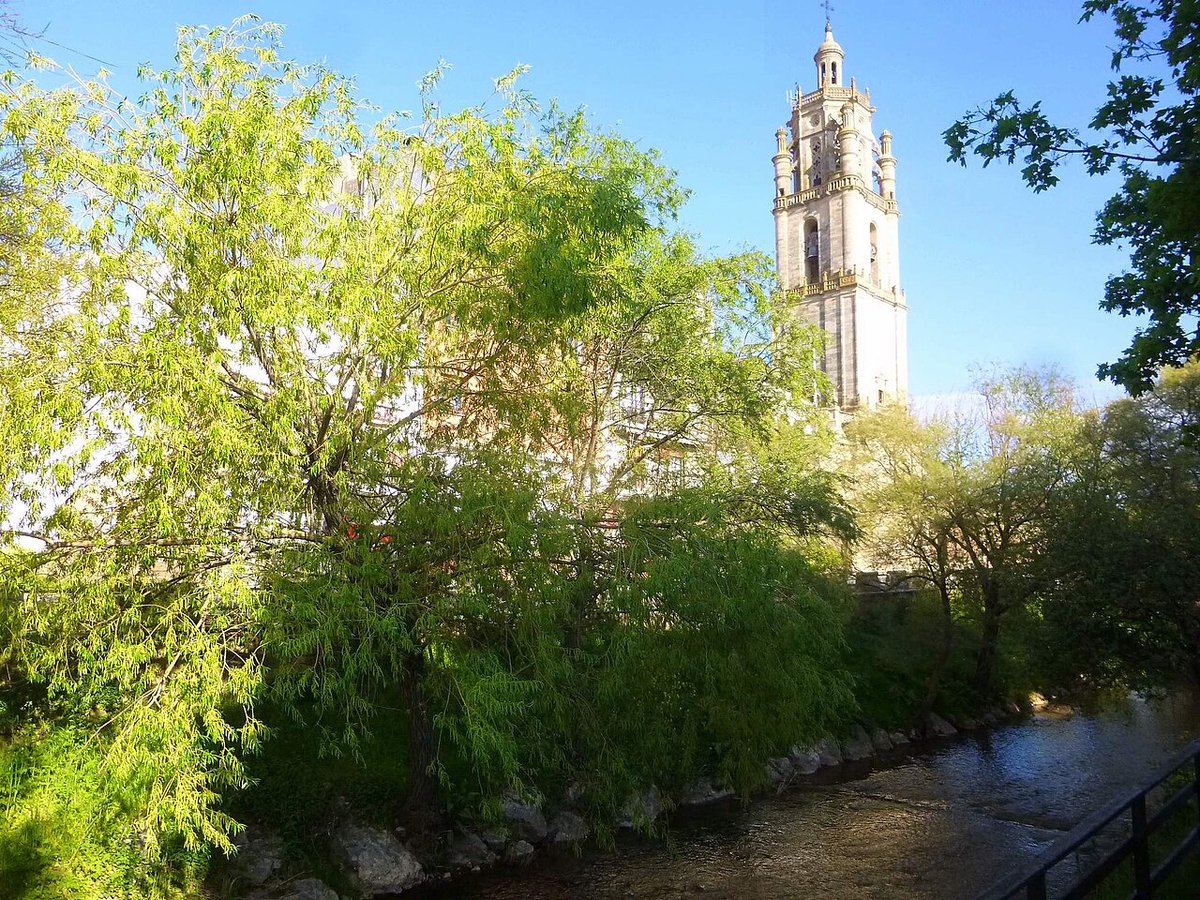
The most prominent building is the parish church of San Pedro. Its structure brings together different phases of construction, with elements often placed between the late Romanesque period and later Gothic-era alterations. The tower rises above the surrounding houses and acts as a clear point of reference, whether approaching by road or following the Camino itself.
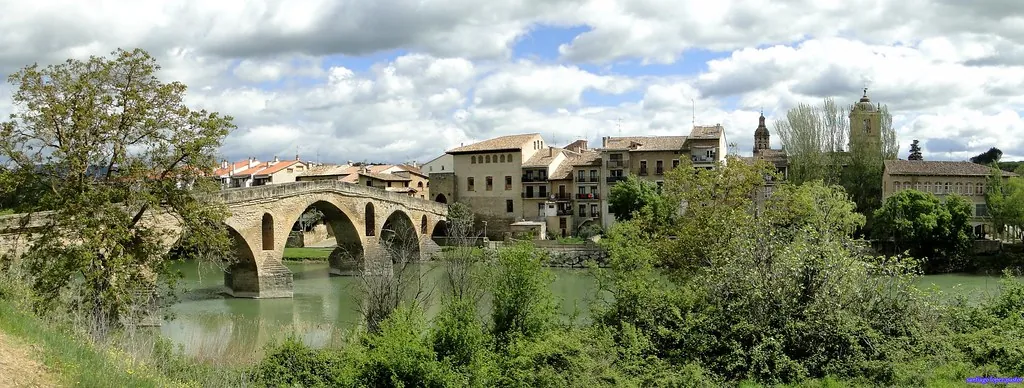
The urban layout is compact and easy to follow. Short streets open into small squares and stretches where carefully worked stone doorways remain in place. Some façades still display coats of arms, traces of earlier periods when agriculture and the steady passage of pilgrims created more activity in the town.
This is not a monumental ensemble, yet it offers a readable layout. The arrangement of streets and buildings shows how Mañeru developed from a tightly grouped core, expanding gradually while maintaining a clear structure.
Open land in the heart of Navarra
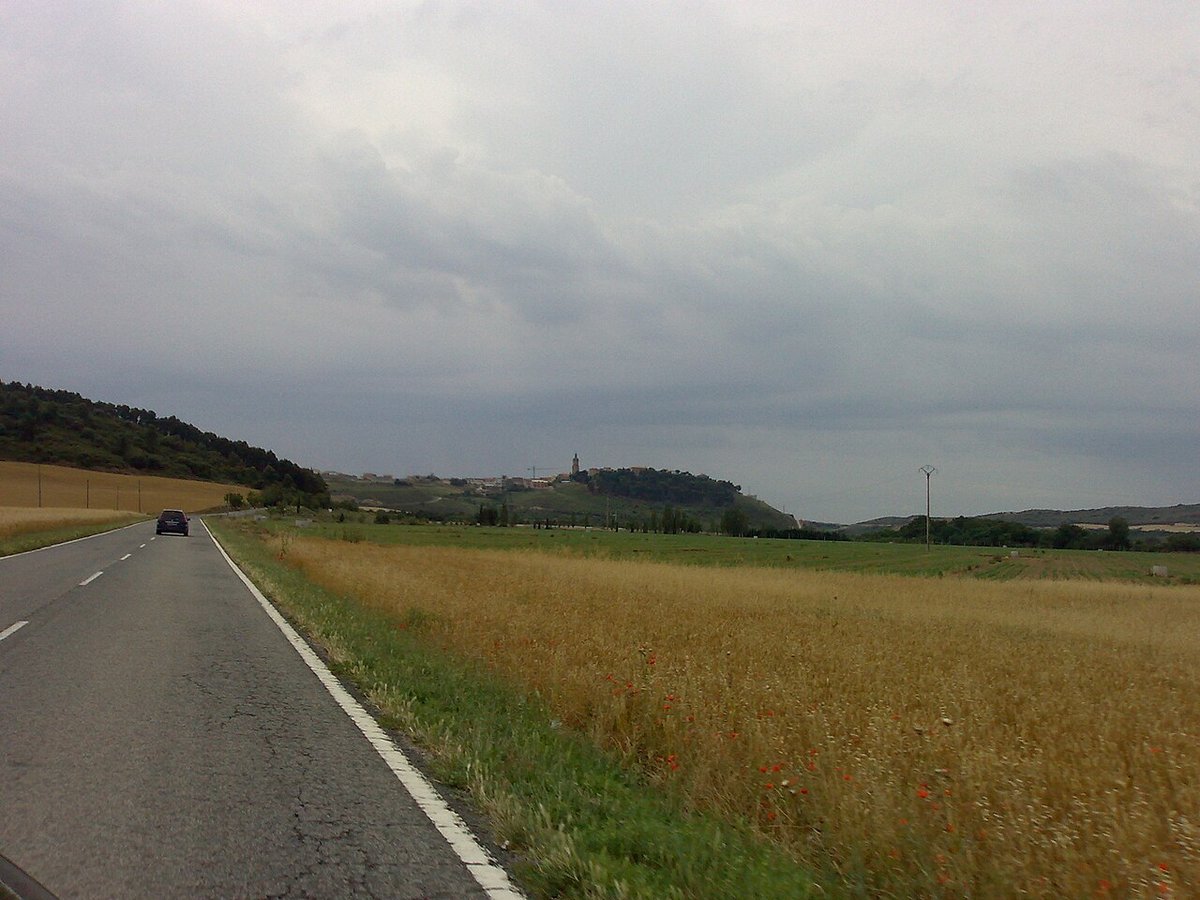
Leaving the town centre brings an immediate shift in scenery. Streets give way to agricultural tracks that cut through cereal fields. The colours change with the seasons, moving from green to gold, then to the muted tones of stubble after harvest.
The terrain is wide and open, without steep gradients. Views extend across Tierra Estella towards other settlements, while distant ranges mark the horizon. Walking these paths offers a straightforward sense of how farmland is organised in this part of Navarra, with large plots and long sightlines shaping the experience.
There is little interruption in the landscape, which reinforces its agricultural identity. The absence of dramatic features allows the scale of the land to stand out, along with the slow transitions brought by seasonal work.
Along the Camino de Santiago
Mañeru lies on the route of the Camino Francés, the most travelled section of the Camino de Santiago pilgrimage. For many pilgrims, it is a midway stretch between nearby towns, appearing as a brief pause rather than a final destination.
The routes from Mañeru towards Cirauqui or in the direction of Villatuerta reflect the character of this section of the Camino. Tracks run through farmland, with open views and occasional low rises that offer a wider perspective of the surroundings. The walk is not dramatic, but it reflects the essence of the central Navarrese landscape.
This part of the Camino emphasises continuity rather than contrast. The terrain, the fields and the steady progression between settlements define the journey here, with Mañeru fitting naturally into that sequence.
Moments in the local calendar
The main celebrations take place around San Pedro at the end of June. During these days, the town becomes more active and the streets fill again with movement and gatherings. Like many smaller municipalities, summer also brings back people who maintain family homes in Mañeru but live elsewhere for most of the year.
During Holy Week, processions usually pass through the main streets. The tone is restrained, matching the character of the town itself, with a focus on tradition rather than spectacle.
Walking through and beyond
Mañeru can be explored in a short amount of time. A relaxed walk through the centre is enough to notice the older doorways, the coats of arms and the way houses cluster around the church.
From there, it is worth heading out along one of the tracks that lead into the surrounding fields. Within a few minutes, the wider setting becomes clear, with a full view of the town and its agricultural surroundings. The transition from built space to open land is quick, which makes the contrast easy to appreciate.
Before setting off
A visit to Mañeru works best as a short stop within a wider route through Tierra Estella or along the Camino de Santiago. The town is small and does not offer a wide range of services, so not everything is open throughout the day.
If arriving by car, it is common to leave it near the centre and continue on foot. From there, all parts of the town can be reached in a brief walk, making it simple to take in both the streets and the nearby countryside without needing much time.