Full Article
about Mues
Set in the Odrón valley; known for the Congosto gorge and its Roman dam.
Ocultar artículo Leer artículo completo
The church bell strikes eleven and nobody looks up. In Mues, population seventy-nine, the clang carries across wheat stubble and stone roofs without a single smartphone lifted to film it. The sound simply marks time for people who already know what time it is.
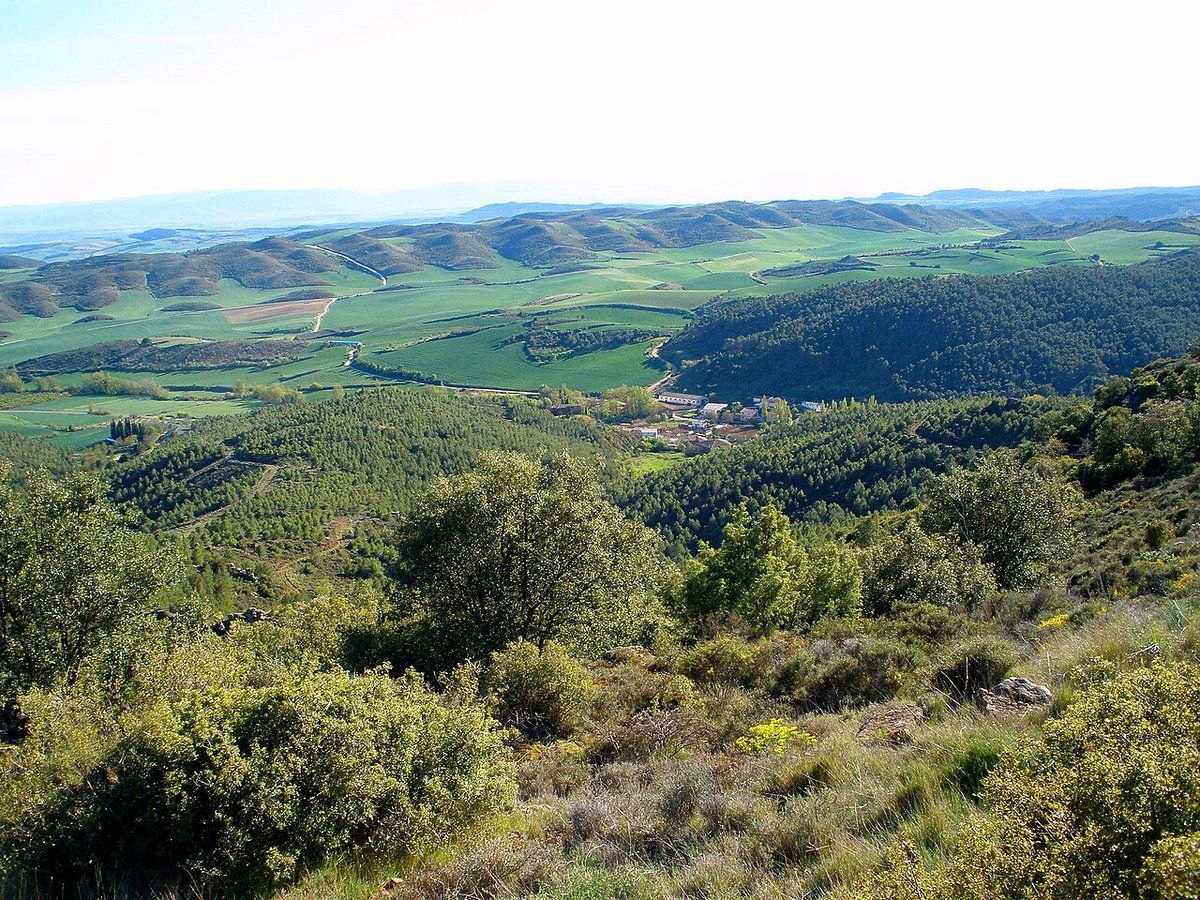
Five hundred and eighteen metres above sea level, the village sits where the Navarran hills pause for breath. That extra altitude knocks two or three degrees off the valley thermometer, so even in August the dawn air carries a nip that smells of cut straw rather than hot dust. Bring a jumper whatever the calendar says; the wind up here has crossed nothing sturdier than a dry-stone wall since La Rioja.
Stone, wood and whatever the weather allows
Houses are built from what lay within ox-cart distance: ochre limestone quarried two miles south, oak beams dragged from the Izki forest, clay tiles that blush terracotta when it rains. Most roofs still wear lichen the colour of old pewter; satellite dishes are small and angled low, almost apologetic. The only new structure visible from the single square is a glass-walled balcony tacked onto the old schoolhouse—now the village reading room—installed when an architect from Pamplona married a local girl and needed somewhere to smoke on Sundays.
There is no high street, merely a Y-shaped junction where the road from Viana splits around the church. Park here; the tarmac ends after fifty metres and the lanes narrow to the width of a tractor tyre. Walking is compulsory, but the gradient is gentle enough for city trainers. In twenty-five unhurried minutes you can circumnavigate every passable street and still have time to read the brass plaque dedicated to the 1936-39 war dead—six names on a wall that sees more sun than mourners.
What grows and what does not
The surrounding map is a patchwork owned by grandfathers and worked by WhatsApp. Wheat, barley and sunflowers rotate with bureaucratic precision; the occasional field of fava beans appears when EU rules favour protein. Smallholdings of lettuces and chard survive only behind garden walls, watered by retired teachers who refuse to buy tasteless supermarket leaves. If you fancy photographing emerald rows, ask first—many plots are leased to cousins in Estella and the tenant may be squatting on a ladder among the artichokes, invisible until you tread on his irrigation hose.
Spring arrives late. Mid-April frosts can still blacken almond blossom, so farmers sow later than their Basque neighbours and harvest well into July. Come October the stubble burns at dusk, sending spirals of sweet smoke towards the Perdón ridge; the smell lingers on clothes long after you have driven back to the AP-15.
Paths that expect you to know the way
Officially there are no way-marked trails. Unofficially, the shepherd tracks heading north-east from the cemetery gate reach a low col in forty minutes, then dip into a shallow canyon where griffon vultures ride thermals above your head. The route is obvious in May when the wheat forms a gold carpet either side, but after the combine has passed the field edges disappear and you will need the river line on the horizon as a compass. Mobile signal flickers in and out; download an offline map before leaving the tarmac.
Winter walking is shorter, sharper. A northerly wind can drive sleet sideways across the plateau, and the clay soil cakes to your soles like wet biscuit. Locals wait until the sun clears the church tower—about ten-fifteen—before stepping out. Even then, boots with ankle support are sensible; the stone gutters ice over nightly and a broken wrist is a long drive from A&E.
Eating, or learning to be flexible
Mues itself has no restaurant, no bar, no shop. The last grocery closed when the proprietor died in 2018; his daughter works in Bilbao and rents the premises to a mechanic who restores vintage Seat 600s. Hunger must be solved elsewhere. Drive ten minutes south to Villamayor de Monjardín and the Hostal Rural Izar gives weekday menus at €14—garlic soup, chuletón beef grilled over vine shoots, house red that stains the glass purple. They open dinner only if five tables reserve; phone before you set off. Vegetarians should ask for menestra de verduras, a spring vegetable stew that arrives heavy on artichoke and potato, light on anything green.
If you are staying self-catering, stock up in Estella’s covered market (closed Monday). Buy pochas beans, still pale flecked with pink, and a slab of queso de oveja wrapped in paper that leaks oil. The village bakery van visits Tuesdays and Fridays at eleven-thirty; listen for a horn that plays the first two bars of La Cucaracha.
When the village throws a party
Festivities cluster around the third weekend of August. The programme, photocopied and taped to the church door, lists mass at seven, paella popular at two, and a disco in the threshing square that finishes before the Guardia Civil make their midnight round. Visitors are welcome but not announced; buy a €7 ticket for the rice from the ladies outside the sacristy and remember to take your own plate. Music is provided by a Pamplona DJ who also does weddings—expect eighties Spanish pop and one Despacito remix. Fireworks are modest; the show fits into a Citroën Berlingo and costs less than a round of gin-and-tonics back home.
Where to sleep (and why you might not)
The only formal bed in town is Hotel Rural Latorrién de Ane, six rooms carved from an eighteenth-century manor on Calle Mayor. Beams are original, Wi-Fi is twenty-first-century, and the back terrace looks over a paddock where two retired carriage horses graze. Doubles run €110–130 including breakfast—local jam, sponge cake, coffee that arrives in a glass. Book ahead; city escapees snap up weekends year-round. Alternative: stay in Estella (20 min drive) and day-trip. The three-star Hotel Yerri has underground parking crucial if you hire a diesel with low clearance; Navarran villages still favour stone ramps designed for donkeys.
The honest verdict
Mues delivers silence, wide skies and the pleasant shock of a place where nothing is optimised for tourism. It also offers zero nightlife, patchy phone data and the possibility that you will arrive on Tuesday to find every gate locked. Treat it as a comma between bigger stops—Estella’s Romanesque bridges to the west, the wine caves of San Martín de Unx to the south—rather than the full stop of your holiday. Pack water, a sense of direction and enough Spanish to apologise for blocking a farm track. If the weather behaves and the bakery van turns up, the village repays with a two-hour masterclass in how much of rural Europe still lives when nobody is watching.