Full Article
about Olejua
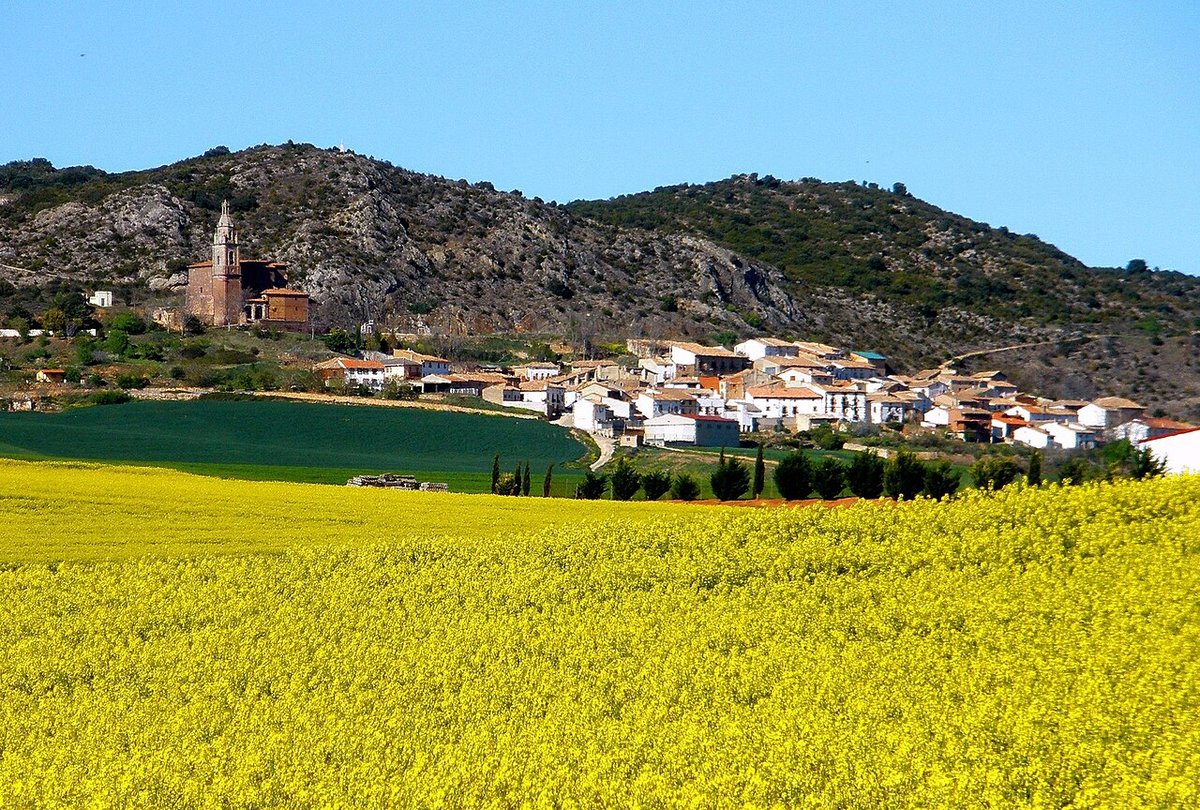
Small farming village near the Estella road; fortified church and unpretentious setting.
Hide article Read full article
A small village shaped by the land
Olejua is one of the small villages in the northern part of Tierra Estella, in Navarra, a region in northern Spain. It sits among gentle hills and cereal fields, a landscape that defines this part of the comarca. Just a few kilometres from Estella‑Lizarra, its size and history explain its present-day character: a very small agricultural settlement where daily life has long revolved around the land.
Its proximity to Estella has influenced how it developed. Many nearby villages came within that town’s orbit, and Olejua kept a low profile, more tied to farming than to passing travellers. Even so, the layout of its streets and elements of its architecture point to several centuries of history. It was likely established as a small rural settlement during the early modern period, in line with others across Tierra Estella.
Santa María at the centre
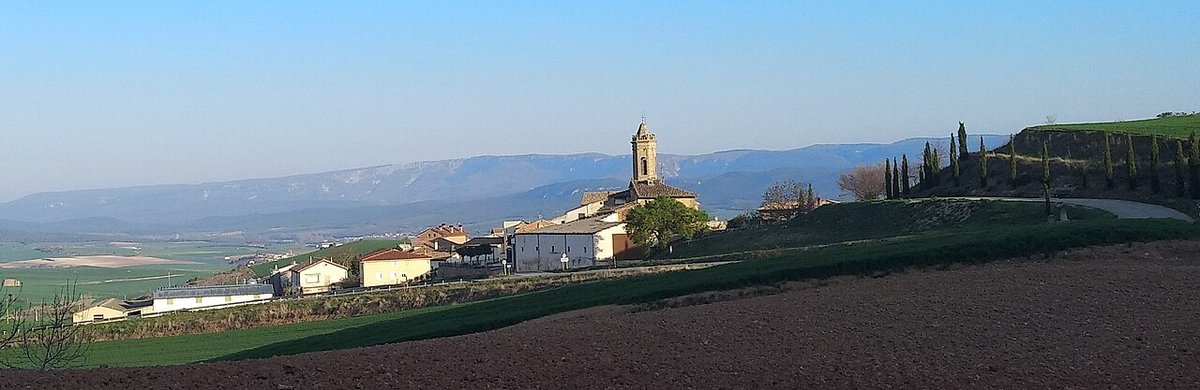
The parish church of Santa María stands at the heart of the village and remains its most prominent building. Its origins are usually placed in the 16th century, although later alterations have shaped what can be seen today, which is common in many churches in this area.
The building is restrained in style. Its stone façade follows simple lines, while the brick bell tower introduces a contrast that appears in other rural churches across Navarra. It is not a monumental structure, yet it organises the space around it. Houses cluster nearby, and a small square beside it works as a meeting point for the village.
Close streets and working houses
Olejua’s urban layout is compact and can be covered in a matter of minutes. The streets are narrow, and houses stand close together, typical of places that grew without large modern expansions.
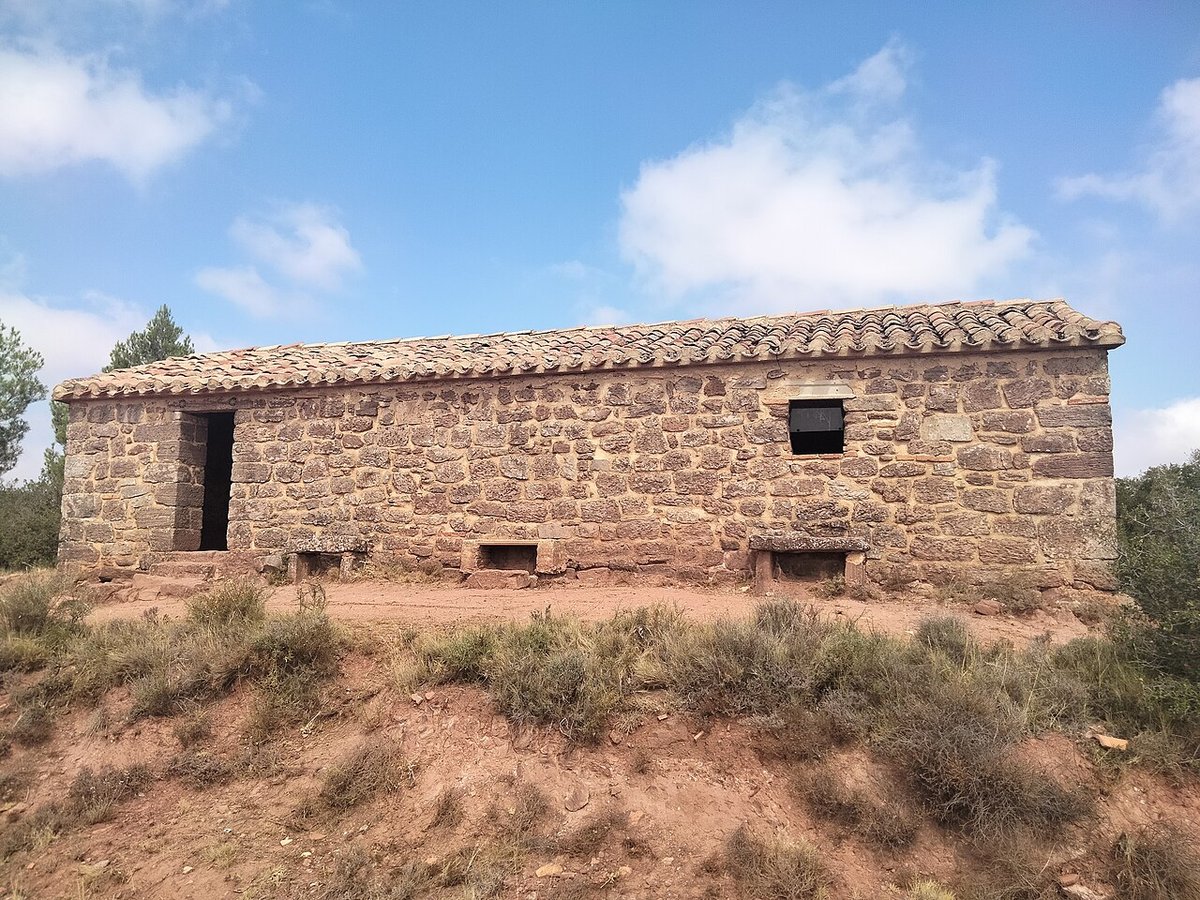
Several façades still preserve details from earlier centuries. Stone doorways, wooden doors with old iron fittings, and coats of arms carved into lintels can be seen here and there. These are modest features, but they offer clues to the village’s past. The houses were closely linked to agriculture, with spaces once used to store tools, grain or animals.
At the edges of the village, barns and stone walls mark the transition from built space to farmland. The shift is gradual rather than abrupt, and it reflects how closely daily life has been tied to the surrounding fields.
The landscape around Olejua
Just beyond the last houses, agricultural tracks begin to cross the fields. The landscape opens out quickly. Plots of cereal dominate, and their appearance changes noticeably with the seasons: green in spring, golden in summer, and more bare after the harvest.
From some of the nearby hills, there are clear views across this part of Tierra Estella. The terrain is gentle, allowing sightlines towards other villages such as Murieta or Villatuerta. On clear days, the mountain ranges that frame the horizon also come into view.
These are working tracks rather than marked walking routes. Tractors and farm machinery are part of the scene, and that is precisely what gives the area its character. They remain practical paths, shaped by agricultural use rather than by tourism.
A short walk through the village
A visit to Olejua does not take long. In about an hour, it is possible to walk through the streets, reach the church and continue a little way along the tracks that lead into the fields.
Those interested in traditional rural architecture can take a closer look at the stone doorways, coats of arms and old walls that appear on several houses. None of these elements are monumental, but together they show the continuity of the settlement and its long relationship with the land.
The experience is simple and direct. There are no large landmarks to structure a visit, and that is part of the place’s identity.
Practical notes for visiting
Olejua has no commercial services, so it is best to arrive prepared with water or anything else needed during a short stay. For meals or shopping, people usually head to Estella‑Lizarra or other nearby villages in the comarca.
Parking is generally straightforward along the village streets, provided access to houses, barns and plots is kept clear.
In summer, the heat can be intense around midday, as in much of Tierra Estella. Early morning or late afternoon tends to be more comfortable for walking. Spring and autumn are also good times to see the landscape with stronger contrasts in colour.
Getting there and exploring further
From Pamplona, the usual route is via the N‑111 towards Estella‑Lizarra. From there, local roads connect to nearby villages, including Olejua.
Because of its size, Olejua is often visited as part of a wider route through Tierra Estella. It can be combined with other nearby villages or with short walks along the rural tracks that cross the comarca.