Full Article
about Sansol
Small village on the Camino de Santiago next to Torres del Río; views over the Linares valley
Ocultar artículo Leer artículo completo
The church bell strikes twice and a tractor answers from the fields below. Nobody appears at any doorway; the only movement is a sheet flapping on a balcony. In Sansol, population somewhere south of a hundred, the siesta is taken seriously—even the dogs know better than to bark.
This is the first village you reach after the long drag across the meseta from Los Arcos, and most walkers arrive with dust on their boots and a single question: “Is the bar open?” The answer is usually yes, but only just. Bar Sansol unlocks at seven for coffee and locks again at ten-thirty once the last tortilla wedge is gone. Inside, the menu is written on a paper plate and the rosado comes chilled in a plastic measuring jug. It is not gourmet, yet to a pilgrim who has covered 20 km before lunch it tastes like relief.
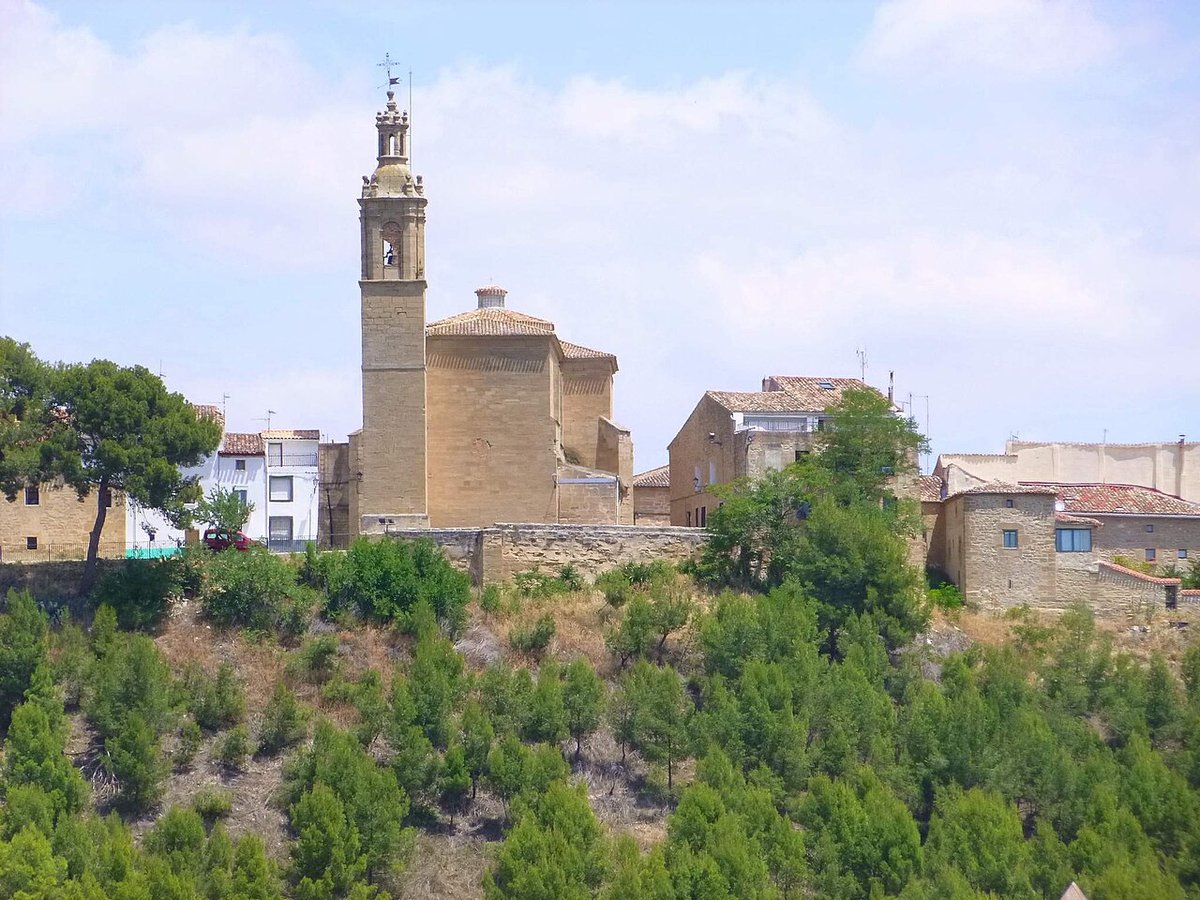
Stone houses the colour of burnt cream line a single lane that crests the ridge. From the top you see the logic of the place: wheat and vines roll east until they bump into the limestone sierra; westward the land drops into Rioja Alta, a checker-board of tempranillo trained low to the ground. The village sits on the hinge, catching both Atlantic breezes and continental heat. That elevation—580 m—means nights stay cool even in July, a blessing if you are bedding down in the unheated albergue.
There is no public monument, no interpretive centre, no brown sign pointing to a Roman milestone. What you get instead is a textbook example of how a tiny Navarrese hill settlement works. The sandstone church, dedicated to the Ascension, has a doorway dated 1624 but the bulk of the masonry is older, recycled from a castle that once watched the road from Nájera to Pamplona. The key hangs next door at number 14; knock and the householder will let you in, provided the harvest is not in full swing. Inside, the single nave smells of candle wax and grain dust; someone has left a scallop shell on the altar with a London postcode scribbled on the back.
Walk fifty metres past the church and the lane peters out into a gravel track between wheat trials run by the regional agricultural college. Every June the plots turn a metallic gold that hurts the eyes; by mid-July the giant combine crawls up the hill, its blade trimmed narrow enough to fit between dry-stone walls. The only footpath signed is the Camino itself, but if you carry on for ten minutes you reach a concrete water tank that doubles as a mirador. From the lip you can trace the pilgrim way as a pale ribbon stitching Los Arcos to Torres del Río, six kilometres of absolutely no shade. It is the sort of view that makes you reach for sun cream you forgot to buy.
Back in the village the afternoon options are limited, which is precisely why people like the place. A bench beside the albergue faces west; sit there at six and you share the sunset with perhaps three other walkers and the farmer’s wife who feeds the cats. Swifts cut across the sky, the church shadow lengthens, and someone inside Bar Sansol begins clattering pots for the evening menú. Conversation turns practical: tomorrow’s forecast (sun, always sun), where the next cash machine lurks (Estella, 16 km), and whether the municipal fountain is potable (it is, but tastes metallic).
Supper is served communal-style at a single pine table. First comes watery vegetable soup, then chicken thigh and chips, finally a plastic tub of flan fought over by those with a sweet tooth. Wine is included; so is bread, but you are expected to saw your own slices from the loaf. The price hovers around twelve euros—cash only, and the proprietor keeps a stack of pre-1999 pound coins as souvenirs. Dietary requirements are met with a shrug; vegetarians get an extra egg, coeliacs are advised to eat the chips and skip the bread.
Night-time is star-heavy and silent. Street lighting consists of two bulbs on timers that switch off at midnight, so torch batteries matter. The albergue dormitory holds sixteen in two-tier bunks; windows open onto wheat stalks that whisper like rain. By ten the lights are out and the only sound is the occasional zip as someone crawls outside to the loo. Curfew is self-imposed: nobody wants to be the pilgrim who clomps in at two and wakes everyone at dawn.
Morning begins early. Bar Sansol fires up its espresso machine at five-thirty; by six-thirty the first walkers are on the track, head-torches bobbing towards the lip of the hill. If you are staying on rather than walking, the village wakes more slowly. The shop—really the front room of a house—opens at nine and sells plasters, peaches and warm Estrella Damm. Buy breakfast here if you missed the tortilla: a baguette, a tomato and a plastic knife cost under two euros. Squash the tomato into the bread, add salt, and you have the simplest version of pan con tomate, best eaten on the church steps while the sun climbs over the sierra.
By eleven the heat becomes assertive and shade is currency. The only reliable patch is inside the church porch; everything else is open sky. This is the moment to leave, or at least to plan the rest of the day. A taxi from Viana can collect you at the entrance track if knees have given up, but you must phone the previous evening—signal is fickle and Uber does not operate. Buses are theoretical: one school service at dawn, one return at three, neither designed for visitors. Most people simply walk on; the next village, Torres del Río, offers a medieval Templar church and a swimming spot in the river, though you will share both with day-trippers from Logroño.
Sansol, then, is less a destination than a pause button. It offers a shower, a bed, a glass of cold rosado and the reassurance that villages where everyone nods hello still exist. Stay longer than a night and you risk running out of things to do; arrive expecting souvenir shops and you will be disappointed. Come with blistered feet and low expectations, and you may remember the place as the evening the world slowed to the speed of wheat.