Full Article
about Sorlada
Home of the Basílica de San Gregorio Ostiense; a place of pilgrimage against crop plagues
Ocultar artículo Leer artículo completo
The school bus grinds up the last incline at 08:15, squeezing between stone walls that have been scoured by wing mirrors for decades. Forty-eight locals, one driver, and the occasional visiting rambler watch the same view unfold: cereal terraces tilting west, vines gripping limestone ribs, and the roofline of Sorlada balanced on a 578-metre ridge like a book left open to dry. No signposts announce the summit; the engine note simply drops an octave and the air smells of wet adobe after night dew. You have arrived because the road decided to stop climbing, not because anyone thought you might need a fanfare.
Stone, Adobe, and the Sound of No Traffic
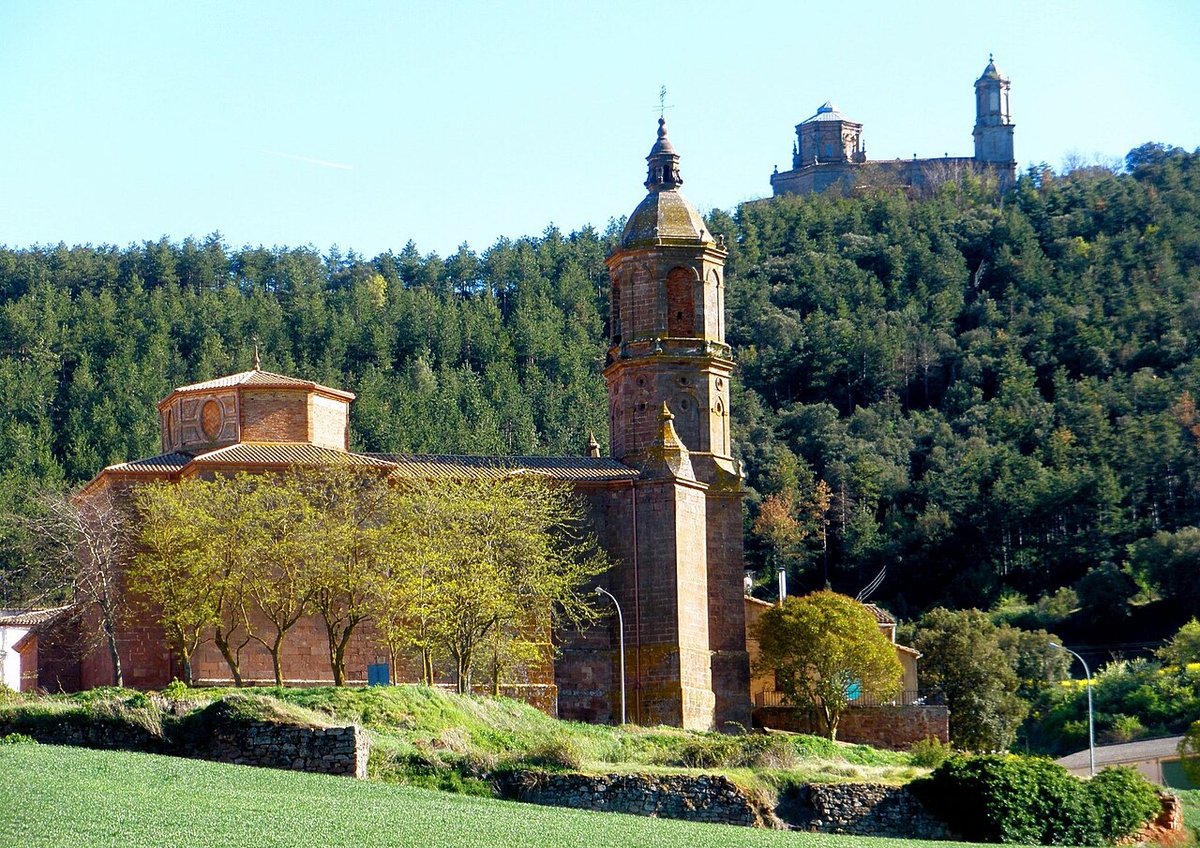
Sorlada’s builders worked with what slid down the nearby scree: soft grey limestone blocks for corners, straw-mud adobe for in-fill, terracotta curved by hand for roof ridges. The result is a palette that changes every thirty minutes. At dawn the walls are the colour of oat biscuits; by late afternoon they have shifted to pale honey; under a storm cloud they turn almost pewter. That chameleon quality makes the hamlet absorbing even though it contains, at rough count, six short streets and a church.
The church, San Martín de Tours, is the only element that breaks the horizontal rhythm. Its bell-stage sits slightly too tall for the houses, like a child wearing Dad’s flat cap. Medieval bones survive inside—a baptismal font hollowed by centuries, a Romanesque window now bricked up—but the door is usually locked unless the priest visits from neighbouring Ayegui. Locals treat the square in front as their sitting room: men park folding chairs against the south wall in winter to catch the low sun, women unload groceries while exchanging news about whose olive press is jammed again. Stand still for two minutes and someone will nod good morning; stand for five and you’ll hear which field has just been drilled, information passed along at the pace dictated by the harvest calendar rather than WhatsApp.
Walking Before the Thermals Rise
The real contour map begins where the tarmac ends. A farm track drops north-east towards the Linares ravine, signed only by two white stones either side of the gateway. Within ten minutes the hamlet sits behind you like a ship in dry dock, masts replaced by the church tower. Wheat stubble crunches underfoot; stone curlews flap off complaining. Half an hour farther on you reach an abandoned threshing floor, its stone circle edged with pale lichen. From here the view opens to the grain belt of Tierra Estella: a chequerboard of browns, ochres, and the odd shock-green plot of winter barley. No interpretive panels, no selfie-frame, just the wind turning the turbine blades of the distant Loizaga factory into silver flashes.
Summer hikers should set the alarm. By 11 a.m. the sun has authority; shade is scarce and the only sound is cicadas machining away in the walnut trees along the lane. Carry at least a litre of water per person; the nearest open bar is 12 km away in Estella. Spring and autumn are kinder: skylarks keep station overhead, and the temperature differential between valley floor and ridge can be 5 °C—perfect justification for packing an extra fleece.
Mud, Mirrors, and the Things That Catch You Out
A yellow weather warning is Sorlada’s quiet catastrophe. Clay soil sticks to boots like liquid chocolate, the single drainage channel overflows, and even the farmer’s 4×4 fishtails on the gradient. Visit within 48 hours of heavy rain and you will understand why the bar-counter philosopher in Estella mutters, “Sorlada? Lovely, but take wellies.”
Parking etiquette matters. The turning circle at the top is barely wider than a Bedford van. Pull in tight to the wall, fold the mirror, and don’t block the brown metal garage door—grain goes in and out at unpredictable hours. If every visitor left their car in neutral gear the place would seize up by lunchtime; as it is, weekday traffic is mostly one Post Office van and the bread lorry that beeps at 10:30 sharp.
November Fires and Other Calendars
The patronal fiesta happens around 11 November, the feast of San Martín. Technically it lasts three days; practically it begins when the first tractor headlights appear on the horizon towing a trailer of beech logs, and ends when the last ember is kicked apart. A txistoria sausage sandwich costs €3, handed over through the kitchen hatch of the old grain store. The band, imported from Viana, plays pasodobles to an audience of 60—half of them related, all of them critics. If you want to join in, bring your own jacket; nights at this altitude drop below 5 °C and the plaza offers only starlight for heating.
Outside fiesta week the calendar is agricultural theatre. Mid-June the harvesters start at 06:00, headlights blazing like grounded UFOs. By late September the air smells of crushed grapes even though nobody grows vines inside the village boundary; the fermenting drifts up from the valley presses. These are the moments when Sorlada feels busiest, though visitor numbers remain in single figures.
Making It Work as a Day Out
Base yourself in Estella, 18 minutes’ drive south along the NA-1320. The road twists enough to keep speed in check but is tarmacked throughout; coaches bound for Santiago trundle past without difficulty. Leave the car in the small cemetery plaza—room for eight vehicles if everyone breathes in. From there a figure-of-eight loop on foot takes roughly 90 minutes: hamlet, threshing floor, ridge line, back via the lower lane past the stone trough where mules once drank. Add coffee before you set off; there is no café here, and the nearest public loo is locked unless the ayuntamiento key-holder is in a good mood.
If the horizon still feels close, continue north on the GR-120 “Tierra Estella” long-distance path. Two hours of way-marked walking brings you to Villamayor de Monjardín, where a castle ruin and one of Navarre’s best craft breweries provide reward and carbohydrate in equal measure. A pre-booked taxi back to Estella costs about €18—cheaper than two tasting flights at the brewery if you do the maths.
The Honest Ledger
Sorlada will not keep a family busy from dawn to dusk. Rain cancels the charm, mid-summer midday is harsh, and anyone hunting souvenir shops or audio guides will leave empty-handed. Yet for walkers who measure a place by how quickly silence returns after the engine stops, or for travellers happy to trade adrenaline for altitude, the hamlet delivers. Stand on the ridge at dusk when the grain silos of the Ebro plain flick on their safety lights one by one, and you will understand the transaction: no spectacle, just space, and the sense that the world’s frantic clock has been reset to agricultural time.