Full Article
about Valle de Yerri
Large valley with several councils and the Alloz Reservoir; transition zone between mountain and riverside.
Hide article Read full article
Morning Dampness on the Stone
The first light catches the moisture still clinging to the wheat stalks, turning it to a faint, rising mist. In the villages of Valle de Yerri, the only sound is water running from a tap into a bucket in a garden. The day starts slowly here, with the scent of damp earth and cut grass. It is the best time to walk, before the Navarran sun climbs high over the plain.
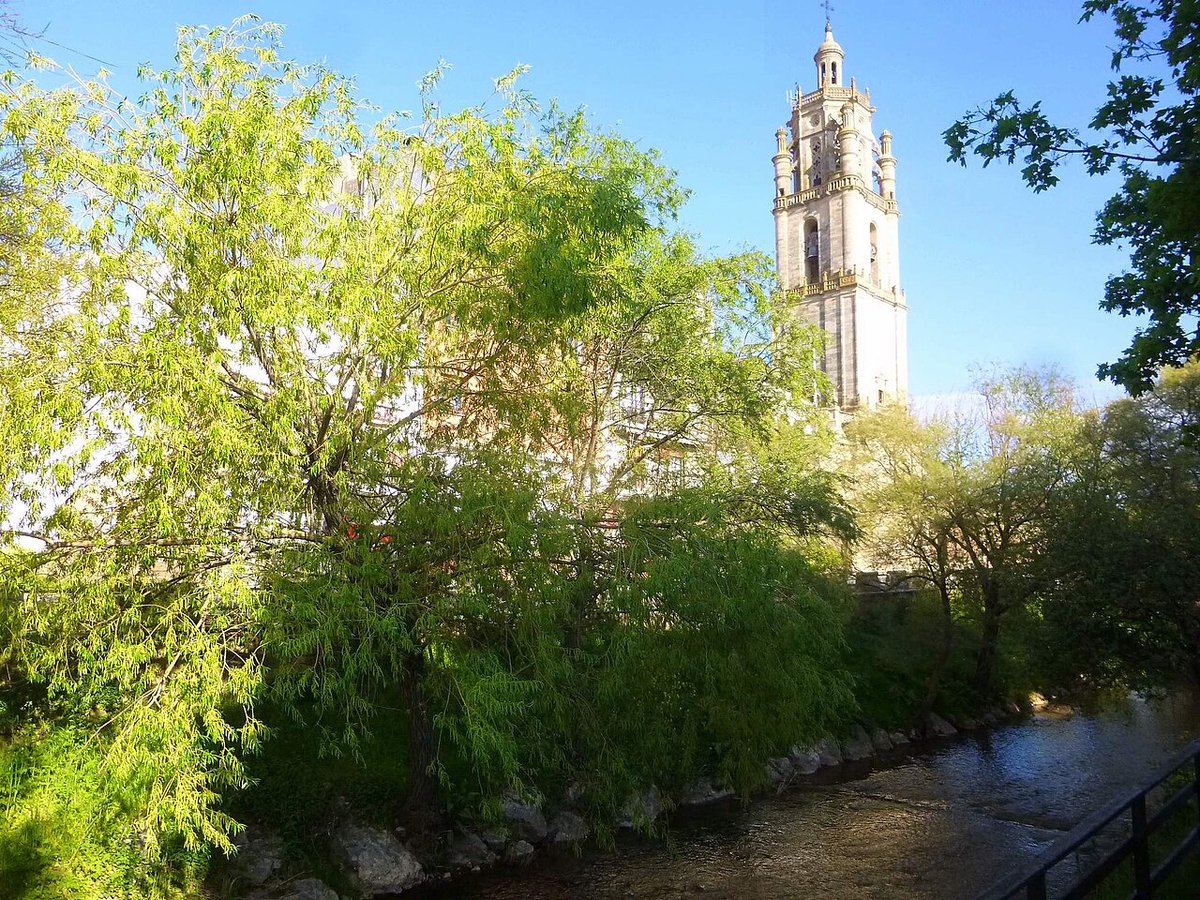
From the NA-111 between Pamplona and Estella, turnoffs lead to places like Gastiáin or Zurucuáin. They are not destinations in a conventional sense. You find short streets of ochre stone, churches with thick walls, and the deep quiet of farmland. In Gastiáin, look for the narrow Gothic windows on the church facade, their stone worn smooth. In Muez, the Romanesque arch over the door is simple, almost severe. These are not grand monuments. They feel like part of the field walls, another layer in a landscape that has been lived in for a long time.
The Geometry of the Plain
This is a country of horizons. The land rolls in wide waves of cereal crops, divided by lines of trees and old stone boundaries. The geometry is human-made and clear-cut: rectangles of gold and green stretching to the dark ridge of the Urbasa mountains in the distance.
The wind is a constant presence. It rustles through the barley with a dry, papery sound. There are no forests to break its path, just occasional stands of holm oak that offer a patch of solid shadow. Because of this openness, light defines everything. By midday in summer, it is flat and harsh. Come late afternoon, it stretches shadows long and turns the fields a warm, glowing bronze. That is when you see the texture of the land, the gentle dips and rises hidden in full sun.
Carry water. The network of rural tracks between villages is perfect for walking, but shade is scarce and distances can deceive. The walk from Zurucuáin to Arizala, for example, follows a straight farm road where you can see your destination the whole way, yet it always feels farther than it looks.
Tables After Work
Food here mirrors the landscape: substantial, direct, and tied to the seasons. You will find slow-cooked beans, lamb from nearby pastures, and vegetables that taste of the garden. Local sheep’s cheese and robust Estella wines appear on tables without fanfare. This is cooking born from farm work, meant to be shared over long talk.
Each village marks its own time. In summer, saint’s day festivals mean tables set up in plazas and the murmur of conversation filling streets that are normally silent. It is a shift in atmosphere, not a spectacle. More cars line the roadsides. The smell of grilled meat hangs in the air until late. Then, by morning, it is gone again, and the rhythm returns to the fields.
How to Move Through It
The valley asks for a loose plan. Public transport exists but won’t link every hamlet conveniently. A car is useful for reaching a starting point, but then it’s better to leave it. Choose two or three villages on a map—Lácar, Murillo de Yerri, and Riezu, perhaps—and use the farm tracks that connect them. The roads between are narrow and winding; they are not for hurrying.
Spring brings a vivid green to the fields and a crispness to the air. Autumn softens everything into ochres and umbers. Winter lays the land bare, amplifying the sound of the wind and making the stone villages feel like anchors in the empty plain. Summer requires an adjusted rhythm: walk early, rest when the sun is highest, and go out again as the light mellows.
The Pace of Footsteps
Valle de Yerri will not give you a single postcard view. Its character accumulates through small things: the crunch of gravel under your boots, the sight of a hawk circling over a fallow field, the way a village appears gradually as you round a bend in a track. It is a landscape understood through slowness. You notice how one field yields to another, how a church bell marks time from miles away. You leave with impressions of space and quiet, and with dust from the paths on your shoes. That feels like enough.