Full Article
about Viana
Last town on the Way in Navarra; full of monuments
Hide article Read full article
A slow morning in Viana
The bells of Santa María strike eight just as the sun begins to warm the stone walls. At that quiet hour, the main square is still half empty. A pilgrim crosses with a tightened backpack and a credential in hand, looking for a place to stamp it before continuing towards Logroño. There is a smell of freshly baked bread and damp streets after the night’s watering, that mix of flour, dust and early morning air that lingers for a while beneath the arcades.
This is how tourism in Viana often begins, without urgency. The town sits on the Camino de Santiago, the historic pilgrimage route that runs across northern Spain, and that presence shapes the rhythm of the day. Even so, there are moments like this when everything feels paused.
The last edge of Navarra
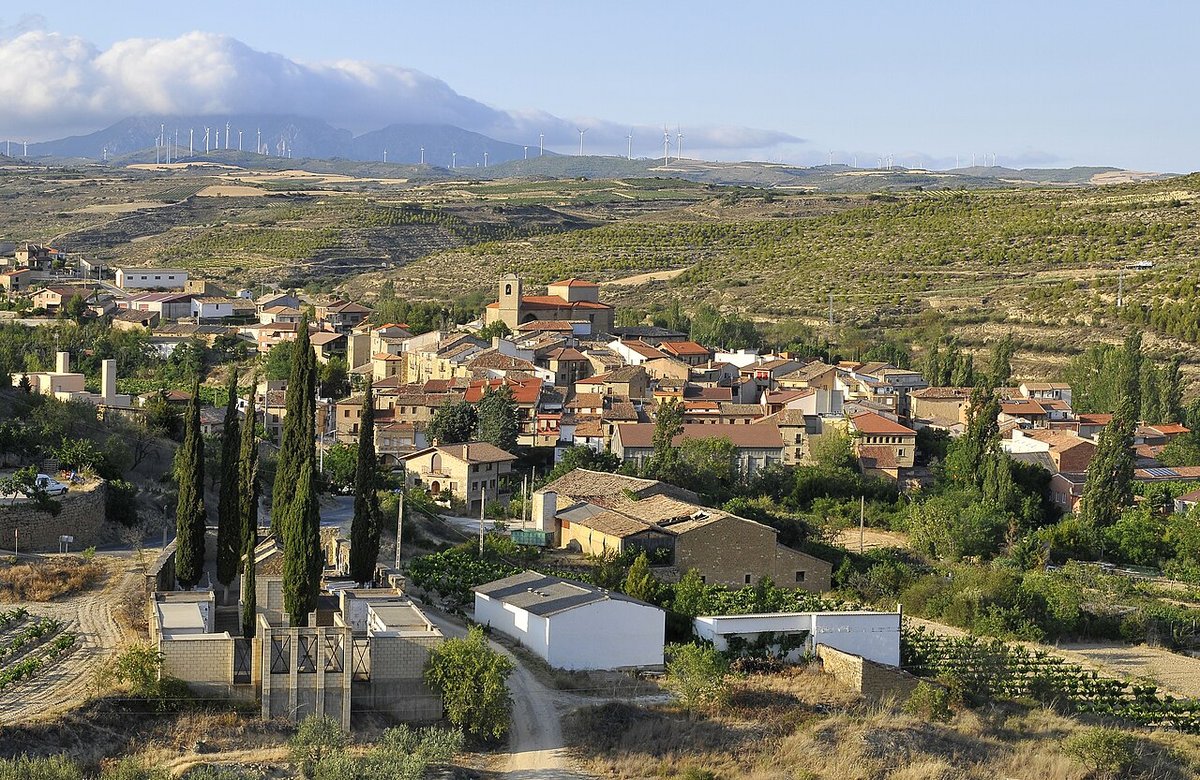
From the Media Luna viewpoint, the view opens suddenly onto the plains of La Rioja. Wide fields stretch out, marked by straight lines of vines and cereal crops. In the distance, the light looks drier than it does in nearby Tierra Estella. Viana stands right on that edge, and it only takes a short walk downhill to notice how the landscape shifts.
The historic centre keeps its medieval layout, with narrow streets that rise and fall without much apparent logic. On windy days, which are frequent here, the corners act like funnels and the breeze rushes along the cobbles, lifting fine dust as it passes.
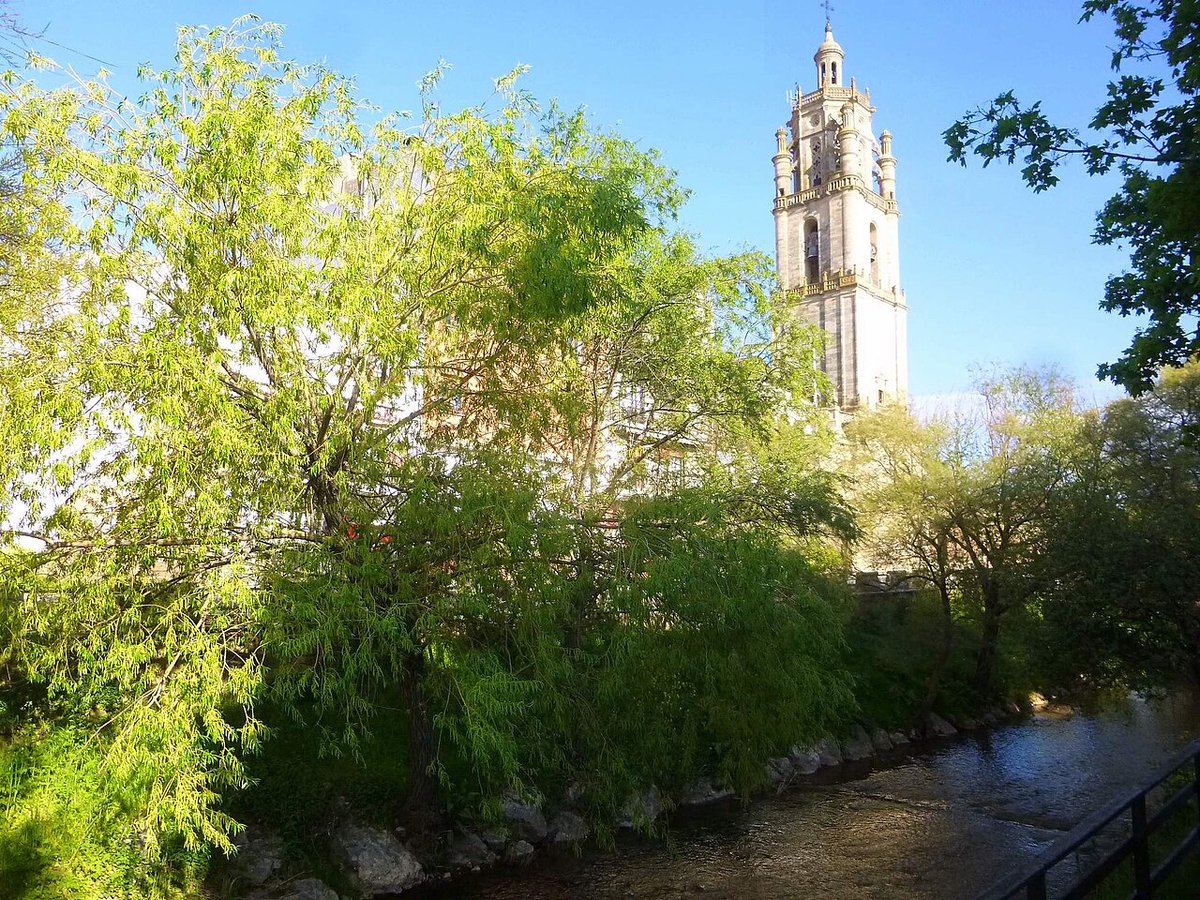
The church of Santa María dominates the town’s skyline. Its Renaissance façade, carved from pale stone, changes character throughout the day. In the morning, the light falls from the side and brings out the relief in the carvings. Inside, near the high altar, lies the tomb of César Borgia. He died in Viana during a skirmish at the beginning of the 16th century and ended up buried here, far from the places where his political life had unfolded.
From market gardens and vineyards
On Wednesday mornings, a market usually takes place in the square. It is not large, but it brings together produce from the surrounding area: seasonal vegetables, preserved goods, some cured meats. The pace is unhurried, more about routine than spectacle.
In autumn, red peppers appear hanging on some façades to dry in the open air. When the sun hits them directly, they give off a sweet, slightly smoky smell that drifts through the streets.
Local cooking draws heavily on the produce of the nearby Ebro river valley. White asparagus appears in spring, artichokes arrive as the weather cools, and menestra, a vegetable stew typical of the region, comes together when several crops overlap. Wine is also part of everyday life here. Many families have or once had vineyards in the surrounding countryside, and that connection to the land still surfaces in casual conversation.
When the pace slows
Viana changes noticeably with the seasons. In summer, the Camino de Santiago brings a steady flow of walkers, and the square has movement from early in the day. In winter, the town becomes quieter, and the afternoons shorten quickly once the sun drops.
September is often a good time to walk here. The heat eases and the fields begin to shift in colour. Several agricultural tracks leave from the town and circle the hill with little change in elevation. One of the more common routes links a number of small hermitages scattered among cultivated land. The landscape is open, with wind almost always present and long horizons of cereal fields.
The Camino through town
By mid-morning, more pilgrims begin to arrive. Their presence is easy to recognise in the steady sound of boots on the ground and in backpacks resting against walls while someone stretches their legs on a bench.
The Camino crosses Viana from one side to the other. It enters at the upper part of town, passes through the historic centre, and then continues towards the road that leads to Logroño. It is a short stretch, but long enough to fill the streets with different accents for a few hours.
As evening falls and the flow of walkers thins out, the town returns to its usual rhythm. In the square, children can be heard playing, and somewhere a chair scrapes across a terrace. The stone façades gradually lose their colour until they settle into a bluish-grey tone, the kind that appears just before the streetlights come on.
For those staying overnight, it is worth walking through the old quarter after dark. The streets are almost empty, and the echo of footsteps bounces between the walls. From some courtyards comes the smell of firewood or freshly cooked food. It is a different Viana, quieter and more domestic.
Spring and early autumn are generally the most pleasant times to walk in the area. In high summer, the constant passage of pilgrims fills the centre more noticeably. In winter, the atmosphere is much calmer and some places reduce their opening hours.