Full Article
about Villamayor de Monjardín
At the foot of Monjardín Castle; a Camino landmark with its famous Moorish fountain
Hide article Read full article
A village shaped by its hill
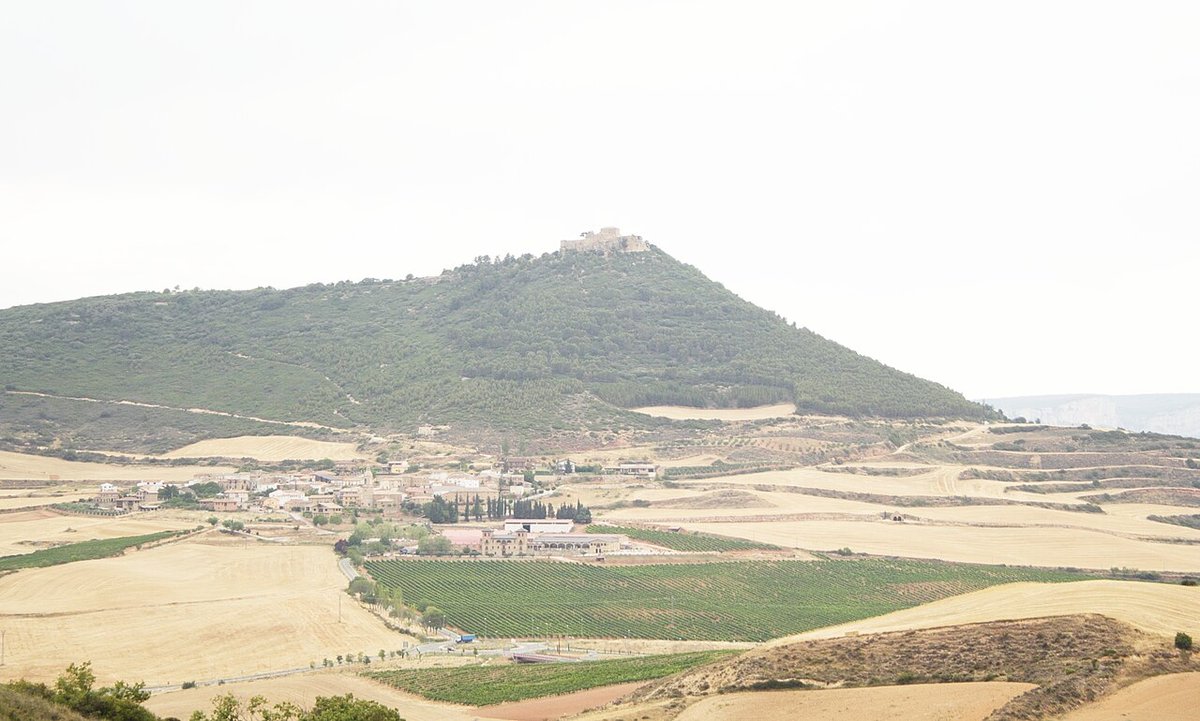
Tourism in Villamayor de Monjardín often begins with a simple question: why is such a small village perched on this hill in Tierra Estella? The answer lies in geography. At around 680 metres above sea level, the settlement sits on the slope of Monte Monjardín, surrounded by cereal fields and vineyards. Just over a hundred people live here today, and the local economy remains closely tied to the land. That connection shows in the pace of daily life and in the way houses and paths have been preserved.
The layout still reflects its medieval origins. Narrow streets follow the incline, and stone houses cluster closely together. It is not a monumental historic centre, but it forms a coherent whole, where it is easy to sense how the village grew gradually around the hillside.
Stone, structure and quiet details
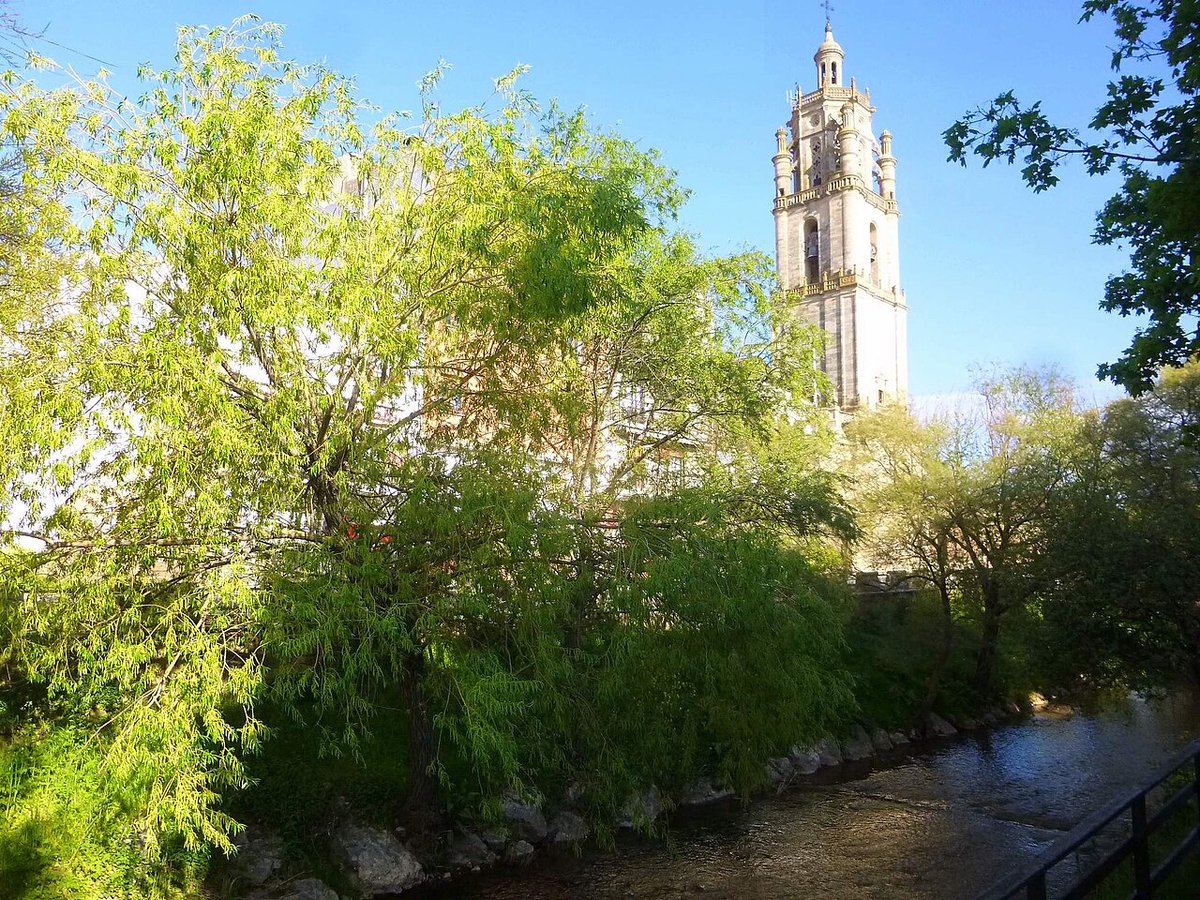
The parish church of San Juan Bautista stands in one of the most visible spots in the village. The current building dates from the 16th century, with later alterations that can be seen in the structure and parts of the façade. Its tower is visible from much of the surrounding countryside, something that traditionally helped guide people moving through this part of Tierra Estella.
Inside, the church is restrained. There is a single nave and decoration is relatively modest when compared with other Baroque churches in the region. The interest lies more in the architecture itself than in ornament. Outside, the stonework around doors and windows is worth a closer look, showing construction techniques that are typical of the area.
Across the village, many houses retain their traditional features: stone walls, wooden gates, iron grilles and balconies without much embellishment. Some still include passageways and inner courtyards linked to agricultural work. This is practical architecture, designed to serve daily life rather than to impress.
Fields, vines and the path uphill
Step beyond the built-up area and the landscape opens quickly. Cereal fields and vineyards dominate the surroundings, forming a patchwork that shifts with the seasons. Summer brings dry, muted tones, while autumn changes the colour of the slopes as the vines turn.
Several farm tracks leave the village, connecting it with nearby settlements and with Monte Monjardín itself. At the top are the remains of the Castle of Monjardín, a medieval fortification that held strategic importance in this area for centuries. The climb is short but steep. From the summit, the reason for the castle’s location becomes clear, with wide views over the fields of Tierra Estella and a clear sense of control over the territory.
The ruins themselves are quite fragmentary, but the setting gives them context. The hill, the fields and the position of the village all come together in a way that explains the logic behind settlement here.
Local traditions and the calendar
The main festivals in Villamayor de Monjardín revolve around San Juan Bautista at the end of June and the Virgen del Rosario in September. As in many villages in the region, the programme combines religious events with activities organised by local residents.
September also coincides with the grape harvest in this part of Navarra. During this period, it is common to see events linked to wine or vineyard work, although these vary from year to year. The agricultural calendar still influences the rhythm of celebrations, tying them closely to the surrounding landscape.
Walking through and beyond
The village itself can be explored quickly. In less than an hour, it is possible to walk along the main streets, visit the church and stop at a few points overlooking the valley.
With a bit more time, it is worth extending the walk along the track that leads up towards the castle. The appeal is less about the remains and more about the perspective it offers. From higher up, the relationship between the village, the hillside and the wider landscape becomes much clearer.
Practical notes for a visit
Comfortable footwear is advisable if planning to walk along the farm tracks or head up towards the castle, especially after rain, when mud can become an issue.
Services in the village are limited, which is typical for a place of this size. For accommodation or a wider choice of places to eat, most people head to other towns in Tierra Estella or to Estella, a few kilometres away by road. Planning ahead helps avoid relying on whatever happens to be open on the day.