Full Article
about Villatuerta
Town before Estella on the Way; it has a Romanesque bridge and a notable Gothic church.
Hide article Read full article
A village shaped by the Camino
Tourism in Villatuerta often begins for a simple reason: the Camino de Santiago passes through it. This small town sits just outside Estella, in the Ega valley, within the region known as Tierra Estella in Navarra. With around 1,250 inhabitants, it keeps a clearly agricultural character. Fields of cereal and vineyards stretch out around it across a gentle plain that links the first low mountain ranges with the more open lands to the south.
The layout of the town is compact. Streets cluster around the church and a central square that still acts as the everyday hub. Distances are short. It does not take long to understand how the village has grown, or how the surrounding landscape shapes its direction and rhythm.
San Miguel and the beginnings of the town
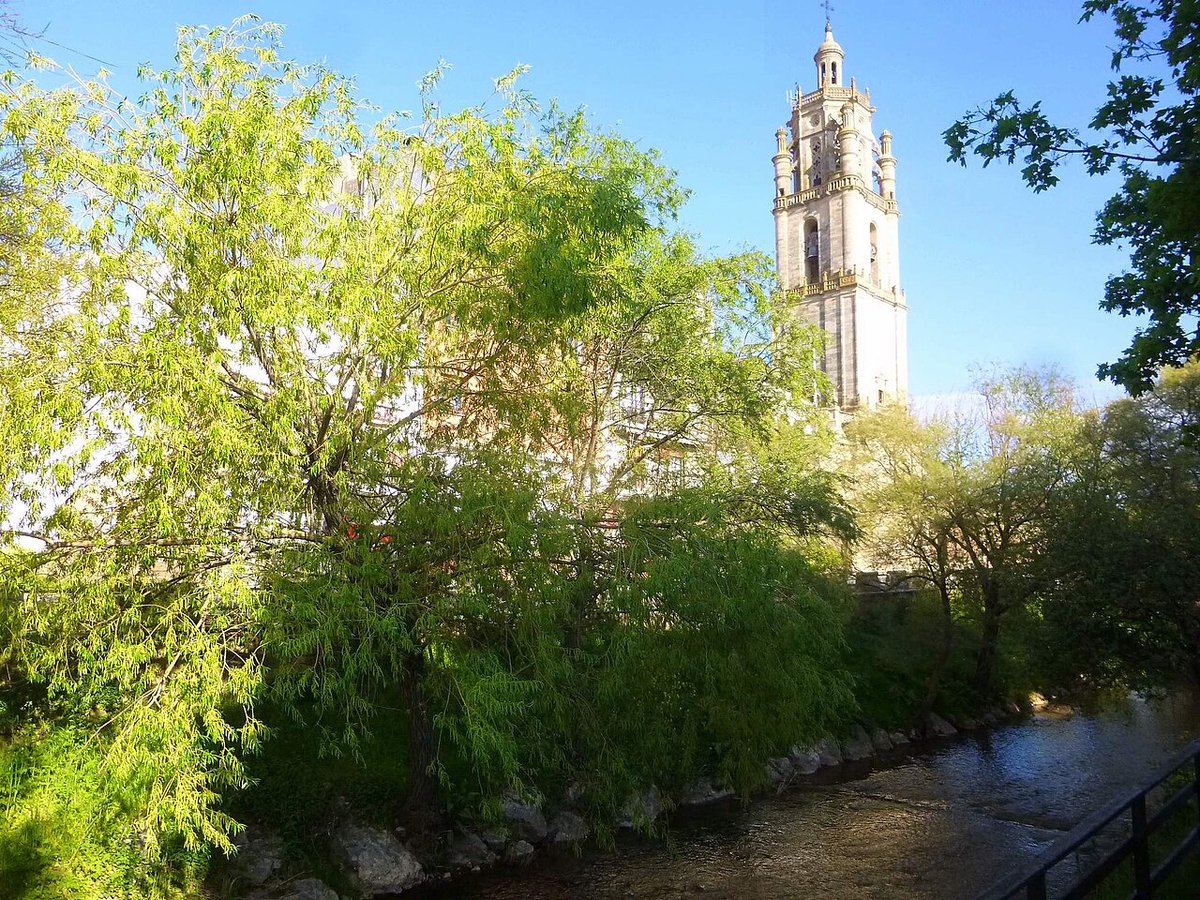
The parish church of San Miguel Arcángel defines the silhouette of Villatuerta. Built in the 16th century and later modified, it combines late Gothic elements with Renaissance additions, a mix that appears frequently in this part of Navarra from that period.
Its tower is visible well before reaching the village. For centuries it worked as a point of reference in a landscape that has seen constant movement. Estella lies only a few kilometres away, and the Camino de Santiago has channelled travellers through this area since the Middle Ages.
Inside, the atmosphere is restrained. The aim is not to impress, but to maintain the character typical of rural churches in Navarra: stone construction, generous proportions, and decoration that reflects local devotion rather than large artistic programmes.
Stone houses and everyday life in the centre
Several streets in the centre feature houses with carved coats of arms above their doorways. These are not palaces, yet they show the presence of families with some means during the early modern period. Stone dominates façades and entrances.
Wrought-iron balconies appear alongside wide doorways designed for carts and agricultural work. Architecture here has always served a practical purpose. Even the oldest buildings reflect that blend of living space and workplace.
The main square gathers much of daily life. Cars come and go, neighbours cross from one side to the other, and farmers pause briefly before heading back out to the fields. It is an active space without ceremony, shaped by routine rather than display.
The Camino de Santiago through Villatuerta
Villatuerta forms part of the classic route of the Camino Francés, the most travelled section of the Camino de Santiago. Pilgrims arrive from the east, after passing through the area around Cirauqui, and continue on towards Estella.
That steady flow has left its mark on how people move through the town. Some streets still follow the same axis used by walkers for centuries. Backpacks and walking sticks are a common sight, even on ordinary weekdays, blending into local routines.
Even so, the town does not revolve entirely around the Camino. Agriculture continues to set the main pace of life, and the presence of pilgrims sits alongside that rather than replacing it.
The Ega valley and working landscape
The River Ega runs close to the town and organises much of the surrounding landscape. Near its banks, there are small market gardens and greener plots, while further out cereal crops and vineyards take over.
Farm tracks leave the village in several directions. They are wide and easy to follow, often linking small holdings or neighbouring villages within the valley. These paths reflect the working nature of the land rather than any designed walking network.
Seasonal changes are easy to notice here. In spring, the contrast between green fields and freshly turned earth stands out clearly. By summer, the landscape becomes drier and more open, with long views across low horizons. This is not a region of high mountains or dense forests. The land stretches outwards rather than upwards.
How long to stay and when to go
The town centre can be explored in a short time. A walk through the square, the church and a few surrounding streets is enough to get a sense of the place. Adding a stroll along the paths near the Ega extends the visit without much effort.
Spring and autumn are generally the most comfortable seasons for walking in the area. In summer, the sun can be intense during the middle of the day. Winter brings colder temperatures, although the village continues its usual rhythm throughout.
Getting there
Villatuerta lies very close to Estella and is well connected by road. From Pamplona, the usual route follows the motorway towards Logroño, with signposted turn-offs to Estella and then to the village itself.
There are also bus connections from the Navarrese capital, though timetables are often limited and checking them in advance is advisable.