Full Article
about Zúñiga
Border town with Álava in the Berrueza valley; retains wall remains and a green natural setting.
Hide article Read full article
On the western edge of Navarra
Zúñiga sits close to the westernmost limit of Navarra, right by the border with Álava, within the region known as Tierra Estella. Fewer than a hundred people live here today, yet the village carries a history that stretches far beyond what its size might suggest. For centuries it formed part of a network of small agricultural settlements supplying Estella‑Lizarra, the main town in the area since the Middle Ages and an important stop along the Camino de Santiago, the historic pilgrimage route across northern Spain.
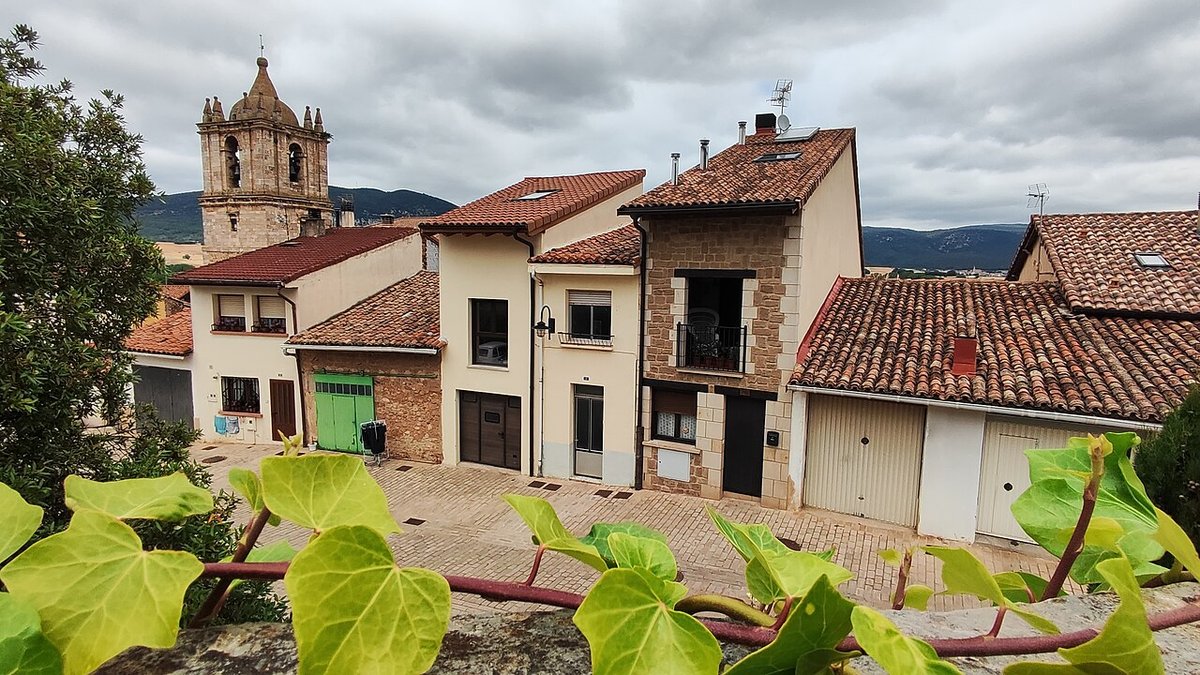
With just 78 inhabitants, Zúñiga remains very small in scale. Its houses gather around a handful of streets and a central square where the church stands. Beyond that compact core lie cereal fields, patches of holm oak and areas of oak woodland on the cooler slopes. Farming still shapes daily life, much as it has done here for generations.
A historic landscape shaped by routes and borders
The wider area of Tierra Estella took shape during the Middle Ages around the town of Estella, founded in the 11th century by King Sancho Ramírez. From that point on, nearby villages such as Zúñiga became linked to its market and to the network of routes that connected the region.
Its position near what is now Álava also played a role. For centuries, this western strip of Navarra functioned as a corridor between the Navarrese mountains and the plains of Álava. The agricultural landscape visible today reflects that long continuity. Open plots of farmland, working tracks and small clusters of houses all point to a territory shaped by steady use rather than rapid change.
Like many villages in the area, Zúñiga saw its population decline over the course of the 20th century. Mechanisation in agriculture reduced the need for labour, while many residents moved to larger towns and cities. The result is the quiet, lightly populated place that remains today.
The church and the shape of the village
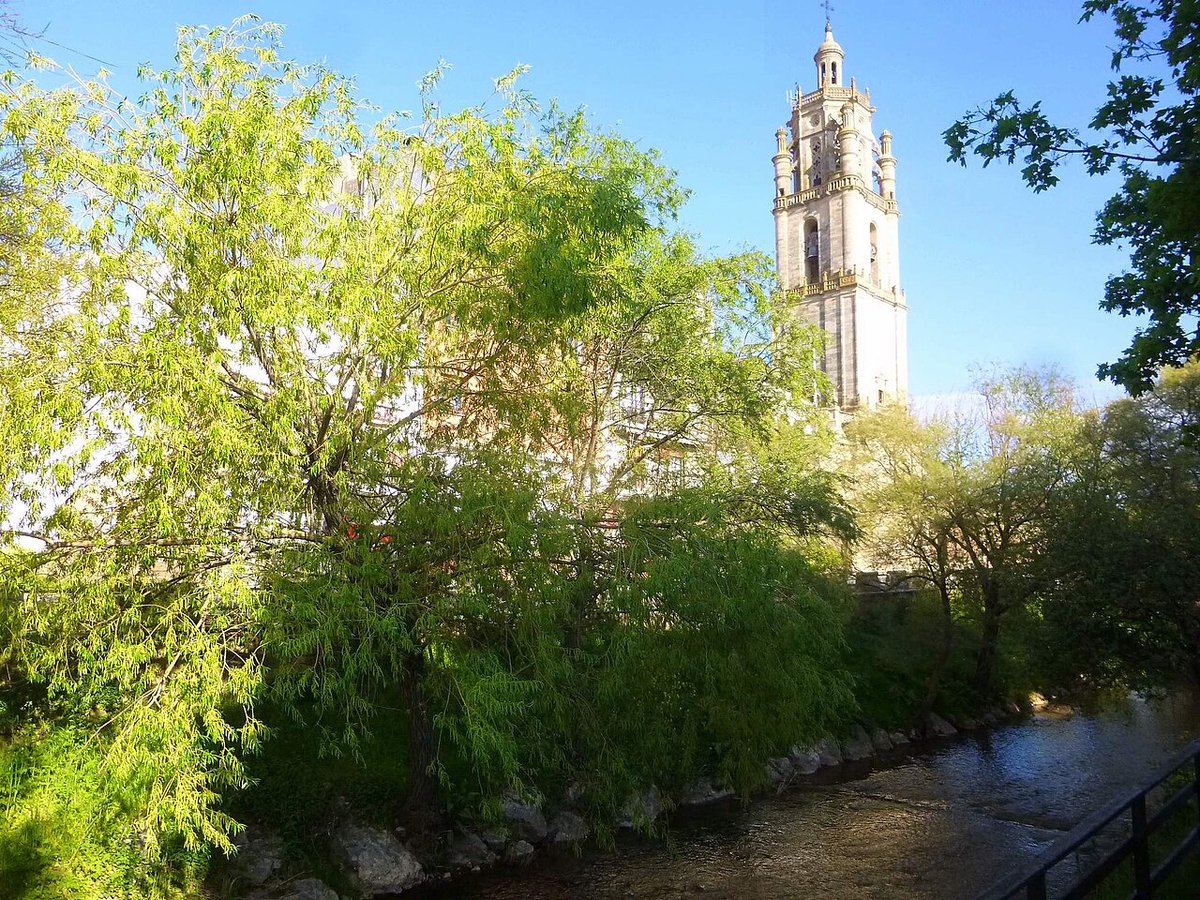
At the centre of Zúñiga stands the parish church of San Juan Bautista. Its present form mainly reflects building work from the early modern period, likely between the 16th and 17th centuries, which is typical for this part of Navarra. It is not a large or imposing structure, yet its position in the main square makes clear how central it once was to local life.
Around it are stone houses, some with wide entrances designed for agricultural use. On certain façades, details such as carved voussoirs or coats of arms can still be seen. These features hint at moments in the past when some households had the means to update or expand their homes.
The layout of the village is compact and easy to grasp. Two or three main streets intersect and meet again near the square. Walking through them takes only a short time, and the overall structure becomes clear within minutes.
Fields, paths and changing seasons
Step beyond the built-up area and agricultural tracks begin almost immediately. Many of these have been in use for decades, connecting cultivated plots and small wooded areas. They are not formally marked, yet they are straightforward to follow.
The surrounding landscape shifts noticeably with the seasons. In spring, green tones dominate, both in the cereal fields and in the low vegetation. By late summer, the scene becomes drier, with harvested fields taking on more muted colours. Slopes covered with holm oaks and oaks introduce patches of shade into what is otherwise an open setting.
Early in the day, it is common to see birds associated with farmland. There is no need to go far from the village to notice this quieter side of the landscape.
A brief stop within Tierra Estella
Zúñiga can be explored quickly. Within about an hour, it is possible to walk through the streets, stop by the church and head out along nearby paths to get a view of the village from its surroundings.
It makes more sense to see it as part of a wider route through Tierra Estella. The region brings together historic towns, monasteries and varied agricultural landscapes within relatively short distances. Zúñiga represents the more modest, understated end of that spectrum, offering a glimpse of the smaller rural settlements that have long supported the area.
Before setting off
It is worth knowing that services in the village are limited and daily life is quiet. For meals, shopping or anything practical, people usually head to larger nearby towns, especially Estella‑Lizarra.
The village is reached by road from that town via local routes. The final stretch passes through fields and gentle hills. Once in Zúñiga, the easiest way to get around is on foot. The surrounding tracks are unpaved and can become muddy after rain.