Full Article
about Adiós
A Camino de Santiago village with a unique name; it offers a peaceful setting on the slopes of the Sierra del Perdón.
Hide article Read full article
A quiet corner of Valdizarbe
In the Valdizarbe region, a short distance from Puente la Reina, understanding Adiós begins with the place itself rather than with a checklist of sights. The village, with a population of around two hundred, sits among gently rolling hills that have been cultivated for centuries. Its layout is compact and straightforward, typical of many settlements in this part of Navarra: a handful of streets gathered around the parish church, followed almost immediately by open countryside.
The name often catches first-time visitors off guard. In Spanish, “adiós” means goodbye, but here it carries no such meaning. It is simply the name of a small agricultural village whose life has long been tied to the land and its position within the valley.
The parish church of San Andrés
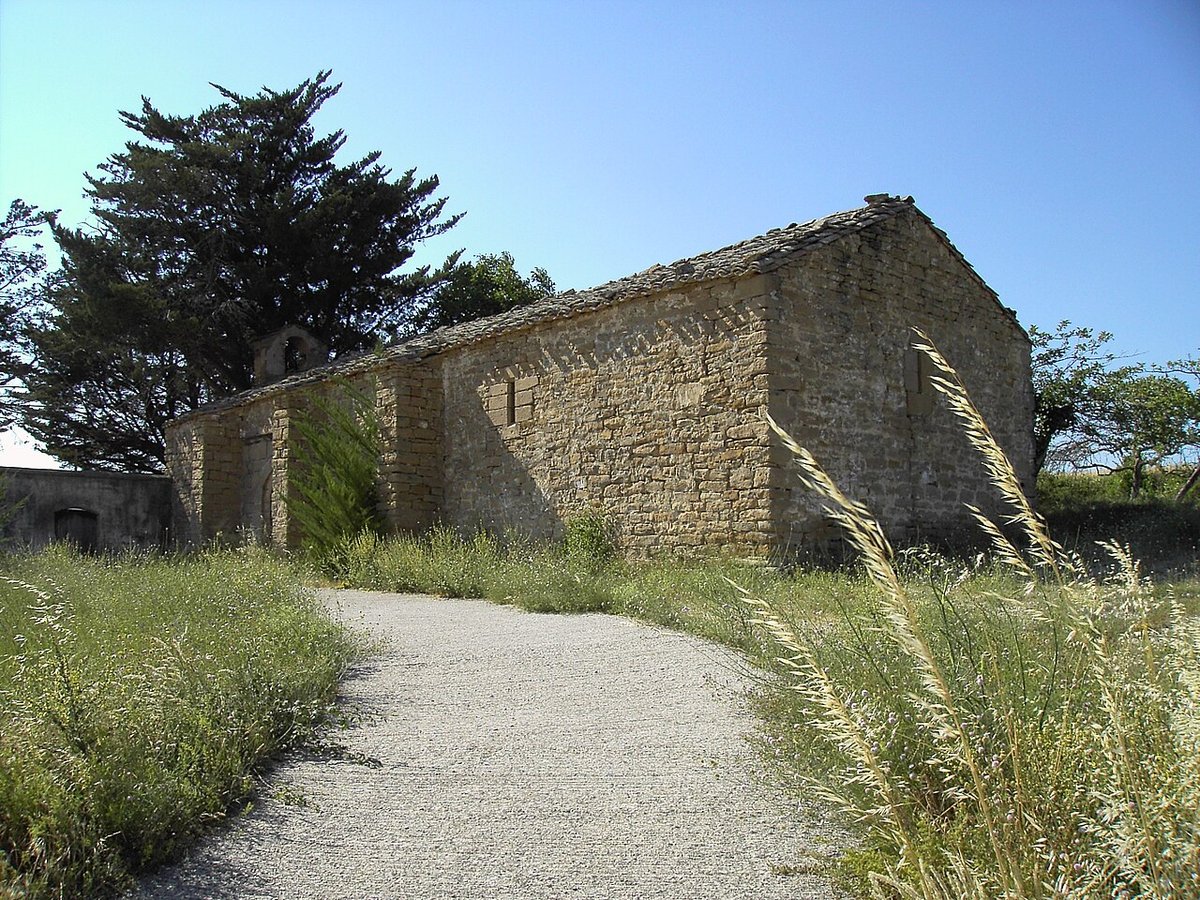
The main point of reference in the village centre is the parish church of San Andrés. Built in the 16th century, the building seen today reflects later alterations, which is common in rural churches that have evolved over time.
From the outside, its role within the village is clear. The solid stone structure rises above the surrounding houses and defines the centre of the settlement. It is not a monumental church, yet it represents well the parish architecture of Navarra from that period, restrained and practical in design.
Around the church lie the small square and the oldest streets, forming the core of the village. This is where Adiós feels most concentrated, with the rest of the settlement quickly giving way to fields.
Stone houses and a compact layout
Adiós can be explored in a short time. The traditional houses follow a familiar pattern seen across the region: stone walls, large doorways at ground level, and balconies or galleries on the upper floors. Some façades still display carved stone elements such as coats of arms or shaped voussoirs, reminders of older farmhouses that once held a certain local importance.
The village is not especially uniform, nor has it been extensively restored. That lack of polish is part of its character. It still feels like a place where people live their daily lives, rather than a carefully arranged setting.
Walking through its streets reveals small variations from one house to another, subtle differences in materials and details that reflect gradual change rather than a single period of construction. The scale remains modest throughout, with no grand avenues or large public spaces beyond the area around the church.
Fields and paths across Valdizarbe
Just beyond the last houses, agricultural tracks begin almost immediately. This part of Valdizarbe is shaped by a mix of cereal fields, vineyards and small patches of trees in the dips of the land.
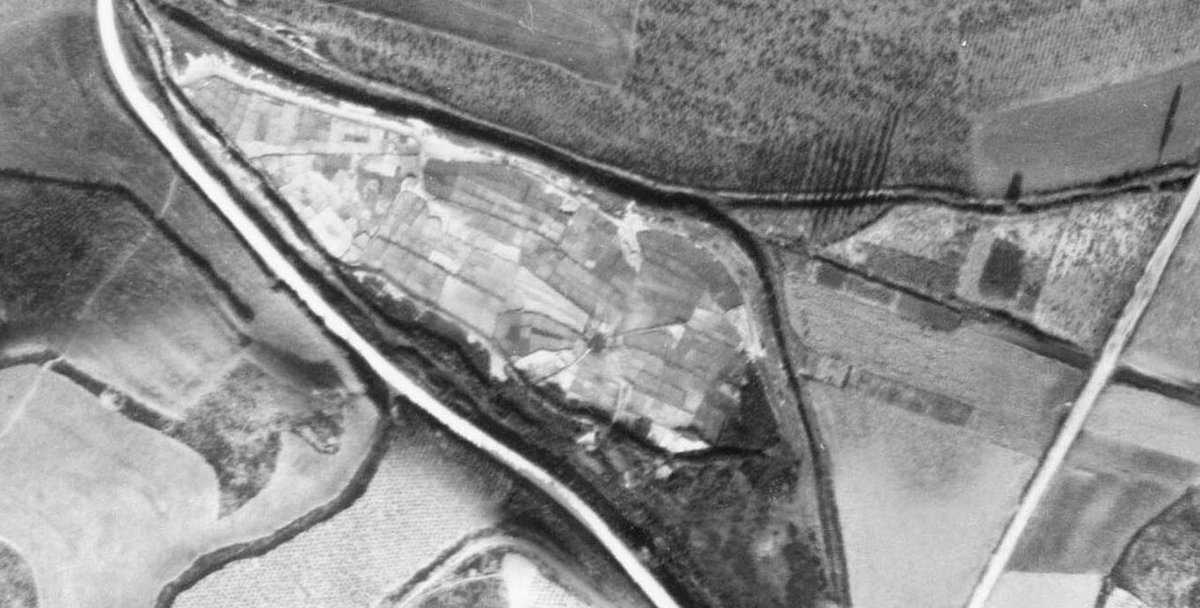
Following any of these paths gives a clearer sense of how the territory is organised. Fields stretch out in long strips, their boundaries marked by low walls or earth banks. From time to time, small features appear along the way, such as a simple fountain or a stone cross. They are modest elements, yet they reflect a landscape that has been worked and maintained over generations.
The terrain is gentle, without dramatic changes in elevation, which makes it easy to observe how the village relates to its surroundings. From just outside Adiós, the connection between settlement and farmland becomes obvious: the village sits as a small centre within a much larger agricultural setting.
Local life and seasonal rhythms
Life in Adiós follows a familiar rhythm for a small village. The main point in the calendar is the festival of San Andrés, held at the end of November. Traditionally, this has been the most important time of year for the community.
Summer brings a noticeable shift. Residents who live elsewhere return, and the streets become more active than they are during the quieter winter months. Even so, the scale remains small, and daily life continues at an unhurried pace.
These seasonal changes highlight the way the village functions today, balancing a stable year-round population with periodic increases in activity.
A short stop within the valley
Adiós does not require a long visit. About an hour is enough to walk through the village centre at a relaxed pace, then head out along one of the surrounding paths to see the valley from a different perspective.
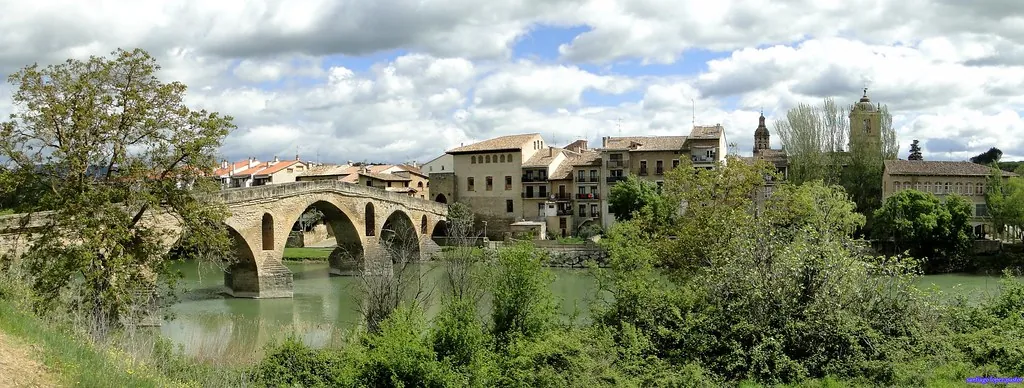
It makes more sense as part of a wider route through Valdizarbe or alongside a visit to nearby Puente la Reina. Seen in that broader context, the village helps to complete a picture of this part of Navarra, where several small settlements together define the character of the landscape.
Getting there
From Pamplona, Adiós can be reached by car in a short time, usually by heading towards Puente la Reina and then turning onto local roads that lead into the interior of Valdizarbe.
Distances are short, though the final stretches often involve narrow roads, typical of access routes to small villages in the valley. Anyone hoping to enter the church of San Andrés should check in advance with the town hall or locally, as opening times are not always fixed.