Full Article
about Añorbe
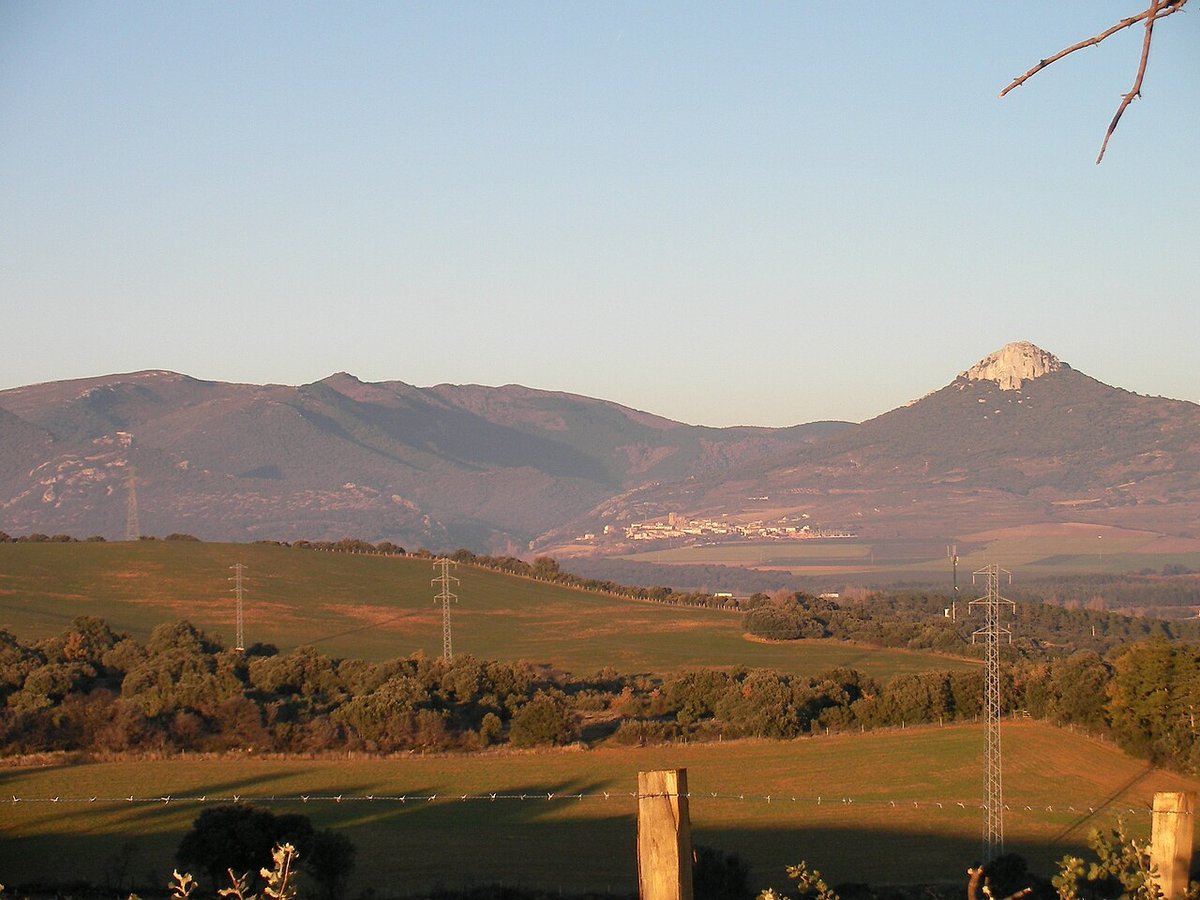
Set on a hill overlooking the valley; noted for its vineyards and its Renaissance church of great artistic value.
Hide article Read full article
Early in the morning, when the sun is still low in the east, the pale stone walls catch a near-white light. Tourism in Anorbe begins like this, with a slow walk along short streets where hardly a car passes. Footsteps carry, a door opens somewhere, a broom brushes the ground. The village reveals itself gradually, without any staging.
Añorbe sits in Valdizarbe, not far from Pamplona. It has just over six hundred residents and a compact centre that can be covered in little time. Many of the houses are built in sandstone, with doorways framed by coats of arms and old ironwork. Look closely and some of the stones show worn edges, smoothed by centuries of hands and wind.
Stone streets and hard light
The layout is simple. Streets rise and dip slightly, ending in small squares or at quiet junctions. In summer the light falls sharply on the pale stone, and everything seems quieter than it really is.
There is no marked route to follow. The most natural way to explore is to wander without a plan, noticing small details: a dark wooden door, a vine climbing a façade, the echo of bells striking the hour.
It is worth arriving early or later in the afternoon if the day is hot. Around midday there is very little shade.
The church at the centre
The tower of the church of San Miguel Arcángel appears quickly above the rooftops. It acts as the organising point of the village, visible from several streets as it rises over the houses.
The current building dates back several centuries and keeps a restrained set of proportions. If the door is open, inside there is often a cool stillness that contrasts with the brightness outside. Dark wood, cold stone, and that faint scent found in old churches that have spent many winters closed.
It is not always accessible, so it is worth assuming that a visit may be limited to walking around it and viewing it from the square.
Traces of a defensive past
Some façades contain fragments that do not quite match the surrounding buildings. Thicker walls, larger stones, corners that seem older than what stands beside them.
These are usually linked to a former palace or to defensive structures that once formed part of the village. There are no information panels explaining them. They appear as scattered traces, absorbed into later buildings. Spotting them takes patience, like looking for seams in old fabric.
Paths through cereal fields
Leaving the built-up area, agricultural tracks begin almost immediately. Pale dirt paths cross open fields.
In summer, cereal crops dominate the landscape. The wind moves through the ears of grain, creating a constant dry rustle. Here and there stand isolated holm oaks, along with small raised banks where taller grass grows.
These are not demanding routes. The tracks are wide, used by tractors, and suitable for walking or cycling without much incline. There is very little shade, though, so carrying water and a hat makes a difference when the sun is strong.
Festivities and the village rhythm
Life in Añorbe follows a fairly traditional calendar. At the end of September, the village celebrates festivities dedicated to San Miguel, with religious events and neighbourhood gatherings that still feel very local in character.
During summer there are usually days with outdoor music and activities organised by the village itself. They are not designed to attract visitors so much as to bring people together.
In winter the atmosphere changes completely. Streets grow quieter, smoke rises from chimneys, and the pace becomes very slow.
Fitting Anorbe into a Valdizarbe route
Añorbe works best as a short stop within a wider route through the area. In less than an hour it is possible to walk through the centre, then head out towards the surrounding fields.
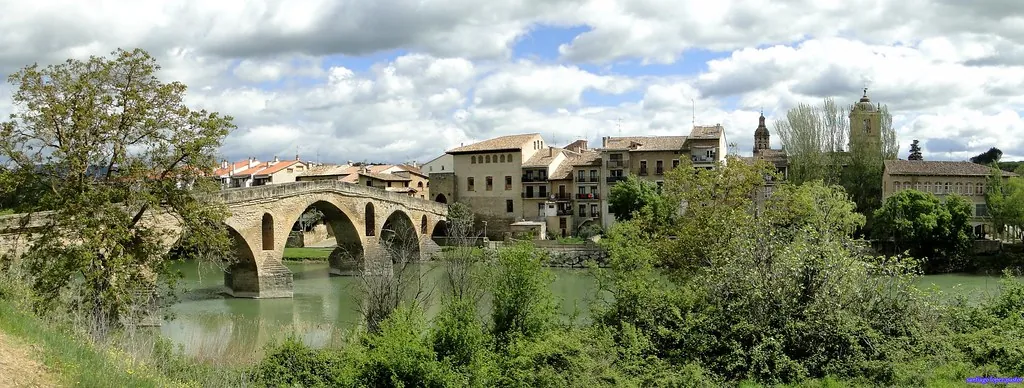
Puente la Reina lies relatively close and tends to draw more movement due to the Camino de Santiago, the historic pilgrimage route that crosses northern Spain. The contrast between the two places helps make sense of the comarca: one very quiet village and, a few kilometres away, another with a steady flow of people.
If visiting in summer, it is sensible to bring water or something to eat. Services in the village are limited, and at certain times everything may be closed. A visit here depends more on walking and the landscape than on schedules.