Full Article
about Biurrun-Olcoz
Municipality made up of two towns; Olcoz stands out for its medieval tower and its Romanesque portal, a mirror of Eunate.
Hide article Read full article
Where you are in Valdizarbe
Tourism in Biurrun Olcoz begins with a simple point: knowing where you are. These two small settlements in Valdizarbe lie south of the Pamplona basin, in an area of gentle hills given over largely to cereal farming. The population is small, and the landscape does most of the explaining. Open fields stretch out between agricultural tracks, and the villages themselves grew around a church and a handful of main streets.
Biurrun and Olcoz still follow that rural logic quite clearly. Houses, barns and farm buildings reflect an agricultural economy that continues today. Nothing here feels detached from the land around it. The layout, the buildings and the routes between them all relate back to the fields that surround the settlements.
Rural architecture and how it reads
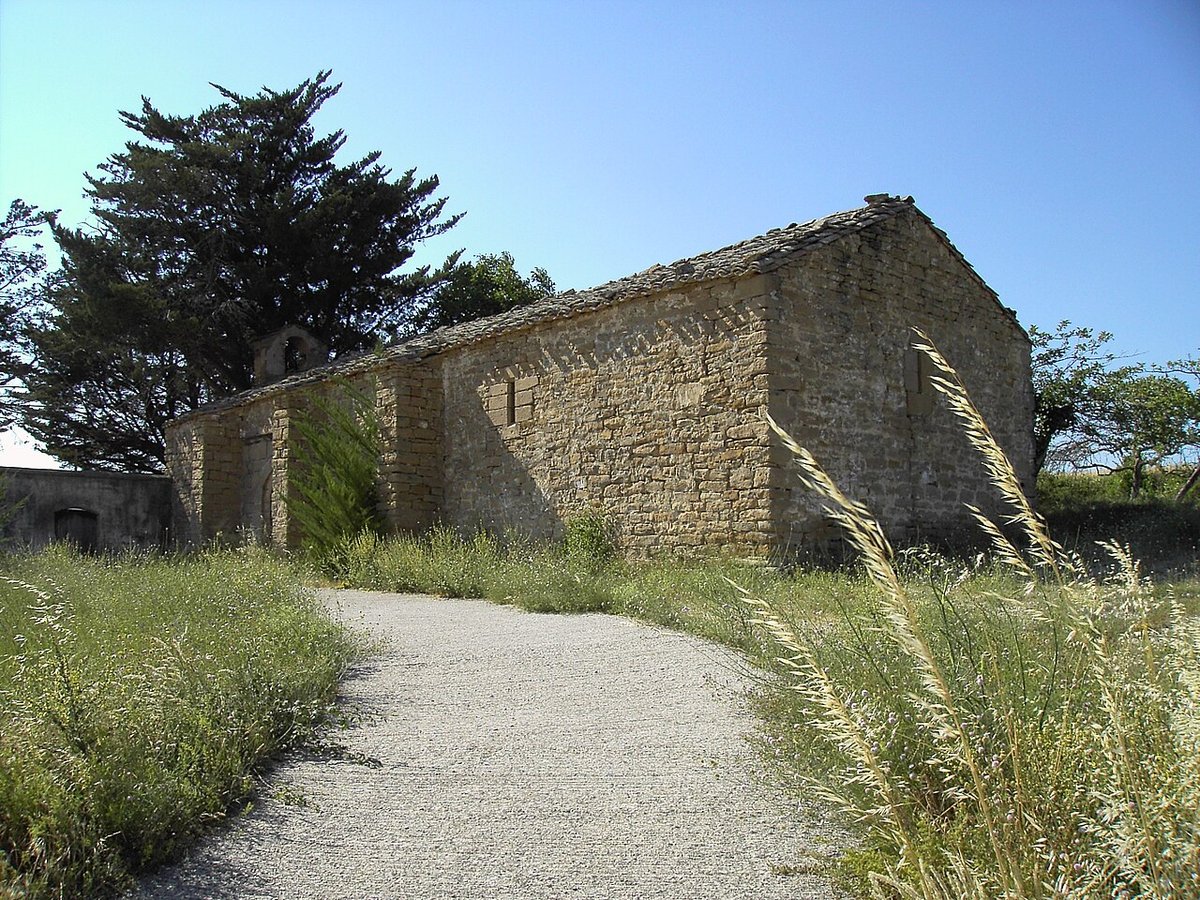
In Biurrun, the parish church marks the centre of the village. The current building includes phases of construction that date at least in part to the 16th century, with later alterations. It is not a large church. Its importance comes more from its position within the settlement and from the square that forms around it.
Olcoz follows a similar pattern. The church acts as a reference point for understanding the layout of the village. Streets lead out from that centre and adapt to the terrain without much regularity. The result is a small network of routes that respond to the shape of the land rather than imposing a strict plan.
The houses in both places repeat building solutions typical of this part of Navarra. Thick stone walls are common. Doorways often feature clearly visible voussoirs, those wedge-shaped stones that form an arch. Roofs are pitched to deal with the weather. Some façades display coats of arms or markings carved into the stone, which usually point to older family homes. On the edges of each village, corrals and auxiliary buildings still appear, linked to agricultural work.
Beyond the houses, cereal fields occupy much of Valdizarbe. These are broad plots, separated by agricultural tracks. The appearance shifts with the seasons, yet the underlying structure of the landscape barely changes. That continuity helps explain how the villages function and why they look the way they do.
Paths through working land
Rural tracks connect Biurrun and Olcoz with each other and with nearby villages. These are agricultural routes, used by local residents and by machinery. The gradients are gentle, which makes it possible to move around on foot or by bicycle when the ground is dry.
These paths offer a useful way to understand the relationship between the settlements and the land around them. From a short distance away, the position of the churches becomes clearer, as do the small clusters of houses and the network of tracks that organise agricultural work.
It is worth keeping in mind that many of these routes are still working spaces. At certain times of year, tractors, trailers or active fieldwork are part of the scene. Movement through the area needs to take that into account.
A short visit that explains a lot
Biurrun-Olcoz can be covered quickly. In Biurrun, a walk around the church and a look at the houses on the nearby streets is enough to grasp the layout. From there, one of the tracks that skirts the edge of the village allows a view back towards the settlement from the outside.
Olcoz sits a short distance away. Its layout is even simpler: a church, a few houses around it, and open landscape very close by. Together, the two places provide a clear idea of what small agricultural villages in Valdizarbe are like.
The experience does not rely on major sights or a long list of landmarks. The value lies in observing how everything fits together at a small scale. The relationship between built space and cultivated land is easy to read here.
Expectations and what often goes unsaid
Some visitors arrive expecting a large monumental ensemble or a complex historic centre. That is not what Biurrun-Olcoz offers. The interest lies elsewhere, in the connection between the village and the surrounding farmland.
It also helps to remember that many paths cross land that is in active use. Blocking access or entering cultivated plots is best avoided. The area is both a place to visit and a place where work continues.
Biurrun-Olcoz often appears as a brief stop within a wider route through Valdizarbe or the middle zone of Navarra. Its small scale is part of its character. Rather than presenting major monuments, it works as a clear example of how these agricultural villages were organised: a church at the centre, compact housing around it, and, just a few steps away, the fields that supported the community. That structure remains easy to read today.