Full Article
about Anue
Livestock and forestry valley north of Pamplona, made up of small councils with well-preserved rural architecture.
Ocultar artículo Leer artículo completo
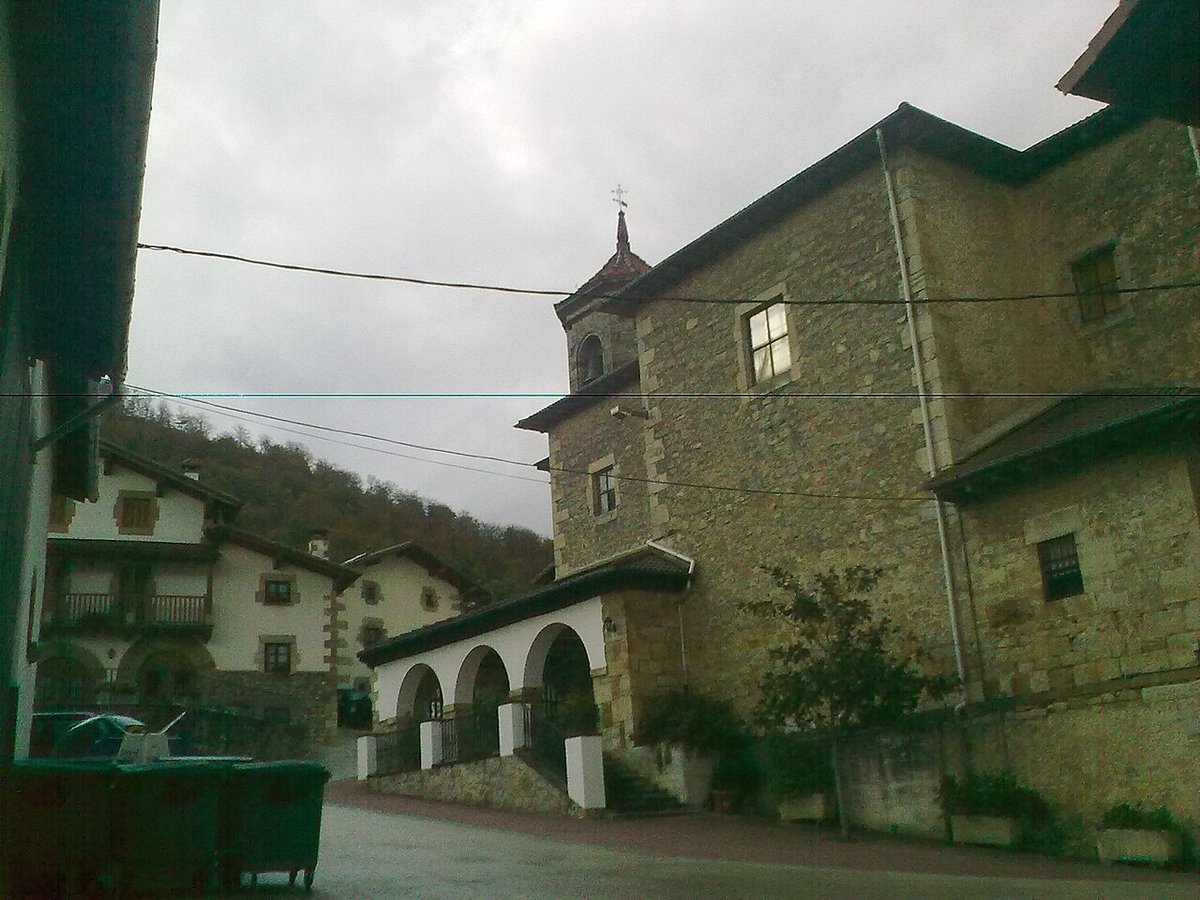
The church tower of San Martín appears first, poking above a ridge at 600 metres like a stone finger testing the wind. Below it, stone farmhouses scatter across a bowl of grass so green it looks irrigated by cloud juice rather than rain. This is Anue, a Navarran village where the Atlantic weather systems stall against the Pyrenean foothills and the air smells of wet earth even in July.
A village that forgot to grow
Five hundred souls, give or take a student in Pamplona, live in houses built for twice that number. Empty barns have become weekend cottages; threshing floors serve as patios for morning coffee. The place feels half-awake, the sort of settlement where a dog asleep in the road holds up traffic for minutes because nobody – not the driver, not the dog – sees the point in rushing.
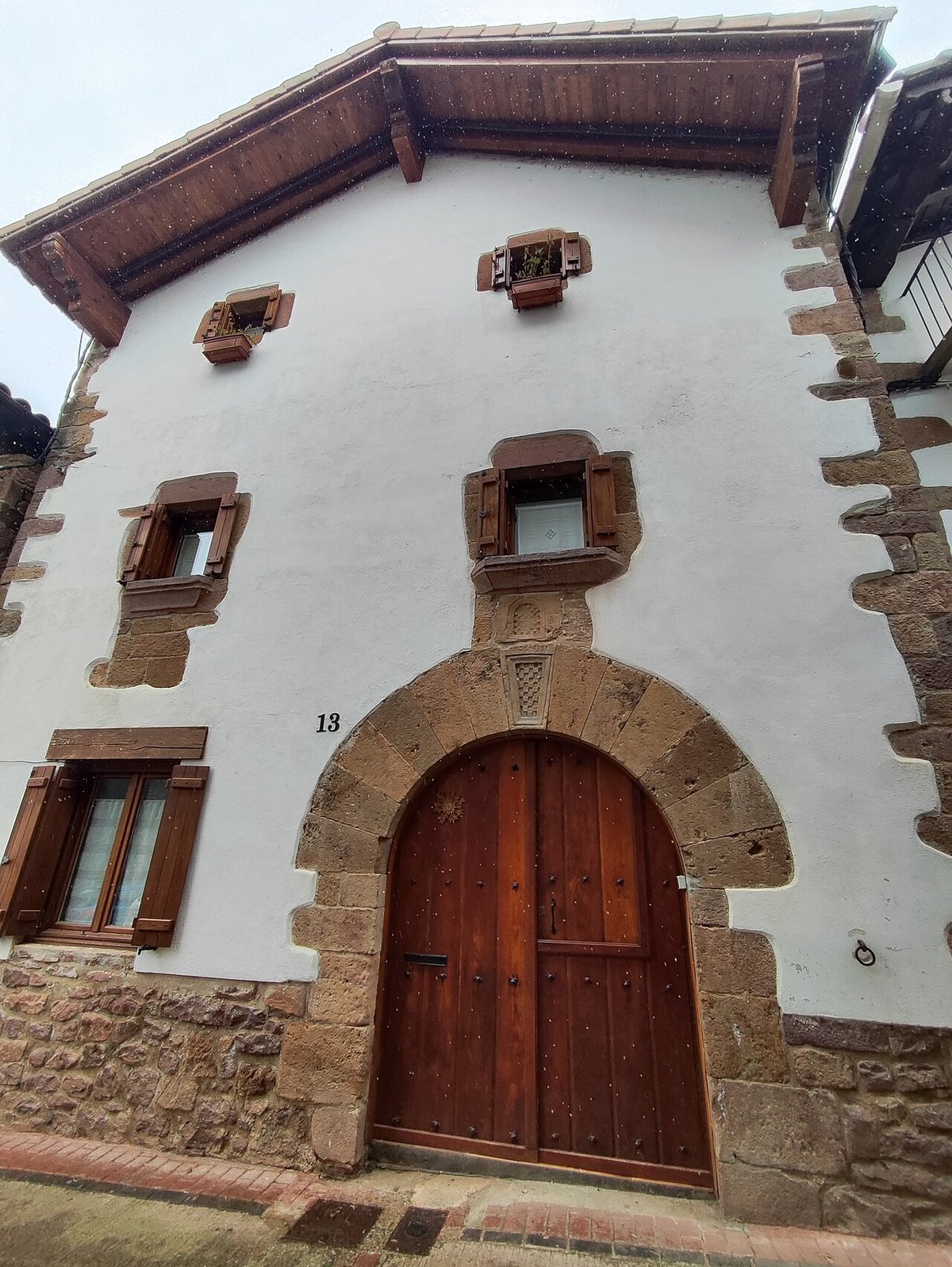
Walk the single lane that loops the hamlet and you’ll pass seventeenth-century façades still carrying the original owners’ coats of arms: wolves, wheat sheaves, a rather optimistic lion. Iron balconies sag under geraniums; woodpiles stack higher than doorways, sized for hearths wide enough to roast a small pig. That isn’t folklore – the December matanza still happens behind shuttered doors, a neighbourhood affair rather than a tourist spectacle. If you’re invited, refusal is taken personally.
Altitude with attitude
Anue sits 300 metres above the cereal plains of the Valdizarbe, high enough for the climate to switch channels without warning. Mornings can be 8 °C cooler than Pamplona, 28 km to the south-west; by afternoon the thermometer may nudge 30 °C in open meadows while the beech woods remain refrigerator-cool. Pack layers even in August: a breeze that started in the Bay of Biscay can arrive horizontal and loaded with drizzle.
The height difference is walkable in twenty minutes. Follow the signed track past the last farmhouse, ascend through cow pasture and you’re suddenly in a narrow corridor of beech and oak where moss muffles every footstep. The gradient is gentle – this isn’t the Picos – but the transition from farmland to forest is abrupt enough to make you check the map. Locals call the ridge line “el interruptor”, the switch, because fog can flick on and off within minutes.
Paths for softies, not summit-baggers
Forget via ferratas. Anue’s trails are old mule tracks that linked farmsteads long before asphalt arrived. A comfortable circuit threads west to the abandoned hamlet of Olaverri (45 minutes), returns via the stone bridge of Zubieta where wagons once crossed the Barranco de Ata. Total distance: 4.3 km, 90 metres of ascent, perfect for children who like puddles more than panoramas.
Mountain bikers can string together gravel lanes towards Lizarraga and the Ultzama valley, but don’t expect single-track adrenaline. These are agricultural service roads; you share them with tractors whose drivers wave you past only when the gradient reaches 12 %. Bring a bell – cows have right of way and they know it.
What passes for gastronomy
There is one bar, Casa Anue, open Thursday to Sunday and whenever the owner feels like it. Inside, the menu is chalked daily: lamb chops from flocks you can see through the window, runner beans from the garden out back, a chunk of Roncal sheep’s cheese that costs €4 and arrives with quince paste sharp enough to make your gums tingle. House wine comes in a 200 ml bottle sealed with a crown cap – drinkable, just, and cheaper than bottled water.
If the bar is shuttered, the nearest alternative is in Galar, 11 twisting kilometres away. Picnic logic therefore applies. The village shop closed in 2009; stock up in Pamplona’s Mercado de la Bretóná before you leave the ring-road. Sunday visitors sometimes find a retired farmer selling lettuces from a wheelbarrow beside the church; carry coins, because he doesn’t do contactless.
When to turn up, when to stay away
Late April brings orchid explosions along the verges and enough daylight for an after-lunch walk without head-torches. May can be wet, but the hay meadows glow an almost fluorescent green that no camera believes. October trades green for copper: beech leaves carpet the paths, locals forage boletus and the air smells of mushroom broth and woodsmoke.
High summer is doable if you avoid midday. The village’s 600-metre altitude keeps nights breathable, unlike the furnace of the Ebro basin 100 km south. August weekends, however, attract second-home owners from San Sebastián; parking by the church becomes a Tetris game and the normally silent lanes echo with quad bikes. Winter is quiet, occasionally snow-quiet, but the access road climbs to 800 m before dropping into Anue – carry chains if the Pyrenean front is forecast.
Getting there, getting stuck, getting out
No bus has stopped here since 2011. From Pamplona take the N-121-A towards Irun, fork right at the Oronoz-Mugairi exit and follow the NA-160 for 12 km of hairpins. The tarmac is decent,宽度 enough for two vans, but morning mist can reduce visibility to twenty metres. Meeting a timber lorry on a bend is educational; reverse etiquette favours whoever is closest to a passing place.
Accommodation is limited to three rural houses, two of them converted barns with wood-burning stoves and solar showers. Expect €90–€110 per night for a two-bedroom cottage, minimum stay two nights at weekends. Book early for Semana Santa and the 11 November fiestas; otherwise you may end up sleeping in the car park at Lizarraga and walking in.
The honest verdict
Anue will not change your life. It offers no Michelin stars, no Iron Age ruins, no Instagram infinity pool. What it does provide is a crash course in how northern Spaniards live when nobody is watching: communal firewood stacks, vegetable plots the size of tennis courts, a church bell that still measures the day in three-note increments. Come for a slow morning, add a valley walk, buy cheese from the bar fridge, then drive on to the cider houses of Gipuzkoa. If that sounds like too little, stay in Pamplona. If it sounds like just enough, bring waterproof shoes and arrive before the fog beats you to it.