Full Article
about Atez
Quiet valley of scattered hamlets; forests and meadows north of Pamplona
Hide article Read full article
Arriving without much planning
Some places are found by accident. You are driving through a valley, glance to one side, and spot a small cluster of stone houses on a slope. You slow down, park wherever you can, and wander for a while. Tourism in Atez feels very much like that: stopping briefly to look around, the way you might turn into an old street just to see where it leads.
There are no grand landmarks here, no historic centre arranged for quick photos. It is a place where daily life continues at its own pace. Solid houses, meadows all around, and a noticeable quiet.
The church and the heart of the village
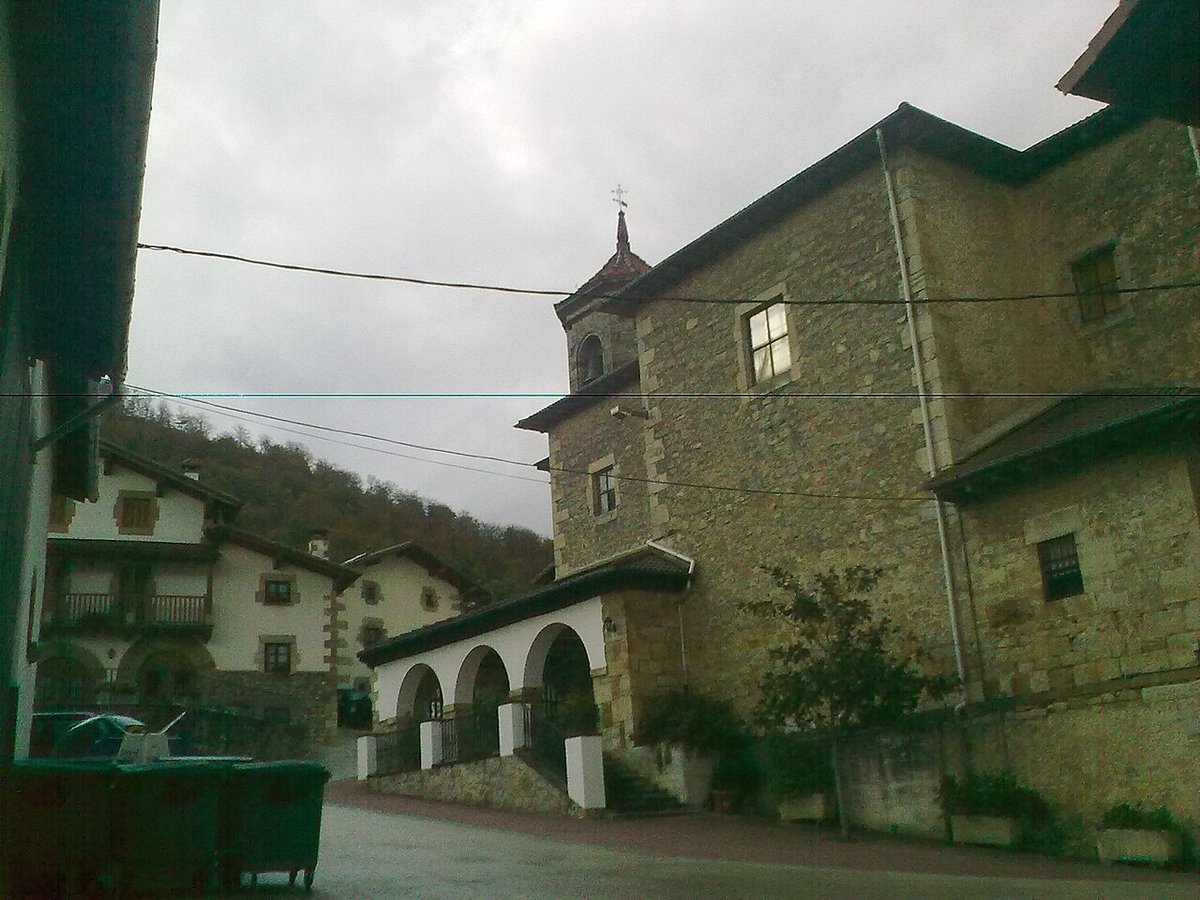
The clearest reference point in the village is the church of San Martín. It is restrained, the kind of building that does not rely on decoration to stand slightly above the surrounding houses. Its origins are medieval, although what stands today reflects a series of alterations over time.
The tower is simple and compact. It is often closed, which is quite typical in small villages. Even so, it is worth walking up to it, as much of the older housing is grouped around this area.
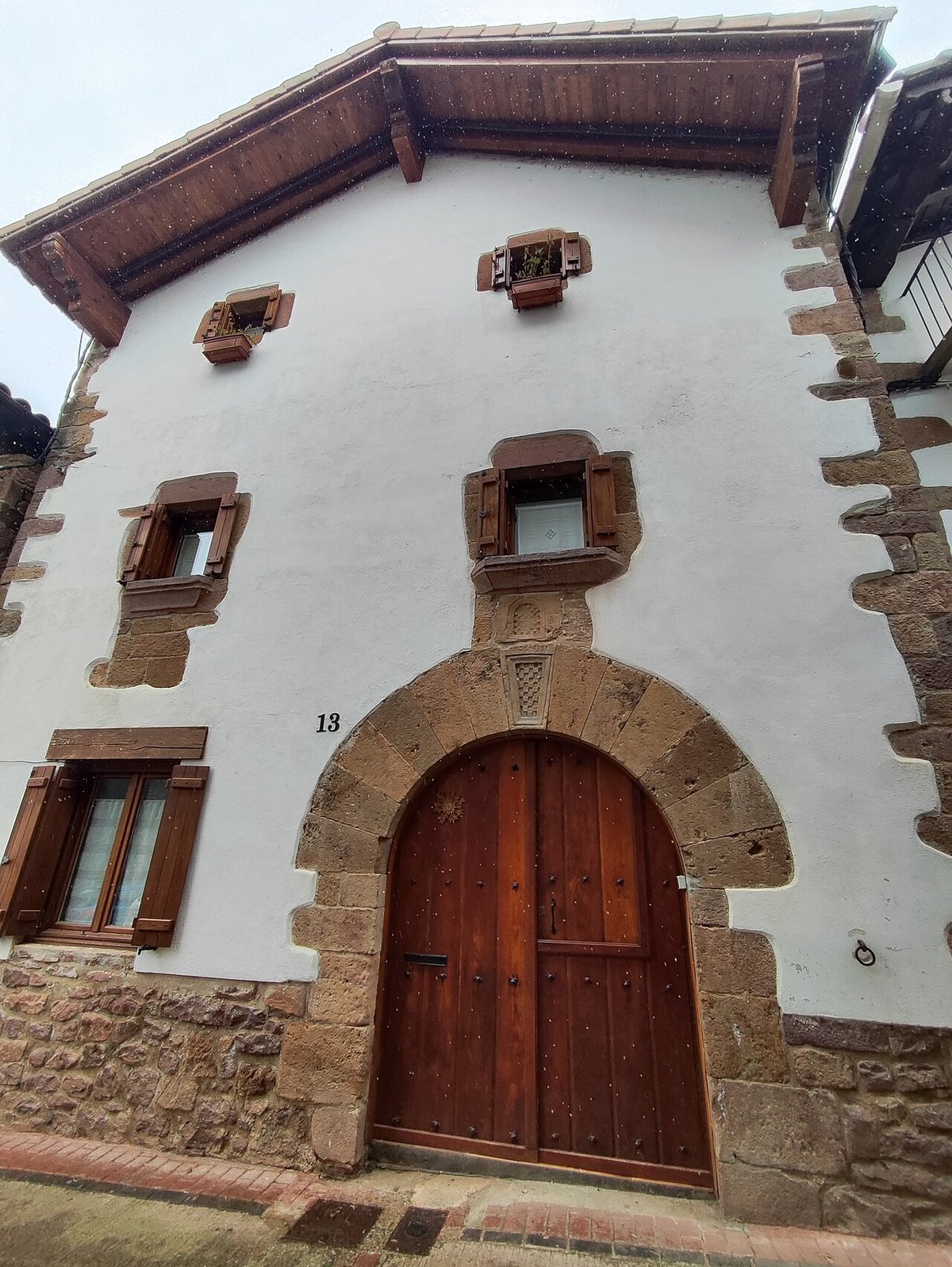
The houses follow a rural pattern repeated across many valleys in Navarra: stone construction, thick walls and iron balconies. On some doorways, carved coats of arms or dates etched into the lintels are still visible. These are details you notice when you walk slowly, not when you pass through in a hurry.
Streets that lead straight to the countryside
The streets are short and fairly direct, without complicated layouts. Within moments, you move from one house to a small open space or a path heading out towards the fields.
Many façades show the marks of generations of use. Large doors once meant for storing tools, old stables that have been adapted to new purposes, balconies that have likely faced more winters than most people. It is the sort of place where each house seems to have a clear function, not just an appearance.
If you pay attention to materials, there is plenty to take in. Carefully worked stone, darkened wood shaped by time, and red-tiled roofs that extend just enough to protect the walls beneath.
Short walks into the valley
From the edges of Atez, several paths lead out between meadows and small wooded areas. These are not marked trails in the style of a natural park. They are local routes, the kind that have always been there.
The landscape mixes pasture with patches of beech and oak. Small streams cross the land and help keep it green for much of the year.
Walk a little way up any of these paths and, within minutes, you get a broad view of the valley. It quickly puts into perspective how small the village is within its surroundings.
Farming life and local produce
The area remains closely tied to livestock and agriculture. In the nearby fields, it is common to see latxa sheep, a breed typical of this part of Navarra. They are the source of some of the cheeses produced in the region.
There is also a tradition of lamb and beef from farms in the surrounding area. This is not a modern food scene, and it does not try to be. The approach is simple: products from the valley and recipes that have been used for generations.
In autumn, as in much of northern Spain, the nearby hills attract people searching for mushrooms. This is usually done carefully and in line with local rules, which tend to be taken seriously in Navarra.
Village gatherings and seasonal moments
Local celebrations revolve around San Martín, although the exact details vary from year to year. As in many small villages, these festivities are mainly a time for people with ties to the place to return.
During the summer, there are also neighbourhood gatherings and activities linked to rural life. These are not organised with visitors in mind; they follow the village’s own rhythm and calendar.
If you stop for a while in Atez
Atez can be explored quickly. In a couple of hours, it is possible to walk through the centre, visit the church and head a short way along the valley paths.
The simplest approach is to leave the car at the entrance to the village and continue on foot. Some of the agricultural tracks are narrow, and there is little point in trying to get closer by car.
It is not a place for a full day’s itinerary. It works better as a quiet pause within the valley, the kind you make without much planning and that leaves you with a clear sense of how many small villages in Navarra still function.