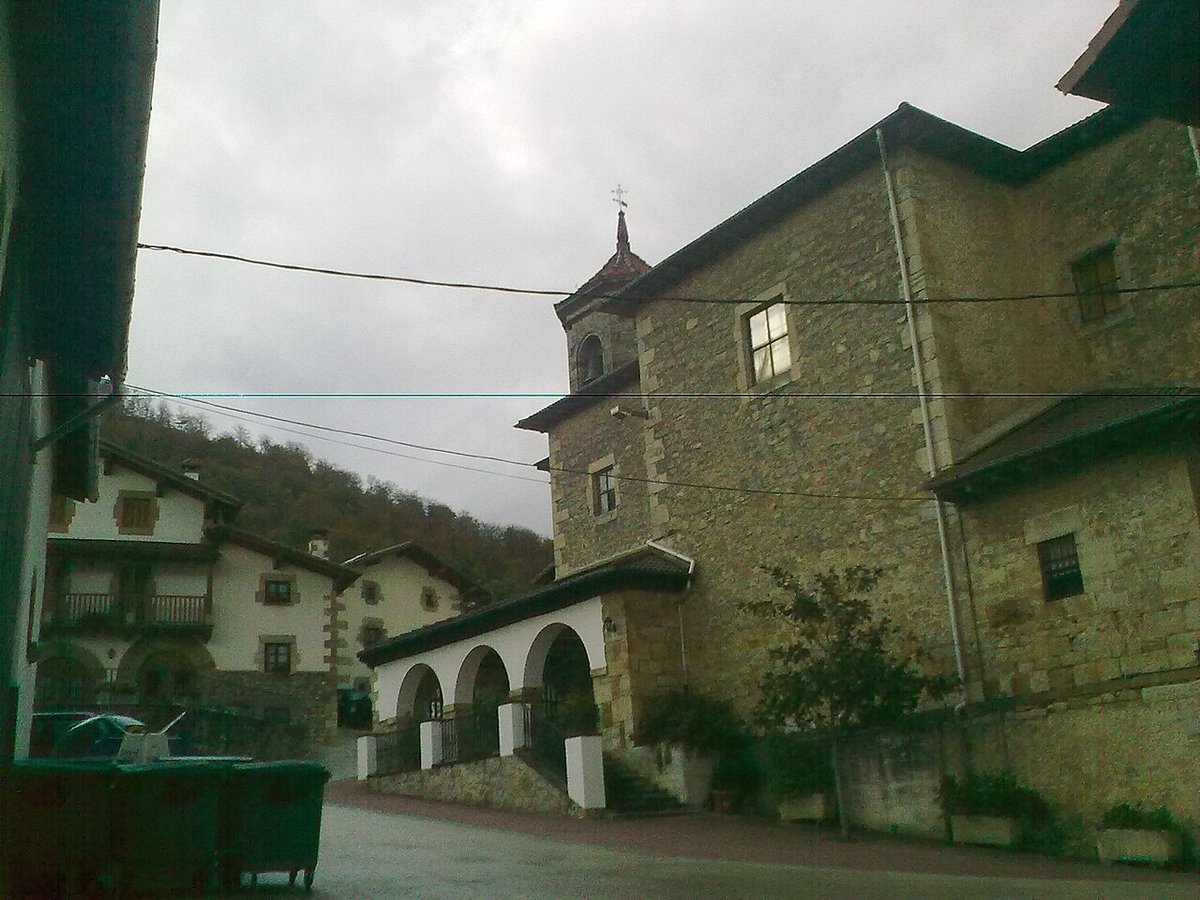
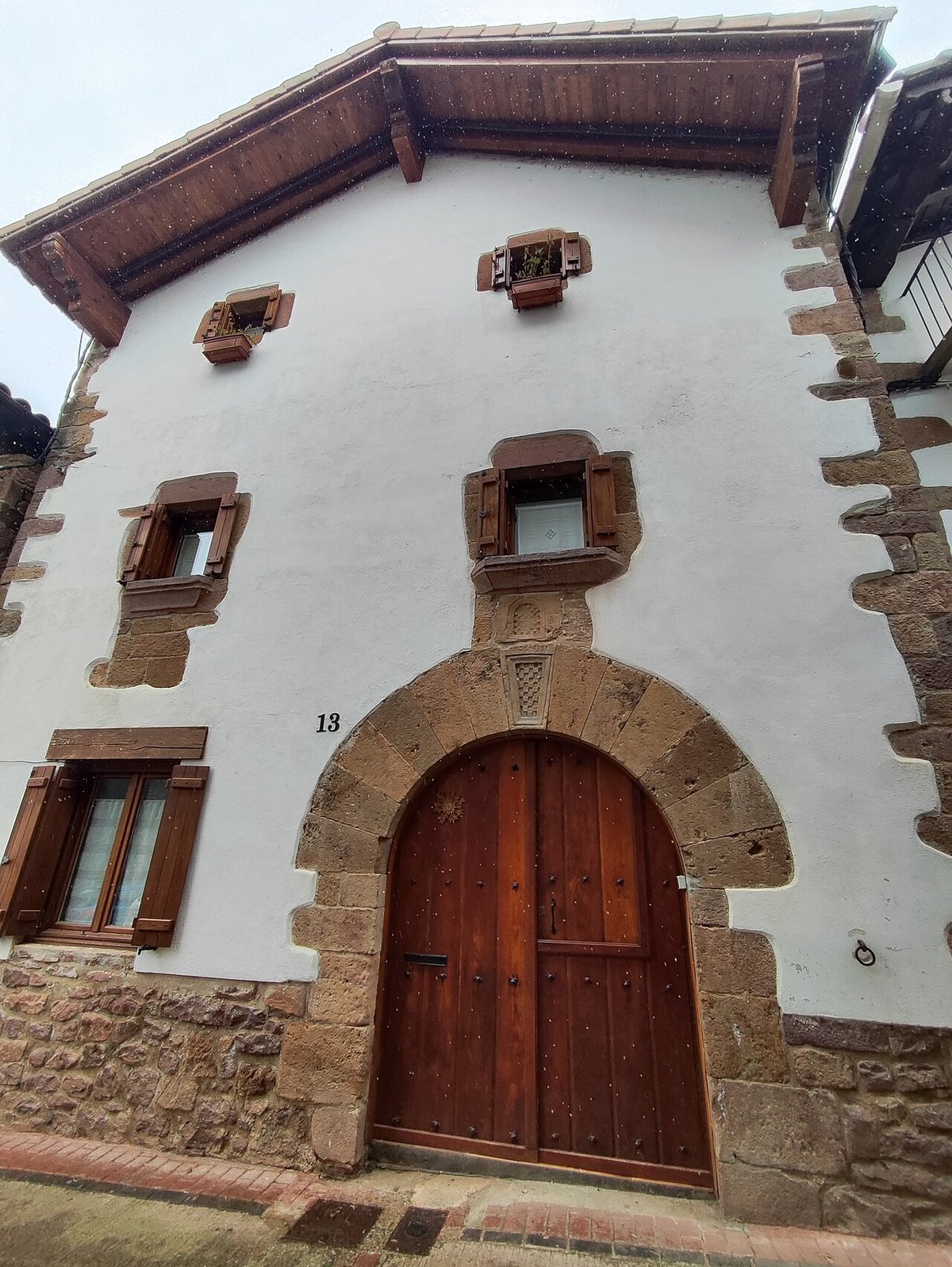
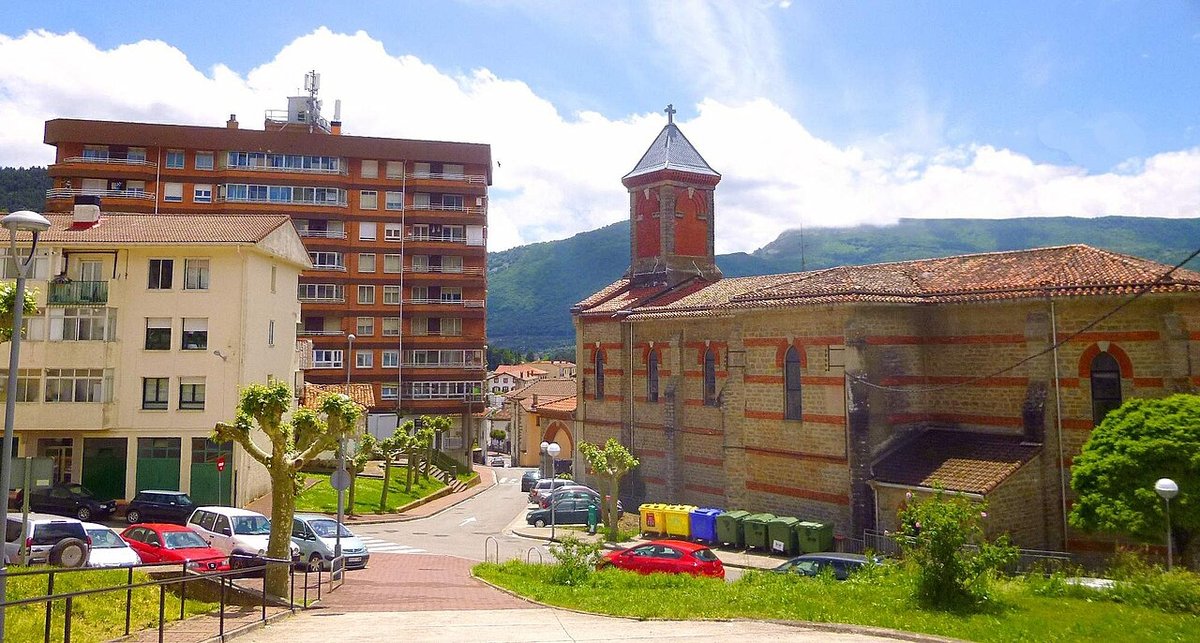
Vista aérea de Imotz
Instituto Geográfico Nacional · CC-BY 4.0 scne.es
Navarra · Kingdom of Diversity

Imotz

The church bell strikes eleven and nobody stirs. Not because the village sleeps, but because Imotz spreads itself across three kilometres of valley...

433 inhabitants · INE 2025
560m Altitude

Why Visit

Mountain Plazaola Greenway Cycling on the Vía Verde

Best Time to Visit

summer

Valley Festival (August) agosto

Things to See & Do
in Imotz

Heritage

  • Plazaola Greenway
  • Etxaleku Church

Activities

  • Cycling on the Vía Verde
  • Mushroom picking

Festivals
& & Traditions

Fecha agosto

Fiestas del Valle (agosto)

Las fiestas locales son el momento perfecto para vivir la autenticidad de Imotz.

Full Article
about Imotz

Green, damp valley with high-quality rural architecture; ideal for rural tourism and gentle hikes.

Ocultar artículo Leer artículo completo

The church bell strikes eleven and nobody stirs. Not because the village sleeps, but because Imotz spreads itself across three kilometres of valley floor. Houses hide behind oak groves, farms sit alone on meadow islands, and the bell simply marks time for whoever happens to be within earshot. This is Navarra's answer to loose-change settlement: 421 souls, one parish, and a geography that refuses to bunch up.

A Parish That Measures Distance in Hoofbeats

Start at the Iglesia de San Esteban, the only building that manages to look central. Stone walls the colour of weathered sheep's wool, a tower that leans a hand's breadth west, and a door carved in 1628 with initials that still belong to the same family. Inside, the air smells of beeswax and wet dog; farmers leave their boots by the font and their dogs wait patiently through mass. The priest walks over from the neighbouring village on Sundays—if the river's not in flood and the track's not sheet ice.

From the church door three lanes radiate like spokes, but only one is tarmacked. Follow it five minutes and the tarmac gives up, turning into a farm track graded by tractors rather than council trucks. This is normal. Imotz has no high street, no plaza mayor, no souvenir shop selling fridge magnets shaped like bulls. What it does have is a lattice of footpaths that connect nine separate hamlets, each with two or three houses, a shared bread oven and a name most Spaniards can't pronounce.

Walking the Chessboard of Fields and Forest

Pick any path and you'll cross invisible boundaries: pasture to beech wood, beech wood to meadow, meadow suddenly interrupted by a walnut grove planted for someone's wedding dowry in 1952. Waymarks are discreet—two red stripes on a fence post, a yellow spot on a barn gable—so carry the free map from the pharmacy in Lekunberri (ten minutes' drive) or download the regional .gpx before leaving Wi-Fi behind.

An easy circuit threads together the barrios of Goikoerrota, Beartzegi and Azpilikueta in a two-hour loop with 200 metres of gentle ascent. Expect cowpats, kissing gates and a ford that can reach your shins after autumn rain. Early risers sometimes spot roe deer slipping back into the beech understorey; dusk brings barn owls that hunt the field edges like pale ghosts. The only guaranteed traffic is the daily milk tanker that crawls from farm to farm collecting cans—give way and you'll get a wave and the day's gossip thrown in for free.

If you want serious kilometres, the GR-12 long-distance footpath skirts the municipal boundary. Follow it north-east and you'll reach the medieval bridge at Ultzama in three hours; swing south-west and the trail climbs to the San Donato pass at 930 metres, where the view opens across the whole valley and the Pyrenees float on the horizon like a torn paper chain. In March these high paths can still hold snow pockets; by July the same stretches are brittle with dried grass and the only shade is what you carry on your back.

What You Eat Depends on the Day of the Week

There is no restaurant in Imotz itself. The closest asador sits on the main NA-810 road, five kilometres towards Lekunberri, and it opens only at weekends unless you phone ahead. Instead, food arrives by van: the bakery lorry on Tuesday and Friday, the travelling fishmonger on Thursday morning, the vegetable seller who parks outside the church at eleven o'clock on Saturdays and sells out of courgettes by half past. Locals still keep the old rhythm—slaughter a pig in December, eat chorizo all year; plant beans in May, eat them fresh in July, dried in January.

Visitors with a self-catering kitchen should stock in Pamplona before driving up. Once here, you can supplement with raw-milk Idiazabal from the farm at the end of the lane (€6 a kilo, bring your own jug) and walnuts sold from an honesty box beside the track at Beartzegi. If you're invited inside a caserío for coffee, accept. You'll leave with a slab of talo-corn flatbread and instructions to send a postcard from wherever you're staying next. The address will be written on the back of a feed-supply receipt.

Four Seasons, Four Sets of Rules

Spring arrives late at 600 metres. Oaks leaf out in late April, followed by a two-week explosion of hawthorn so intense the lanes look snow-dusted. Streams run loud enough to drown conversation; pack waterproof boots because clay paths become skating rinks. By late May daylight lasts until ten and the first swallows race the tractors cutting early hay.

Summer is dry but rarely hot. Midday temperatures top out at 28 °C, cool enough to walk if you start early, though south-facing slopes feel Mediterranean by two o'clock. Afternoons belong to siesta and to the scent of dried fennel drifting across the yards. August nights can drop to 15 °C—bring a jumper even if the car thermometer said 35 °C down in Pamplona.

Autumn is the photographers' season. Beech woods turn copper in mid-October, morning mists sit in the river bends like unspooled wool, and the walnut and chestnut harvest brings tractors crawling home with trailers stacked high. Rain becomes frequent; what was a dusty track in August turns into a chocolate mousse that will suck the boots off the unwary.

Winter is short but sharp. The first snow usually falls in December and may linger on north slopes until March. Roads are gritted promptly—the dairy lorry has to get through—but walking paths become slimy ice chutes. Daytime highs hover around 6 °C; night frosts dip to –5 °C and can burst outdoor taps. If the weather window closes, you're stuck: no museums, no covered market, just the inside of your rented caserío and whatever book you thought to pack.

Getting Here, Getting Out Again

From Pamplona take the N-121-A north towards Bayonne, fork right at Huarte-Araquil onto the NA-810, then watch for the brown sign to Imotz after 18 kilometres. The final approach is a single-track lane with passing bays; meet a tractor and someone has to reverse. Buses run twice daily from Pamplona to Lekunberri (40 min), after which it's a 5 km taxi or a hot uphill hike with no pavement. Car hire is sensible: you'll need it for bread unless your stay coincides with the bakery van.

Petrol stations close early—fill up before six o'clock. Phone reception is patchy; Vodafone works on the ridge, Orange in the valley bottom, nothing at all inside thick-stone houses. Download offline maps and tell someone your route if you plan to walk alone. The Guardia Civil mountain rescue number is 112 and they answer in English, but they'd still rather not come looking for you in a fog that erases footprints in minutes.

The Part They Don't Print on Brochures

Imotz is not pretty in the postcard sense. Satellite dishes bloom on stone walls, breeze-block barns butt against 18th-century houses, and the council hasn't yet buried the electricity cables. Children move away for university and don't always come back; a third of the houses stand shuttered, their roofs intact only because neighbours harvest the slates before rain gets in. The village survives because farmers keep farming, not because tourists drop by.

And yet. Stand on the track at dawn when the only sound is a chain echoing against a cow's neck bell, watch mist lift off a meadow in torn strips, and you understand why people stay. Imotz offers no checklist of sights, no fridge-magnet glory. What it gives instead is space calibrated to hoofbeats and heartbeats, a place where distance is measured in the time it takes for two neighbours to meet at a gate and talk about rain. Come for that, or don't come at all.

Key Facts

Region
Navarra
District
Valles
INE Code
31126
Coast
No
Mountain
Yes
Season
summer

Livability & Services

Key data for living or remote work

2024
Connectivity5G available
HealthcareHospital 21 km away
EducationElementary school
Housing~5€/m² rent · Affordable
Sources: INE, CNMC, Ministry of Health, AEMET

Official Data

Institutional records and open data (when available).

  • Arkatxiki
    bic Dolmen ~4.1 km
  • Gurutzeondo (Udabe)
    bic Dolmen ~2.5 km
  • Arkatxu
    bic Dolmen ~4.5 km

Planning Your Visit?

Discover more villages in the Valles.

View full region →

More villages in Valles

Traveler Reviews