Full Article
about Lantz
World-famous for its rural Carnival (Miel Otxin); a well-kept town of mountain architecture
Hide article Read full article
A place that shifts your pace
Lantz is the kind of place you arrive at thinking you are just going to “see a village”, and within ten minutes realise you have actually come to slow down. Quite literally. Tourism in Lantz is not about ticking off sights, it is about walking a little, hearing a tractor somewhere in the distance, and noticing that time moves differently here.
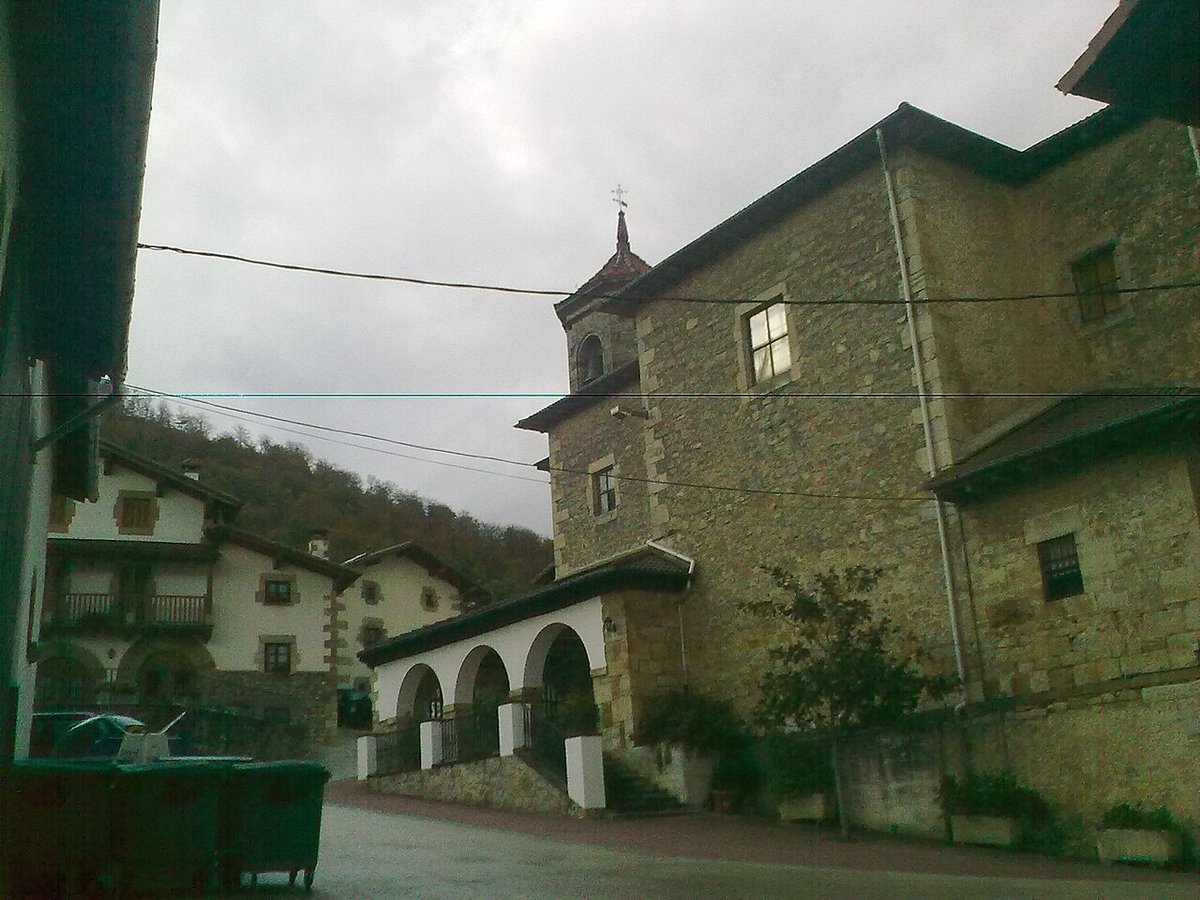
This is a small village in the Valles of Navarra, with barely 150 residents. Stone houses, reddish roofs, kitchen gardens around them, and hills close by. Nothing feels set up for a quick photo. If anything, it leans the other way, giving the sense of a place where life continues much as it always has.
Along the main street
With a couple of hours to spare, the obvious place to start is by walking straight through the village.
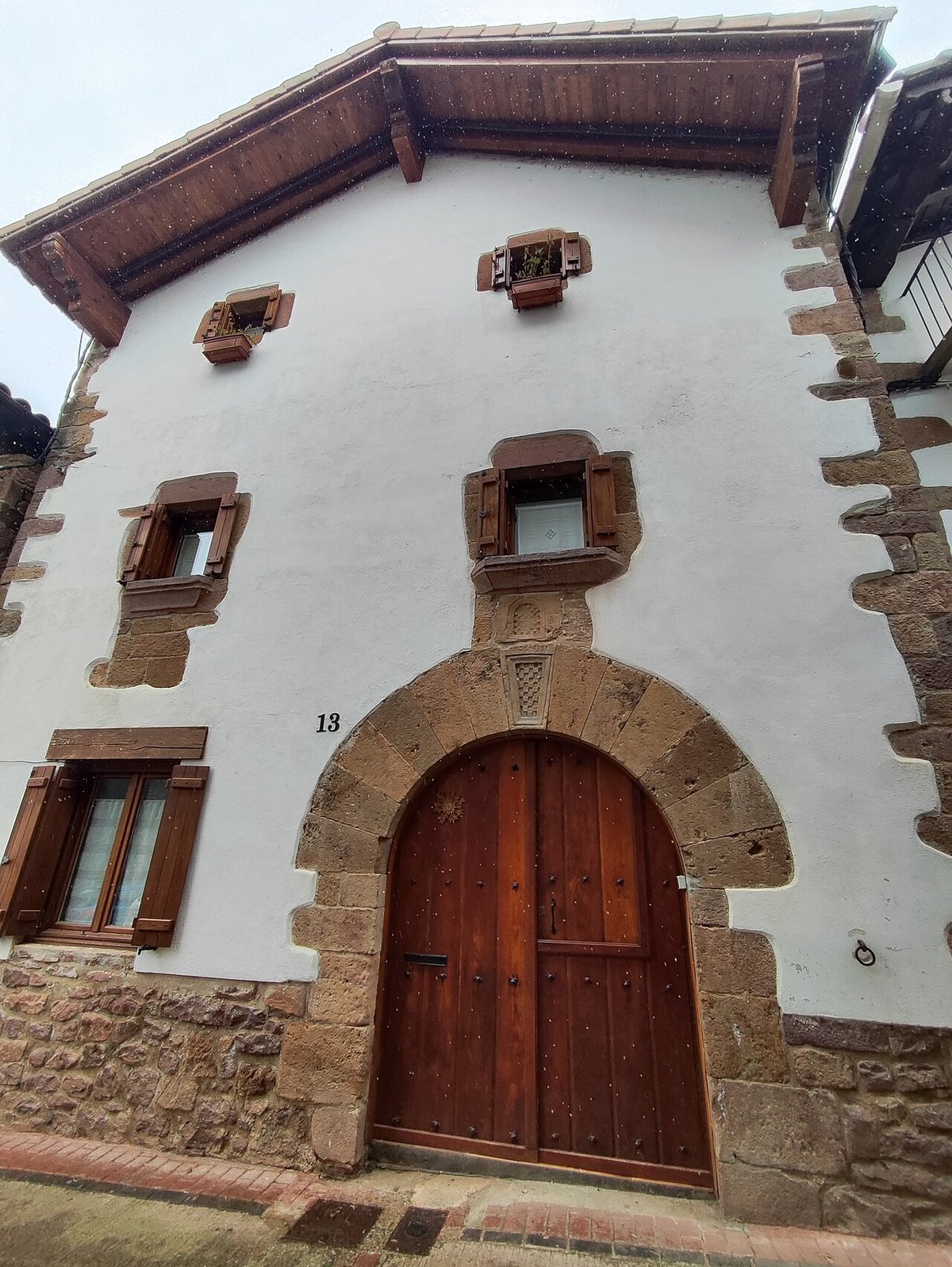
The main street has uneven cobbles that naturally slow your pace, and many houses still keep older features in their balconies, doorways or beams. It is not a neatly ordered historic centre, the kind that looks uniformly restored. Each house feels different, and many are still owned by the same families over generations.
Near the centre stands the church of San Pedro. It is usually dated to the 16th century, though it seems to have been built on top of an earlier structure. From the outside it is quite plain, but inside it keeps that atmosphere typical of a village church: dim light, dark wood, and a few Baroque altarpieces that draw attention if you take a moment to look.
There is no need to look for much more. In Lantz, the interest lies in observing how the village is arranged around fields and surrounding hills, and how those elements still shape daily life.
Paths that begin at the edge of the village
One of the most striking things about Lantz is how quickly you find yourself in the countryside. There is no need to drive anywhere or search for a designated starting point. From the edge of the village, paths begin that within minutes lead into meadows and small patches of woodland.
These are not purely recreational routes. They are still used for everyday work, to reach farm buildings, move livestock, or connect with other villages in the valley. Because of that, you may come across gates, fenced areas, or dogs watching from inside a property. Nothing unusual, just a reminder that this is a working landscape rather than a staged one.
The scenery alternates between open grassland and wooded areas of beech and oak, especially in shadier spots. When the ground is damp, which is quite common, animal tracks often appear in the mud. With a bit of luck, you might also spot a bird of prey circling above the slopes.
When it feels best to visit
Spring and autumn are usually the most rewarding times to walk here. The valley shifts in colour, and the temperatures tend to be comfortable.
That said, humidity and fog are frequent. Some mornings the village wakes under a low blanket of cloud, with the surrounding hills barely visible. It adds a certain atmosphere, though it is worth expecting it.
In summer, the landscape stays green, though some of the more open areas receive strong sun, so walking is often more pleasant earlier in the day. Winter can feel harsher: wind, damp ground, and short daylight hours shape the experience.
A few practical notes
Lantz does not function as a typical tourist destination. There are few shops or services aimed at visitors, so it is common to arrive already prepared with what you might need from Pamplona or from larger nearby villages.
If you plan to walk, a few basics make the day easier:
- Water and something to eat
- Footwear that can handle mud
- A light jacket, even if the day starts clear
Parking is generally straightforward, though it helps to be mindful. Avoid blocking access to fields or agricultural tracks. These routes are still in use and have a clear purpose.
What Lantz really offers
Lantz is not a place to visit in search of major monuments or grand, signposted history. Its appeal is simpler than that. It is about the feeling of being somewhere that has not significantly altered its way of life.
Open fields, nearby woodland, quiet paths, and very few distractions. With the right expectations, a short walk, a look at the landscape, and an unhurried pace, it works well.
And if it does not quite land, that is fine too. You can see it in a morning and continue through the valley. Small villages sometimes serve exactly that purpose.
Getting there
From Pamplona, it is roughly 45 kilometres along the N‑121‑A towards Tolosa. After passing the area around Lekunberri, turn-offs begin to appear for the villages of the Valles, including Lantz.
The final stretch has plenty of bends, so it is best taken calmly. The landscape starts to become more striking at that point, as the hills close in around the road. That, in itself, is already part of the journey.